Employee Safety Key Performance Indicator Dashboard With Case Incident Rate
Try Before you Buy Download Free Sample Product
Audience
Editable
of Time
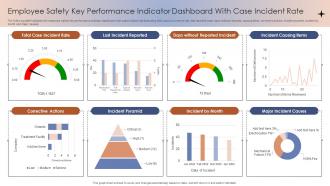
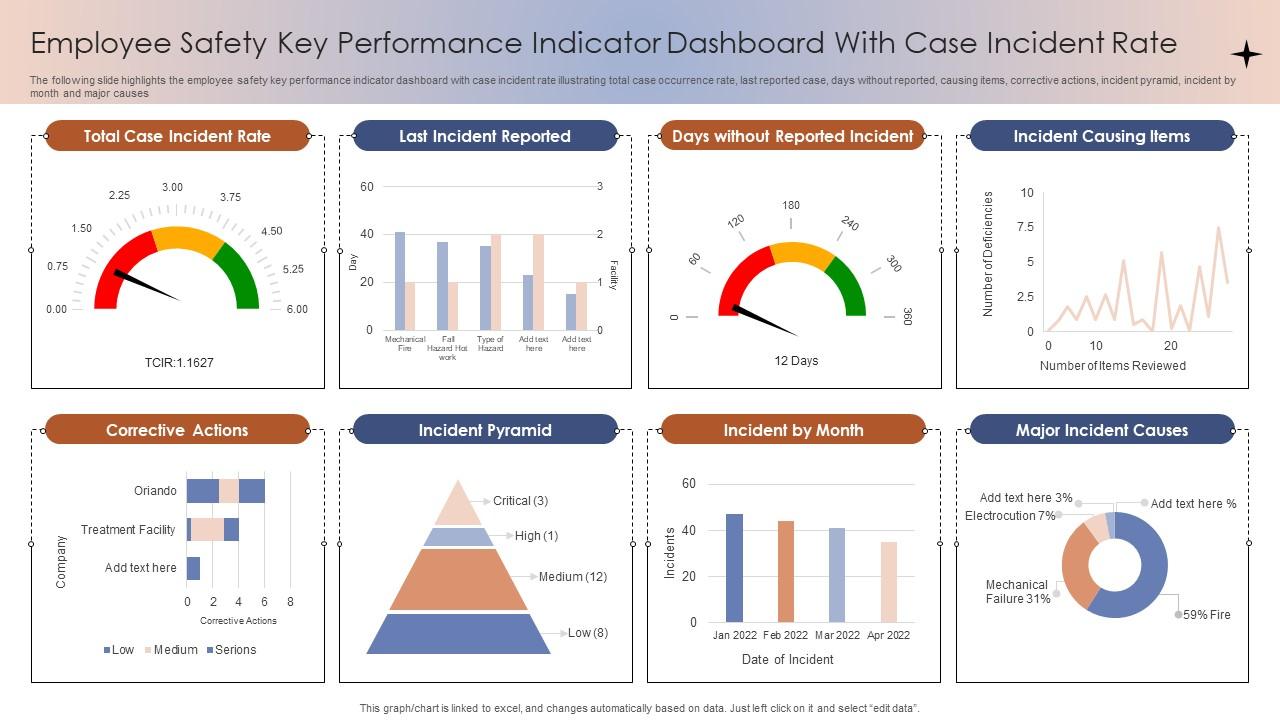
The following slide highlights the employee safety key performance indicator dashboard with case incident rate illustrating total case occurrence rate, last reported case, days without reported, causing items, corrective actions, incident pyramid, incident by month and major causes
People who downloaded this PowerPoint presentation also viewed the following :
Employee Safety Key Performance Indicator Dashboard With Case Incident Rate with all 7 slides:
Use our Employee Safety Key Performance Indicator Dashboard With Case Incident Rate to effectively help you save your valuable time. They are readymade to fit into any presentation structure.
FAQs for Employee Safety Key Performance Indicator Dashboard With
TRIR and DART rate are your bread and butter - they show real safety performance, not just random luck. Near-miss frequency is huge too. Honestly, I'd focus more on the leading stuff like training completion and hazard reports people submit. Way better than waiting for bad things to happen. Lost time incidents matter obviously, but if you're just starting out? Go with TRIR and near-misses first. They'll show you where the real problems are lurking. Oh, and severity rates help too, but don't get overwhelmed trying to track everything at once.
Honestly, you just need something dead simple for logging near-misses - anonymous forms work great, or even an old-school suggestion box. Most incidents don't get reported anyway (which is maddening), so track your reporting rate first. Sort everything by type, location, and how bad it could've been to find patterns. There's this rule about 300 near-misses happening for every serious injury, so if your numbers look low, people probably don't trust the system yet. Make reporting stupidly easy - like Amazon-level easy. The smoother the process, the better your data gets.
Training's probably your best bet for actually moving those safety numbers. I've seen places drop recordable injuries 30-40% in a year just from decent programs - which is wild when you think about it. Your team learns proper procedures, spots hazards better, knows what to do in emergencies. Don't make it a one-and-done onboarding thing though. Figure out where your biggest risks are and hit those areas first. You'll see improvements in incident rates, near-miss reports, all that compliance stuff. Way more effective than trying to boil the ocean with training everything at once.
Honestly, tech has been a game-changer for safety stuff. Those old manual reports were such a pain - now you can get real-time data that's actually useful. Wearables track heart rate, fatigue, even auto-detect falls. Pretty cool, right? Employees can report incidents instantly through apps with photos and GPS locations. Plus they get safety alerts pushed to their phones immediately. Best part is everything syncs to your dashboards automatically, so no more tedious spreadsheet entries (seriously, who has time for that?). I'd start with just one pilot program - maybe try a basic incident app first and see how your team responds.
Track injury rates and near-misses first - that's your baseline. Days since last incident matters too, but honestly the forward-looking stuff is where it gets interesting. Safety observations completed, training percentages, how fast you're closing corrective actions. Those tell you what's coming instead of just what already went wrong. Meeting attendance is clutch too - people skip those and then wonder why incidents happen. Go with red/yellow/green lights so you can scan it fast. Nobody's got time to dig through spreadsheets when something needs fixing.
You want KPIs that prove productivity and safety work together, not against each other. Track stuff like "incidents per unit produced" or compare safety training hours to quality scores. Honestly, that whole "safety vs speed" thing is so 2010 anyway. Create combined metrics that reward teams for hitting targets while keeping people safe. Make safety count big in bonus calculations - shows you actually mean it. The real trick? Teams need to see that lasting productivity comes from safe operations. They're partners, not enemies. Trust me, once people get this connection, everything clicks better.
Honestly? There's a solid link between how much your people actually give a damn about work and your safety numbers. Engaged employees follow protocols way better and actually speak up about hazards instead of just walking past them. Think about it - when you're mentally checked out, you're way more likely to cut corners or miss obvious red flags. Teams with higher engagement usually see fewer accidents and better compliance across the board. Oh, and their injury rates drop too. If your safety metrics are tanking, maybe check those engagement surveys first - could save you a headache later.
Yeah, you definitely want to update those safety KPIs as things change. Small companies usually just track basic stuff like incident rates, but once you grow you need better metrics - near misses, training completion, that kind of thing. Those actually predict problems before they happen. New equipment or facilities totally change your risk profile too. What works in manufacturing makes zero sense for office spaces, obviously. I'd review them every quarter and just ask yourself "Do these numbers actually tell me what I need to know right now?" Start by comparing what you're measuring against your current operations. Sometimes you realize you're tracking stuff that doesn't matter anymore.
Honestly, dashboards in break rooms work pretty well - people actually look at them while getting coffee. Pick your top 3 KPIs and hammer those until they become second nature. Monthly email updates are solid too, but the real magic happens when managers tell stories instead of just throwing numbers around. Like, connect those metrics to actual incidents people remember. Team meetings can feel repetitive (okay, they definitely will at first) but that's kind of the point? Making it routine beats those one-off training sessions every time. Short version: make the numbers visible everywhere and give them context people care about.
Check out OSHA's injury data and Bureau of Labor Statistics - they've got tons of benchmarking stuff broken down by company size and region. Your industry association probably has annual reports too, which honestly are way more useful than the generic databases. NSC and ASSE have member tools if you're part of those orgs. Pick maybe 3-5 metrics you actually care about first though, otherwise you'll get lost in all the data. The key thing is comparing companies that actually operate like yours, not just anyone in your broad industry category. I'd start by calling your trade association - they usually know exactly what you need.
Safety KPIs totally change how people think about work when you use them right. Instead of pointing fingers after accidents, everyone starts preventing problems before they happen. Track stuff like near-misses and training completion - it shows your team you actually care about keeping them safe, not just avoiding lawsuits. Honestly, transparency is everything here. Share the numbers in meetings and ask what else you should measure. People get way more invested when they feel protected instead of just watched. The trust and morale boost is real. Your team will surprise you with how engaged they become.
Just ask them straight up what safety stuff worries them most. Set up surveys, maybe some focus groups - your floor workers catch hazards management totally misses, so their input is pure gold. Anonymous reporting works best since people won't sugarcoat things when they're not worried about getting in trouble. Oh, and definitely get employees involved in actually designing the KPIs themselves. They'll actually care about metrics they helped create instead of just ignoring whatever gets handed down from above. Cross-functional safety committees are perfect for this kind of thing.
Honestly, the biggest trap is thinking good KPIs mean you're actually safe. Like, your incident numbers might look great but people could just be scared to report stuff because they don't want to get blamed. I've seen this happen so much. Injury rates only tell you what already went wrong anyway - not super helpful for prevention. Some metrics actually make people game the system instead of fixing real problems. You're way better off tracking things like how often people report hazards or complete safety training. Those show you if your culture is working before someone gets hurt.
Quarterly reviews are the bare minimum, but monthly is way better if you can pull it off. Catching trends early beats scrambling later when things get messy. I've watched companies do annual reviews and suddenly realize they missed red flags for half the year - not fun. High-risk stuff obviously needs more attention than office work. Your incident rates and any big operational changes should tell you when to dive deeper. Honestly, just block out quarterly reviews on your calendar today and tweak from there.
Leadership makes or breaks your safety numbers, no question. When execs actually show up on the floor and ask real questions about safety issues, incident rates drop fast. I've watched companies where management only talks safety in boardrooms - their KPIs stay stuck in mediocre territory. The difference? Good leaders base decisions on actual data instead of just winging it. They hold themselves to the same standards too, which honestly shouldn't be revolutionary but somehow is. Pro tip: start measuring leadership safety behaviors as its own metric. Game changer right there.
-
Great product, helpful indeed!
-
The information is visually stunning and easy to understand, making it perfect for any business person. So I would highly recommend you purchase this PPT design now!