

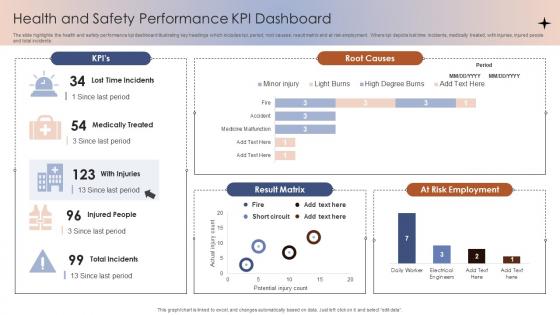
Health And Safety Performance KPI Dashboard




Try Before you Buy Download Free Sample Product
 Impress Your
 Audience
 100%
100% Editable
 Save Hours
 of Time


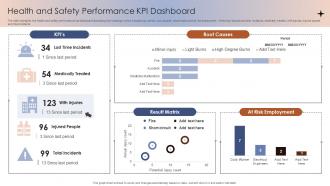
The slide highlights the health and safety performance kpi dashboard illustrating key headings which includes kpi, period, root causes, result matrix and at risk employment. Where kpi depicts lost time incidents, medically treated, with injuries, injured people and total incidents
People who downloaded this PowerPoint presentation also viewed the following :
Health And Safety Performance KPI Dashboard with all 7 slides:
Use our Health And Safety Performance KPI Dashboard to effectively help you save your valuable time. They are readymade to fit into any presentation structure.





FAQs for Health And Safety
Start with TRIR and DART rate - those are your bread and butter metrics. Near-miss frequency too. But honestly? The leading indicators like training completion and hazard reports are where the real value is. They actually help you catch stuff before it goes sideways. Lost time injury frequency is pretty standard as well. I'd focus on these basics first since they'll give you the clearest read on how you're doing safety-wise. You can always add more specific ones later once you figure out what risks are unique to your operation.
Look, you've gotta connect your safety numbers to stuff the business actually cares about. Track how good safety reduces insurance costs and keeps people from quitting - nobody wants to work somewhere sketchy, right? Show leadership how fewer accidents mean less downtime and disruption. Honestly, the compliance angle is boring and doesn't move the needle. Pick maybe 3-4 metrics that tell a story about worker wellbeing AND saving money. When you frame it as "safety investments pay for themselves," suddenly everyone's interested. Regular reports help too.
Don't just track incident rates - that's like looking in the rearview mirror. You need stuff that predicts problems before they happen. Near-miss reports are gold for this. Also, resist the urge to measure everything because people will just ignore it all. I've seen teams stop reporting small issues when they're only rewarded for "days without incidents." That's backwards. Mix your backward-looking metrics with forward ones like hazard IDs and training completion. Three to five KPIs max, and make sure your team can actually do something about them.
Don't just track people like numbers - actually get them involved. Explain how near-miss reporting prevents real injuries that could hurt their families. Let teams pick their own metrics and set safety goals together. Here's what works: celebrate wins publicly instead of only talking about safety when something goes wrong (which honestly happens way too often). Give your safety champions some recognition. Make reporting super easy and fear-free. The big thing? Act fast on their suggestions so they see their input matters. Otherwise you'll lose them.
Dude, the difference is crazy - you get real-time dashboards instead of waiting weeks for incident reports. Workers can report hazards instantly through apps, plus those wearable devices actually monitor if someone's getting too tired. AI spots patterns you'd miss completely (way better than the old spreadsheet nightmare). What I love most? You catch problems before they turn into actual accidents. My buddy's company started with just one digital tool and kept adding more. Short sentences work. Game changer honestly - no more just reacting after stuff goes wrong.
Look, you're stuck tracking whatever OSHA says first - injury rates, near-miss stuff, response times. That's just how it works. Then your industry probably throws more requirements on top (confined spaces if you're in manufacturing, chemical exposure limits, etc). Here's what I'd do though - don't stop there. Those regulatory KPIs are basically just counting problems after they've already happened. Build out from those basics and add some forward-looking metrics that actually help you catch issues before someone gets hurt. Start with what you legally have to measure, then get creative with predictive stuff that fits your actual workplace risks.
Honestly, ditch the spreadsheets - nobody wants to stare at rows of numbers. Go visual with dashboards that show injury trends, near-misses, incident-free days over time. I made that mistake once and literally watched people zone out! Color-coding works great: green for good, red for problem areas. Context matters too, like "this spike happened during our crazy busy month." Mix your lagging indicators (actual injuries) with leading ones like training completion rates. Oh, and always end with who's doing what by when - not just vague "let's improve" stuff.
Quarterly reviews are the bare minimum, but monthly is way better if you can manage it. Safety stuff happens fast - you don't want to wait six months to catch a pattern. Also do immediate reviews after any big incident or when you change operations (new equipment, different processes, whatever). The whole point is keeping your KPIs current with what's actually happening on the floor right now. Honestly, I'd just set a recurring calendar reminder so you don't forget about it completely - that's happened to me before with other reviews.
So leading indicators are like preventive stuff - safety training hours, near-miss reports, audits. They help predict what might happen. Lagging indicators? That's the aftermath - injury rates, lost time, workers' comp claims. It's kinda like monitoring your speed vs. counting how many speeding tickets you racked up later. One prevents problems, the other just measures the mess. Honestly, leading indicators are where the real value is since you can actually fix things before someone gets hurt. Track both for sure, but use those leading ones to make actual improvements happen.
Check out OSHA stats and industry safety councils first - they've got solid benchmarking data broken down by sector. Trade associations publish annual reports too, which are super helpful. Honestly, the best intel comes from just talking to other safety managers at companies like yours. Professional networks are where you'll get the real scoop on what actually works. Just make sure you're comparing similar companies though - same size, same risks, that whole thing. Numbers are great but dig deeper. Find out HOW the top performers hit those metrics, then steal their best practices.
Put up visual boards where everyone hangs out - break rooms, near time clocks, wherever people actually look. Keep it dead simple with red/yellow/green colors so anyone can get it instantly. We've had good luck with quick huddles where supervisors just spend 2 minutes explaining what the numbers mean for everyone's daily work. Real-time digital displays are pretty sweet if you can swing it. Honestly, most people tune out if it feels like corporate BS, so connect it directly to their safety and job security. Start with maybe 2-3 metrics max and see what clicks with your team first.
So here's the thing - tracking safety KPIs actually shows your people that leadership cares about more than just hitting numbers. Honestly, it's probably the quickest culture shift you can make. Pick metrics your frontline folks can actually impact, like near-miss reporting or training completion rates. Share those results regularly too. People notice when you're measuring what matters to their daily safety, not just productivity stuff. You'll start seeing teams watch out for each other more. Better communication about risks. Way more engagement overall - which, let's be real, benefits everyone in the long run.
Honestly, your biggest headache is gonna be people not reporting stuff - especially near-misses. They're scared of getting blamed, you know? Also, half your workers probably don't even know what they should be logging. Manual tracking is a nightmare too (spreadsheets are the worst). Different departments interpret safety categories however they want, so your data's all over the place. Oh, and good luck with data entry errors if you're still doing things by hand. Start with standardizing how everyone reports things and actually train people on what needs tracking. That alone will fix most of your problems.
Honestly, just track 3-4 things that actually matter - incident rates, near-misses, days without accidents. Don't overthink it with fancy software; a basic spreadsheet does the job perfectly fine. I've watched companies go crazy trying to measure everything and it backfires when you're already stretched thin. Grab some free templates from OSHA or your industry group. Get your team involved since they're doing the work anyway - makes data collection way easier. Oh, and consistency beats perfection every time. Pick what you can realistically track monthly and will actually use for decisions.
Your insurance company will literally cut your rates when you can show solid safety data - reduced incidents, near-miss reports, training completions, all that stuff. They see you as less risky. Pretty straightforward business logic, honestly. Track your top 3-5 safety metrics consistently and you'll also spot problem patterns before they blow up into expensive disasters. Way better than scrambling after something goes wrong. Oh, and definitely bring that data when you're negotiating renewals with your broker - they actually want to see it.
-
I never had to worry about creating a business presentation from scratch. SlideTeam offered me professional, ready-made, and editable presentations that would have taken ages to design.
-
It's always a delight to see new templates from you! I am extremely pleased with the fact that they are easy to modify and fit any presentation layout in seconds!