


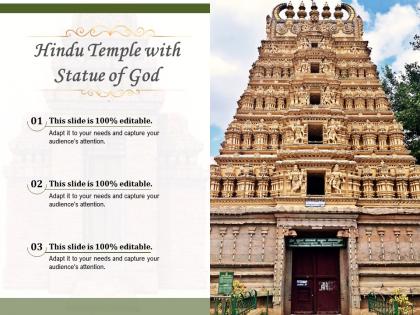
Hindu temple with statue of god




Try Before you Buy Download Free Sample Product
 Impress Your
 Audience
 100%
100% Editable
 Save Hours
 of Time


Our Hindu Temple With Statue Of God are topically designed to provide an attractive backdrop to any subject. Use them to look like a presentation pro.
People who downloaded this PowerPoint presentation also viewed the following :
Hindu temple with statue of god with all 2 slides:
Use our Hindu Temple With Statue Of God to effectively help you save your valuable time. They are readymade to fit into any presentation structure.


FAQs for Hindu temple with
So Hindu temple deities are actually living in those statues - not just representations, but the real deal. They get fed, bathed, and dressed up daily which is wild to see honestly. Most have multiple arms and crazy vibrant colors since they represent different parts of the same divine source. Each temple usually has one main deity with their own backstory and regional quirks. Oh and definitely take your shoes off before going in - learned that one the awkward way! The ceremonies are incredible if you catch one.
So basically every symbol tells a story about what that deity does. Ganesha's got the elephant head because elephants just plow through everything - he removes obstacles. Shiva's trident? That's his create/preserve/destroy power. Durga rides a lion and has like eight arms with weapons since she's literally fighting demons all day. I think it's pretty clever how they crammed entire myths into visual cues. Oh, and multiple arms usually mean they're juggling cosmic responsibilities. Next time you're at a temple, try spotting the symbols - you'll instantly get what each god is about.
So basically each form connects to different stuff you might be going through. Ganesha's your go-to for clearing obstacles, Durga's got your back when you need protection, Krishna's all about love and devotion - honestly it's genius how they figured this out. Different avatars match whatever you're dealing with spiritually. Plus it shows how Hinduism gets that the divine is way too vast for just one form, you know? Oh and here's something cool - next time you're at a temple, pay attention to which deity catches your eye first. That usually says something about what your soul needs right now.
Yeah, it totally depends on which god you're visiting! Shiva temples are all about water, milk, and those bilva leaves. For Vishnu it's more tulsi leaves and flowers - always vegetarian stuff. Ganesha obviously gets the good stuff like modaks and sweets (I mean, can you blame him?). Durga's different though - red flowers and sometimes even meat during festivals. The chants and timing change too based on each deity's whole story and personality. Honestly, your best bet is just asking the local priests when you get there. They'll break down exactly what to do and why - way better than guessing!
So basically Hindu temple art started super simple - just geometric shapes, stones, trees, that kind of thing around the 6th century. Then deities got the human forms we know today with all the multiple arms and specific symbols. Medieval times is when things got really fancy with crazy detailed sculptures. The regional differences are pretty fascinating though - South Indian temple art has its own distinct style compared to North Indian ones. Local cultures totally shaped how the deities looked. When you're temple hopping, you'll notice older temples are way more minimal while newer ones go full-out with the elaborate artwork. It's like watching artistic evolution in real time.
Oh totally! The same deity can feel completely different depending on where you are. Like Ganesha - some places he's all about removing obstacles, others treat him as the arts patron. Wild how that works, right? Even the statues look different region to region. Festivals change too. Honestly, I think it makes your connection feel way more personal when it matches your background. You should check out temples in different areas if you get the chance. The variations are crazy and you'll get how diverse Hindu practice actually is.
Dude, temple design is way deeper than just looking pretty. The whole building is basically a spiritual GPS - starts at the entrance and leads you step by step toward where the main deity lives. All those crazy detailed carvings? They're telling stories and showing you what the gods are about. Even the math behind how it's built is supposed to create good energy or whatever. Honestly, the proportions thing always fascinated me. Next time you visit one, don't just snap photos - actually look around. The architects designed every inch to put you in the right headspace for worship.
People connect through darshan (seeing the deity) and bringing offerings like flowers or food. Daily rituals like aarti happen too. What's really cool is watching devotees have these super personal conversations with the deity - honestly gets me every time. Festivals are where the community vibe really kicks in though. Everyone gathers for group ceremonies, chanting, sharing prasadam (blessed food). It's like your personal spiritual spot but also the neighborhood hangout, if that makes sense? Oh and if you go, don't stress about protocols. Just watch what others do and ask temple staff - they're usually pretty helpful with newbies.
Honestly, you can't really understand Hindu deities without knowing their stories first. The Puranas and Vedas are like the original comic books - they've got all the backstories and powers of each god you'll see in temples. Without reading them, you're just staring at pretty statues with zero context. The Ramayana is probably the most accessible starting point. I'd grab simplified versions though, because the original texts can be pretty dense. Once you know who's who and what they represent, temple visits become way more meaningful. It's like watching a movie after reading the book - everything just clicks better.
Hindu deity festivals are where the real cultural action happens. Communities gather to celebrate and teach kids traditional stuff - cooking, dance, music, all that. It's honestly way more fun than regular religious events. These festivals create this perfect storm where devotion meets art meets socializing. Even people who barely show up to temple normally will pitch in during festival season. The participation level is just different. Oh, and if you're trying to understand Hindu culture? Festival time is when you'll see the most authentic practices happening. Short bursts, but they pack everything in.
Honestly, temple worship is pretty amazing for your mental health. You get this instant stress relief from the repetitive prayers and rituals - it's like meditation but with more community vibes. Plus you're surrounded by people who actually get your background and beliefs, which feels really grounding. The regular ceremonies give your week structure too. I mean, it's basically free therapy plus social hour rolled into one sacred space. If you're thinking about checking it out or studying how it works, pay attention to both the personal quiet moments and how everyone interacts as a group. The cultural identity boost is real.
Hindu goddesses are seriously badass - they represent Shakti, which is basically divine feminine power. Durga's shown as this fierce warrior, Lakshmi's all about prosperity with lotus flowers everywhere, and Saraswati has books and musical instruments for knowledge. What's cool is they're not just sidekicks to male gods. These deities are independent forces who can literally create or destroy entire worlds. People go to temples asking them for everything - protection, wisdom, you name it. I think it really shows how much Hindu culture values the feminine side of spirituality for keeping everything balanced.
Oh this is such a cool topic! Artists are doing wild stuff with Hindu deities now - like Ganesha in street murals or Kali done digitally. They're mixing traditional symbols with modern materials, sometimes using neon lights or recycled junk instead of bronze. Scale gets crazy too. Honestly, I think it's brilliant how they keep the meaning but make it relevant for us today. You should definitely look up Bharti Kher and Subodh Gupta - their work is incredible at this blend. Krishna in pop culture settings? Yes please.
So priests are basically the middlemen who know all the proper rituals and Sanskrit prayers that regular people don't. They'll do the puja ceremonies and handle offerings to help you connect with the deities. Think of them as spiritual guides who actually know what they're doing - most of us would be totally lost without them! Shamans are different though. They're more about trance stuff and aren't really part of your typical temple experience. When you visit, just follow whatever the priest tells you and you'll be good. Honestly, it's way less intimidating than it seems.
Yeah, it's wild how much city life is changing religious practices. People are getting super creative - mixing traditional worship with apps for temple services, online prayers, even quick 10-minute rituals between work meetings. I've noticed this cool trend where devotees blend global spiritual ideas with their ancestral traditions too. The devotion is still there, just... compressed? Short prayer sessions, digital offerings, that sort of thing. Honestly, working professionals don't have hours for elaborate ceremonies anymore. If you're researching this stuff, hit up some urban temples during rush hour - you'll see exactly what I mean about how they've adapted.
-
Presentation Design is very nice, good work with the content as well.
-
Wonderful templates design to use in business meetings.
-
Attractive design and informative presentation.
-
Wonderful templates design to use in business meetings.