


Proceso de contratación Diapositivas de presentación de PowerPoint




Try Before you Buy Download Free Sample Product
 Impress Your
 Audience
 100%
100% Editable
 Save Hours
 of Time


Mida y evalúa tu procedimiento de reclutamiento con nuestras Diapositivas de Presentación de PowerPoint del Proceso de Contratación listas para usar. El conjunto completo de la estrategia de reclutamiento de empleados prediseñada en PPT PowerPoint contiene diapositivas de PPT diseñadas profesionalmente como resumen ejecutivo, alta dirección, departamentos y equipos, servicios, vacantes actuales, proceso de reclutamiento, descripción del puesto, embudo de reclutamiento, seguimiento y presupuesto, etc. Estas diapositivas de PPT del proceso de selección de empleados se diseñaron después de una investigación en profundidad. Cada diapositiva del conjunto de presentación del proceso de dotación de personal es totalmente personalizable, edita el color, el estilo de fuente según tus necesidades. Muestra las diversas etapas involucradas en el proceso de contratación utilizando diapositivas de PPT del plan de reclutamiento listas para usar. Demuestra las diversas fuentes de reclutamiento, como colocaciones escolares, búsquedas internas, agencias de empleo, anuncios, referencias de empleados. Además, los diseños de presentación del procedimiento de reclutamiento son apropiados para presentar varios temas relacionados como el sistema de seguimiento de solicitudes, el plan de estrategia de empleo, la consultoría de RR. HH. y el plan de reclutamiento, etc. Descarga visuales de estrategia de reclutamiento de PPT atractivos para implementar nuevas tendencias de reclutamiento. Nuestras Diapositivas de Presentación del Proceso de Contratación de PowerPoint te aseguran que mejores. Logra más allá de tus sueños más grandes.
People who downloaded this PowerPoint presentation also viewed the following :
Contenido de esta presentación de Powerpoint
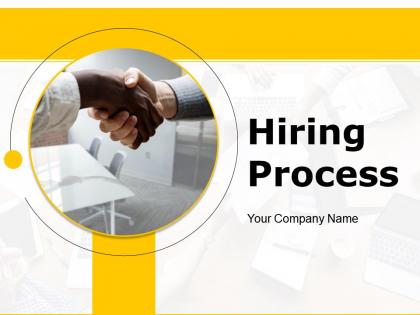
Diapositiva 1: Esta diapositiva presenta el Proceso de Contratación. Indique el Nombre de su Empresa y comience.
Diapositiva 2: Esta diapositiva muestra el Esquema con estos importantes puntos de la historia: Resumen Ejecutivo, Gerencia Clave, Nuestros Servicios, Vacantes Actuales, Seguimiento de Reclutamiento, Fuentes de Reclutamiento, Departamentos y Equipos, Proceso de Reclutamiento, Descripción del Puesto, Embudo de Reclutamiento, Presupuesto de Reclutamiento.
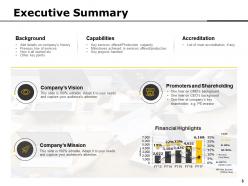
Diapositiva 3: Esta diapositiva presenta el Resumen Ejecutivo que muestra estos encabezados principales: Antecedentes, Capacidades, Acreditación, Datos Financieros Destacados, Promotores y Accionistas, Misión de la Empresa, Visión de la Empresa.
Diapositiva 4: Esta diapositiva muestra la Gerencia Clave. Puede agregar los nombres y designaciones de la gerencia de su empresa.
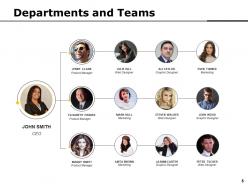
Diapositiva 5: Esta diapositiva presenta los Departamentos y Equipos. Puede agregar la información de su empresa.
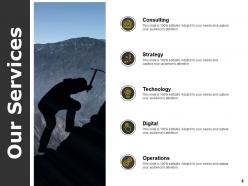
Diapositiva 6: Esta diapositiva muestra Nuestros Servicios con estas categorías: Consultoría, Estrategia, Tecnología, Digital, Operaciones.
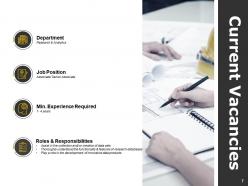
Diapositiva 7: Esta diapositiva muestra las Vacantes Actuales e incluye también estos parámetros: Departamento, Experiencia Mínima Requerida, Roles y Responsabilidades, Puesto de Trabajo.
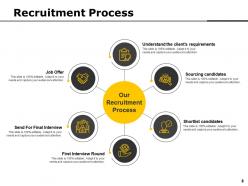
Diapositiva 8: Esta diapositiva muestra el Proceso de Reclutamiento con estos parámetros mencionados: Comprender los requisitos del cliente, Búsqueda de candidatos, Preselección de candidatos, Primera ronda de entrevistas, Enviar a entrevista final, Oferta de trabajo.
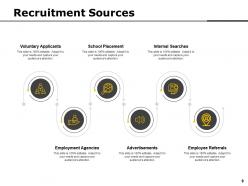
Diapositiva 9: Esta diapositiva presenta las Fuentes de Reclutamiento con estas seis etapas: Búsquedas Internas, Solicitantes Voluntarios, Agencias de Empleo, Colocaciones Escolares, Referencias de Empleados, Anuncios.
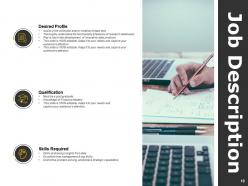
Diapositiva 10: Esta diapositiva presenta la Descripción del Puesto, que además le guía para agregar más información sobre: Perfil Deseado, Calificaciones, Habilidades Requeridas.
Diapositiva 11: Esta diapositiva muestra el Embudo de Reclutamiento con estos importantes factores a tener en cuenta: Candidato Potencial Identificado, Candidatos Contactados, Respuestas de Candidatos, Presentaciones, Invitados a Entrevista, Oferta, 2da Entrevista.
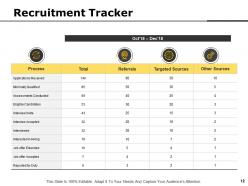
Diapositiva 12: Esta diapositiva muestra el Seguimiento de Reclutamiento. Puede agregar los datos para el requisito o los procesos de contratación.
Diapositiva 13: Esta diapositiva le guía para agregar el Presupuesto de Reclutamiento y también agregar los datos según sus requisitos.
Diapositiva 14: Esta diapositiva muestra los Iconos del Proceso de Contratación.
Diapositiva 15: Esta diapositiva se titula Diapositivas Adicionales para avanzar.
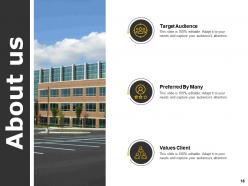
Diapositiva 16: Esta es la diapositiva Sobre Nosotros para mostrar las especificaciones de la empresa, etc.
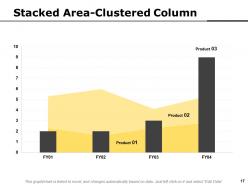
Diapositiva 17: Esta diapositiva muestra un gráfico de Área Apilada-Columnas Agrupadas con comparación de tres productos.
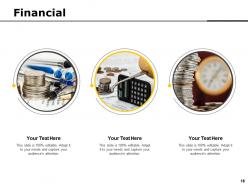
Diapositiva 18: Indique su puntaje financiero en esta diapositiva con imágenes y texto relevantes.
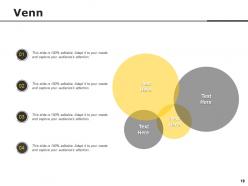
Diapositiva 19: Esta es una diapositiva de imagen de Diagrama de Venn para mostrar información, especificaciones, etc.
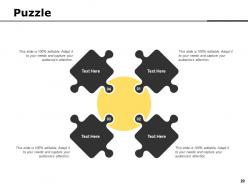
Diapositiva 20: Esta es una diapositiva de Rompecabezas con cuadros de texto.
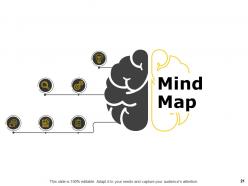
Diapositiva 21: Esta diapositiva muestra un Mapa Mental para representar entidades.
Diapositiva 22: Esta es una diapositiva de imagen de Gracias con Dirección, Correo Electrónico y Número de Contacto.
Proceso de contratación Diapositivas de presentación de PowerPoint Todas las 22 diapositivas
Nuestro proceso de contratación genera gran entusiasmo. Aseguran eventos exitosos.





FAQs for Hiring Process
So you've got job analysis and posting first, then resume screening, phone/video interviews, in-person finals, reference checks, and offer negotiation. Define your requirements super clearly upfront - trust me, it saves so much time later. Most candidates get cut during screening, so be specific about what you actually want. Use structured interviews with the same questions for everyone to avoid bias. Reference checks are honestly pretty much a formality most of the time, but they do catch weird stuff occasionally. Each stage needs clear criteria and timelines. I'd start by mapping your current process and see where people usually drop out.
First thing - clean up those job descriptions. Remove weird requirements that don't actually matter and any language that feels exclusionary. Also, you've gotta post beyond the usual job boards. I swear, companies use the same three sites then act shocked when they get cookie-cutter applicants! Structure your interviews with standardized questions - helps cut down on unconscious bias. Mix up your interview panels too. Here's the thing though: track everything. Like, actually measure where diverse candidates drop off in your process so you can fix the real problems instead of just guessing.
Oh man, employer branding is everything these days! Basically it's how people see your company as an actual workplace. Candidates are stalking you on Glassdoor and social media before they even apply - they want to know if you're cool or if everyone's miserable. Good branding makes talented people chase YOU instead of the other way around. I mean, nobody applies somewhere that looks boring, right? My advice? Talk to your favorite employees first. Figure out what they genuinely love about the job, then blast that message everywhere. It's like marketing but for recruiting.
Honestly, behavioral interviews are so much better than the usual "where do you see yourself in 5 years" nonsense. When you ask "tell me about a time when..." people can't just BS their way through with generic answers. They have to give you actual stories about handling conflict or solving real problems. I always listen for the STAR thing - Situation, Task, Action, Result - since it shows you how they think through stuff. Short sentences work too. You should probably prep like 4-5 questions that match whatever your biggest headaches are in the role. Way more useful than hypothetical scenarios!
Honestly, most companies mess up by not being clear about what they actually want in the role. Then they panic-hire because they're desperate. Super common mistake. Don't drag out your decision-making either - I've seen great candidates bail because companies took weeks to get back to them. Also avoid those marathon interview processes that go on forever, and definitely don't ask weird personal stuff that could get you in legal trouble. Oh, and actually call those references instead of just pretending you will! Stay consistent with how you interview everyone and set realistic timelines. Sounds basic but you'd be surprised how often this gets screwed up.
Honestly, start with resume screening - that's where you'll save the most time. ATS systems can auto-filter based on keywords, which is huge. Calendar integrations handle interview scheduling automatically too. Some companies are using chatbots for initial screening now (feels weird but actually works). AI ranking tools are getting decent, though I still wouldn't rely on them completely for final picks. The whole point is getting you out of the administrative nightmare so you can focus on the candidates who actually matter. Oh, and video assessments are pretty solid for early rounds if you're dealing with tons of applicants.
Start with time-to-fill, cost-per-hire, and quality of hire - those are your bread and butter. Quality's honestly the hardest to nail down, but you can track it through performance reviews at 6-12 months, how long people stick around, and whether managers are happy with new hires. Candidate experience scores matter too. Nobody wants to deal with a nightmare hiring process, right? Also check your offer acceptance rates and which job boards actually work - some are total money pits. Your recruiting team will definitely have thoughts on what to prioritize first!
Cultural fit matters, but don't let it trump actual skills. I've watched hiring managers get way too focused on "would I hang out with this person?" - which honestly just breeds bias. Define what fit actually means first. Work style? Communication? Values alignment? You want someone who'll mesh well and add to the team vibe. But here's the thing - use real scenarios to test it. Ask about collaboration situations or how they'd handle specific problems. Way more telling than just gut feelings, you know? Structure beats intuition every time.
Ok so first thing - start with structured interviews where everyone gets asked the same questions. Way more fair that way. Remove names/photos from resumes during initial screening (blind reviews are a game changer). Get diverse people on your interview panels too since they'll spot stuff others miss. Honestly, I'd ditch the whole "culture fit" thing - it's usually just bias in disguise. Focus on actual skills instead. Oh and don't try changing everything overnight, that never works. Pick like two of these and see how it goes first.
Skip the generic questions - nobody cares about their "greatest weakness" anymore. Instead, ask them to walk you through specific situations where they dealt with conflict or had to lead a team. The details they share will tell you everything. I'm a huge fan of role-playing too, like having them explain something technical to a non-technical person. Watch how they treat the receptionist or whoever walks them around - that's often more telling than the formal interview. Oh, and listen to what they ask about your team culture. Good candidates always want to know about the people they'll work with. Create situations where their soft skills show naturally instead of forcing them to list qualities.
So you can basically hire anyone now, which is pretty cool - not just people who live nearby. Finding niche skills got way easier. Interviews are faster without all the back-and-forth travel stuff, though figuring out if someone's a good culture fit over Zoom is... tricky. The onboarding thing is where it gets real different. New people can't just wander over to ask questions or grab lunch with the team. You'll definitely need good video tools and some kind of structured plan to get people up to speed remotely.
Dude, anti-discrimination laws are huge here - can't ask about age, religion, marriage, pregnancy, disabilities, any of that stuff. The "don't ask" list is honestly ridiculous these days! Job-related questions only. Your postings need clean language too, no bias. Stay consistent with how you interview everyone - same process, same types of questions. Document everything because if someone comes after you later, you need proof your decision was about their actual qualifications, not some protected thing. Keep good records of why you picked who you picked.
Honestly, employee referrals are a game changer for hiring. Your current team basically does the initial screening for you - they're not gonna recommend someone terrible, right? These candidates already get what your company's about through their connection, so they usually stay longer too. I've watched referral hires wrap up in like half the normal time. What's cool is your employees actually care about their referrals succeeding, so they help with onboarding naturally. Just throw together some referral bonuses - doesn't have to be fancy - and suddenly everyone's thinking about awesome people they know.
So there's actually a bunch of different platforms depending on what you're testing for. HackerRank and Codility are solid for tech roles - I've seen both used pretty frequently. Wonderlic and Criteria Corp handle cognitive stuff well. Personality-wise, you've got Hogan and Caliper, though honestly 16Personalities works too if you want something more basic. Oh, and if you're already using an ATS like Greenhouse or Lever, they usually play nice with these tools or have their own built-in options. I'd probably just pick one that fits your budget first and see how it goes.
Honestly, just communicate better and don't waste people's time. Send updates even when nothing's happening - radio silence is the worst. Make sure whoever's interviewing actually knows what they're doing (nothing more awkward than "so... what's this job again?"). Keep it structured but don't be robotic about it. When you reject someone, give them real feedback instead of those cookie-cutter emails. Set expectations upfront about timing too. Oh, and treat everyone well even if you're saying no - you never know who they might know or if they'll apply again later. Basic stuff but so many companies mess it up.
No Reviews