

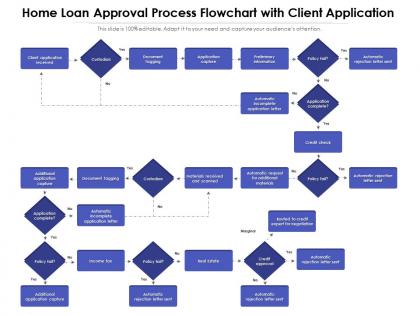
Home loan approval process flowchart with client application




Try Before you Buy Download Free Sample Product
 Impress Your
 Audience
 100%
100% Editable
 Save Hours
 of Time


Our Home Loan Approval Process Flowchart With Client Application are topically designed to provide an attractive backdrop to any subject. Use them to look like a presentation pro.
People who downloaded this PowerPoint presentation also viewed the following :
Home loan approval process flowchart with client application with all 2 slides:
Use our Home Loan Approval Process Flowchart With Client Application to effectively help you save your valuable time. They are readymade to fit into any presentation structure.

FAQs for Home loan approval process flowchart
So first you'll get pre-approved - they check your credit and income stuff. Then comes the full application with all your documents. Property appraisal happens next, plus underwriting where they basically scrutinize your entire life lol. After that, final approval and closing. Usually takes about 30-45 days if you're quick with paperwork. Honestly, the most annoying part is they'll keep asking for the same bank statements and pay stubs like three different times. Get everything organized from the start - tax returns, pay stubs, all of it. Trust me, it'll save you so much hassle later.
Your credit score is basically the first thing they look at - think of it as the gatekeeper. If you're sitting at 740+, you'll breeze through with better rates. Between 620-739? Expect more paperwork and higher interest. Below 620 gets messy - manual reviews or straight rejections at most places. Here's the thing though: better credit lets you get away with higher debt-to-income ratios too. Some lenders are way stricter than others, which is honestly annoying. Pull your score now and fix any mistakes before you apply - trust me on this one.
Ugh, home loan paperwork is honestly the worst part of buying a house. You'll need pay stubs, last two years of tax returns, bank statements, and anything showing your debts. Your employer has to verify you actually work there too. Once you find a place, they want the purchase contract and property info. Self-employed? Good luck - you'll need like triple the documents. I'd start gathering everything now and throw it in a folder. Trust me, you don't want to be scrambling when your loan officer calls asking for updates on stuff you can't find.
So lenders basically want to see three things - your income stays steady, your debt isn't crazy high compared to what you make, and you don't have a trash credit score. They'll ask for recent pay stubs and employment verification, then calculate how much of your monthly pay goes to existing debts. Credit history is honestly the biggest factor since it shows if you're reliable with money. Having some savings helps too because they want proof you won't be completely screwed if something goes wrong. Just get all your financial paperwork ready ahead of time - trust me, they'll want everything anyway and it's such a pain scrambling for documents later.
So basically the lender orders an appraisal to make sure the house is actually worth what you're paying. Like if you're buying for $300k, they want to confirm it's not really worth $250k - otherwise they're screwed if you default. The appraiser measures everything and looks at recent sales nearby. Honestly, it's pretty straightforward but can be stressful. If it comes back low, you'll need to renegotiate or bring extra cash to closing. This whole thing happens after you apply but before they give final approval, so don't panic if it takes a bit.
So pre-approval is when lenders look at your credit, income, debt ratio and basically say "looks good so far." But don't celebrate yet! Final approval comes later after they verify your job again, order the appraisal, and go through your bank statements with a magnifying glass. Your finances could change or - this happens more than you'd think - the house might not appraise for what you're paying. I've seen deals fall through right before closing because of stuff like this. Think of pre-approval as your permission to shop, not a done deal.
So loan rejections usually come down to a few main things. Your credit score is huge - anything below 620 makes it really hard, though some programs will go lower. Income matters too, but it's more about your debt-to-income ratio. Lenders want that under 43% typically. Having too much existing debt will kill your chances fast. They also look for steady employment, like two years minimum. And honestly, the down payment thing trips up more people than you'd think. I'd definitely pull your credit report first and do the math on your DTI before you even bother applying.
Honestly, start with your credit score - pay off some debt and check for any weird errors on your report. Save up whatever you can for a down payment (20% is ideal but don't stress if you can only do 10%). During the whole process, don't buy anything big or open new credit cards - lenders hate that stuff. Oh and gather your paperwork early because they'll want literally everything: tax returns, pay stubs, bank statements, probably your firstborn too lol. Give yourself like 6 months to work on credit before applying.
So your debt-to-income ratio is basically what lenders obsess over when you apply for a mortgage. They take all your monthly debt payments and divide by your gross income. Most want 43% or under, though some go up to 50% if your credit's amazing. Honestly, it's the first thing they'll check because they need to know you won't get buried under payments. Quick math before you apply - add up everything you owe monthly and keep it under 40% of what you make. Better to be conservative than get rejected, you know?
Yeah so rates can totally mess with your timeline. Rising rates? Lenders actually move faster because they want to close deals before rates jump again. Everyone's in scramble mode. But falling rates are the worst - applications flood in and everything slows to a crawl. Your rate gets locked for like 30-60 days once you're in underwriting though. Honestly, the delays are more about how swamped they get than your actual rate. Don't overthink the timing thing - just apply when you're ready to buy.
So you're looking at about 30-45 days total, maybe longer if things get weird. Pre-approval is super quick - like 1-3 days once you get your stuff together. Underwriting is where they really slow down though, that's gonna be your 2-3 weeks of waiting while they basically investigate your entire financial life. The appraisal happens around the same time, takes about a week. Then final approval and all that closing paperwork is another few days. Oh, and if your lender is busy or your documents are all over the place, just add more time. Seriously, answer their requests fast or you'll be waiting forever.
Honestly, the flowchart is a lifesaver because you can actually see where you are in the process instead of just wondering what's happening. No more guessing what documents they'll want next or when things might get stuck. I always tell people to print it out - sounds old school but whatever works, right? You can check off each step and spot those decision points where applications usually hit snags. Way easier to prep for stuff when you know it's coming. Think of it like having directions instead of just driving around hoping you'll find the right place. Takes so much stress out of the whole thing.
So this flowchart is actually pretty clutch - it shows you all the spots where you might get rejected. Credit scores, debt ratios, appraisals, the whole thing. I had no idea there were this many checkpoints honestly. What's wild is it's not just about having money for the down payment. They dig into everything about your finances. But that's good because you can actually prepare for each step instead of going in blind. I'd definitely use it to make a checklist and get your stuff sorted before applying. Way better than just hoping for the best.
So state regs are basically extra hoops you gotta jump through - like mandatory pit stops that change depending where you are. California's nuts about everything, other states not so much. Different licensing rules, disclosure deadlines, sometimes cooling-off periods that'll add days or weeks to your timeline. They also control what paperwork you need and when borrowers get certain info. Honestly learned this the hard way on my first deal. Point is, check your state's requirements right away so you're not panicking later when everything's due at once.
Dude, loan approvals are totally different now. Banks can approve you in minutes instead of weeks thanks to all this automated stuff. They're analyzing your credit and income instantly without anyone actually looking at it. Pretty wild, right? Some places even check your rent payments or utility bills if your credit history is kinda thin. Everything's digital now too - document uploads, e-signatures, the works. When you apply, just make sure you've got all your financial docs saved digitally and ready to go. The whole process moves crazy fast these days.
-
Great product with highly impressive and engaging designs.
-
Awesome presentation, really professional and easy to edit.