Credit approval process powerpoint guide

Rating:
100%
Credit approval process powerpoint guide
Slide 1 of 5
Favourites Favourites

Try Before you Buy Download Free Sample Product

Audience Impress Your
Audience
Editable 100%
Editable
Time Save Hours
of Time
The Biggest Sale is ending soon in
0
0
:
0
0
:
0
0
Rating:
100%
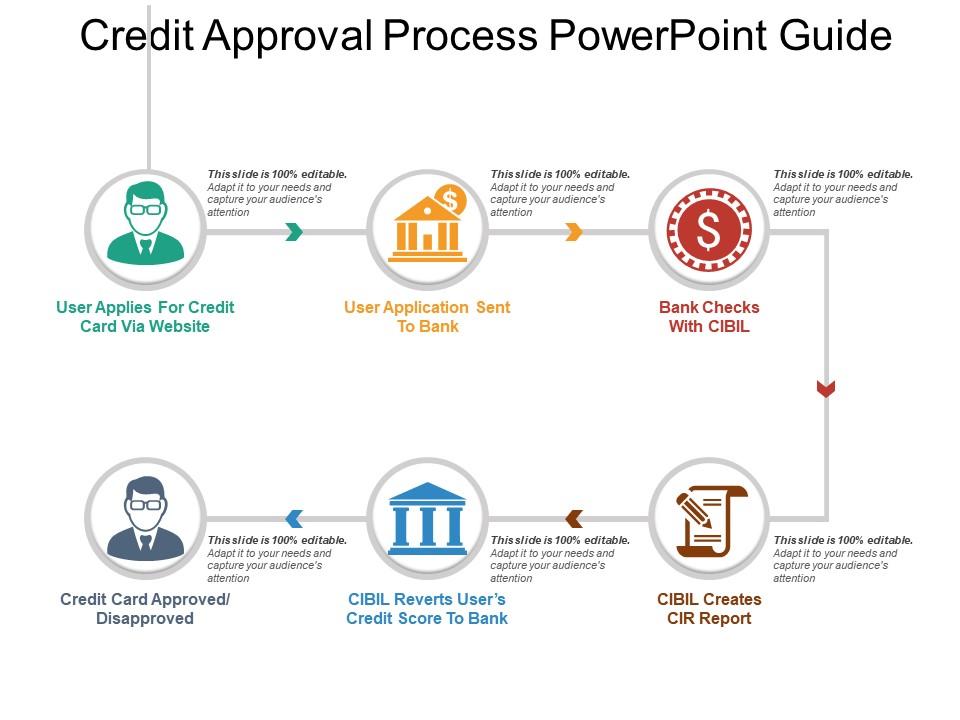
Introducing credit approval process PowerPoint image. Acclimatized PowerPoint template for the managers and many other professionals from diverse fields. Ready to use PowerPoint templates which saves time. Tremendous resolution PPT templates. Re workable Presentation designs, verse, figures etc. Proficient with Google Slides and runs evenly with all other applications. Swift and smooth downloading process. Enough space availability to add titles or subtitles adequately. Also provides an option to add company emblems also.

FAQs for Credit approval

Honestly, they care most about your credit score - that's like their crystal ball for whether you'll pay them back. Income stability is huge too since they want proof you can actually make the payments. Your debt-to-income ratio matters because they don't want your total monthly debt eating up your whole paycheck (makes sense, right?). Employment history shows you're not job-hopping constantly. Oh, and definitely check your credit report beforehand! I found a random error on mine once that would've tanked my rate. Better to catch that stuff early than be surprised later.

Your credit score is basically everything when you apply for anything. Lenders pull it right away and boom - you're either in the good pile or the "we need to think about this" pile. Honestly, most places are pretty ruthless about it. Get a 700+ and you'll breeze through with decent rates. Lower than that? Expect them to ask for more paperwork or just say no. The score also decides your interest rate and credit limit. I always tell people to check theirs first so there aren't any nasty surprises when you apply.

So basically lenders want proof you can pay them back - shocker, right? They'll check your income covers monthly bills plus some extra. Job stability matters too since they don't want someone who switches jobs constantly (though honestly can't blame people these days). Your debt-to-income ratio is super important. Get your recent pay stubs and employment letters ready before applying. Missing paperwork just drags everything out forever. Oh and consistent work history shows you're reliable, which they love.

So basically they take all your monthly debt payments and divide by your gross income - like if you make $5k and owe $1,500, that's 30% DTI. They'll check your pay stubs, tax returns, and credit report to get these numbers. The credit report thing can bite you if there's some random old account you forgot about (happened to my cousin). Most want you under 36-43% depending on what you're applying for. Honestly, if you're cutting it close, pay down a card or two first - makes a huge difference in approval odds.

So you'll need pay stubs or tax returns for income proof, plus your ID and recent bank statements. Employment verification is usually required too - some lenders are weirdly obsessed with this step. Credit reports they handle themselves, which is nice. Assets, debt info, or rental history might come up depending on the loan type. Honestly, just grab everything upfront because scrambling around later when they're like "oh we also need this" is the worst. Way easier to be overprepared than dealing with delays.

So automated approval is basically algorithms making split-second decisions on credit apps - we're talking milliseconds instead of hours or whatever. The system grabs your credit report, income stuff, all that data and just spits out yes or no. No humans involved. Manual review means actual underwriters look at each application, which honestly takes forever but they can spot weird situations that computers miss. Like if someone has inconsistent income or some random circumstances that don't fit the normal boxes. Most companies do both now - auto-approve the obvious ones and kick the tricky cases to real people.

So it really depends on what you're trying to get and where you apply. Banks are super picky - they want like 720+ credit scores, low debt, steady job history, the whole nine yards. Credit unions are way more chill though since they actually care about knowing you as a person. Online lenders will approve lower scores but you'll pay through the nose for it. Oh and different loans have totally different rules - mortgages require a million documents while personal loans mostly just care about your score and income. Honestly just shop around because lenders are weird about what they'll approve.

Your credit report is literally everything when applying for loans. Lenders check your payment history, current debt, how long you've had credit - all that stuff. Any major issues like bankruptcies? Yeah, those show up too. Better credit = better rates and higher approval chances. It's annoying but true. Before you apply anywhere, grab your free annual report and look for mistakes. I found a random credit card on mine once that wasn't even mine! Fixing errors upfront can save you serious money on interest rates later.

Lenders totally change their game based on how the economy's doing. Strong economy? They're handing out loans left and right with decent rates. But the second things look sketchy - unemployment jumps, markets tank - they get super picky about everything. Credit scores need to be higher, they'll nitpick your debt-to-income ratio, and suddenly you need like three extra forms of documentation. It's actually pretty easy to predict once you've seen it happen a few times. My advice? Watch those economic indicators if you're thinking about applying for anything big soon.

So basically, AI and machine learning can crunch through credit data in seconds now instead of taking forever. Lenders are using automated systems that look at stuff like your bank transactions and utility bills - not just the usual credit score thing. Open banking APIs are pretty big too since they let lenders peek at your actual financial data (with your permission obviously). Some companies are even getting weird with behavioral analytics from your phone data, which honestly feels a bit creepy to me. The smart part is simple applications get approved instantly while messy cases still go to humans. If you want faster approvals, just set up basic automation for your most common situations first.

Okay so first thing - pull your credit report and look for errors. Like a quarter of them have mistakes, which is honestly ridiculous. Dispute anything wrong you find. Try to pay down your current debt so you're using less than 30% of your available credit. Don't go crazy applying for a bunch of stuff at once though, that'll tank your score. Maybe see if someone can co-sign with you or save up for a bigger down payment? I'd give it like 2-3 months of cleaning things up before you actually apply anywhere.

So lenders basically run your info through these prediction models based on what similar borrowers did before - did they pay back or not? Age matters since younger people usually have thinner credit files. They'll check your job stability, where you live, income consistency, all that stuff. Can't legally discriminate on race or gender though, fair lending laws prevent that. Honestly the whole thing comes down to whether you look like you can actually pay them back - your credit score, how much debt you're already carrying compared to income, job history. It's pretty straightforward once you think about it that way.

Yeah, those negative hits will mess with your approval odds for sure. Lenders get spooked by late payments, defaults, bankruptcies - they figure you're risky. How much it hurts depends on timing and severity though. Like a 30-day late from two years back? Annoying but not devastating. Fresh bankruptcy? That's gonna sting for a while. Here's the thing - time actually helps heal this stuff. Keep making payments on time going forward and don't max out your cards. I know it sounds basic, but that combo really does work to rebuild things gradually.

Honestly, knowing how credit approval works will save you so much headache. Lenders mainly care about your credit score, income, debt-to-income ratio, and job history. If you understand this stuff upfront, you won't waste time applying for cards you'll never get approved for. Like, don't go after that fancy rewards card if your score is 650 - trust me on this one. Better to check your credit report first, fix any errors, maybe pay down some balances. Then apply for things that actually match where you're at financially, not where you wish you were.

Dude, the lending world is getting crazy right now. AI's making decisions way faster than humans ever could, and they're not just looking at credit scores anymore. Companies are checking your social media, how you pay utilities, even how you use your phone - which honestly feels a bit invasive but whatever. Most places do instant approvals now. Open banking means they can see your actual money flow instead of guessing from old data. Oh, and you're gonna be using your fingerprint instead of signing stuff soon. Seriously though, if you're thinking about getting into this space, start playing around with these tools now. Two years from now? You'll be toast if you haven't adapted.

Ratings and Reviews

100% of 100
Review Form
Write a review
Most Relevant Reviews
  1. 100%

    by Noah Hernandez

    Amazing product with appealing content and design.
  2. 100%

    by Edward Nunez

    Awesome presentation, really professional and easy to edit.

2 Item(s)

per page: