


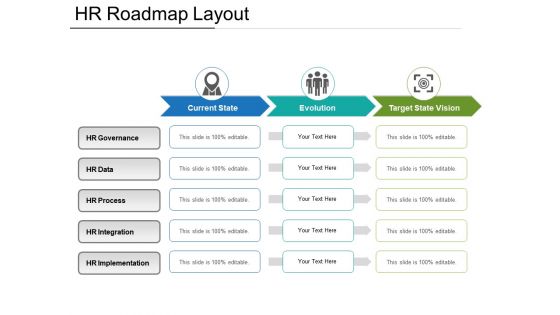
Exemple de présentation de la feuille de route RH Ppt





Try Before you Buy Download Free Sample Product
 Impress Your
 Audience
 100%
100% Editable
 Save Hours
 of Time


Utilisez notre image PPT développée par des experts sur la mise en page PPT de la feuille de route RH. Il fonctionnera comme un outil informatif qui est utilisé par les responsables RH pour gérer leurs fonctions. Vous pouvez utiliser ce diagramme PowerPoint de chronologie des ressources humaines pour créer les plans et les graphiques d'embauche de nouveaux talents pour le service en particulier. Il permet aux RH d'être bien informés à l'avance sur les besoins en main-d'œuvre de n'importe quel département de l'entreprise. Ainsi, pour répondre aux besoins en main-d'œuvre de l'organisation, l'équipe des RH utilise ce modèle de présentation des plans stratégiques des RH. Expliquez comment votre opération RH contribue à améliorer les performances de vos employés en augmentant le taux de rétention des employés dans l'entreprise ? Ainsi, cette mise en page PPT de feuille de route des ressources humaines permet aux gestionnaires de développer des stratégies de ressources humaines compétentes pour maintenir ou rationaliser leurs fonctions. Cela aide également la direction à prendre le contrôle de la main-d'œuvre, car la feuille de route permet à la direction de connaître les rôles et les responsabilités définis de chaque employé de l'organisation. Ainsi, il vous suffit de télécharger et d'utiliser ce format PowerPoint de plan de ressources humaines pour conceptualiser vos réflexions dans un rapport professionnel. Capitalisez sur vos idées avec notre exemple de présentation de la feuille de route RH Ppt. Ils paieront de bons dividendes.
People who downloaded this PowerPoint presentation also viewed the following :
Hr Roadmap Layout Sample Presentation Ppt avec les 5 diapositives :
Notre Ppt de présentation de l'exemple de mise en page de la feuille de route des ressources humaines croit en la création d'actifs. Ils ajoutent systématiquement du capital.

FAQs for Hr roadmap layout
Start with where you're at now versus where you want to be in 12-18 months, then work backwards. You'll need clear objectives that actually connect to business goals - not just fluffy HR stuff. Map out your current processes first. Then figure out specific initiatives with realistic timelines for talent acquisition, development, retention, plus any tech upgrades. Tracking metrics is honestly the part most people skip, but don't. It's what proves your roadmap actually works. Oh, and get stakeholder buy-in early or you'll be fighting uphill battles later. Keep it visual if you can - way easier to sell.
Honestly, your HR roadmap should just mirror what the business is actually trying to do. Expanding into new markets? You'll need hiring plans for those regions plus cultural training. Revenue growth of 30%? Better figure out workforce planning and performance stuff to back that up. The trick is actually sitting down with business leaders - I know, revolutionary concept - and figuring out what people gaps you have. Too many HR teams just do their own thing in isolation. Grab your company's strategic plan (if it exists lol) and work backwards from there to see what human capital you're missing.
Honestly, data analytics is a game-changer for HR decisions. Instead of just winging it, you get actual proof of what's happening with turnover trends, skill gaps, employee engagement - the whole deal. Makes it way easier to figure out which initiatives to prioritize. I learned this the hard way when we launched a program nobody actually needed! Short sentences work here. Pick 3-4 metrics that match your business goals, then let those numbers guide where you put your energy. Way better than guessing and hoping you're right.
Honestly, you need to watch both the numbers and the vibe. Track your turnover, how long hiring takes, engagement scores - that spreadsheet stuff is annoying but crucial. But also listen to what people are actually saying. Regular surveys help, but so does just paying attention during meetings. Are you hitting those timeline goals you set? Because let's be real, most roadmaps fall behind schedule. Stay interviews are gold for catching issues early. I'd do quarterly reviews to see what's working and what isn't. Oh, and don't forget diversity metrics if that's part of your plan.
Honestly, you're gonna hit three big walls with this. Leadership will drag their feet because they can't see immediate results - classic move, right? Then your team will push back hard since they're used to doing things the old way. Oh, and budget constraints will definitely mess with your timeline. I'd say start with some easy wins first. Show people it actually works, then go after the bigger stuff. Trust me, momentum is everything here - once you get that rolling, the rest gets way easier.
Honestly? I'd say check it every quarter, then do a big overhaul once a year. The quarterly thing is clutch because stuff always comes out of left field - you know how it is. Keeps you from getting totally off track when priorities shift. Your annual review is where you dig deep and figure out what actually moved the needle. Companies going through crazy growth sometimes do it twice a year instead. Oh, and definitely put those dates in your calendar right now or you'll forget. Trust me on that one - I've been there.
Dude, start with whatever's driving you crazy right now - like if you're drowning in onboarding paperwork, tackle that first. The AI analytics stuff is actually pretty incredible for predicting who might quit and spotting skill gaps before they bite you. Way better than those nightmare spreadsheets we all pretend work. Employee feedback platforms give you real-time pulse surveys too. Performance review automation frees up so much headcount for strategic thinking (finally!). Oh and the data viz makes leadership presentations look super clean. Pick one pain point and pilot something small - you don't need to overhaul everything at once.
Honestly, feedback is everything for your HR roadmap. People will straight-up tell you what's broken - like if your performance reviews suck, fix those before rolling out some fancy wellness program nobody asked for. Exit interviews are gold mines for this stuff. So are those quick pulse surveys and random hallway conversations. I've seen too many companies waste time on initiatives leadership loves while employees are screaming about basic problems. Set up regular check-ins so you're building what people actually want, not what sounds good in meetings. It's way better than playing the guessing game.
Don't make D&I some side project - bake it right into everything you're already doing. Your hiring, reviews, promotions, pay audits. I've seen too many places treat it like an add-on and wonder why nothing changes. Set actual quarterly targets for representation and pay gaps, then track them like you would any other business metric. Here's the thing though - it can't just be HR's job. Make your managers accountable by tying these numbers to their performance reviews. Oh, and budget decisions too. Money talks, right? That's honestly what gets leadership to pay attention.
First thing - figure out who actually matters in this decision. Leadership, department heads, employees, union folks if you've got them. Run workshops where people can genuinely contribute instead of just nodding along to slides (seriously, we've all suffered through enough boring presentations). Ask about real problems they're facing, not just blue-sky wishlist stuff. Check in regularly so nobody feels blindsided later with "wait, what happened to my input?" Document everything and keep sharing updates. People hate feeling left in the dark, and transparency is honestly your best friend here for getting buy-in.
Oh man, compliance stuff will absolutely wreck your HR plans if you're not careful. New pay equity laws or data privacy rules pop up and suddenly you're dropping everything to fix your comp structure. That performance management rollout you were excited about? Yeah, it's getting pushed back. The deadlines are always brutal too - like why do they give us two weeks to overhaul everything? Anyway, I'd definitely pad your timeline with extra buffer weeks and maybe set up some Google alerts for new regs. Trust me, it beats scrambling at the last minute when some new law drops.
Miro and Mural are solid choices if you want your whole team collaborating - they're super drag-and-drop friendly. Roadmunk or ProductPlan work well too (they're technically for product roadmaps but honestly, who cares). PowerPoint works fine if you just need something basic. Here's what I'd actually do though: start with whatever tool your team's already comfortable with. Getting people to actually use it matters way more than having the "perfect" platform. Just make sure you can update it easily since these things change all the time. Oh, and sharing needs to be painless or it'll just sit there collecting digital dust.
So basically an HR roadmap is your master plan for hiring and keeping decent employees. Map out recruitment tactics, spot skill gaps early, plan retention stuff that fits your budget. When your boss randomly asks "what's our hiring strategy?" you won't look like a deer in headlights. It coordinates everything - employer branding, career development, all that jazz - so things don't slip through the cracks. Honestly, I'd start by figuring out where your talent situation stands right now, then build out your next 6-12 months from there. Game changer for staying organized.
Okay so first things first - don't dump this on your current team without giving them actual time for it. That's like asking someone to juggle while riding a unicycle, obviously gonna fail. Get dedicated people assigned and budget for the tools you'll need, training, maybe some consultants if things get weird. Block out time every month (or whatever) to check how it's going and pivot if needed. Oh and this is key - make sure someone with actual power is backing you up. Because when things get messy, and they will, you need someone who can clear the path.
Check out Google's "Project Oxygen" - they spent 3 years mapping what actually makes managers effective. IBM did something crazy too, repositioning over 100,000 employees based on skills. But honestly? Microsoft's culture makeover under Satella is probably the gold standard everyone talks about. The thing these companies got right was starting with concrete metrics and realistic timelines instead of trying to change everything at once. Leadership bought in first, then they rolled changes through departments step by step. Break big transformations into smaller wins that build on each other - that's your secret sauce.
-
Great designs, really helpful.
-
Use of different colors is good. It's simple and attractive.