


Steps For Creating An Employee Work Experience Journey Roadmap




Try Before you Buy Download Free Sample Product
 Impress Your
 Audience
 100%
100% Editable
 Save Hours
 of Time


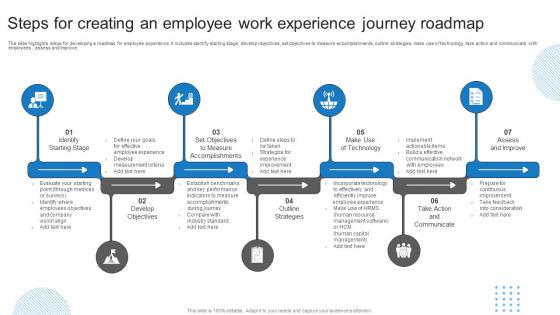
The slide highlights steps for developing a roadmap for employee experience. It includes identify starting stage, develop objectives, set objectives to measure accomplishments, outline strategies, make use of technology, take action and communicate with employees , assess and improve.
People who downloaded this PowerPoint presentation also viewed the following :
Steps For Creating An Employee Work Experience Journey Roadmap with all 6 slides:
Use our Steps For Creating An Employee Work Experience Journey Roadmap to effectively help you save your valuable time. They are readymade to fit into any presentation structure.
-
Steps For Creating An Employee Work Experience Journey Roadmap
-

Steps For Creating An Employee Work Experience Journey Roadmap
-

Steps For Creating An Employee Work Experience Journey Roadmap
-

Steps For Creating An Employee Work Experience Journey Roadmap
-

Steps For Creating An Employee Work Experience Journey Roadmap
-

Steps For Creating An Employee Work Experience Journey Roadmap
FAQs for Steps For Creating An Employee Work
So you need employee journey mapping first - map out literally everything from hiring to when people leave. Most companies totally miss like half the touchpoints, it's wild. Focus on the moments that actually matter: onboarding, reviews, career convos. Set real metrics for each stage and make sure someone owns it. Don't forget regular feedback loops! Oh and ask your people what they care about - sounds obvious but you'd be surprised. Timeline milestones and budget stuff goes in there too.
Honestly, start with what you actually want to achieve business-wise, then work backwards to figure out which employee stuff will get you there. Customer satisfaction tanking? Focus on engagement and training your people better. Revenue goals? Go hard on retention and productivity initiatives. The real challenge is getting leadership to care - show them clear ROI numbers for every investment or they'll just see it as fluffy HR spending. Don't randomly throw ping pong tables at people. Tie each milestone to actual results and check in quarterly to see if it's working.
Track both the people stuff and business results - that's key. eNPS, retention rates, engagement surveys are your bread and butter metrics. But here's the thing - most teams stop there and ignore the money side. Connect those to productivity, customer satisfaction, revenue per employee. Also worth tracking participation in your programs and how fast new hires get up to speed. Oh, and don't go crazy measuring everything at once. Pick 3-5 metrics max or you'll drown in data.
Honestly, just ask your team what's driving them crazy first - that's where you start. Then find tech that fixes those exact problems. Self-service HR portals are great for basic requests. Mobile apps work well for expense reports and recognition stuff. AI can suggest relevant training, which is actually pretty useful. The best solutions? People don't even think about them because they just... work. Don't get distracted by flashy new platforms that look cool but solve nothing. Focus on automating the boring, repetitive tasks and giving everyone instant access to what they need. Survey first, then build around real pain points.
Oh man, leadership is everything here. Without them, your whole roadmap just dies in endless meetings - I've seen it happen so many times. You need executives who actually show up to listening sessions and don't just talk about caring. When they share real stories, admit they screwed up, and put actual money behind improvements, people notice it's legit. Get them involved from day one and keep checking in. The programs that really work? Those leaders never stop explaining why this stuff matters. Trust me, skip this step and you'll regret it later.
Honestly, bake feedback collection into your roadmap from the start or you'll regret it later. Pulse surveys and exit interviews are your friend for baseline data. Then do regular check-ins - quarterly works, or throw up some anonymous suggestion boxes. Here's the thing though: actually DO something with what people tell you. Nothing kills morale faster than asking for input then ignoring it. Prioritize the biggest pain points first and don't be afraid to shift your timeline. Oh, and always circle back with a "here's what we heard and what we're fixing" update. People appreciate that transparency way more than you'd think.
Honestly, the worst mistake is trying to tackle everything simultaneously - it's chaos. Survey your people first instead of guessing what they actually want. I've watched so many roadmaps completely bomb because executives assumed they understood employee priorities. Quick wins are your friend here, sprinkle them between bigger projects. Also, realistic deadlines or you're screwed - nothing kills team buy-in faster than missing promised dates. Oh, and measure stuff that actually matters, not just numbers that look impressive in presentations. Getting employees involved in planning from the start saves you tons of headaches later.
Honestly, start by looking at who's actually making these EX decisions - that alone will show you the problem. Get your employee resource groups involved in the design phase, not just asking for their thoughts after you've already built something. I've watched so many companies do this backwards and then act surprised when nobody cares. Test stuff with different employee groups first - think about various work styles, people at different life stages, accessibility needs, all that. Oh and stop only asking the same people for input every time. Mix it up from day one or you'll keep getting the same tired results.
Honestly, hybrid flexibility is huge right now - people want control over where they work. Mental health support and personalized career paths are the other big ones. Some companies are throwing AI learning tools at everything (which can be overkill tbh), but psychological safety matters way more than fancy tech. Pay transparency is non-negotiable for younger employees, and DEI visibility too. Oh, and quarterly pulse surveys help you catch trends before they become problems. Really though, it comes down to giving people autonomy and actually listening to what they need.
Onboarding is your first real touchpoint with new employees - and honestly, it makes or breaks everything that comes after. You're shaping someone's entire first impression of what working there actually feels like. It's the bridge from "super excited new hire" to someone who can actually contribute to the team. Good onboarding directly impacts engagement and retention because you're setting expectations right from day one. The trick is connecting those first 90 days to your bigger employee experience strategy instead of treating it like some standalone thing. Map out how it all flows together - trust me, it matters way more than most companies realize.
Get regular feedback through pulse surveys and stay interviews - but make sure people actually feel safe to talk. Nothing's worse than suggestions vanishing into thin air, so always circle back on what you heard. Mix up your improvement teams with folks from different levels, not just the usual suspects in management. When changes happen because of employee ideas, celebrate that stuff publicly! Be honest about what you can't do and why (people appreciate the real talk). Oh, and this one's key - tie improvement goals directly to how you measure managers. Otherwise it just becomes another forgotten initiative that collects dust.
So basically you map out wellness stuff at every step of someone's job - like during onboarding, performance reviews, those crazy deadline weeks. Most places just throw some meditation app at people and think they're done (which is pretty useless tbh). Instead, you can actually plan this out. Put mental health resources where they're needed most. Train managers to spot burnout. Do regular check-ins that aren't just "how's work going?" Figure out where your employees are most stressed and build solutions around those specific moments. Way better than random wellness perks nobody uses.
Honestly, remote work flips your whole employee experience upside down. Those random coffee chats and spontaneous brainstorms? Gone. Now everything has to be planned out - which sounds awful but actually works if you do it right. You're basically redesigning how people connect with your company and each other. Virtual team building becomes huge, and yeah, the tech stuff matters for collaboration. But here's the thing - people get lonely working from home way more than you'd expect. I'd start by looking at your current employee journey, then figure out what needs a remote makeover. Just don't pick tools that make things more complicated than they need to be.
Honestly, you need input from everyone because each department sees totally different problems. IT knows which systems are driving people crazy day-to-day. Managers spot the workflow issues that tank morale. HR obviously handles the policy stuff, but they miss a lot of the real frustrations. When you include everyone upfront, they actually care about making it work instead of rolling their eyes at another "HR thing." I've seen roadmaps sit on shelves because only one team built them. Get people in a room together early - that's when the good stuff happens and you actually move employee satisfaction numbers.
Honestly, training and development is huge for keeping people happy at work. When you invest in upskilling your team, it shows them they actually have a future there - not just a paycheck. Nobody wants to feel stuck with outdated skills while everything changes around them, you know? It builds confidence and gives people clear ways to move up. Plus they're way more likely to stay instead of jumping ship. I'd start by figuring out what skills your team actually wants to learn (might surprise you), then build programs around those gaps.
-
You know what? I'm so glad I opted for this PPT design. It has been a total game-changer for me and my presentations. Thank you!
-
Visually stunning presentation, love the content.