


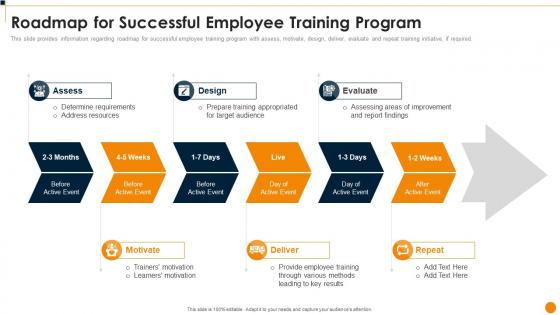
Workforce Training Playbook Roadmap For Successful Employee Training Program




Try Before you Buy Download Free Sample Product
 Impress Your
 Audience
 100%
100% Editable
 Save Hours
 of Time


Our Workforce Training Playbook Roadmap For Successful Employee Training Program are topically designed to provide an attractive backdrop to any subject. Use them to look like a presentation pro.
People who downloaded this PowerPoint presentation also viewed the following :
Workforce Training Playbook Roadmap For Successful Employee Training Program with all 6 slides:
Use our Workforce Training Playbook Roadmap For Successful Employee Training Program to effectively help you save your valuable time. They are readymade to fit into any presentation structure.





FAQs for Workforce Training Playbook Roadmap For Successful
Honestly, start with your biggest skill gaps first - that's where you'll see the most impact. You need clear learning objectives and content that actually matches what people do day-to-day. Mix up your delivery too - hands-on practice, online stuff, mentoring, whatever works. Leadership buy-in is huge (learned that the hard way). Make sure you're measuring results though - so many programs just... exist without tracking if anyone actually got better. Regular feedback helps you tweak things as you go. The real trick is connecting training to actual work scenarios instead of boring theoretical stuff. That's what makes people care.
Honestly, tech can completely change how you train people. Start with personalized learning that adapts to each person's speed - way better than one-size-fits-all stuff. VR training is actually insane for dangerous equipment (no one gets hurt learning!). Mobile platforms let people learn whenever, and gamification makes boring topics way more engaging. Oh, and AI assessments are pretty smart at figuring out knowledge gaps. Analytics help you see who's struggling in real-time. Don't go crazy buying every new tool though - pick what actually fixes your problems first, then expand.
Honestly, I'd focus on just a few things that actually matter. Knowledge retention is obvious - do pre/post tests and check again in like 3 months. Are people actually doing stuff differently at work? That's behavior change and it's huge. Business impact is where you see real results - better productivity, fewer mistakes, happier customers. ROI calculations are kind of a pain but worth trying. My advice? Don't go crazy measuring everything right away. Pick one or two metrics that match what you're trying to achieve. Mix some quick wins like completion rates with longer-term stuff like performance improvements. Way easier than drowning in data you won't use anyway.
Honestly, just give people options - that's the real trick here. Some folks love face-to-face training while others want everything digital. Yeah, there's this whole thing about Boomers preferring printed stuff and Gen Z wanting bite-sized online modules, but I've totally seen 60-year-olds who are obsessed with learning apps! Mix it up with live sessions, self-paced courses, mentoring, workshops. Don't assume what people want based on their age though. Survey your team first - you'll probably be surprised by what they actually prefer. Flexibility wins every time.
Think of feedback like your training program's reality check. Learners will tell you what actually made sense and what was confusing as hell. Managers can clue you in on whether people are using the stuff they learned (though honestly, most managers forget to even check). Performance data shows if your training moved the needle at all. I'd grab feedback during the session, right after, and then again in like 3-6 months when the honeymoon phase wears off. Use all that info to fix whatever's broken - maybe it's the content, maybe your delivery sucks, or the timing's all wrong. The whole point is making sure training doesn't just disappear into the void.
Honestly, the key is making learning feel normal instead of like another task on their endless to-do list. Give people actual work time for it - even 30 minutes weekly makes a difference. Set up casual stuff like lunch sessions where they can learn from each other. Coffee conversations teach more than most formal training anyway! Celebrate when someone finishes a course or tries new skills. Oh, and share what you're learning too - nobody wants to follow someone who acts like they know everything already.
Honestly, soft skills training is totally worth it. Your team gets way better at communicating and working together, which actually boosts productivity. Technical skills might get someone in the door, but soft skills? That's what gets them promoted. Plus your people handle change better and deal with difficult customers like pros. The numbers don't lie either - less turnover saves you serious money. I'd probably start by figuring out where your biggest gaps are first. Maybe it's conflict resolution or just basic teamwork stuff. Then build training around those specific problems instead of doing some generic program that covers everything.
Online training is honestly a lifesaver because people can jump in whenever they want - no more scrambling to find meeting rooms or dealing with everyone's crazy schedules. The flexibility is huge since some folks absorb stuff better through videos while others need to read everything twice. People move at their own speed instead of getting dragged along or left behind in traditional classes. Oh, and you can actually see who's completing what, which is pretty helpful for managers. The best part? If someone forgets something from three months ago, they can just log back in and review it. Way better than trying to remember what happened in some random Tuesday meeting.
Honestly, just talk to your people first - survey them about where they feel shaky, and have managers flag performance gaps they're noticing. Then do a proper skills gap analysis comparing what your team knows now vs. what they actually need. Your business goals matter too though - like if you're implementing new software or whatever, that's obviously going to create training needs. Oh, and check those exit interviews! People leaving usually spill the tea about skills they wish they'd gotten better at. Mix the hard data with real conversations and you'll figure it out.
Start sending stuff before their first day - welcome package, schedule, maybe some branded gear to hype them up. Day one should cover the basics: desk setup, meeting their immediate team, essential systems. But honestly, don't throw everything at them right away because that's just cruel. Spread out the heavy technical stuff over a few weeks. Give them a buddy for random questions too - saves everyone time. Oh, and check in regularly those first 90 days. You'll catch problems early and can pivot if something isn't working.
Dude, you've gotta try using collaboration tools in your training sessions. Breakout rooms are perfect for getting people talking in smaller groups instead of that awkward silence thing. Real-time polls help you actually see if anyone's getting it, and shared whiteboards make brainstorming so much better. The quiet people finally start participating when they can type in chat or work on docs together - I swear it makes such a difference. People remember way more when they're doing stuff, not just sitting there zoning out. Just don't go crazy with too many tools at once or you'll confuse everyone.
Honestly, budget issues are probably gonna hit you first - that and people complaining they don't have time for training. Everyone thinks it'll mess up their regular work flow, which I totally get. Survey your team first to see what they actually need help with. Start super small with short modules instead of those marathon training days (ugh). Get the higher-ups on board early so they stop treating training like it's optional. Show them real numbers on how it's helping. Oh, and mix online stuff with in-person sessions - some people just learn better face-to-face. Make sure whatever you're teaching connects to what they do daily or they'll tune out completely.
So first figure out what actually matters to your business - like are you trying to boost customer satisfaction or hit sales targets? Then build training around those specific goals. If it's customer service, teach communication skills and product knowledge instead of some boring generic leadership stuff. I've watched so many places just dump random training on employees and then act shocked when nothing improves lol. You've got to connect the dots between what skills people need and what your company wants to achieve. Track whether it's working too - did those metrics actually move after training?
Dude, training your people is honestly a game-changer for keeping them around. When employees get development opportunities, they're way less likely to jump ship because they feel valued and can see actual growth potential. Nobody wants to feel stuck in their role, you know? It builds their confidence too - they get better at their job and feel more satisfied overall. My old manager used to do these random lunch-and-learns that were actually pretty helpful. The trick is keeping it ongoing though. One-time training sessions are basically useless - you need consistent, relevant stuff that actually matters to what they're doing day-to-day.
Honestly, community colleges are your best bet here - they're way more flexible than you'd expect. Reach out to their continuing education folks first. They love industry partnerships and can actually move fast on custom programs. What you want is curriculum built around your actual skill gaps, not some generic course catalog stuff. Some companies I know do apprenticeships or bring professors on-site for workshops. Way cheaper than those fancy private training companies too. The trick is finding schools that'll work with you to design something real, not just slap your logo on existing classes. Most are pretty eager to collaborate once you start the conversation.
-
Definitely recommend SlideTeam to all who need help with PowerPoint presentations. Their design team can create anything you need.
-
I'm happy to discover your PowerPoint presentations and templates. They met my expectations precisely. Very innovative!