

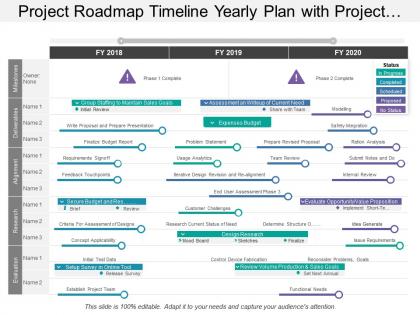
Project roadmap timeline yearly plan with project and functional team showing three fiscal years




Try Before you Buy Download Free Sample Product
 Impress Your
 Audience
 100%
100% Editable
 Save Hours
 of Time


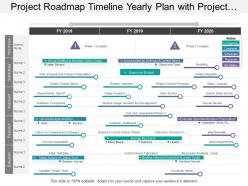
Proceed to maximum heights with our, project roadmap timeline yearly plan with the project and functional team showing three fiscal years. Taking the right decision for the business growth is important it decides the outcome of it. Project roadmap timeline PPT deck allows you to precisely show your project planning over the years. This PPT template s primarily divided into two phases, which further elaborate on group staffing to maintain sales goals, assessment on the write up on current needs, evaluate opportunity value proposition, review value production, and sales growth, set up survey in an online tool, design research, review volume production, and sales goals etc. Our designs and graphics have enough room for text and are arranged properly, making it easier for you to modify the design. So be done with your browsing for the top PowerPoint Template describing your business and finance concerns. Folks begin to accept any changes with our Project Roadmap Timeline Yearly Plan With Project And Functional Team Showing Three Fiscal Years. They help fresh ideas gain ground.
People who downloaded this PowerPoint presentation also viewed the following :
Project roadmap timeline yearly plan with project and functional team showing three fiscal years with all 5 slides:
Give yourself the exact hint you desire with our Project Roadmap Timeline Yearly Plan With Project And Functional Team Showing Three Fiscal Years. You are bound to find the best cues.
FAQs for Project roadmap timeline yearly plan with project and functional team showing
So definitely hit the big stuff first - project kickoff, when deliverables are due, major decision points, stakeholder check-ins, and launch day. Buffer time is non-negotiable because literally nothing ever goes to plan (learned that the hard way). Mark any dependencies or outside stuff that could mess with your dates too. Don't go crazy with every tiny detail though - that just makes people's eyes glaze over. These core milestones will do the trick. You can always drill down into smaller ones later if your team actually wants that level of detail, but honestly most don't.
Get everyone together first - doesn't matter if it's in person or on Zoom. Let them dump all their priorities and constraints on you upfront. Way better than building something solo and hoping they'll approve it later. Ask about big milestones, what depends on what, realistic deadlines - the whole mess. Then set up regular check-ins so they can actually review your drafts as you go. Honestly, people get way less cranky when they feel like they helped create the timeline instead of just receiving it. Oh, and send drafts a few days early so they're not seeing it for the first time in the meeting.
Honestly, I'd go with Gantt chart tools first - Monday.com, Asana, or Microsoft Project if you need all the dependencies mapped out. Simpler visual stuff? Roadmunk and ProductPlan are solid. Though I've literally seen people create killer roadmaps in basic tools like Miro or Figma, which is kinda wild. Check if your current project management software already has roadmap views before you pile on another tool. That gets messy fast. The real trick is finding something your stakeholders will actually open and that won't make you want to scream when you're updating it every week.
Look at dependencies first - what's blocking other stuff? Those can't wait. Business impact comes next - what actually matters for your goals? I used to overthink this part way too much honestly. Check your team's capacity and any hard deadlines too. Here's what works: score each thing 1-5 on those factors, then multiply the numbers. Highest scores win. Sounds super basic but it actually cuts through all the noise pretty well. Just don't get fancy with it.
Honestly, I'd go with 6-18 months for most roadmaps. Three to six months works if it's a shorter project. Bigger stuff might need up to 2 years, but that's pushing it. You want enough detail to actually do something with it, but not so much that you're basically fortune telling - because we both know how often priorities change anyway. Breaking things into quarters helps a ton since you can pivot when needed. Start with whatever timeline doesn't make your team's eyes glaze over, then expand once you've got the hang of it. Oh, and definitely review it regularly or it'll just collect digital dust.
Honestly, just bake in extra time from the start - like 20-30% buffer on big stuff. Don't plan out the whole year because everything's gonna change anyway (learned this the hard way). Quarterly planning works way better. Keep things high-level instead of mapping out every single week. Set up priority tiers so you know what can get bumped when shit hits the fan. Tell everyone upfront that dates will move - saves you so many headaches later. Monthly roadmap check-ins are clutch for adjusting based on what you've actually learned.
Honestly, I'd focus on schedule variance first - are you hitting your planned dates or not? Track percent complete for each milestone too. If you're using story points, burn-down rate is clutch. Critical path progress is huge though - that's where delays will absolutely wreck you. Resource utilization matters, plus keep an eye on scope creep since both kill timelines fast. Don't chase vanity metrics that look pretty but tell you nothing useful. Stick to stuff that actually predicts if you'll make your deadlines. Weekly dashboard works great - just review during standups and you're golden.
Honestly, start by figuring out what business stuff your company actually cares about this quarter - revenue goals, product launches, whatever. Then just work backwards from those deadlines to see when you need to deliver things. Coffee chats with stakeholders are clutch for this, trust me. Way better than guessing what they want and being wrong later. Don't forget to pad your timeline though - dependencies always mess things up. Oh and treat your roadmap like it's flexible. I review mine monthly because priorities change constantly and you'll need to adjust.
Oh man, the worst thing you can do is be way too optimistic with timelines. I learned this the hard way lol. Always add like 20-30% buffer time because something will go wrong. Don't map out every tiny detail months ahead either - it's pointless since you can't predict everything. Dependencies are huge too - other teams, vendor delays, all that stuff will mess you up. Honestly, I think most people treat roadmaps like they're permanent when they should be flexible. Review yours regularly and don't be afraid to change it as you go.
Honestly, visuals are a game-changer for roadmaps. Color-coding different workstreams and throwing in some icons for milestones makes everything way easier to scan. Progress bars are clutch too - people get the status instantly without reading paragraphs of text. I've sat through too many meetings staring at roadmaps that looked like Excel threw up. Nobody's squinting at that mess. Different font sizes help folks spot what's actually critical versus the fluff. Think dashboard, not document - that's the vibe you want. Your team will actually use it instead of bookmarking it and forgetting it exists.
Honestly, risk management is just your sanity check for project timelines. Map out what could blow up early on, then pad your schedule for the stuff that'll actually hurt. I can't tell you how many roadmaps I've watched die because someone thought everything would magically go smooth. Dependencies are usually where things get messy. List your top 5 nightmare scenarios and throw 15-20% extra time at each big milestone. Resource constraints bite you too - people get sick, priorities shift, whatever. Better to look pessimistic upfront than scramble later when reality hits.
Honestly? At least once a month, but it really depends on your situation. Weekly reviews work better if you're in a fast-moving industry or doing agile stuff. Don't be like those teams that cling to ancient roadmaps forever - I've watched that trainwreck too many times! Be proactive about it. Set up recurring reminders and loop in your stakeholders. Major changes happen between reviews? Update right away instead of waiting. Oh, and definitely don't wait until you're already behind schedule to make adjustments - that's just asking for trouble.
Honestly, go with a visual timeline that has layers - like a Gantt chart but way less boring. Put the big milestones up top for executives who just want the highlights. Then your project managers can dig into all the dependencies below. Color-coding by workstream is clutch here (and way easier on the eyes). Make sure you've got key dates, major deliverables, and those decision points that mess with everyone's schedules. The whole thing needs to work for both audiences - quick scan for leadership, actual detail for the people doing the work. Oh, and export it both ways so people can use whatever format they want.
Honestly, I think about roadmaps in two chunks. First figure out your big 1-2 year vision - like where do you actually want to end up? Then work backwards into 3-6 month sprints that get you there. The key thing is making sure your quick wins aren't just random busy work. Don't ship stuff just because it's easy if it doesn't move the needle on your bigger goals. I've totally done that before and it's such a waste. Map out quarterly milestones that actually feed into the yearly stuff. Short wins keep everyone motivated, but they gotta connect to the long-term direction or you're just spinning wheels.
Gantt charts are great if your team likes visual stuff - you can spot dependencies right away. I'd also throw up a shared calendar since everyone checks those anyway. For quick changes, Slack beats email every time (nobody reads those project emails, let's be honest). Regular standups help too, but don't overdo it. Roadmap dashboards work if you've got the tools for it. The real trick is picking whatever your team actually uses instead of trying to force some fancy system. Oh, and consistency matters more than the tool itself - keep updating whatever you choose.
-
Very well designed and informative templates.
-
Great experience, I would definitely use your services further.