


Human resource training proposal powerpoint presentation slides





Try Before you Buy Download Free Sample Product
 Impress Your
 Audience
 100%
100% Editable
 Save Hours
 of Time


Employ this impressive ready-made Human Resource Training Proposal PowerPoint Presentation Slides to discuss the importance of having skilled employees for an organization. Discuss the role of recruiting a competent workforce in your brand’s success with the help of our content ready HR training bid PPT theme. In today's cut-throat competition, providing efficient training to your employees is the key to any enterprise’s success. By incorporating this professionally designed staffing training contract PowerPoint template, you can illustrate the responsive, customized and requirement based training your agency provides. Our detailed and researched training can add value to the complete procedure of grooming a suitable candidate that can be illustrated efficiently. The wide range of topics covered in this skill development proposal PPT visuals can be explained to your prospects. With the help of this customizable employee training contract PowerPoint theme, you can highlight the packages your firm provides to managers in handling greater responsibilities. List the various issues your agency has identified after the in-depth analysis of the working environment of the client’s company. With the assistance of the employee skills coaching agreement PowerPoint template, you can showcase the objectives like team building workshops, time management, productivity, and effective leadership. Explain to your clients that they can ensure stability, resolving key issues and profit maximization of the business with the help of our human resource training contract PPT slideshow. Download this aptitude development procedure efficiently including the steps like assessment & analysis, training, and development, etc. and land in more customers.
People who downloaded this PowerPoint presentation also viewed the following :
Content of this Powerpoint Presentation
Slide 1: This slide introduces Human Resource Training Proposal. Mention Proposal name, Client name, User name and Date submitted.
Slide 2: This slide displays Cover Letter.
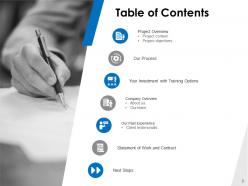
Slide 3: This slide displays Table of Contents containing- Project Overview, Project context, Project objectives, Our Process, Your Investment with Training Options, Company Overview, About us, Our team, Our Past Experience, Client testimonials, Statement of Work and Contract, Next Steps.
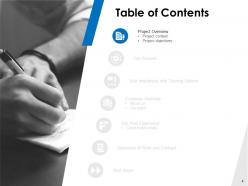
Slide 4: This slide displays Table of Contents of the presentation.
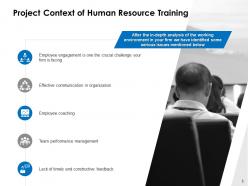
Slide 5: This slide showcases Project Context of Human Resource Training.
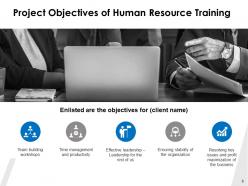
Slide 6: This slide shows Project Objectives of Human Resource Training.
Slide 7: This slide depicts Table of Contents.
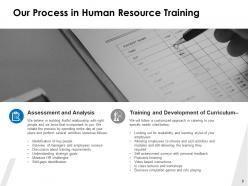
Slide 8: This slide showcases Our Process in Human Resource Training.
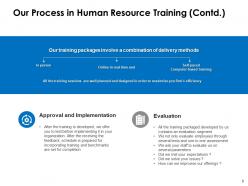
Slide 9: This slide is continued with Our Process in Human Resource Training.
Slide 10: This slide displays Table of Contents of the presentation.
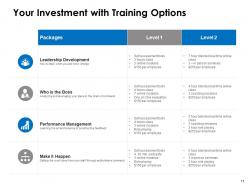
Slide 11: This slide represents Your Investment with Training Options.
Slide 12: This slide depicts Table of Contents of the presentation.
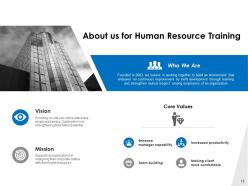
Slide 13: This is About us slide with Company specifications.
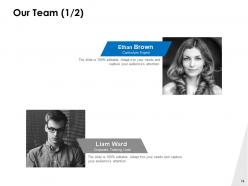
Slide 14: This is Our Team slide with Names and Designations.
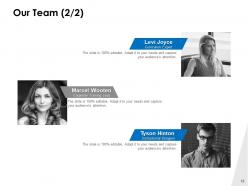
Slide 15: This is Our Team slide with Names and Designations.
Slide 16: This slide displays Table of Contents.
Slide 17: This slide showcases Client Testimonials with Names and Designations.
Slide 18: This slide represents Client Testimonials with Names and Designations.
Slide 19: This slide depicts Table of Contents of the presentation.
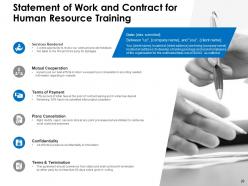
Slide 20: This slide displays Statement of Work and Contract for Human Resource Training.
Slide 21: This slide displays Table of Contents.
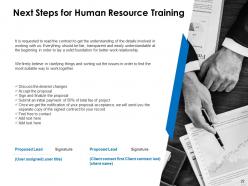
Slide 22: This slide depicts Next Steps for Human Resource Training.
Slide 23: This is Contact Us slide with Address, Contact number and Phone number.
Slide 24: This slide is titled as Additional Slides for moving forward.
Slide 25: This is About Us slide to showacase Company specifications.
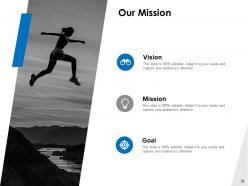
Slide 26: This is Our Mission slide with Vision, Mission and Goal.
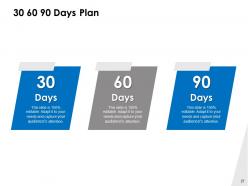
Slide 27: This is 30 60 90 Days Plan slide.
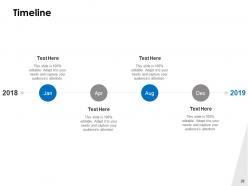
Slide 28: This slide displays Timeline process.
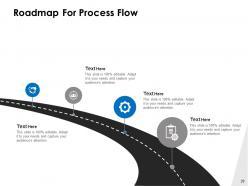
Slide 29: This slide showcases Roadmap For Process Flow.
Human resource training proposal powerpoint presentation slides with all 29 slides:
Use our Human Resource Training Proposal Powerpoint Presentation Slides to effectively help you save your valuable time. They are readymade to fit into any presentation structure.

FAQs for Human resource training proposal
Honestly, start with super specific goals - not vague stuff like "better communication" but actual metrics like "cut response time by 30%." That's what gets attention. Map out your timeline and budget next, then figure out how you'll measure if it actually worked. ROI projections are clutch because managers eat that up. Oh, and make sure everything connects to real business problems, not just training for training's sake - I've seen so many proposals die because they felt fluffy. The measurable goals are your foundation. Everything else just supports those core numbers.
So basically, you don't want to just guess what training people need - that's how you waste money on programs nobody cares about. Do a proper assessment first. Survey your managers AND employees because I swear they'll tell you completely different things about where the problems are. You'll actually see what skills are missing instead of assuming. Plus people get way more into training when it actually helps with stuff they deal with every day. Oh, and it helps you figure out what's urgent versus what can wait until next quarter. Way better ROI that way.
Track completion rates and test scores before/after - that's your baseline stuff. But honestly? Employee satisfaction matters way more than people think. If they're miserable during training, good luck getting them to actually use what they learned. I'd also watch turnover rates and who's getting promoted internally since decent training should help with both. Oh, and see how fast people actually start using new skills at work - that's where the real magic happens. Just don't go crazy with metrics though. Pick maybe 3-4 things to measure or you'll spend more time analyzing data than actually improving anything.
Honestly, those hour-long presentations are brutal - everyone just zones out. Try breaking things into 5-10 minute chunks instead. Way more effective. Gamified platforms work really well, and VR training is actually pretty cool for scenario practice (though maybe pricey depending on your budget). Mobile apps are clutch since people can learn during their commute or whatever. The trick is making it not feel like typical corporate BS training. Maybe start with one thing - see what your team actually uses - then build from there. Oh, and those AI learning paths that adapt to each person? They're surprisingly good at keeping people engaged.
Honestly, you've gotta get feedback from your team first - it's like your cheat sheet for building training they'll actually care about. Survey them about skill gaps and what's driving them crazy at work right now. Learning styles matter too, though that's kinda obvious. Focus groups work great if surveys feel too formal. I've watched so many programs crash and burn because someone just assumed what people needed. The feedback shows you what to prioritize and how to package everything. Skip this step and you're basically throwing darts blindfolded. Do this before you even think about writing your proposal.
Honestly, I'd spread it over 3-6 months with checkpoints every couple weeks. Build from basics first - kinda like learning to drive before you merge onto the freeway, right? Don't just track "finished module 2" or whatever. Make each milestone actually measurable. Between formal training blocks, throw in practice sessions so people can digest what they learned. Quick pulse checks after each phase help you catch stragglers early. The tricky part is keeping momentum without rushing - you want concepts to actually stick. Oh, and definitely don't cram everything together at the end.
First thing - map your training to whatever your company's actually trying to achieve. Like if they're obsessing over customer retention, that's where your training focus should be. Get leadership involved early so they can tell you what winning looks like (trust me, their definition might surprise you). Then create metrics that connect back to business results they care about. I'd also suggest regular check-ins with department heads since priorities change constantly. Honestly, most places skip this whole alignment piece and wonder why their training budget gets slashed. Every dollar you spend should move something executives are losing sleep over.
Don't just slap D&I training into a separate section - that's the biggest mistake I see. Weave it throughout your whole HR proposal instead. First, figure out where your company actually has diversity gaps. Then show how specific training fixes those problems with real metrics. Connect it to business stuff like keeping people around longer and boosting team performance. I'd include hands-on workshops and scenario training, plus make sure leadership is held accountable. Oh, and budget for ongoing work, not just a one-and-done session. The proposals that win show how this creates actual culture change, not just checking compliance boxes.
Honestly, the biggest thing people miss is calculating the cost of employees being out of the office - that'll bite you way harder than trainer fees. Get quotes upfront for everything: materials, venue, any tech stuff if you're going digital. External trainers mean travel costs too, obviously. I learned the hard way to always pad the budget by 10-15% because there's always some random expense nobody thought of. Your boss will want to see how each cost connects to actual learning goals, so have that ready. Way better to overestimate now than scramble later when you're short on funds.
Honestly, scenario-based learning is a game changer for HR training. Your team gets to practice messy situations - like performance reviews gone wrong or harassment complaints - without real consequences. Way better than sitting through another boring presentation, right? I'd pull from actual workplace drama you've dealt with (just change the names obviously). Makes it feel relevant instead of theoretical. People remember this stuff better too. When they're facing a tricky termination later, they'll actually know what to do instead of panicking and calling you.
Honestly, you need multiple support layers or people just fall through the cracks. Set up mentorship programs and regular manager check-ins - those are non-negotiable. Online learning platforms help too, but peer groups are where the real magic happens. People are way more honest with each other than in formal training. Quarterly refresher sessions keep things fresh. Oh, and definitely create some kind of help desk situation for quick questions. Nobody wants to schedule a meeting just to ask how to do something basic. The whole thing should feel natural, not like bureaucratic hell. Start by figuring out what support you're missing right now.
Honestly, I just send out a quick survey like a week beforehand asking people how they prefer to learn - visual, audio, hands-on stuff. Works pretty well. Then during the actual training, you'll notice patterns: note-takers are usually visual learners, the question-askers love discussing things out loud, and kinesthetic people just want to jump into activities immediately. Sometimes I'll do a fast self-assessment thing at the beginning too. But here's the thing - even if someone says they're purely visual, I still mix everything up. Slides, group discussions, interactive bits. Covers your bases and honestly keeps things from getting boring for everyone.
Budget's always the worst part - nobody wants to spend money on training. Plus half your team thinks it's pointless busy work (can't blame them honestly). Start with tiny pilot programs to show results first. Make everything super relevant to what they actually do daily, not some boring generic workshop. Interactive stuff works way better too. Oh and definitely track some basic metrics from day one - like performance improvements or follow-up surveys. Once you prove ROI on the small stuff, getting bigger budgets becomes easier. Connect it to career growth and people actually care.
Honestly, just grab like 10-15 people from one department first and test it out on them. Way better than bombing in front of the whole company—trust me, I've watched that trainwreck happen before. Get their feedback on literally everything: boring? too long? confusing? actually helpful? Then tweak whatever's broken before you go wide. It's so much easier fixing stuff when you've only annoyed 15 people instead of 150, you know? Plus volunteers are usually more forgiving than people who got voluntold to attend. Start small, figure out what works, then roll it out everywhere.
Honestly? External trainers are totally worth it when you need specialized knowledge your team doesn't have - think technical stuff, compliance, leadership development. They're way more objective about spotting skill gaps since they're not buried in your daily chaos like the rest of you. Fresh eyes, you know? Plus they come with tried-and-true methods and can adapt everything to fit your company. Just make sure whoever you pick actually gets your industry. I'd interview a few and ask for examples from companies like yours before deciding. Oh, and check if they vibe with your culture - that matters more than people think.
-
Awesome use of colors and designs in product templates.
-
Illustrative design with editable content. Exceptional value for money. Highly pleased with the product.
-
Professional and unique presentations.
-
Amazing product with appealing content and design.