


Human Resource Transformation Toolkit Training Plan For Human Resource Transformation




Try Before you Buy Download Free Sample Product
 Impress Your
 Audience
 100%
100% Editable
 Save Hours
 of Time


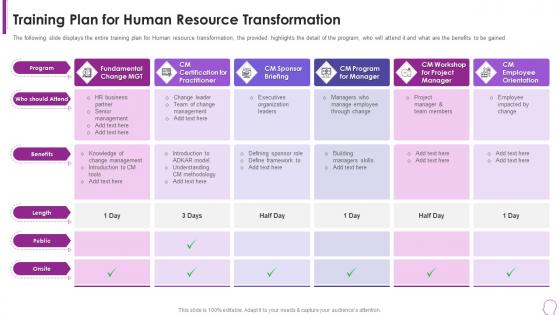
The following slide displays the entire training plan for Human resource transformation, the provided highlights the detail of the program, who will attend it and what are the benefits to be gained
People who downloaded this PowerPoint presentation also viewed the following :
Human Resource Transformation Toolkit Training Plan For Human Resource Transformation with all 6 slides:
Use our Human Resource Transformation Toolkit Training Plan For Human Resource Transformation to effectively help you save your valuable time. They are readymade to fit into any presentation structure.





FAQs for Human Resource Transformation Toolkit Training Plan For
Honestly, it's mostly three big things happening at once. Tech adoption is huge - everyone's going digital with their HR stuff. Employees are also way more demanding now about flexibility and work-life balance, which I totally get. Then there's this massive push to use data to actually show what HR does for the business (about time, right?). Remote work basically threw gasoline on all of this and forced companies to completely rethink how they find and keep good people. I'd say figure out which one of these is hitting your company hardest first, then tackle that.
Honestly, tech is a game-changer for HR stuff. Automate the boring things first - payroll, onboarding, those endless performance reviews. AI recruiting tools are pretty solid for screening people faster too. Your team can focus on actual strategy instead of being buried in paperwork all day. Self-service portals are clutch because employees can handle their own PTO and benefits requests. The data side is interesting - you'll actually see patterns in engagement and workforce trends you missed before. I'd start with whatever's eating up most of your time right now and find tools that fix those specific headaches.
Look, data analytics is a total game changer for HR - you stop making decisions based on hunches and actually see what's happening. Track turnover patterns, figure out what keeps people engaged, predict when you'll need to hire. I mean, pay equity issues? You can catch those early now. Once you start digging into your people data, the trends just jump out at you. Why is Department X bleeding talent? The numbers will tell you exactly when and why it started happening. My advice? Start small though. Pick something like time-to-hire and track it for a few months. See what story emerges.
Look, map every HR thing you do straight to business results first. New performance system? Connect it to revenue or productivity numbers. I've watched so many HR teams fall in love with fancy tools without asking "but will this actually move the needle?" Talk to business leaders constantly about what's keeping them up at night. Build KPIs showing how your changes hit the bottom line. Here's the key part though - ditch the HR speak when you report back. Show them dollars saved, efficiency jumps, people staying longer. Not just "we improved our processes." Numbers they actually care about.
Honestly, change management is where I'd start - it's like the backbone of everything else. Project management skills will save your sanity when things inevitably get chaotic. Data analytics is non-negotiable these days since executives only care about numbers and ROI. Obviously communication matters too, but it's trickier than people think because you're constantly translating tech stuff for different groups. Oh, and get comfortable with HR technology - that seems to be everywhere now. Pick one of these to focus on this quarter and find a decent course. Trust me, trying to learn everything at once never works.
Honestly, culture is everything when it comes to HR transformation. I've seen so many companies blow tons of money on shiny new systems only to watch them collect digital dust because nobody wanted to change how they work. Your leadership team has to be all-in first - employees can smell fake buy-in from a mile away. Without trust and people who actually want to learn new things, you're basically throwing money at a wall. The whole organization needs to be cool with being transparent and making decisions based on data, not just gut feelings. My advice? Figure out what your culture actually looks like right now before you do anything else.
Don't try fixing everything at once - that's a recipe for disaster. Your team will freak out and nothing gets done right. Communication is huge here. People assume the worst when they don't know what's happening, so keep everyone in the loop. Also, resist picking fancy new software just because it looks cool. Figure out your actual workflows first, then find tech that fits. Oh, and get your department heads on board early. Trust me on this one - they can make or break the whole thing. If they're not buying in, good luck getting anyone else excited about changes. Start with baby steps instead of going nuclear day one.
Honestly, don't wait until the end to ask what people think - that's when you're screwed. Start with surveys and focus groups before you even touch anything. Figure out what's actually broken first. Throughout the whole thing, keep checking in. Anonymous suggestion boxes work great, or maybe try employee committees if you're feeling fancy. People get really pissed when stuff just happens to them without warning. The biggest thing though? Actually do something with their feedback and tell them what changed because of it. Otherwise you're just wasting everyone's time.
Honestly, talk to your people constantly - like, way more than feels necessary. Tell them what's happening and why, even when you're still figuring stuff out. I've watched so many changes crash because leadership just disappeared. Get them involved in the actual planning, not just the "here's what we decided" meetings. Run those quick pulse surveys too. Oh, and don't forget training - people freak out less when they feel prepared. The whole point is making them feel like they're helping build something, not just getting dragged along for the ride.
Oh man, change management is huge for HR stuff - like, it'll totally tank your project if you skip it. People hate learning new systems and breaking their routines, trust me. I've seen so many rollouts fail because everyone just... ignored the new tools. Get your leadership on board first, then loop in actual users early. Don't just surprise people with changes - tell them WHY you're doing this way ahead of time. And honestly? Your training better be rock solid or you'll be fielding angry emails for months. Communication is everything here.
So you definitely need both the hard numbers and how people actually feel about everything. I'd track stuff like how long hiring takes, retention rates, cost-per-hire - the usual suspects. But honestly? The employee engagement scores and satisfaction surveys are where you'll really know if this thing is working. Manager effectiveness ratings too. Oh, and don't sleep on process efficiency - like how long basic HR tasks take now vs before. My advice though is start small. Pick maybe 4-5 metrics that actually connect to what you're trying to change. You can always add more later, but if you try measuring everything right away you'll just overwhelm yourself.
Start with the boring stuff - automate chatbots for employee questions and self-service portals for vacation requests. Cloud HRIS systems are a game changer, no joke. You'll get real-time data instead of wrestling with spreadsheets like it's 2005. Analytics tools help you spot workforce patterns quickly. Honestly, the automated onboarding workflows alone will save your sanity. Don't try to overhaul everything though. Pick one thing that's driving you crazy, nail that first, then move on. Way less overwhelming that way.
Start with auditing what compliance stuff you're already dealing with, then see how it lines up with your new HR processes. Gaps will pop up - they always do. Make checklists for each phase and give someone actual ownership of each task. Seriously, the "we'll all handle it" approach is where things go to die. Document decisions as you go, especially around policy changes. During pilots, run your compliance checks alongside everything else so you're not scrambling later. Oh, and build this into your design from the start - trying to retrofit compliance is a nightmare you don't want.
Honestly, HR transformation is perfect for this. Instead of tacking D&I onto existing processes, you're rebuilding everything with inclusion baked in from day one. Redesign recruiting to cut out bias, update performance reviews to actually measure inclusive behaviors, use analytics to spot representation gaps. It's way more effective than the Band-Aid approach most companies try. Focus on transforming talent management, compensation, and leadership development to support underrepresented groups. I'd start with auditing your current processes - you'll probably find bias creeping in where you least expect it. Makes such a difference.
Look at Netflix and Unilever - they totally flipped their HR on its head. Netflix threw out performance reviews and went with constant feedback plus brutal honesty about what they expect. Unilever did this massive digital overhaul, bringing in AI for hiring and building custom career paths for people. Sure, both caught heat at first, but they pushed through. Here's what worked for them: pick your worst problem first, don't try fixing everything. Actually listen to what your people need instead of doing "traditional HR stuff." Oh, and seriously - get the executives on board early or you're just burning money on fancy changes nobody will support.
-
Editable templates with innovative design and color combination.
-
Presentation Design is very nice, good work with the content as well.