

Idea Innovation Funnel Management Process Set 1 Innovation Product Development




Try Before you Buy Download Free Sample Product
 Impress Your
 Audience
 100%
100% Editable
 Save Hours
 of Time


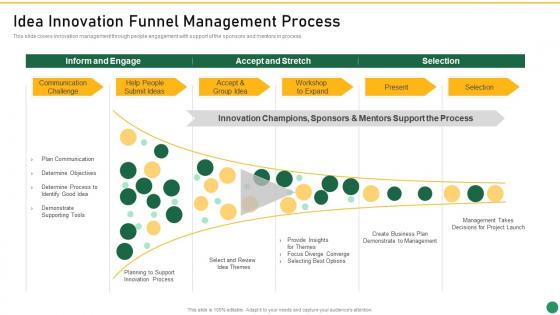
This slide covers innovation management through people engagement with support of the sponsors and mentors in process.
People who downloaded this PowerPoint presentation also viewed the following :
Idea Innovation Funnel Management Process Set 1 Innovation Product Development with all 6 slides:
Use our Idea Innovation Funnel Management Process Set 1 Innovation Product Development to effectively help you save your valuable time. They are readymade to fit into any presentation structure.





FAQs for Idea Innovation Funnel Management Process Set 1
So the innovation funnel basically works in three chunks - first you brainstorm a bunch of ideas, then you build prototypes and test the promising ones, and finally you launch whatever survives. It's like a brutal elimination game, honestly. You might start with 100 ideas but only 2-3 actually make it to customers. Most stuff crashes and burns during the testing phase, which is fine because that's way cheaper than failing after launch. Each stage helps you figure out what's garbage before you waste more time and money. Oh, and you've gotta be ruthless about cutting the losers early - sounds harsh but it works.
Start with 4-5 scoring factors max - strategic fit, market potential, resources needed, and how doable it actually is. More than that and you'll drown in analysis paralysis (trust me on this one). Get different people to score ideas separately first, then compare. Otherwise you just get echo chamber nonsense. Weight your criteria based on what matters right now. Cash tight? Feasibility beats everything else. Set a cutoff score and actually stick to it - don't get sentimental about pet ideas. Run a small test round first to see if your criteria make sense before going all-in. The scoring system's only as good as how honestly you use it.
Honestly, customer feedback is like your best friend who'll tell you when your idea sucks before you waste tons of money on it. Get people's opinions super early - even with rough prototypes or sketches. Ask specific stuff: would they actually pay for this? What's confusing about it? I've watched so many teams just assume their brilliant concept will work without bothering to check. Bad move. Set up regular feedback rounds at each stage of your funnel. Each round helps you fix problems and make it stronger before moving forward. The earlier you start collecting input, the better - saves you from those painful "oh crap" moments later.
Start with whatever's driving you crazy right now - that's my take anyway. If it's collecting ideas, try an idea management platform that sorts submissions automatically. AI can spot patterns in those submissions to find the good stuff. Real-time dashboards are honestly huge for catching bottlenecks before they spiral. You'll want digital collab tools to speed up feedback between everyone involved. Oh, and automated scoring handles the initial screening so your team isn't drowning in terrible ideas. Pick one tool first though - don't try to fix everything at once.
For each stage, pick different metrics but keep it simple. Early on, count idea volume plus some basic feasibility scores. Prototype stage? Track success rates and how long builds take. Testing phase gets user feedback scores and whether tech actually works. Honestly, most teams go crazy with metrics here and track stuff that doesn't matter. Implementation is where you measure what counts - time to launch, adoption rates, real revenue. I'd stick to maybe 2-3 metrics per stage, tops. The trick is making sure each one actually connects to business stuff you care about, not just numbers that look impressive in meetings.
Honestly, cross-functional teams are game-changers for innovation. You get marketing, engineering, design - everyone working together from day one instead of passing ideas down a chain. Ideas get validated way faster that way. Plus you catch problems early before they become expensive headaches. No more "this sounds amazing but we literally can't build it" situations, which happens all the time when teams don't talk. The trick is giving these teams real decision-making power though. Otherwise you're just adding more meetings to people's calendars - and nobody needs that.
Start with psychological safety - nobody's sharing crazy ideas if they think they'll get roasted. Cross-functional teams work best since weird perspective combos usually breed the coolest stuff. Google's 20% time thing sounds amazing but honestly most places suck at actually doing it. Still worth trying though! Set up clear processes for moving ideas through your pipeline. Short bursts work better than long meetings in my experience. Celebrate smart failures hard - you want fast learning, not people playing it safe all the time.
Honestly, you've gotta balance both but shift the focus as you go. Early on, let the crazy ideas fly - score them way higher on creativity than feasibility. Most teams mess this up by being too practical right away. Then gradually flip that weighting as you move through stages. Run quick tests on the wild stuff before ditching it completely - sometimes those "impossible" ideas just need tweaking. The real trick is knowing when to tighten the screws. I've watched too many projects die because they either crushed creativity too fast or chased pipe dreams forever.
Oh man, don't let your innovation funnel turn into where good ideas go to die! I've seen companies over-filter at the start and kill concepts before they even get explored properly. Keep some flexibility - innovation needs a bit of mess to work. Here's the thing though: resist only backing "safe" projects since the real breakthroughs usually look pretty risky upfront. Actually move stuff through the stages instead of letting everything sit there forever. Clear criteria for each gate helps, plus stick to your timelines or you'll end up with more of a parking lot than a funnel.
Honestly, testing and prototyping later in the funnel saves you from major headaches down the road. Real users will expose problems you totally missed earlier - it's like finding bugs before your code goes live, except way more embarrassing if you don't catch them. Each round of feedback helps you nail down what actually works versus what sounds good on paper. The trick is using your actual target audience, not just your coworkers who'll be nice about everything. I always start super basic with rough prototypes first. Then build up complexity as you learn what people really need. Cuts down risk big time.
Partnerships are honestly a game-changer for innovation - you get access to tech and expertise you'd never build in-house. It's like tapping into someone else's R&D without the crazy costs. Testing happens way faster too since your partners bring their own resources to the table. The catch? You'll lose some control over timing and direction, which can be frustrating. I learned this the hard way on a project last year. My take: nail down your IP agreements upfront and use partners to fill specific gaps. Don't let them drive your whole strategy though.
Honestly, data beats guessing every time. Track what users actually engage with in early stages - not what Bob from marketing thinks will work. You'll see real conversion rates between funnel stages and catch where good ideas are dying. Short sentences hit different sometimes. Analytics shows patterns across your wins too, so you can predict what's likely to succeed next. The numbers don't care about anyone's pet project being "the next big thing" (we've all been there). Just start with basic tracking on your current pipeline. Build it up from there and you're golden.
Honestly, most teams mess this up by only talking at handoffs. Get your marketing and R&D people in the same room weekly - even just 30 minutes works. Marketing needs to share what customers actually want, and R&D has to be real about what's possible (and what isn't). Set up shared dashboards so everyone can see progress. Joint customer interviews during concept phase are huge too. I've seen way too many projects tank because these teams work in separate bubbles. The magic happens when marketing gets technical realities and R&D understands market needs. Start small with regular syncs and build from there.
Honestly, trends basically flip your whole innovation process upside down. They change what ideas you chase and how you judge them. Say sustainability blows up in your industry - suddenly you're seeing tons of eco-friendly concepts at the top, and your screening process starts favoring green stuff over everything else. Same thing happens with digital transformation. AI projects jump to the front while old-school methods get pushed aside. It's wild how much trends act like filters for where you spend money and time. I'd check your sector's big trends every quarter and tweak your criteria from there.
Honestly, celebrating tiny wins makes a huge difference - even when stuff crashes and burns. I'd set clear milestones so your team actually sees progress happening. This might sound weird, but failure parties are genuinely effective at keeping people willing to experiment. Share the messy learning stories, not just success highlights. Rotating fresh people through projects brings new energy (plus prevents burnout). Kill dying ideas quickly so resources can flow to the good stuff. Oh, and always tie experiments back to your bigger vision. People need to remember why they're doing this work in the first place, you know?
-
Fantastic and innovative graphics with useful content. The templates are the best and latest in the industry.
-
A perfect platform for all your presentation needs. Unlimited products at an affordable price.