

Innovation process style 5 powerpoint presentation slides





Try Before you Buy Download Free Sample Product
 Impress Your
 Audience
 100%
100% Editable
 Save Hours
 of Time


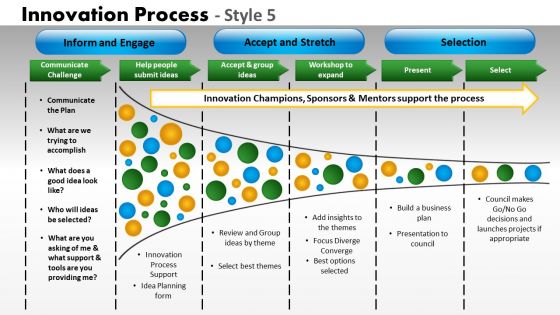
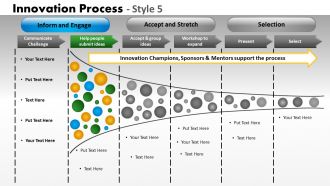
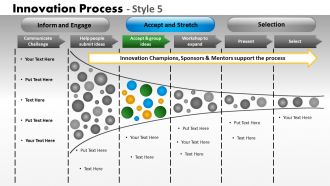
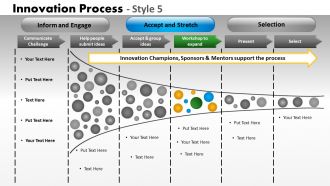
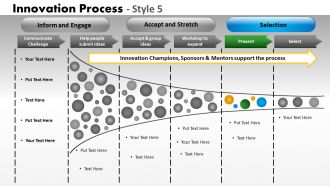
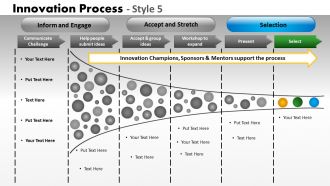
An innovation style defines how a company can stay successful in complex and volatile environment. Review your business plans with our innovation process PowerPoint presentation slides. This presentation slide of innovation process style defines how an organization promotes innovation which can be categorized into different stages such as setting a vision, modifying business, exploring and experimenting different opportunities. This innovation management process PPT slide tells more about diversity to see how people think and solve problem, and how a business can leverage different people’s strengths and styles. This PowerPoint slide on innovation and creativity puts focus on improvement styles of team members so that organizations will be able to create right mix of its employees to form better solutions. This PPT layout of process improvement contributes to economic development of an organization by fostering the development of new markets and the improvement of existing. With the help of this process improvement management layout, you can be confident of your own creative style, diagnose team problems and set up a successful team. Download this template and consider what challenges your team is facing and how your team can excel with innovation. Drape your thoughts with our Innovation Process Style 5 Powerpoint Presentation Slides. They will sashay down the ramp in style.
People who downloaded this PowerPoint presentation also viewed the following :
Innovation process style 5 powerpoint presentation slides with all 11 slides:
Use our Innovation Process Style 5 Powerpoint Presentation Slides to effectively help you save your valuable time. They are readymade to fit into any presentation structure.
FAQs for Innovation process style 5
So there's basically four stages to innovation - ideation, development, implementation, and scaling. But honestly? It's messy as hell. You'll be testing something and realize your original idea was garbage, so back to square one. Development feeds into implementation, sure, but you're constantly looping back when reality hits. Think of it more like a spiral than a straight path - you're always circling through these stages. My advice? Figure out where each of your projects actually sits right now. That way you know if you need brainstorming time or if you should be focused on getting something out the door.
First thing - make sure people won't get roasted for throwing out weird ideas. Nobody's gonna brainstorm if they think you'll judge them. Mix up your teams sometimes too, fresh combos spark better stuff. Give them actual time to think creatively (Google does that 20% thing for a reason). Celebrate the smart failures, not just wins. Oh and honestly? Your meeting spaces probably suck for creativity - ditch the boring conference rooms. Most crucial part though - actually DO something with their ideas, even tiny ones. I've seen so many teams kill momentum by letting every suggestion just... disappear.
Honestly, you can't innovate in a bubble - stakeholder feedback is everything. Get it early to make sure you're solving an actual problem, not just something you think exists. Then keep asking throughout development because things change. I've watched so many teams get obsessed with their "brilliant" idea and completely tune out what people are telling them. It's painful to watch, honestly. Mix up who you ask - users, your internal folks, partners, anyone affected. But ask smart questions! "What do you think?" gets you nowhere. Oh, and don't just collect feedback once and check that box. You'll need regular check-ins.
Honestly, market research is like having cheat codes for brainstorming. Instead of sitting around going "what if we made this random thing," you're actually looking at real problems people have. I always check customer complaints and reviews first - that's where the gold is. You'll find patterns in what's missing or what sucks about current options. Makes your ideas way more targeted too, since you're solving actual pain points instead of made-up ones. Trust me, it beats building something cool that nobody wants to buy. Look into what's frustrating your potential customers before your next session.
Honestly, mixing up your approach keeps everyone engaged. Sticky notes and mind mapping are solid, but try "crazy 8s" - sketch 8 ideas in 8 minutes. Sounds nuts but it actually works. For remote stuff, Miro's pretty good. Whiteboards are still king for in-person though. Set clear time limits and get someone to facilitate who won't let things drag. Here's the thing - ban "that won't work" during brainstorming. Use "yes, and..." instead to build on ideas rather than shooting them down. Makes a huge difference in what people come up with.
Honestly, just automate the boring stuff that slows everything down. Project management tools help track your ideas, and AI can handle those initial research dumps that take forever. Collaboration platforms are a game-changer too - email chains are creativity killers, trust me. Digital prototyping saves you tons of money since you're not building physical mockups for every wild idea. But here's the thing: don't just grab random tools because they look cool. Figure out what's actually eating up your time first. Then find tech that fixes those specific problems. Otherwise you'll just create new headaches.
Honestly, you need both types of metrics or you're flying blind. Leading ones like idea submissions and how fast people are cranking out prototypes - that's your momentum right there. Lagging stuff is revenue impact, market share, customer adoption rates. Time-to-market is probably the biggest one though, like if you can't ship fast you're dead in the water. Customer feedback matters too, obviously. Here's the thing - don't go crazy with twenty different dashboards. Pick maybe 3-4 that actually matter for your goals and review them monthly. Otherwise you'll just ignore them anyway.
Don't just avoid risks - that's how companies die slowly. Instead, set up little "sandbox" areas where teams can mess around with small budgets and clear limits. Honestly, I've watched so many places murder perfectly good ideas just because they freaked out about uncertainty. Start tiny with pilots, grab data fast, then double down on winners while axing the losers. The trick? Make failing cheap but learning valuable. Oh, and use those stage-gate things where you only throw more money at projects after they hit real milestones and prove they're not completely insane.
Oh man, you're gonna run into three big headaches for sure. Budget issues always pop up - suddenly you need way more money or some specialist nobody thought about. Then there's people being stubborn about change, which honestly makes sense because who likes their routine getting flipped? And scope creep is the worst - everyone wants to tack on "just this tiny thing" until your project is totally different. Set hard boundaries from day one. Talk to your team constantly so problems don't blindside you. When stakeholders start adding stuff, push back hard or you'll never finish.
Oh man, those department silos are productivity killers! Getting different teams to actually talk changes everything. I've watched engineering and sales have random hallway chats that turned into our biggest product wins - sounds cheesy but it's true. Marketing spots trends that product dev totally misses, you know? Each group sees blind spots the others can't. Maybe start with casual cross-team coffee sessions or throw different departments into the same brainstorming room. Sometimes the weirdest combinations work best. You'll be surprised how many "obvious" solutions nobody thought of because the right people weren't talking.
So co-creation is where you actually bring customers into the design process instead of just asking for feedback after. The thing is, they'll spot problems your team would never see coming. When people help build something, they're way more invested too - makes total sense if you think about it. You catch those annoying usability things early, figure out what actually bugs people (not what you assume does), and honestly? You end up with stuff people will use. I'd just grab like 3-4 good customers for your next brainstorm. Way better than guessing what they want.
Honestly, your leadership style makes or breaks innovation on your team. Transformational leaders who let people take risks? They get way more creative ideas bubbling up. Micromanagers just crush that stuff before it starts - I've watched it happen so many times it's not even funny. Leaders who encourage collaboration also get better cross-functional thinking, and that's usually where the real breakthrough stuff comes from. Oh, and psychological safety is huge too. If your team doesn't feel safe to fail and mess around with crazy ideas, you're basically shooting yourself in the foot innovation-wise.
Honestly, start by mixing up who's actually in the room. Grab people from different departments, experience levels, maybe even some customers. Demographics matter, but don't stop there - you want different thinking styles and backgrounds too. Most teams get super comfortable in their little bubbles (I've totally been guilty of this). The real trick is making sure people feel safe enough to actually share their weird ideas. Short version: audit your next project team before you kick off. Are you missing voices? Because those missing perspectives are probably where your best insights are hiding.
Look, continuous learning is what stops your team from becoming those people who still think flip phones are cutting-edge. Fresh knowledge means fresh ideas - it's that simple. Your team learns new stuff, they spot trends faster and catch opportunities everyone else misses. Markets move crazy fast now, so you adapt or you get left behind. Honestly, most companies are terrible at this because they think they're too busy. Start with something tiny: have everyone share one cool thing they learned each week. Takes like 30 minutes but keeps your innovation engine actually running instead of just sputtering along.
Honestly, failure is just cheap market research in disguise. Every time something doesn't work, you're getting free intel on what your customers actually want (or don't want). Way better to fail fast with a small experiment than blow your whole budget on something that tanks later. I always tell people to treat failures like science experiments - write down what went wrong and why. That way you're not making the same mistake twice. It's basically like paying for a really expensive business course, except the lessons actually stick because they hurt a little. Just don't fail at the same thing repeatedly - that's not learning, that's just being stubborn.
-
Understandable and informative presentation.
-
Enough space for editing and adding your own content.
-
Attractive design and informative presentation.
-
Awesomely designed templates, Easy to understand.
-
Good research work and creative work done on every template.
-
Top Quality presentations that are easily editable.