


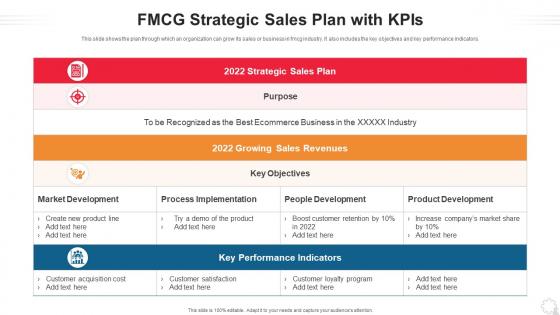
Fmcg Strategic Sales Plan With Kpis




Try Before you Buy Download Free Sample Product
 Impress Your
 Audience
 100%
100% Editable
 Save Hours
 of Time


This slide shows the plan through which an organization can grow its sales or business in fmcg industry. It also includes the key objectives and key performance indicators.
People who downloaded this PowerPoint presentation also viewed the following :
Fmcg Strategic Sales Plan With Kpis with all 6 slides:
Use our Fmcg Strategic Sales Plan With Kpis to effectively help you save your valuable time. They are readymade to fit into any presentation structure.





FAQs for Fmcg Strategic Sales
Honestly, omnichannel stuff is huge right now - people find you on TikTok, research online, then buy in stores. Wild but that's just how it works now. AI personalization is everywhere too, plus brands are going crazy with sustainability messaging (some of it feels forced tbh). Direct-to-consumer is blowing up since companies want control over their customers. Oh, and everyone's obsessed with data analytics for inventory and forecasting. Don't try to do everything though - pick one channel integration first and nail that before expanding.
Honestly, start by looking at your POS data alongside customer info - that combo will show you buying patterns and help predict what people actually want. Most businesses have tons of useful data just sitting there doing nothing. Track seasonal stuff, how price changes affect sales, and what competitors are up to. I'd focus on maybe 2-3 metrics at first instead of going crazy with everything at once. Oh, and here's something you can do right now: pick your worst-performing product and really dig into its numbers this week. You'll probably find some obvious fixes you missed before.
Look, e-commerce isn't optional anymore - it's basically survival at this point. COVID pushed everyone online and they never really came back to just shopping in stores. You're missing out on direct customer access and way better data if you're not doing it right. Amazon's obviously huge, but don't sleep on your own website either. The smart move? Don't treat online and physical stores like they're competing - make them work together. Oh, and definitely check where your customers are actually buying stuff online before you do anything else. That'll save you a ton of headaches.
Okay so don't think of online vs offline as competing - they're actually better as teammates. Physical stores are perfect for letting people touch stuff and buy it right now, while online handles the convenience factor and reaching way more people. Pricing has to match everywhere though or you'll mess up your own sales. The inventory thing is honestly a nightmare - took us forever to figure out the right split. Map out where customers actually find you versus where they buy, because sometimes they'll see your display in-store then order online later. Your digital ads can definitely push people to visit stores too. Start there and tweak from the data you get.
BOGO deals and percentage discounts work best - those customers are crazy price-sensitive. Free samples are gold too, especially for new stuff. People can't resist freebies! Placement is everything though. Get your products near checkout or do cross-merchandising (like putting sauce by the pasta aisle). Oh, and timing - run these during busy shopping weeks, not random Tuesdays. Track your numbers obsessively so you actually know what's working. I swear half the brands I see just throw money at promotions without measuring anything properly.
Dude, it's huge right now. Gen Z will straight up ditch brands that don't get it - like, they actually research this stuff before buying. Major retailers are pushing their suppliers hard on sustainable packaging too. My neighbor was telling me she won't even buy cereal anymore unless the box is recyclable, which honestly seemed extreme but whatever. Regulatory stuff is getting stricter everywhere. Don't just slap "eco-friendly" on your marketing though. Actually audit where you're failing sustainability-wise first. Then tackle the changes that'll matter most to customers and won't totally wreck your budget.
Honestly, it comes down to three things. First - quality can't slip, even once. FMCG customers will ditch you so fast if they have one bad experience. Second, your loyalty programs need to actually matter to people, not just be another points thing they ignore. Distribution is huge too - you've gotta be wherever they're shopping, whether that's physical stores or online. The real trick though? Use their purchase data to personalize everything. I'd start by looking at where you're currently losing people in their buying journey - that's usually pretty eye-opening.
Dude, merchandising is literally what makes people buy stuff instead of just walking past it. Get your products at eye level - that's where the magic happens. Clear pricing and good displays make it super easy for customers to grab your brand over whatever else is there. People decide what to buy in like 3 seconds in grocery stores, which is honestly kind of crazy when you think about it. Visibility is everything for impulse buys and getting people to remember you. End-caps, shelf spots, and those little point-of-sale signs? They'll bump your sales up 20-30% no problem.
Honestly, social media flipped everything upside down for FMCG brands. Before, you'd just blast TV ads everywhere and pray they worked. Now you can actually see what people buy and target them specifically - it's wild how precise you can get. People expect brands to talk back now too, which is kinda weird but whatever. You need those social listening tools to see what's being said about you (and your competitors, obvs). Influencer stuff is where the real money gets made these days. But first - figure out where your customers actually hang out online. No point posting on TikTok if they're all on Facebook, you know?
Dude, personalized marketing is seriously worth it - we're talking 15-25% sales bumps. You know how you buy the same coffee brand every week? Companies track that stuff and then hit you with targeted ads for premium blends or whatever. Way better than random generic ads that nobody cares about. New parents get baby product promos, frequent buyers see deals on their usual stuff. The trick is segmenting customers based on their buying patterns, then creating different campaigns for each group. Honestly, just start with your email list - group people by what they've bought before. Once that's working, you can get fancy with personalized recommendations everywhere else.
Honestly, demand forecasting will make you want to pull your hair out - you're constantly guessing what people want without ending up with too much or too little stock. Short shelf lives make timing everything a nightmare. Then there's distribution chaos managing everyone from Walmart to tiny corner shops, each wanting different delivery schedules. Don't even get me started on keeping everything temperature-controlled. Weather or random strikes? Your whole system falls apart in hours. Get some real-time tracking tools and maybe stash extra inventory at key spots. Trust me on this one.
Honestly, start digging into what customers are actually saying about your stuff. Set up surveys and have your sales team track the objections they keep hearing. Social media mentions are gold too - people complain there without filters. The real insights come from those random complaints nobody wants to deal with. Take that feedback and use it to fix your messaging or figure out which channels work for different customers. Don't just collect it and forget about it though. Pick one recent piece of feedback and see how it could change your approach next quarter. That's where you'll find the gaps between what you're selling and what they want.
Your price is basically how customers instantly categorize you - premium, cheap, or middle ground. Go low to steal market share quickly, or price high to make people think you're fancy quality. But honestly? Price wars in FMCG are absolutely vicious since everyone's already working on razor-thin margins. You've got to tell a coherent brand story while staying cheap enough that stores will actually put you on shelves. Test how sensitive your customers are to price changes - some products can handle increases way better than others.
Look, your team's gotta stay plugged into what's happening out there. Regular training sessions help - focus on trend analysis, social media monitoring, that kind of stuff. But honestly? Role-playing customer scenarios is where the magic happens. We've gotten some of our best insights just from those mock conversations. Your reps should be actually listening to customers, not just pitching products. Set up weekly feedback loops so field insights get shared around. Oh, and make adaptability part of your culture - can't just be a one-time thing. Keep everyone talking to each other about what they're seeing.
Stop dumping products and hoping retailers will magically sell them - that's what lazy brands do. Build actual partnerships instead. Work together on promotions and share customer data that helps both of you. Train their staff, create exclusive bundles they can't get anywhere else, and nail down good shelf placement. Point-of-sale materials matter too, though honestly half the time they end up in storage. Pick your top 3 retail partners and meet quarterly to align on goals. It's way more work than the spray-and-pray approach, but you'll actually see results.
-
A fantastic collection of templates. I'll likely use this as my go-to resource for future templates and support.
-
Delighted to see unique and eye-catching PowerPoint designs that are so easy to customize.