


Impact Of IoT On Various Industries Application And Use Cases IoT CD
Check out our professionally designed Impact of IoT on Various Industries Application and Use Cases template. This IoT applications presentation provides valuable insights into the profound influence of the Internet of Things IoT on diverse sectors, highlighting critical applications, use cases, and future trends shaping the business landscape. Moreover, this IoT use cases PPT begins with a comprehensive industry outlook, emphasizing how IoT has become a game changer across multiple sectors. Also, the IoT applications deck focuses explicitly on integrating IoT in smart homes, showcasing how IoT based solutions such as thermostats, lighting systems, and intelligent security have revolutionized residential living. Furthermore, the IoT Manufacturing Applications presentation explores the realm of Industrial IoT, revealing its significant contributions to predictive maintenance and quality control in the manufacturing sector. Lastly, the Internet of Things PowerPoint offers valuable insights into future trends, outlining emerging technologies and their potential impact on various industries. Get access to this powerful template now.
Check out our professionally designed Impact of IoT on Various Industries Application and Use Cases template. This IoT appl..


























-

- Google Slides is a new FREE Presentation software from Google.
- All our content is 100% compatible with Google Slides.
- Just download our designs, and upload them to Google Slides and they will work automatically.
- Amaze your audience with SlideTeam and Google Slides.
-

Want Changes to This PPT Slide? Check out our Presentation Design Services
-

- WideScreen Aspect ratio is becoming a very popular format. When you download this product, the downloaded ZIP will contain this product in both standard and widescreen format.
-

- Some older products that we have may only be in standard format, but they can easily be converted to widescreen.
- To do this, please open the SlideTeam product in Powerpoint, and go to
- Design ( On the top bar) -> Page Setup -> and select "On-screen Show (16:9)” in the drop down for "Slides Sized for".
- The slide or theme will change to widescreen, and all graphics will adjust automatically. You can similarly convert our content to any other desired screen aspect ratio.
Compatible With Google Slides

Get This In WideScreen
You must be logged in to download this presentation.


Do you want to remove this product from your favourites?
PowerPoint presentation slides
Deliver this complete deck to your team members and other collaborators. Encompassed with stylized slides presenting various concepts, this Impact Of IoT On Various Industries Application And Use Cases IoT CD is the best tool you can utilize. Personalize its content and graphics to make it unique and thought-provoking. All the ninety slides are editable and modifiable, so feel free to adjust them to your business setting. The font, color, and other components also come in an editable format making this PPT design the best choice for your next presentation. So, download now.

People who downloaded this PowerPoint presentation also viewed the following :
Content of this Powerpoint Presentation
Slide 1: The slide presents Impact of IoT on Various Industries: Application and Use Cases.
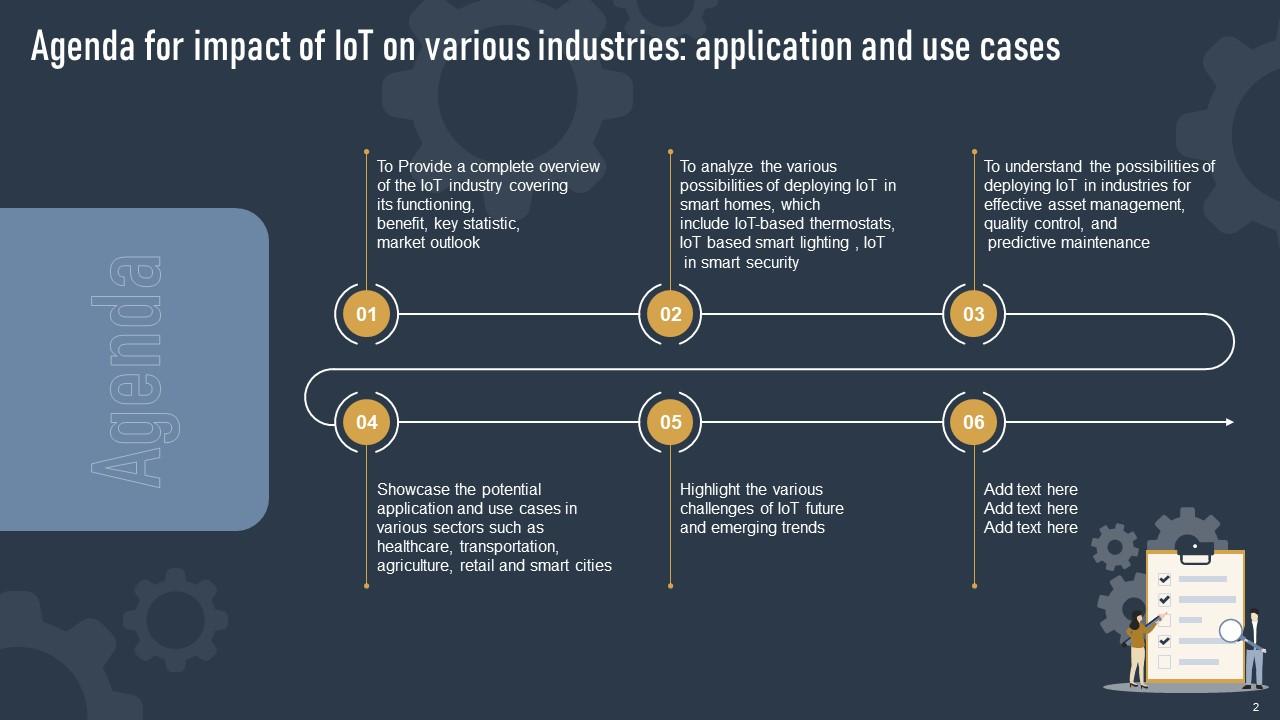
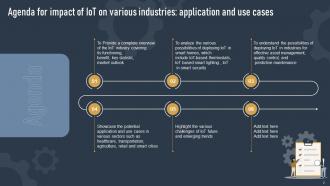
Slide 2: This is an Agenda slide. State your agendas here.
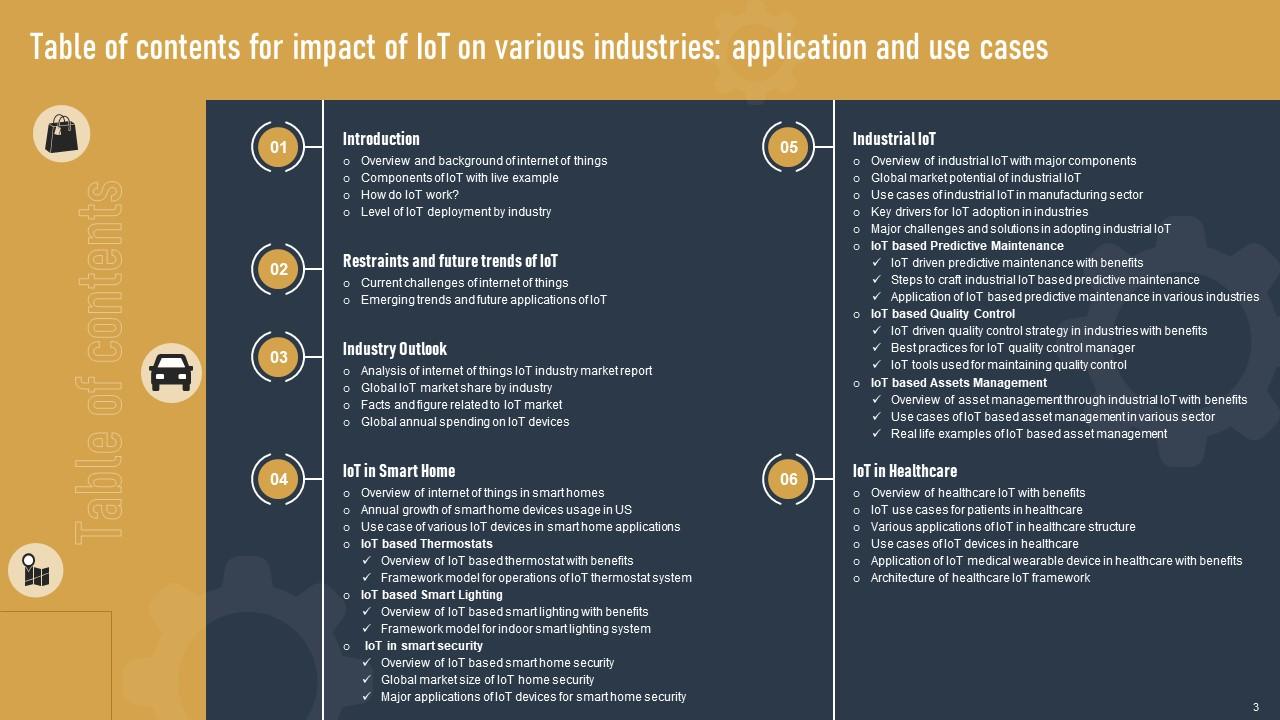
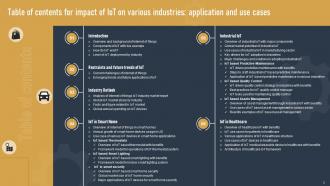
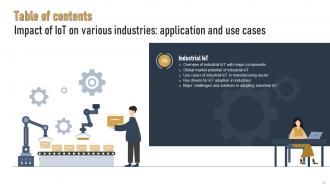
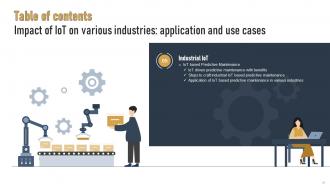
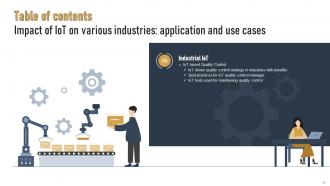
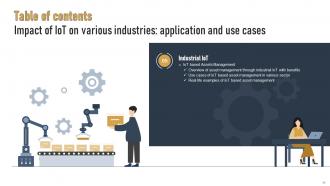
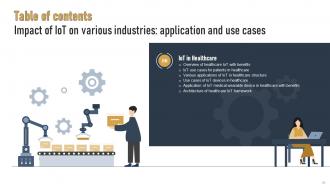
Slide 3: The slide displays Table of contents for presentation.
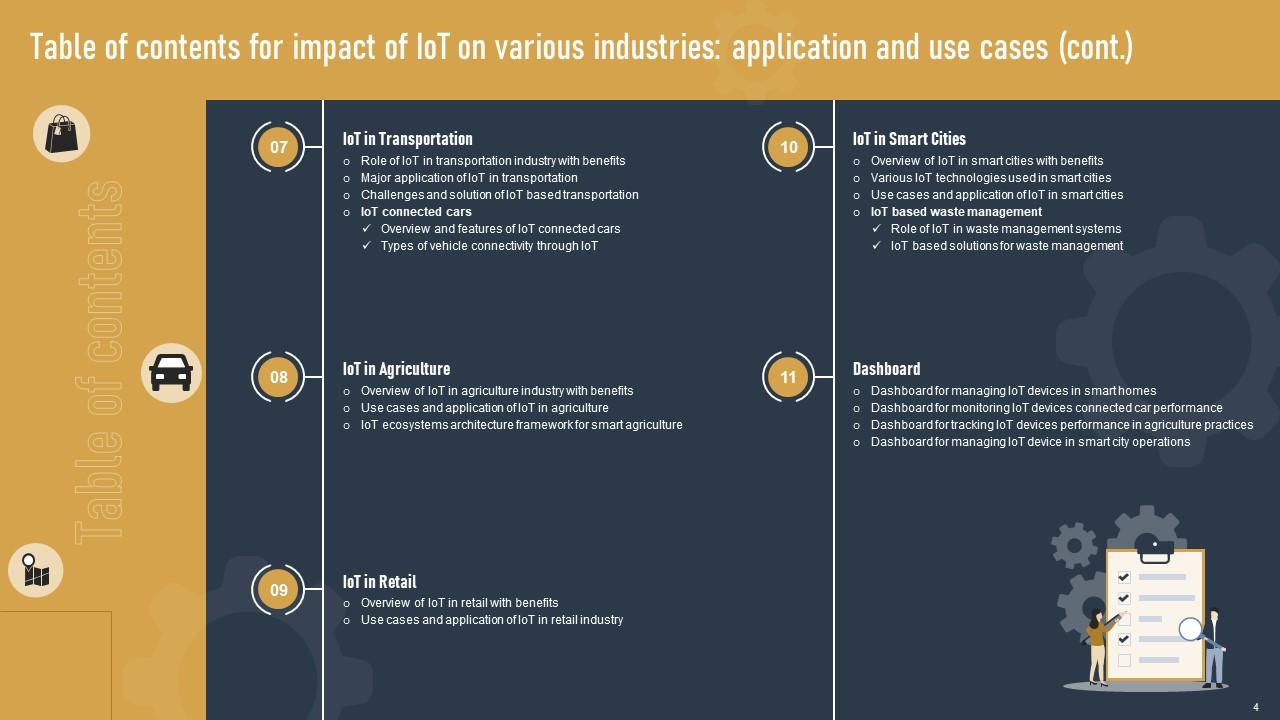
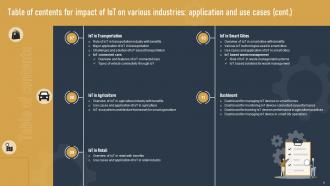
Slide 4: The slide continues Table of contents.
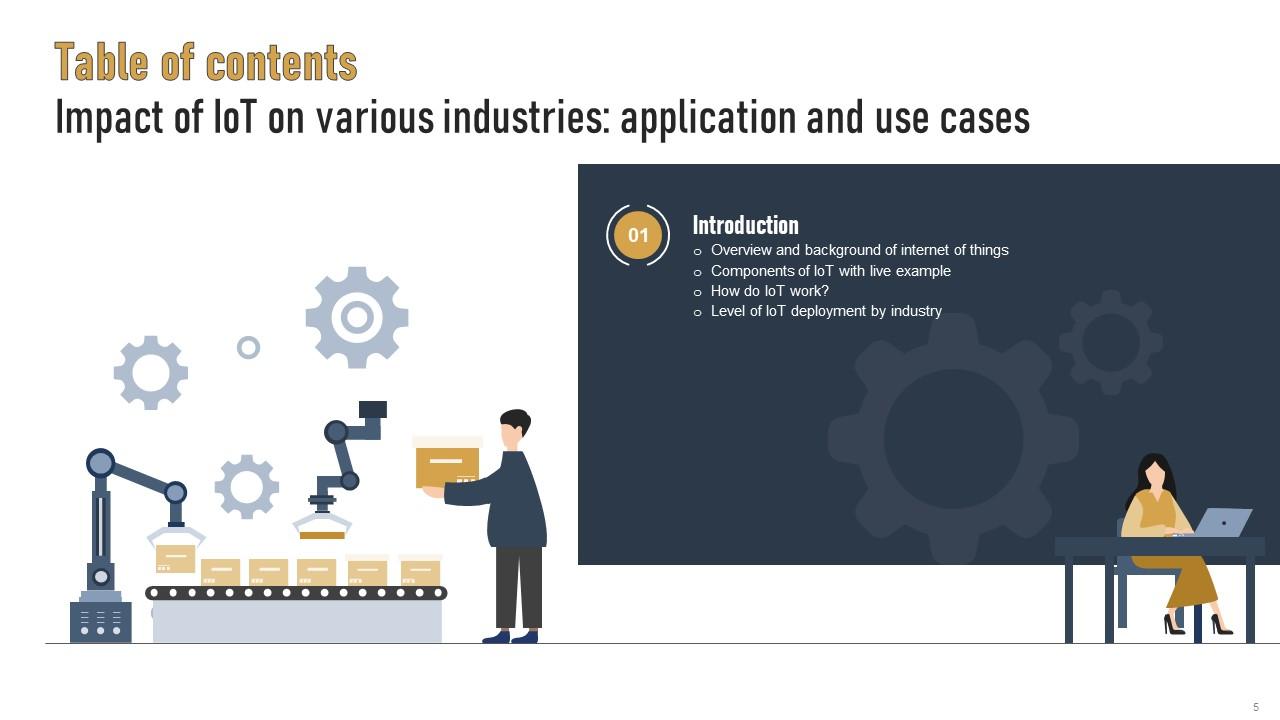
Slide 5: The slide again shows Table of contents.
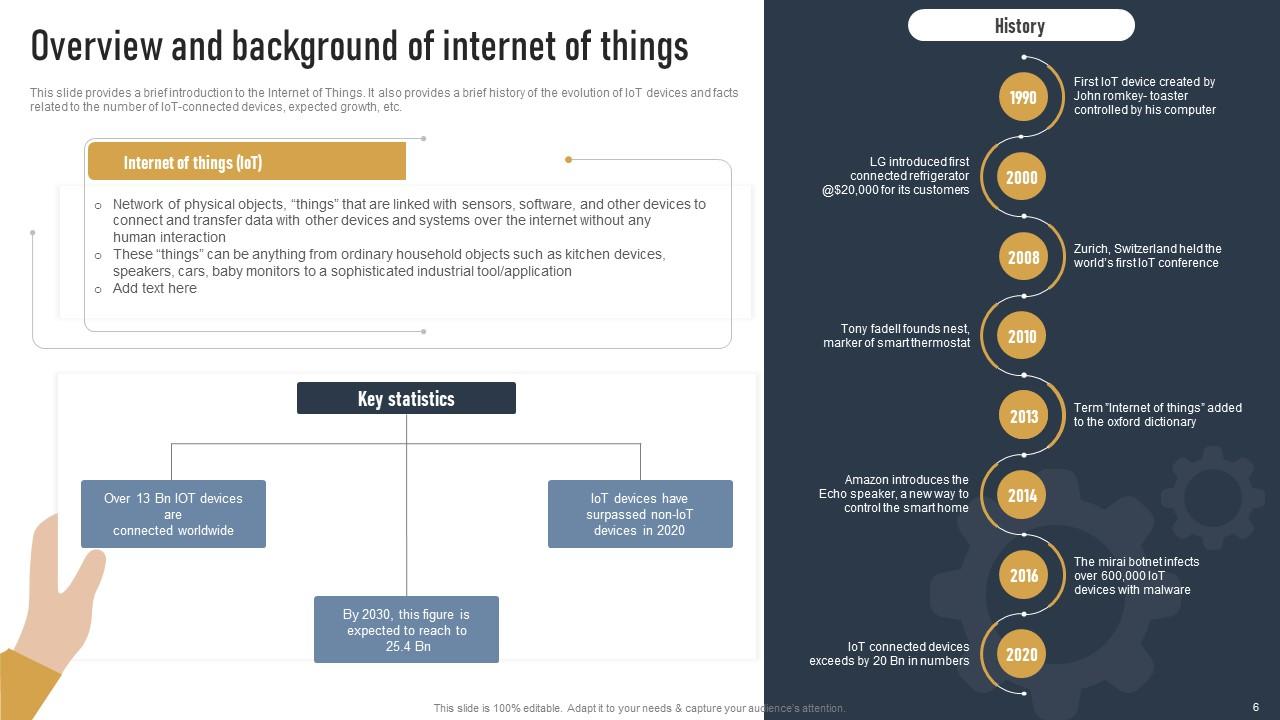
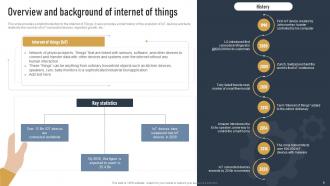
Slide 6: This slide provides a brief introduction to the Internet of Things.
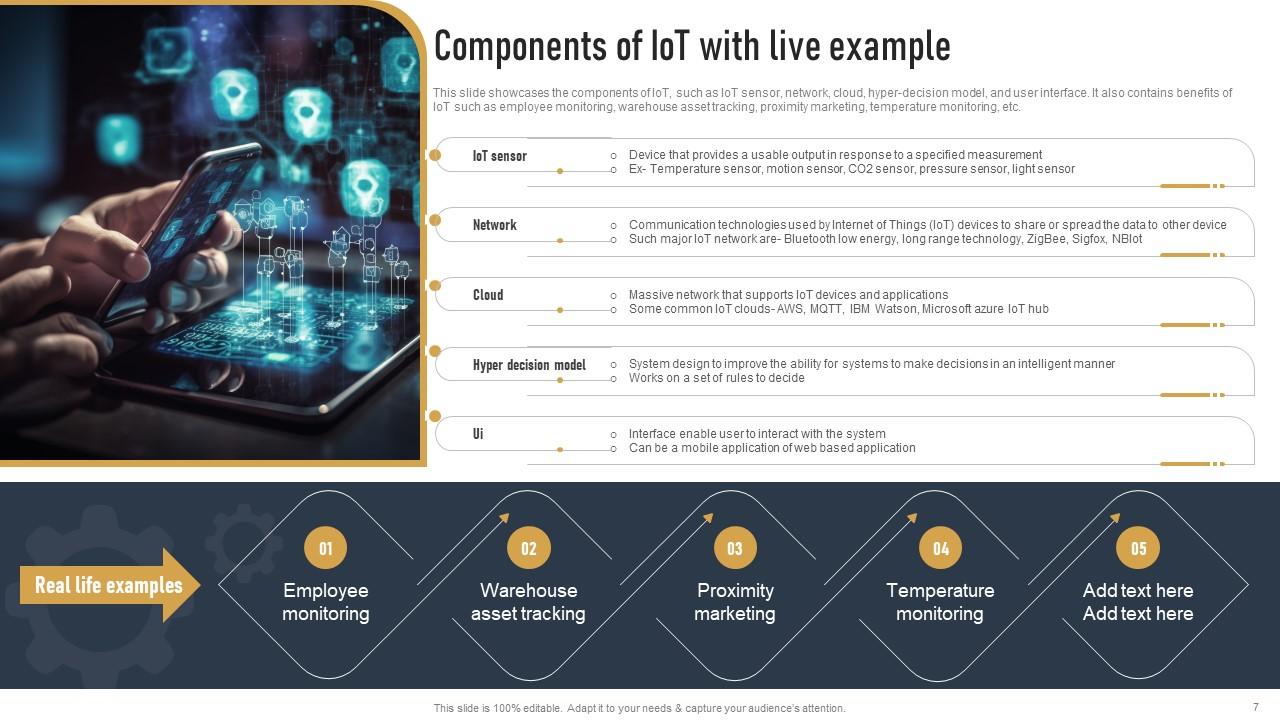
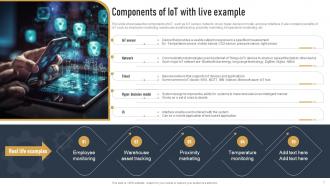
Slide 7: This slide showcases the components of IoT, such as IoT sensor, network, cloud, hyper-decision model, and user interface.
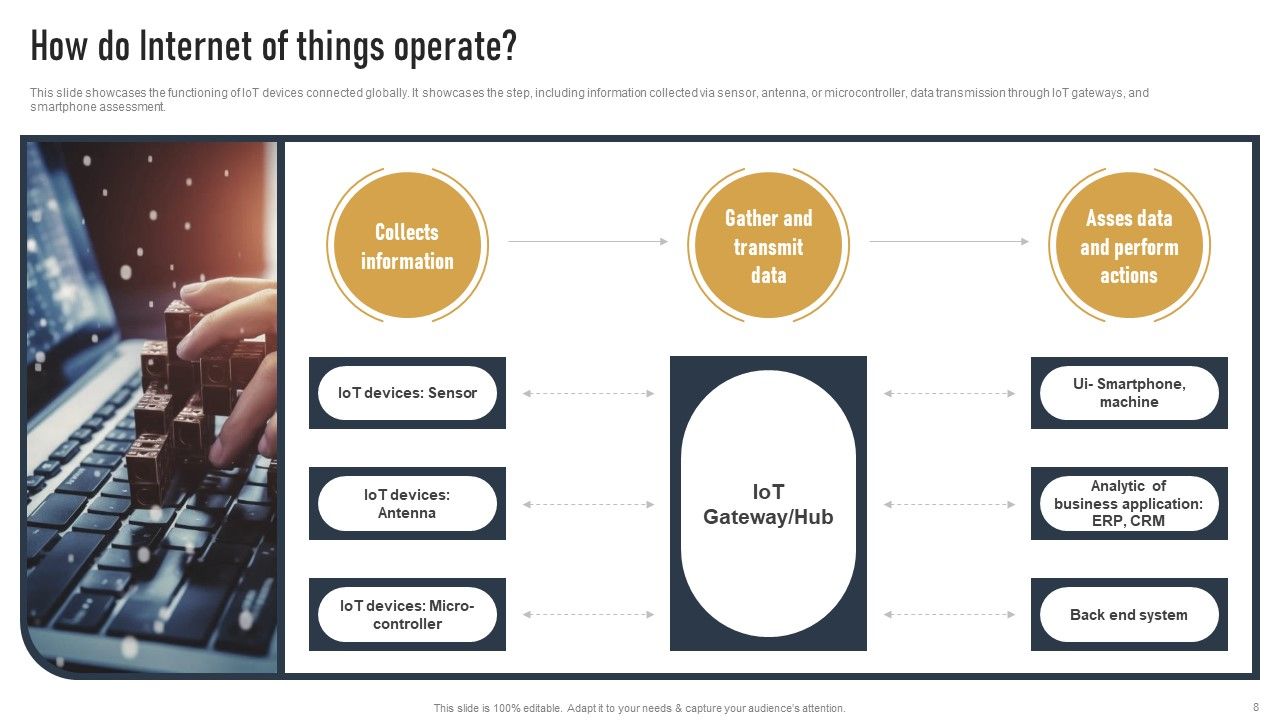
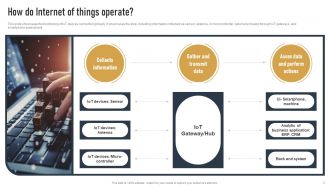
Slide 8: This slide showcases the functioning of IoT devices connected globally.
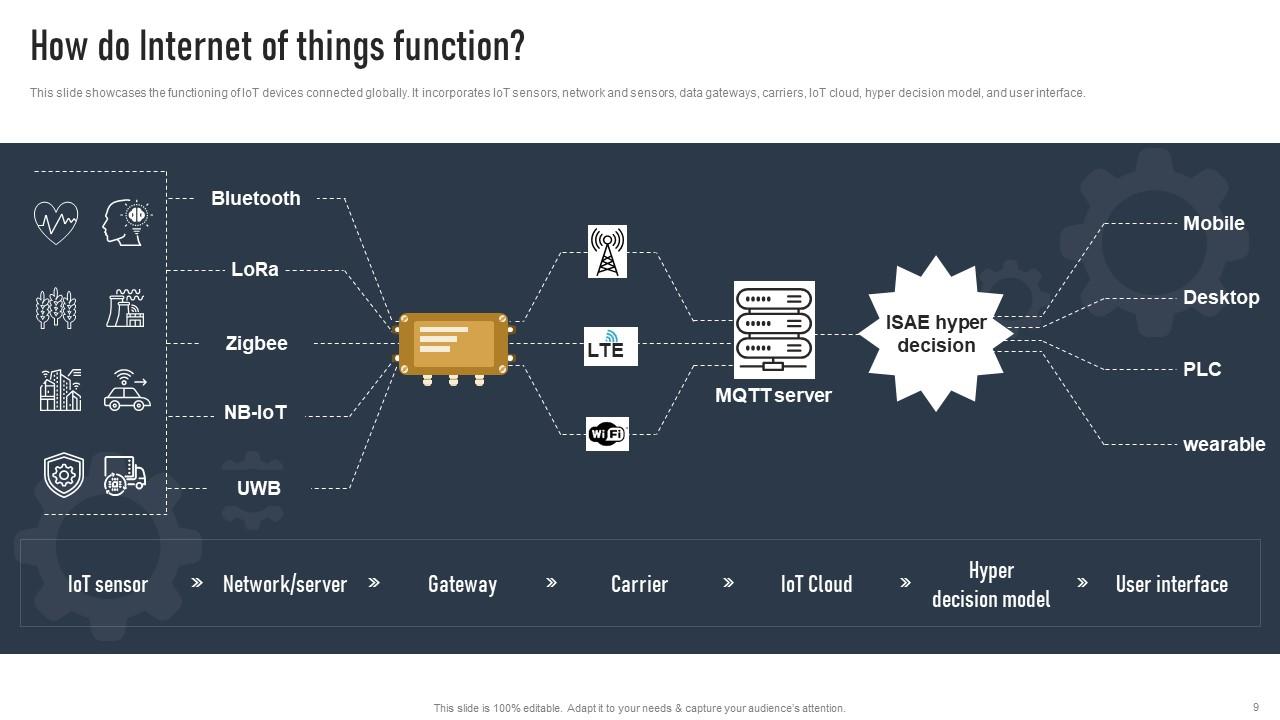
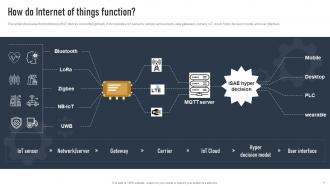
Slide 9: This slide showcases the functioning of IoT devices connected globally.
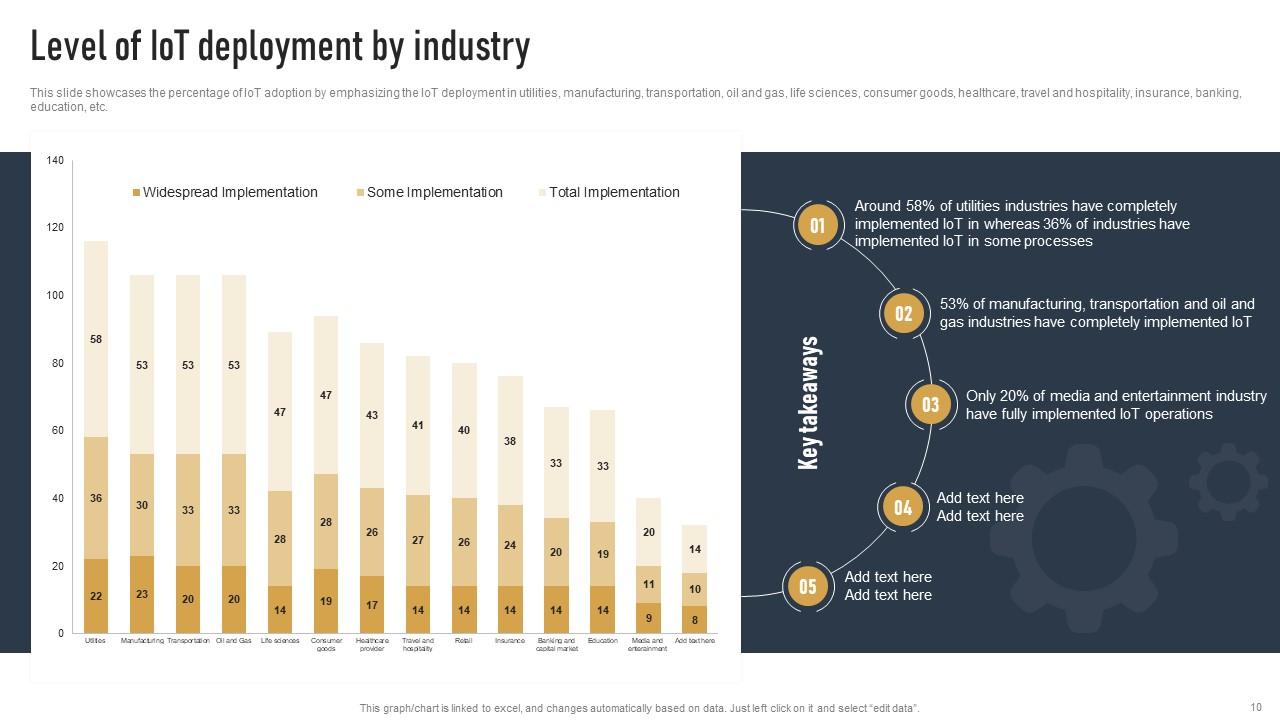
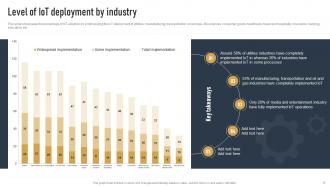
Slide 10: This slide showcases the percentage of IoT adoption by emphasizing the IoT deployment in utilities, manufacturing, transportation, oil and gas, etc.
Slide 11: The slide represents Title of contents further.
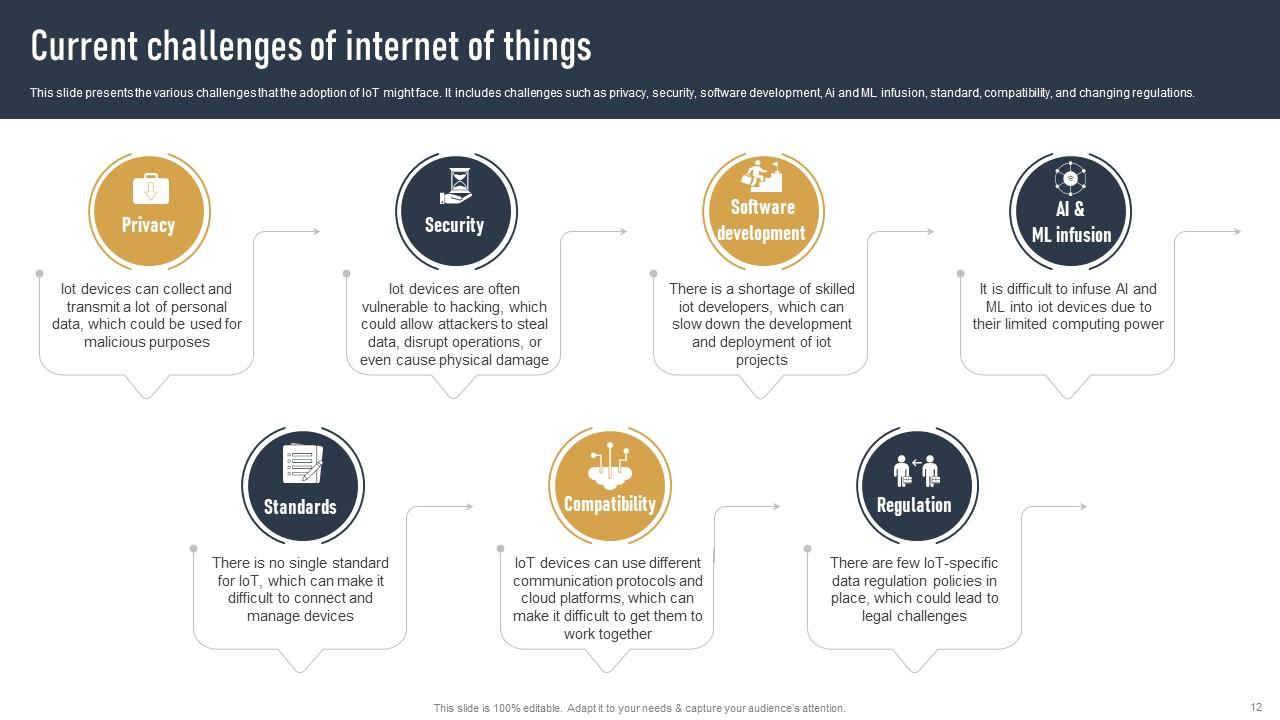
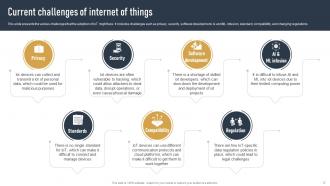
Slide 12: This slide presents the various challenges that the adoption of IoT might face.
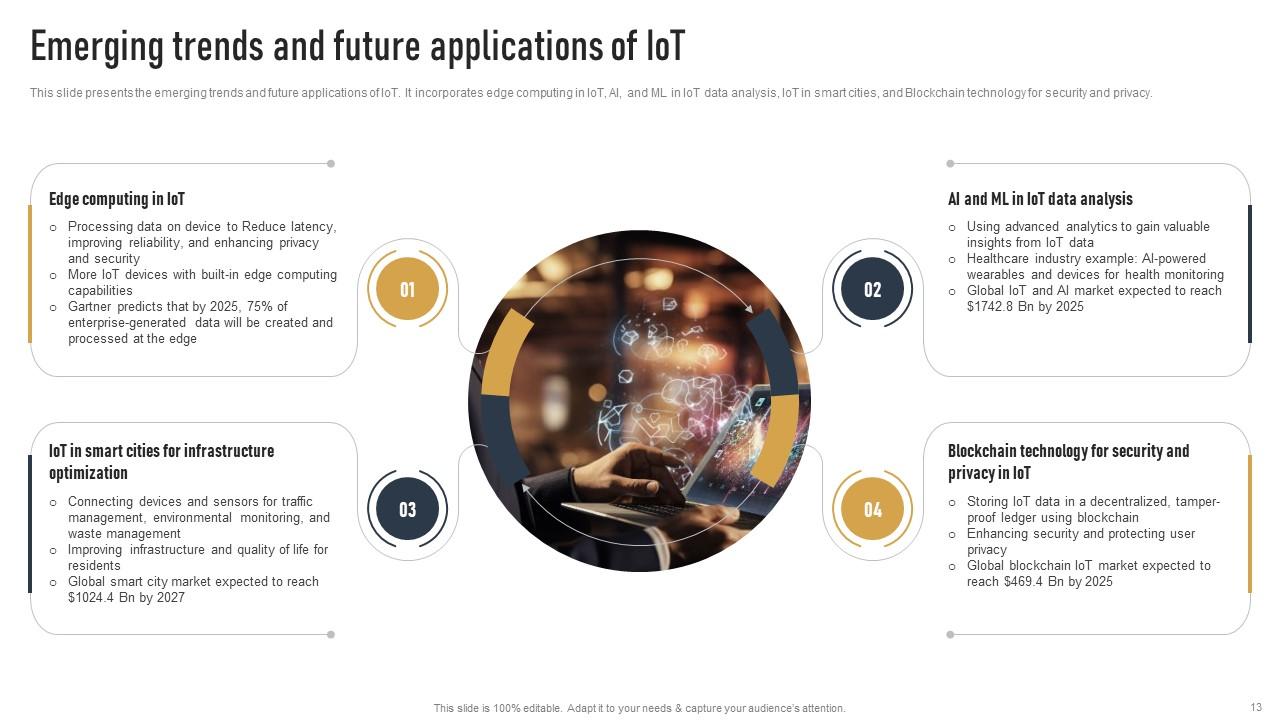
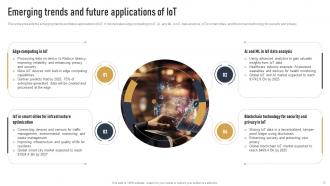
Slide 13: This slide presents the emerging trends and future applications of IoT.
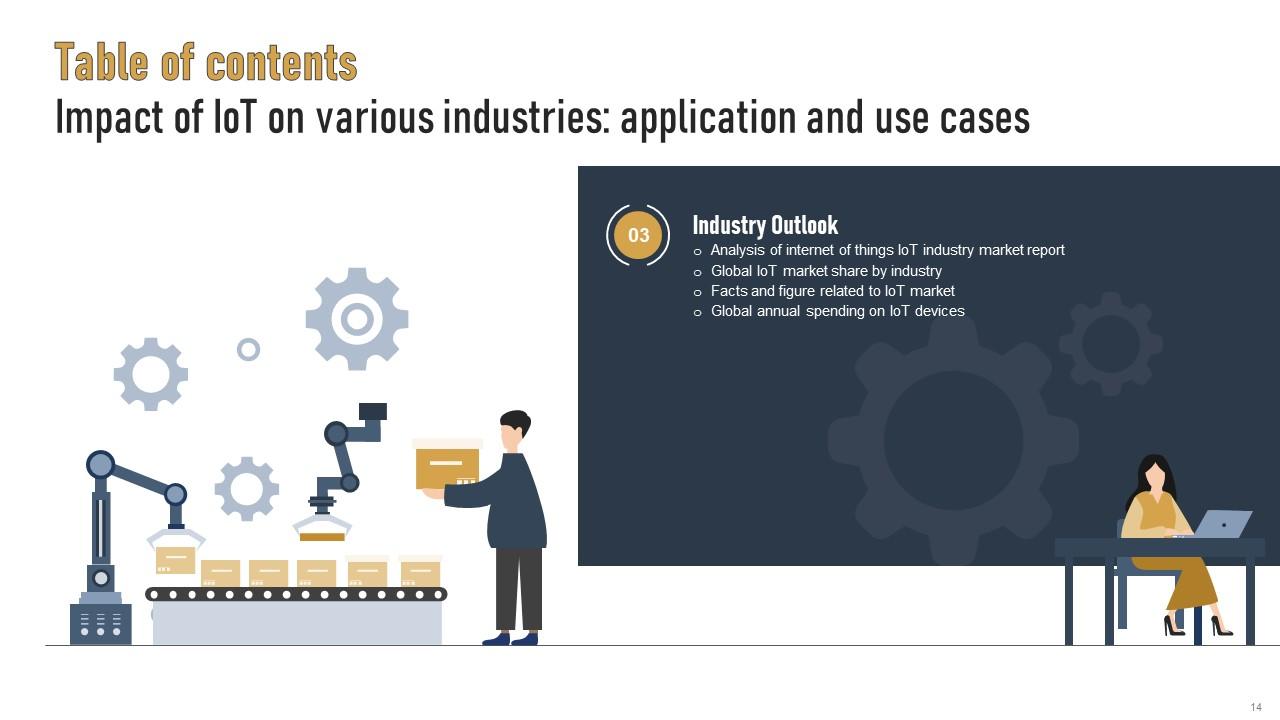
Slide 14: The slide presents title of contents further.
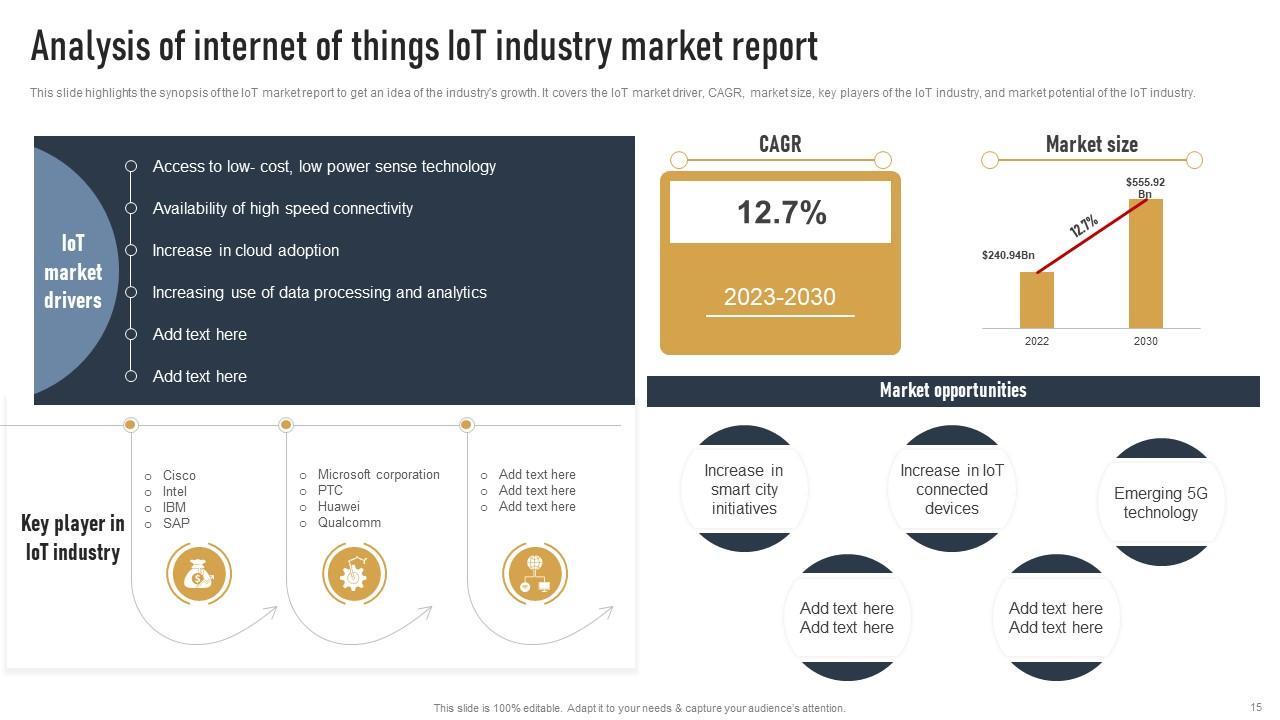
Slide 15: This slide highlights the synopsis of the IoT market report to get an idea of the industry's growth.
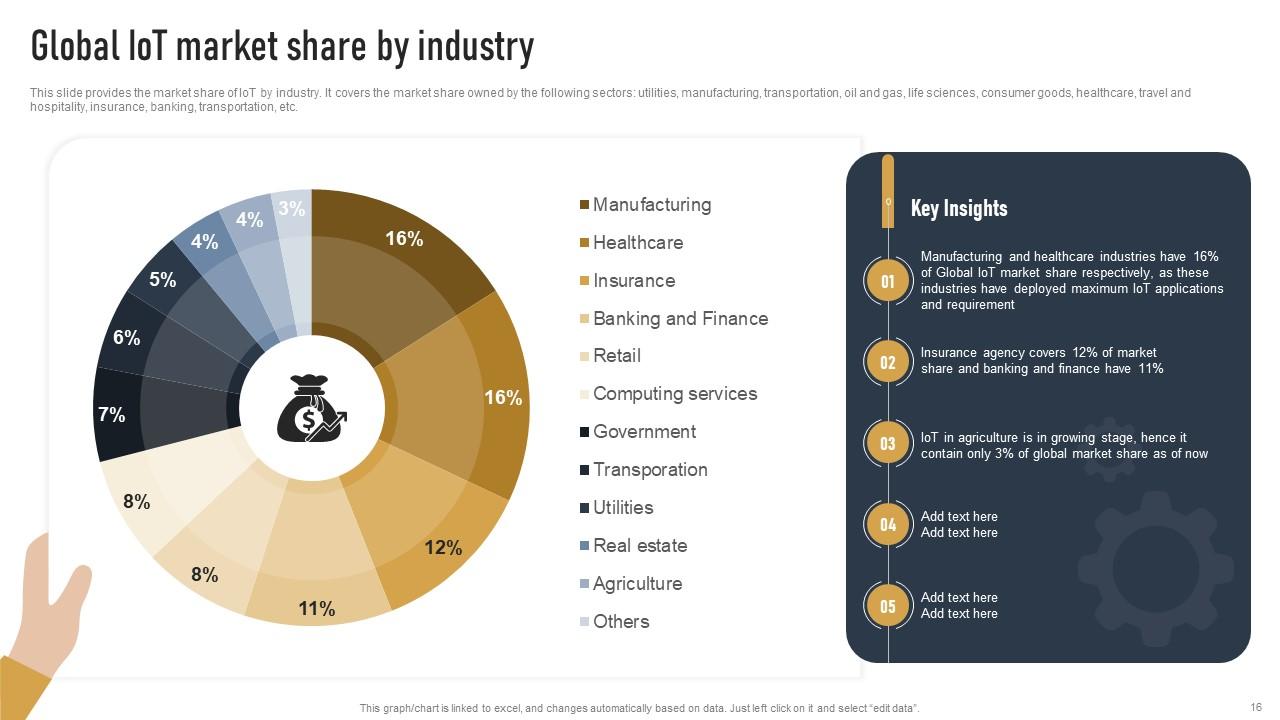
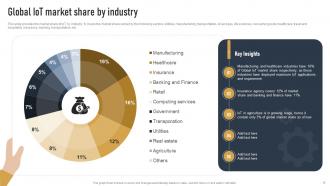
Slide 16: This slide provides the market share of IoT by industry.
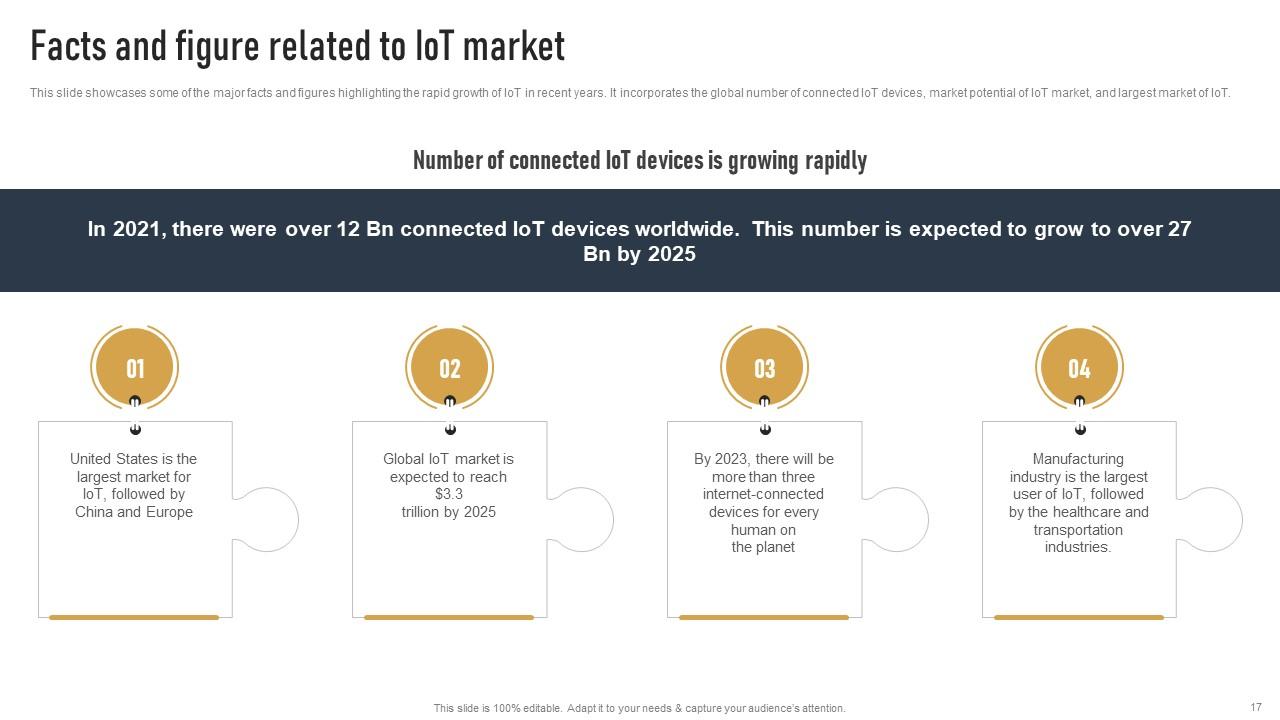
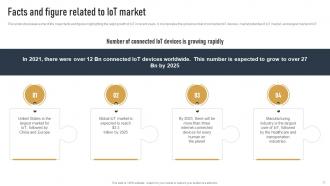
Slide 17: This slide showcases some of the major facts and figures highlighting the rapid growth of IoT in recent years.
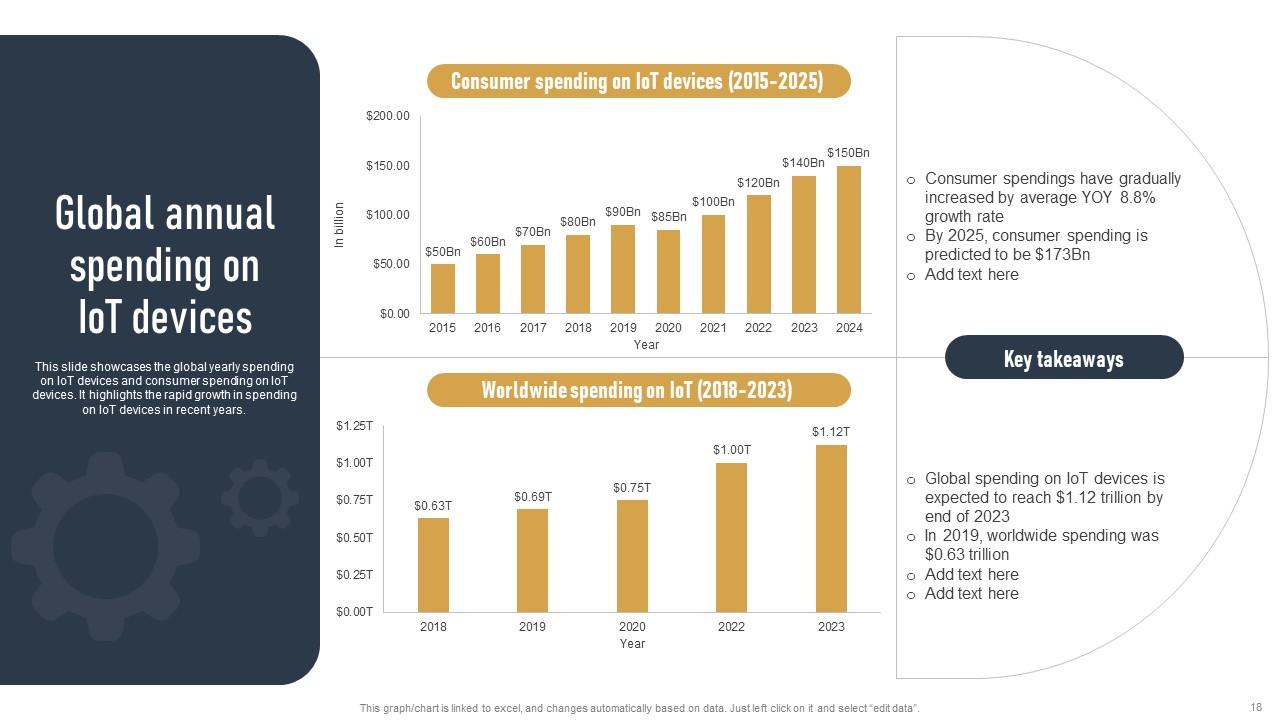
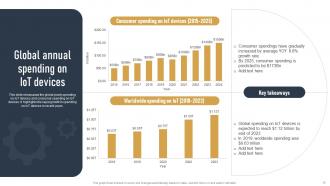
Slide 18: This slide showcases the global yearly spending on IoT devices and consumer spending on IoT devices.
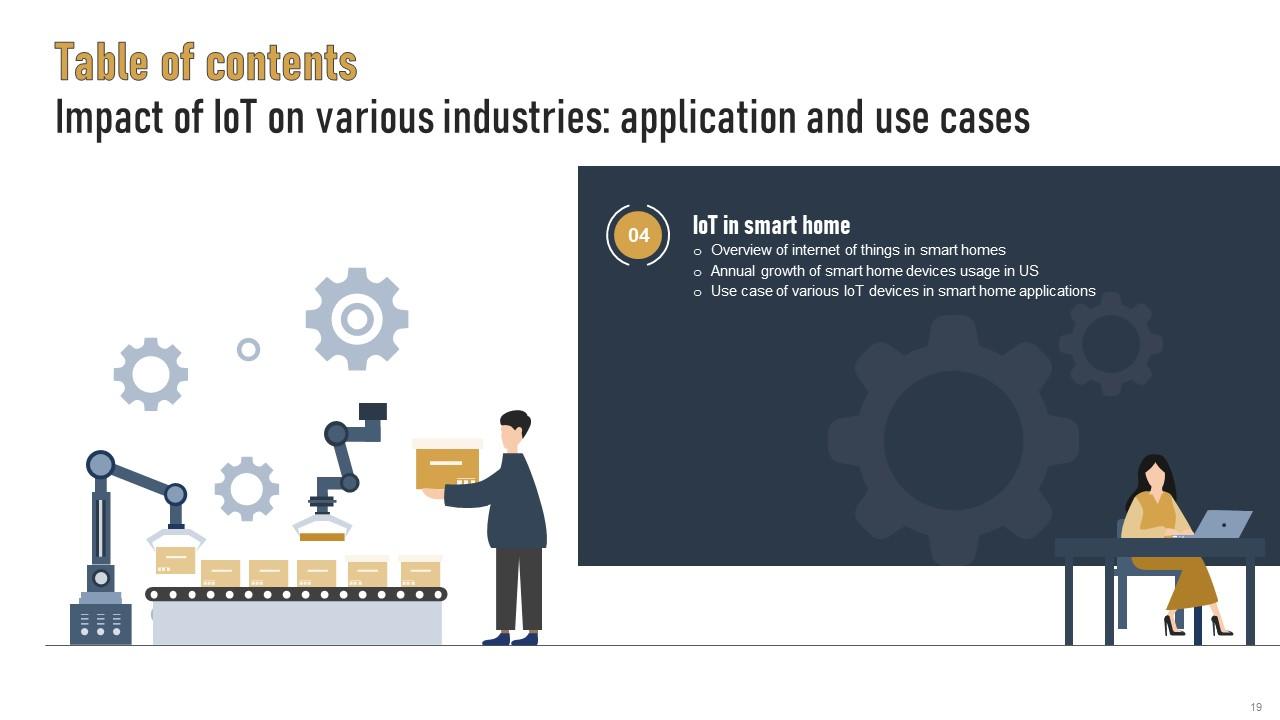
Slide 19: The slide renders Title of contents further.
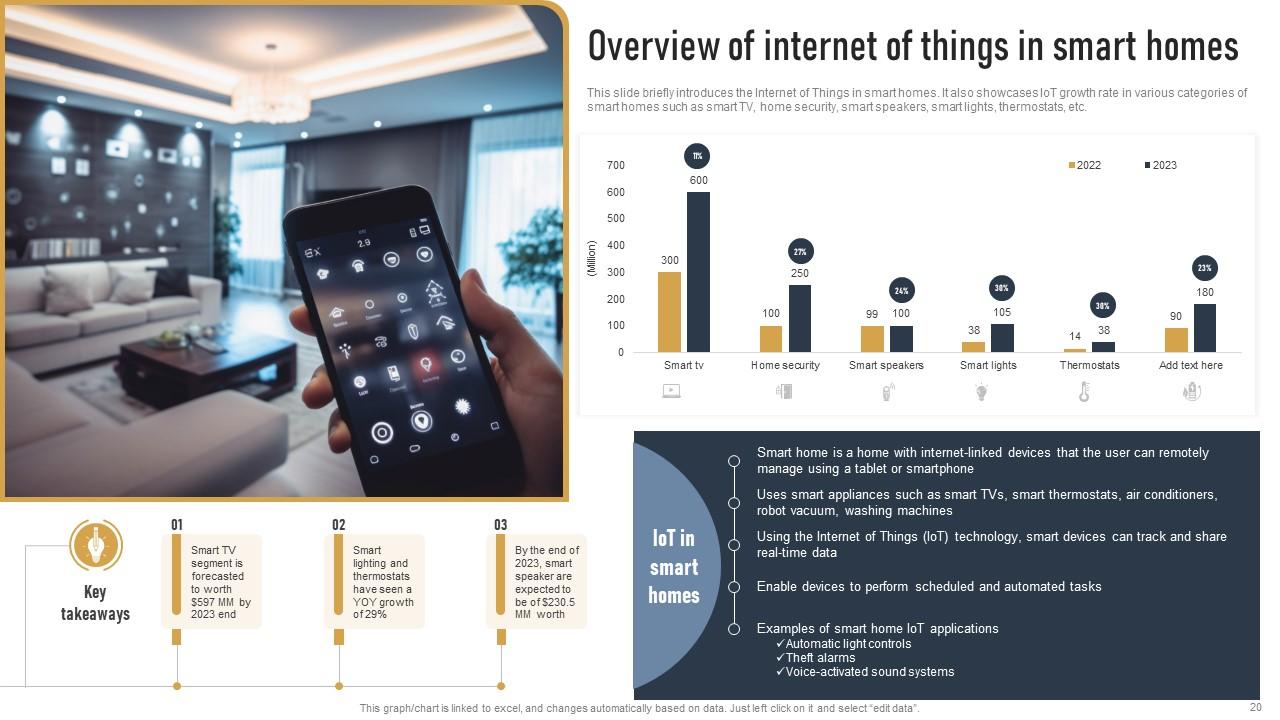
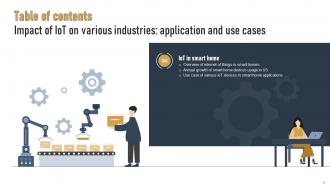
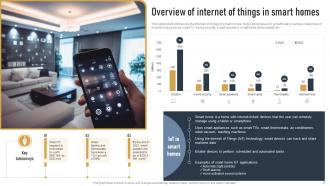
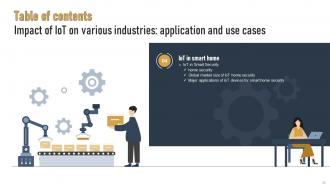
Slide 20: This slide briefly introduces the Internet of Things in smart homes.
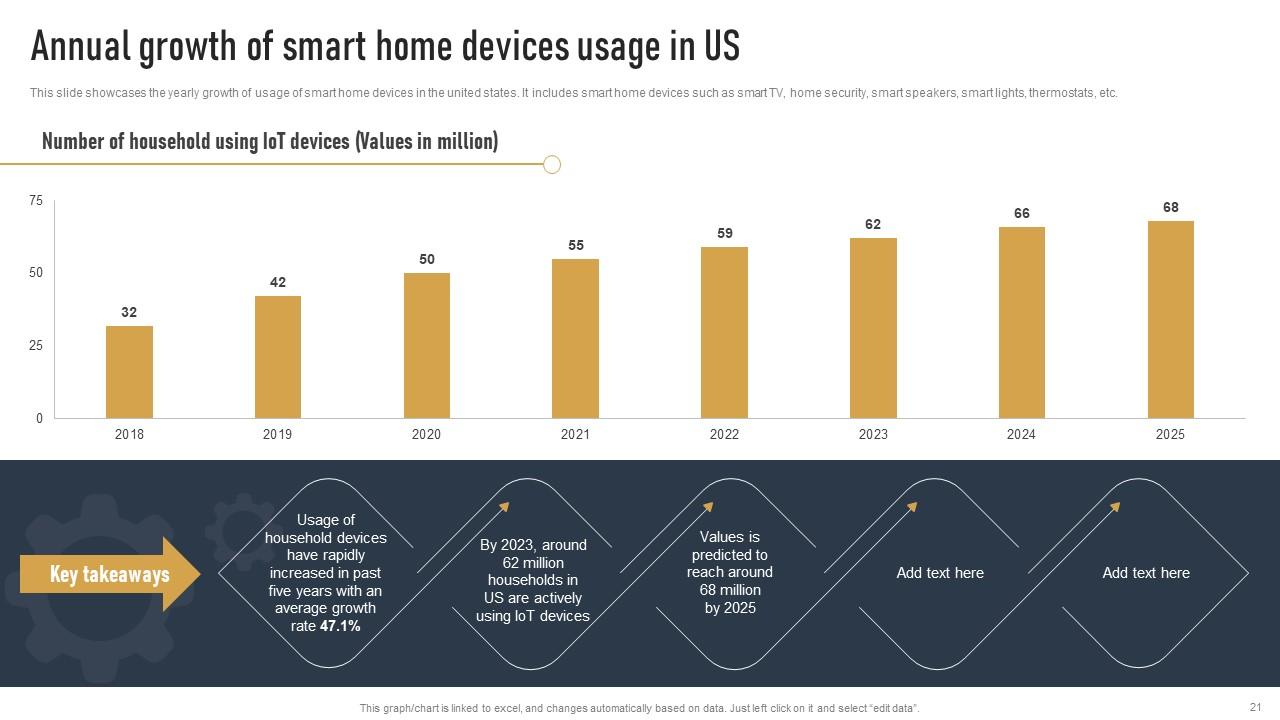
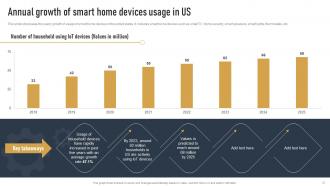
Slide 21: This slide showcases the yearly growth of usage of smart home devices in the united states.
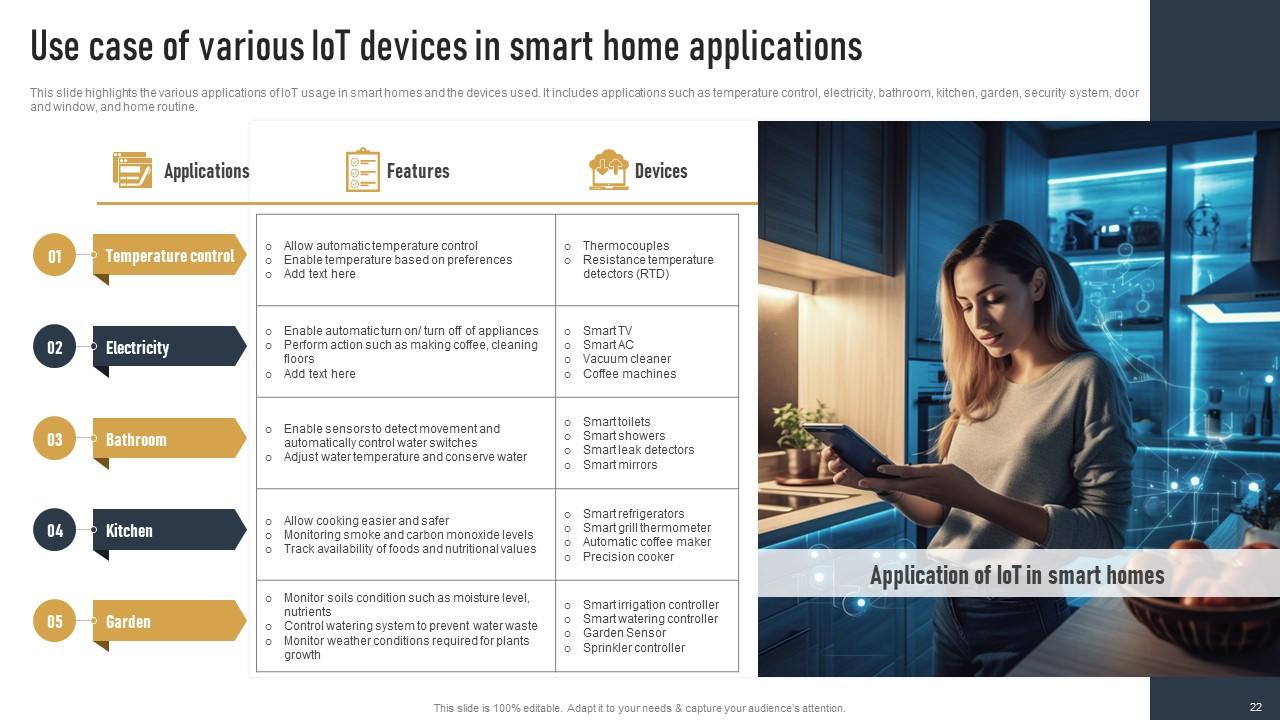
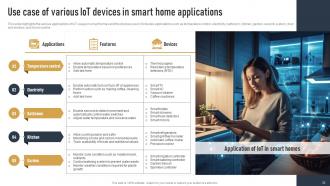
Slide 22: This slide highlights the various applications of IoT usage in smart homes and the devices used.
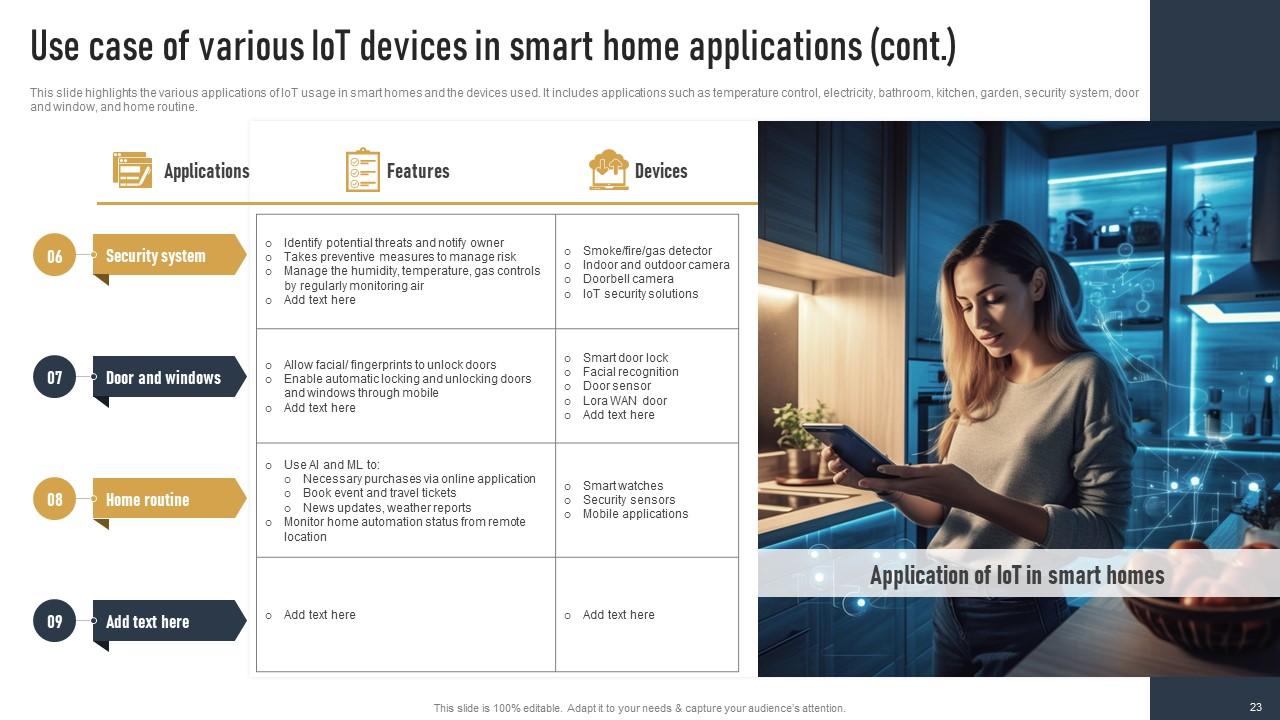
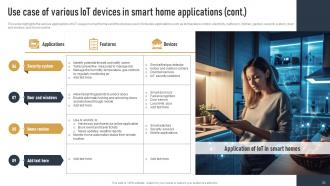
Slide 23: This slide highlights the various applications of IoT usage in smart homes and the devices used.
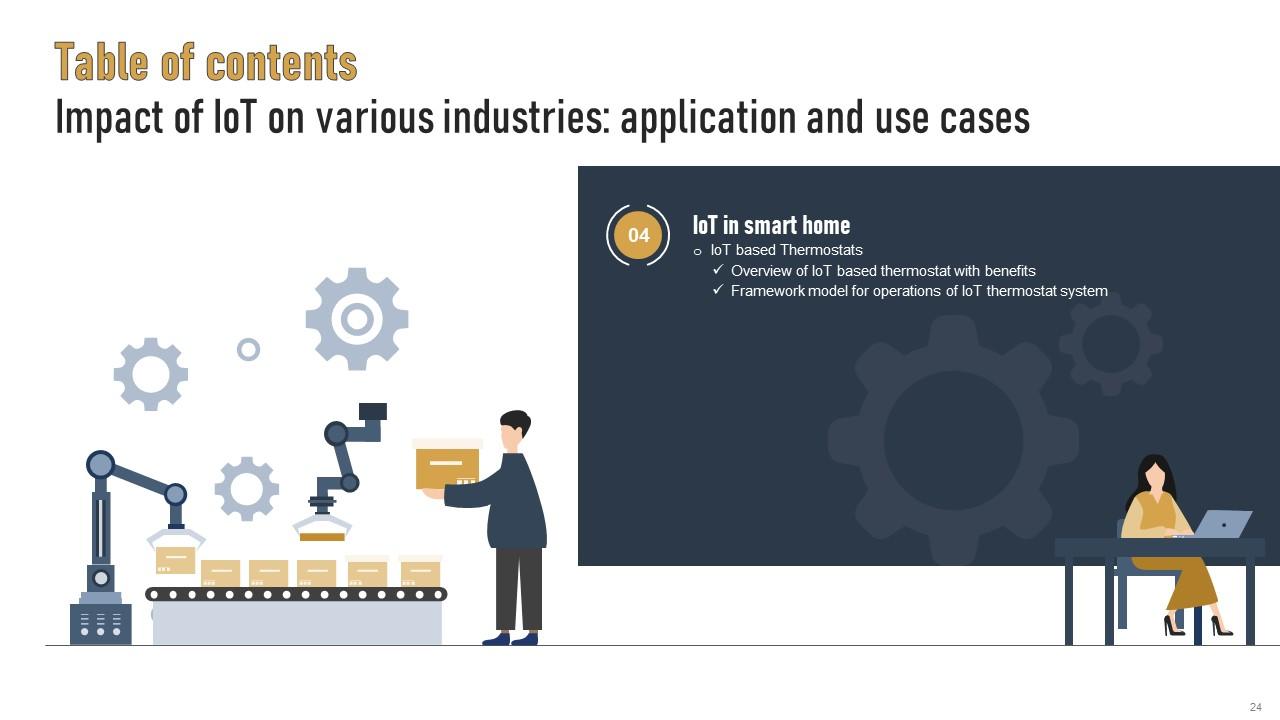
Slide 24: The slide displays another title of contents.
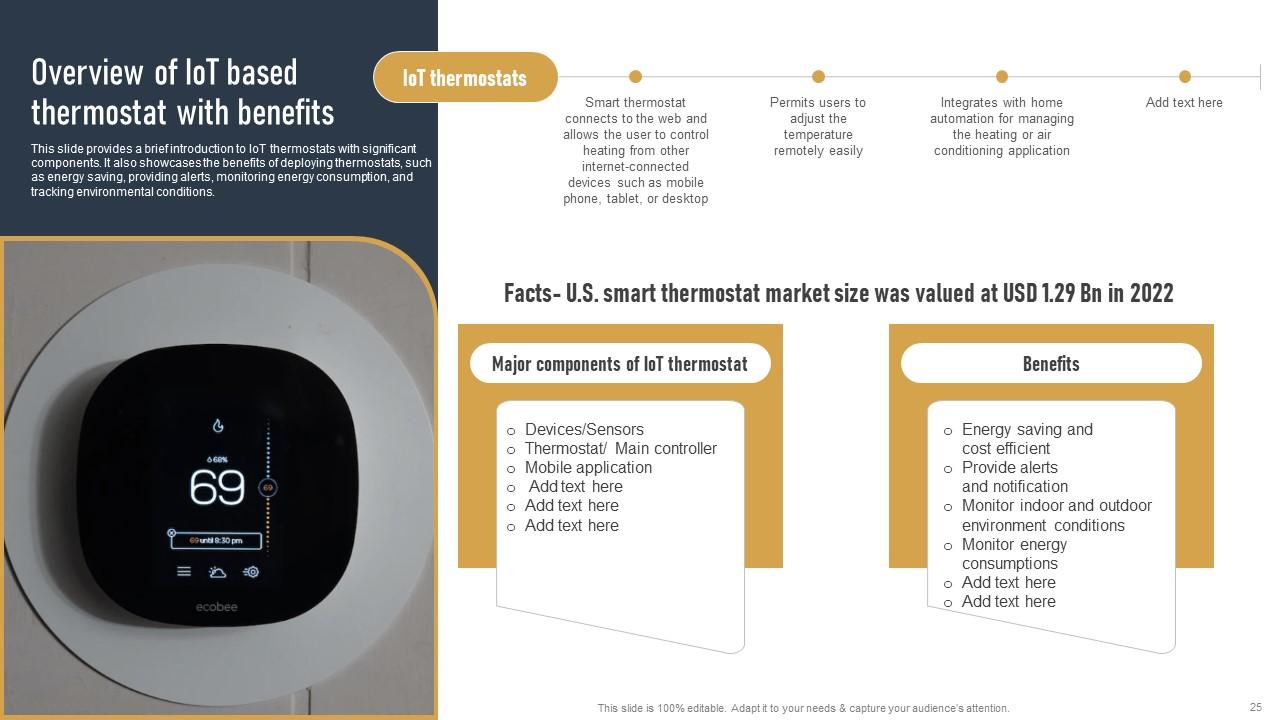
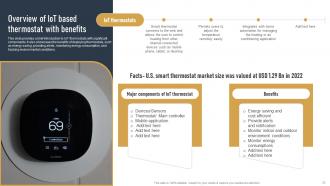
Slide 25: This slide provides a brief introduction to IoT thermostats with significant components.
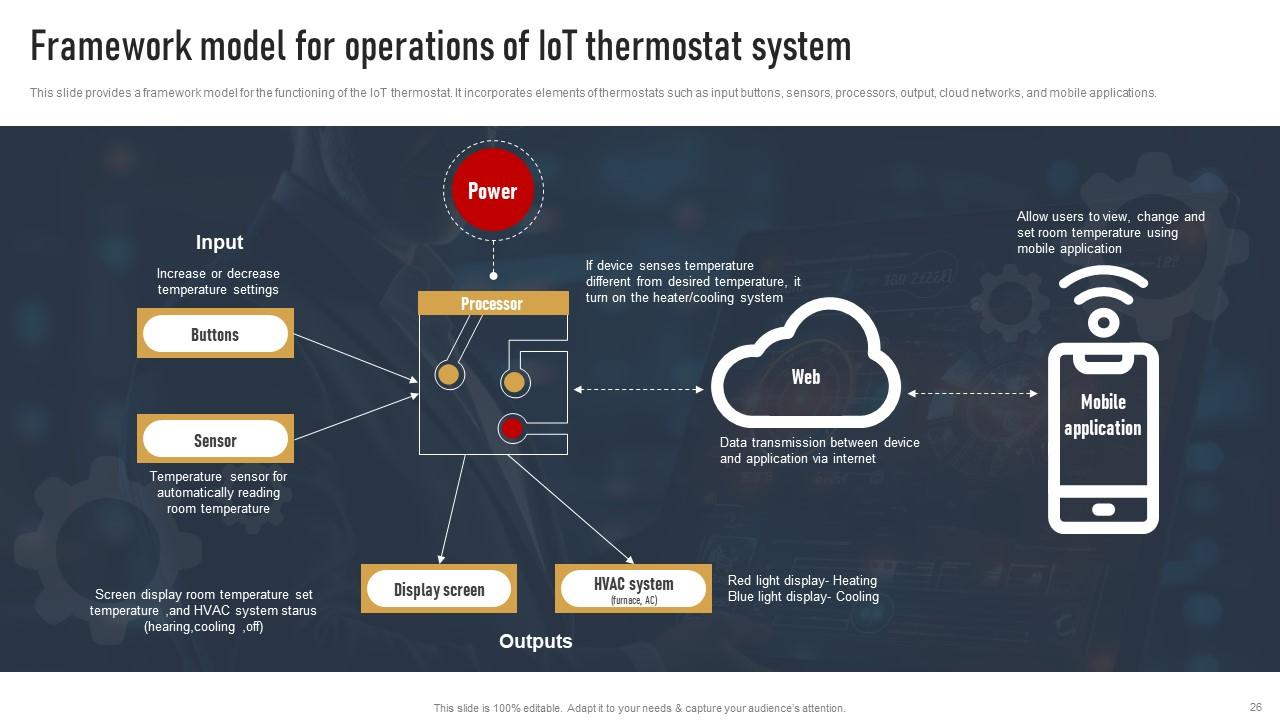
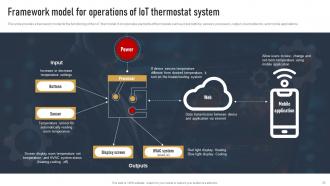
Slide 26: This slide provides a framework model for the functioning of the IoT thermostat.
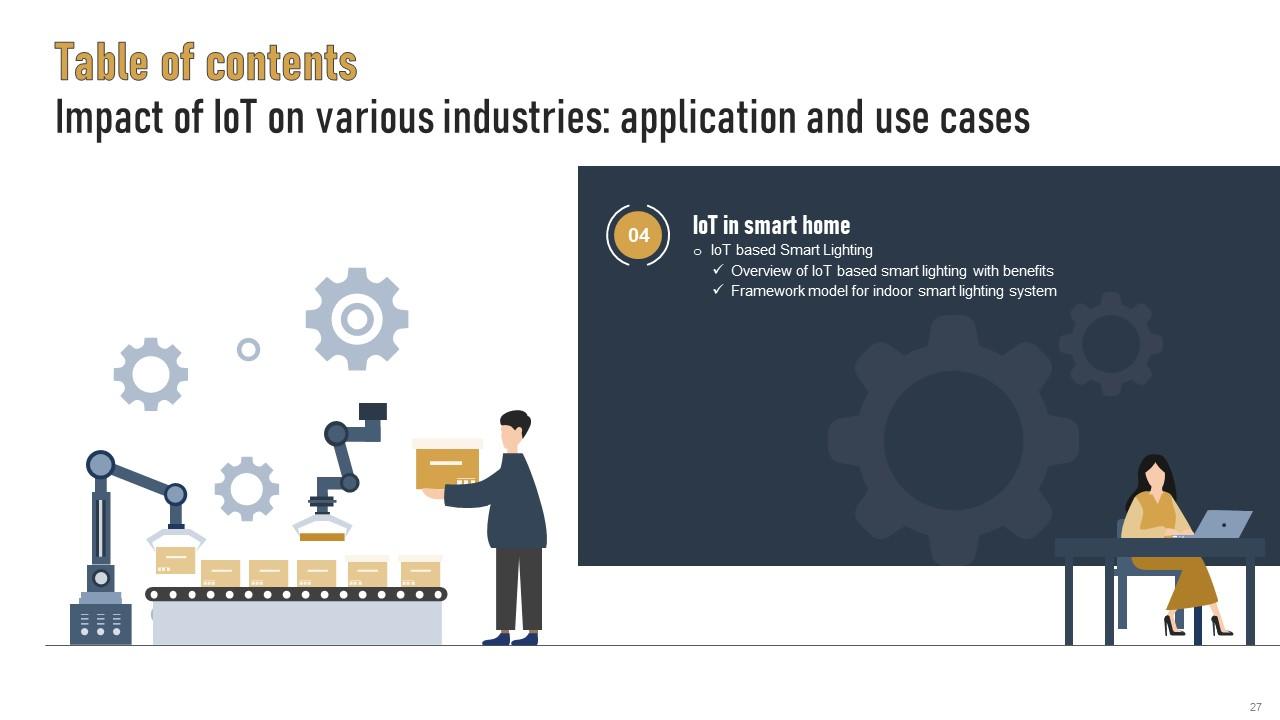
Slide 27: The slide renders title of contents which is to be discussed further.
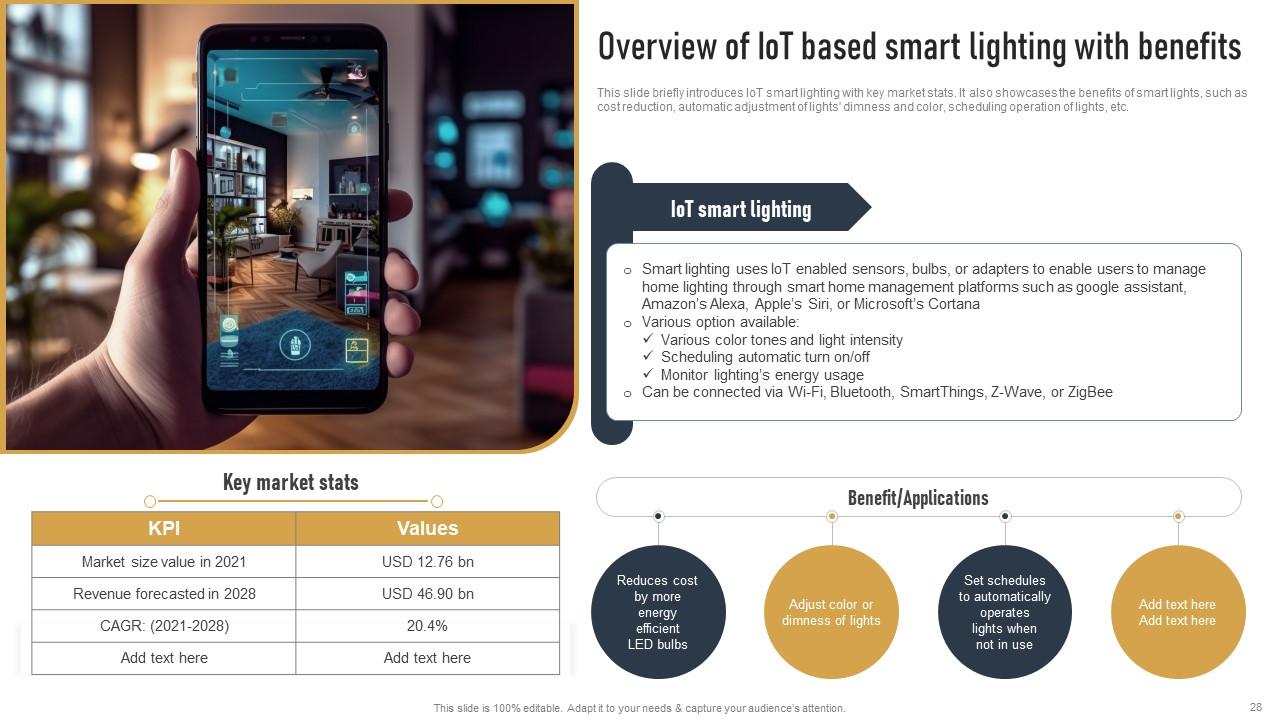
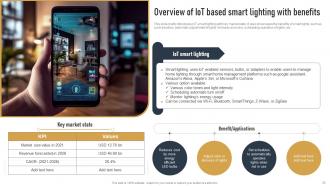
Slide 28: This slide briefly introduces IoT smart lighting with key market stats.
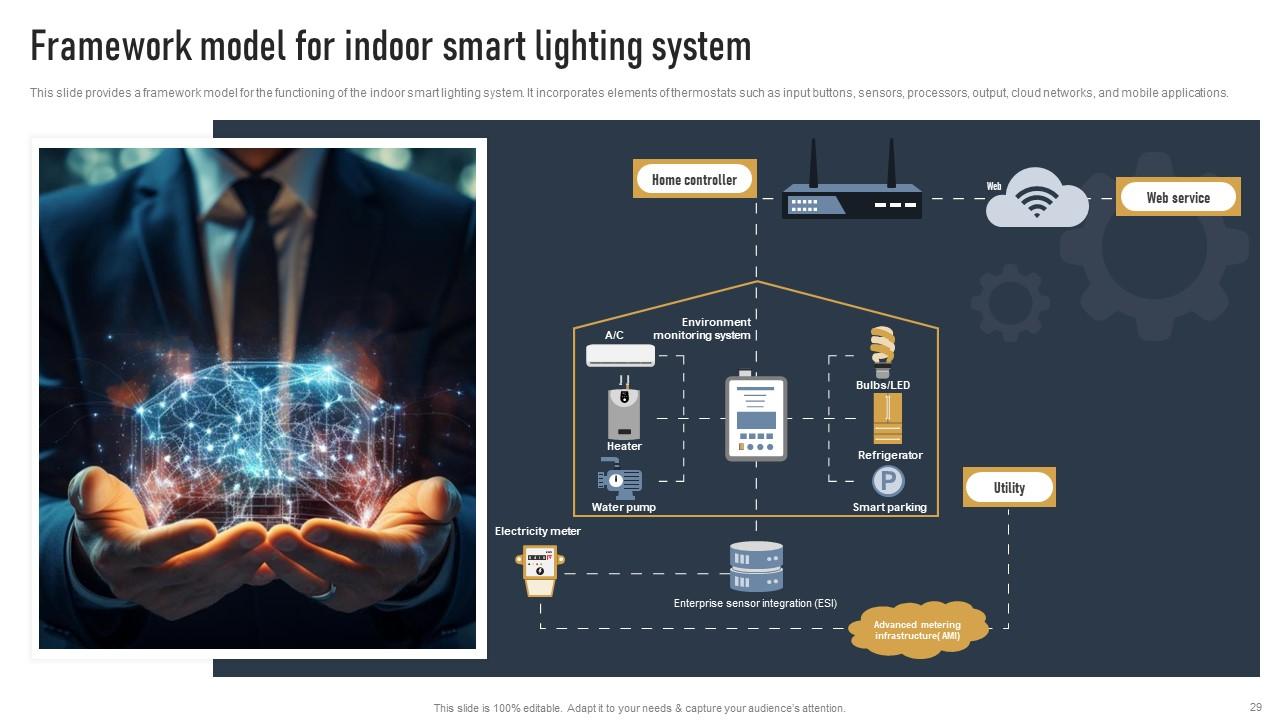
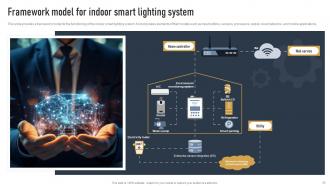
Slide 29: This slide provides a framework model for the functioning of the indoor smart lighting system.
Slide 30: The slide also demonstrates title of contents.
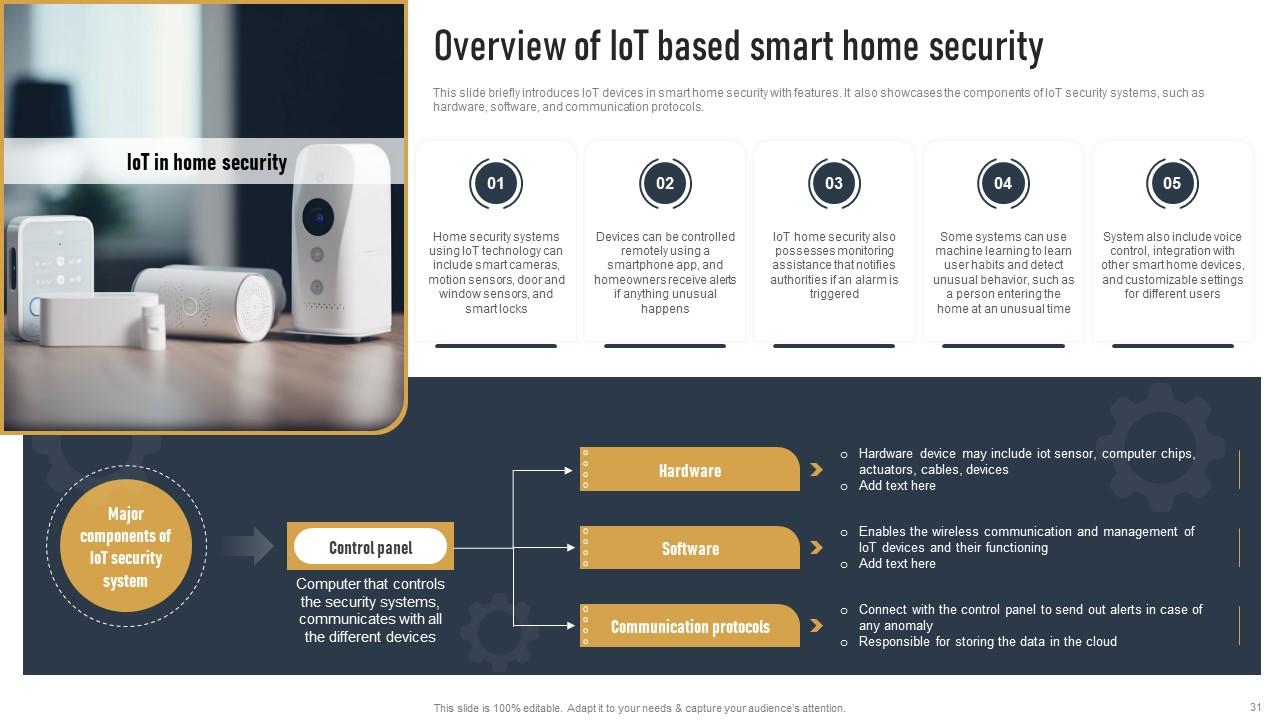
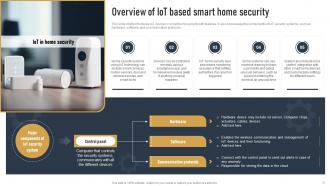
Slide 31: This slide briefly introduces IoT devices in smart home security with features.
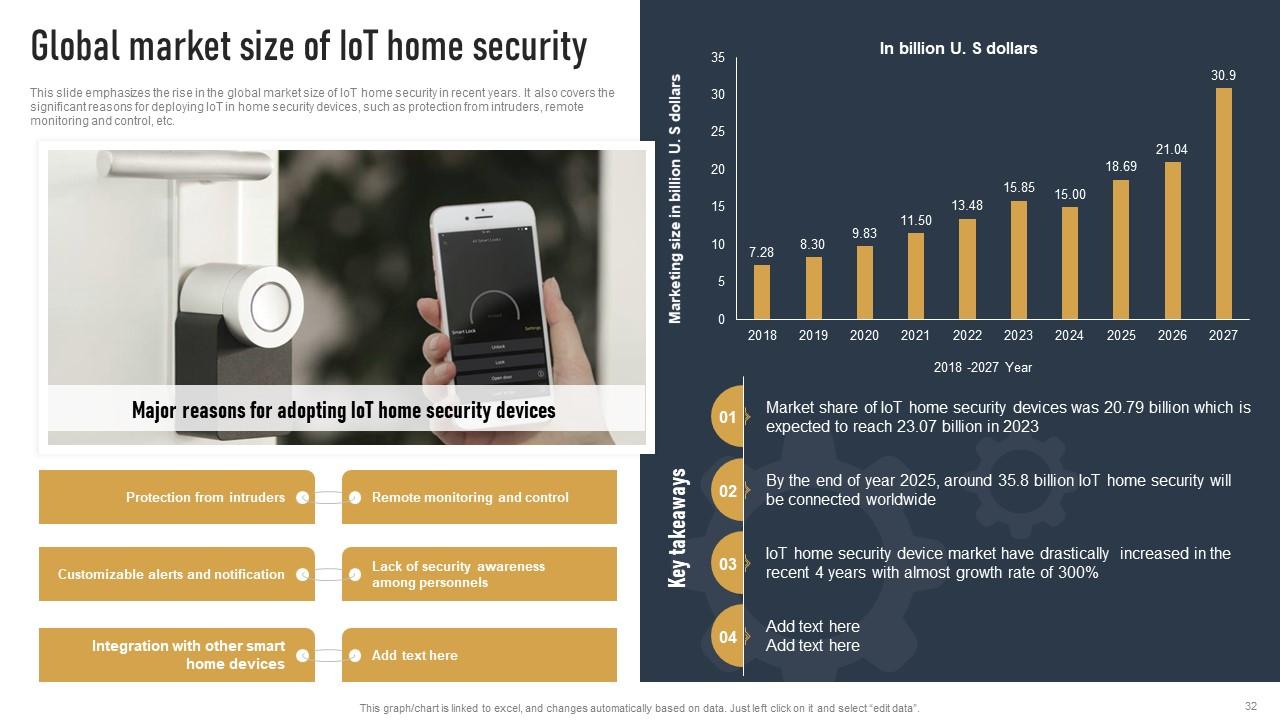
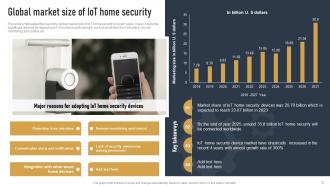
Slide 32: This slide emphasizes the rise in the global market size of IoT home security in recent years.
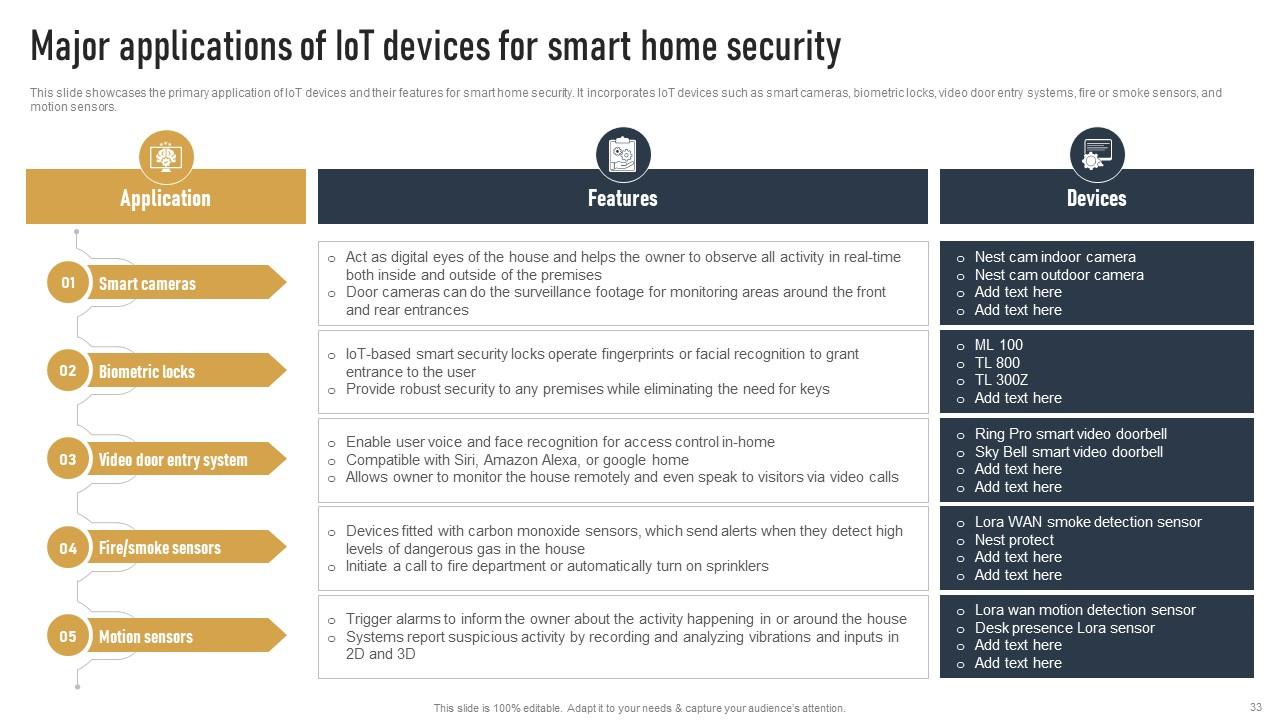
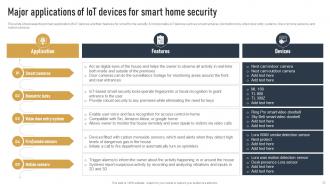
Slide 33: This slide showcases the primary application of IoT devices and their features for smart home security.
Slide 34: The slide displays title of contents further.
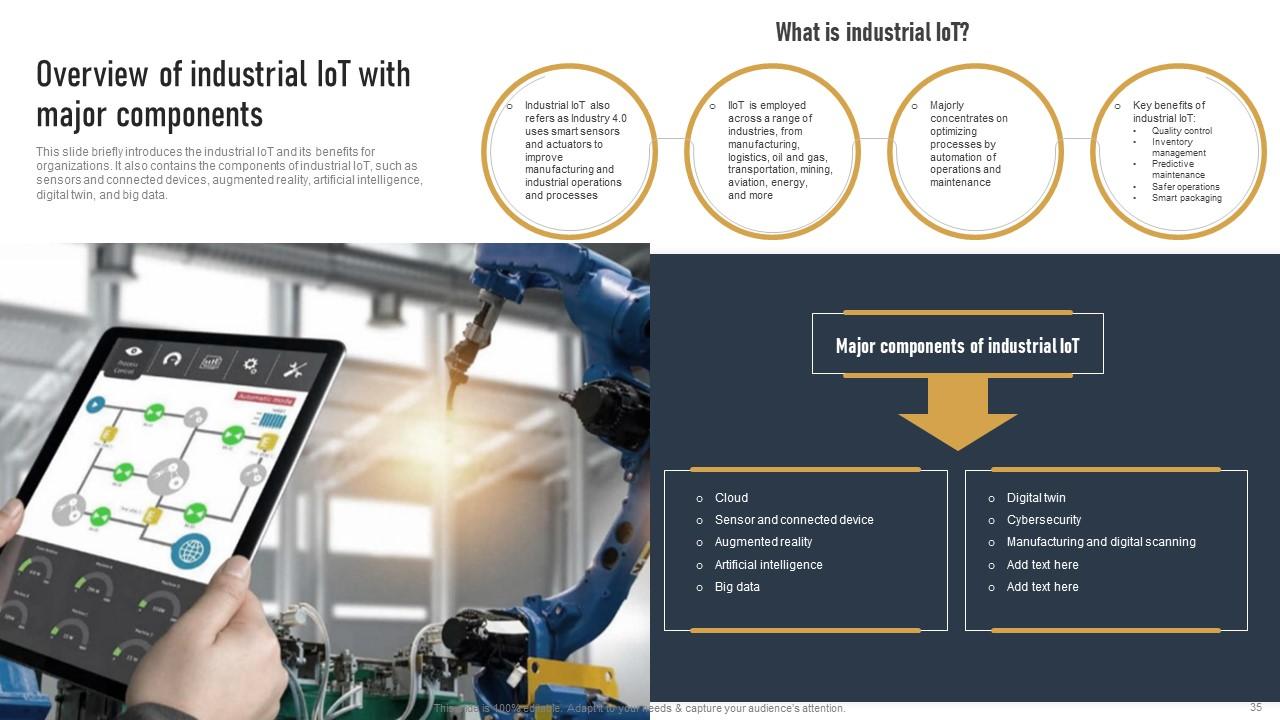
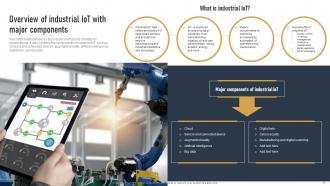
Slide 35: This slide briefly introduces the industrial IoT and its benefits for organizations.
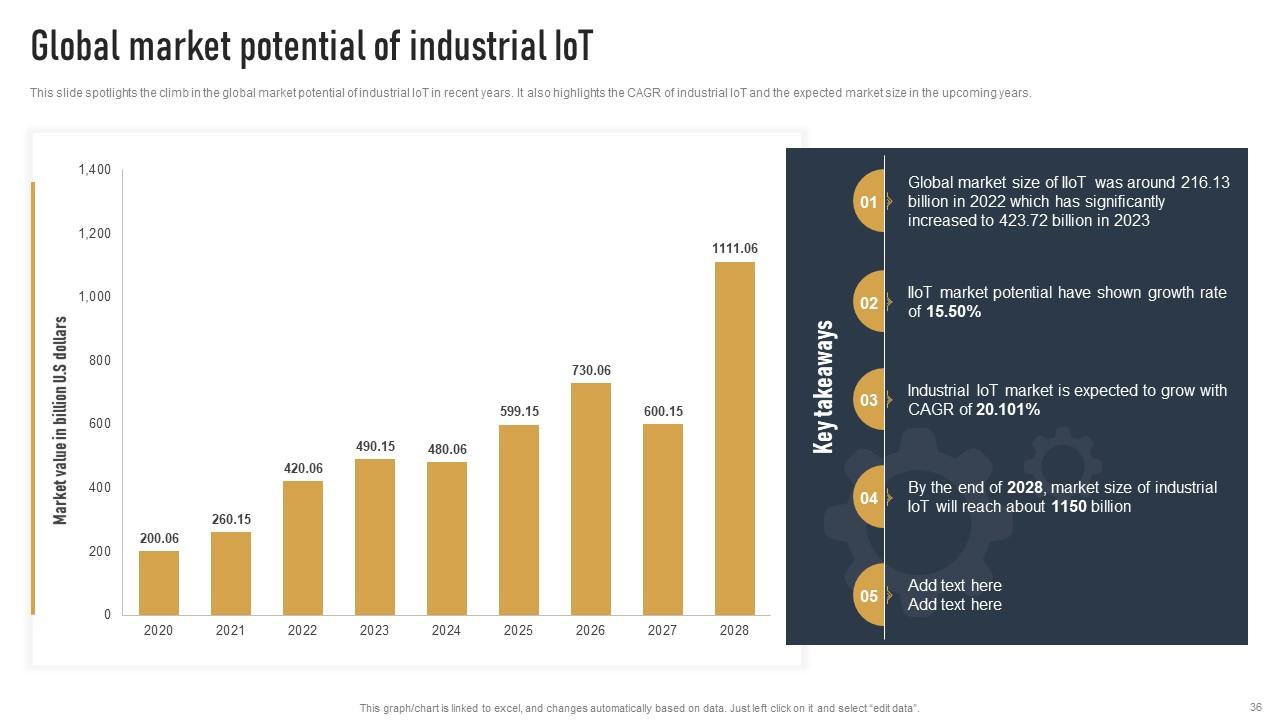
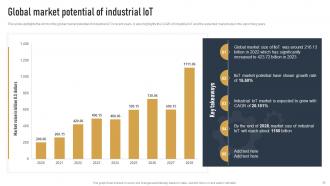
Slide 36: This slide spotlights the climb in the global market potential of industrial IoT in recent years.
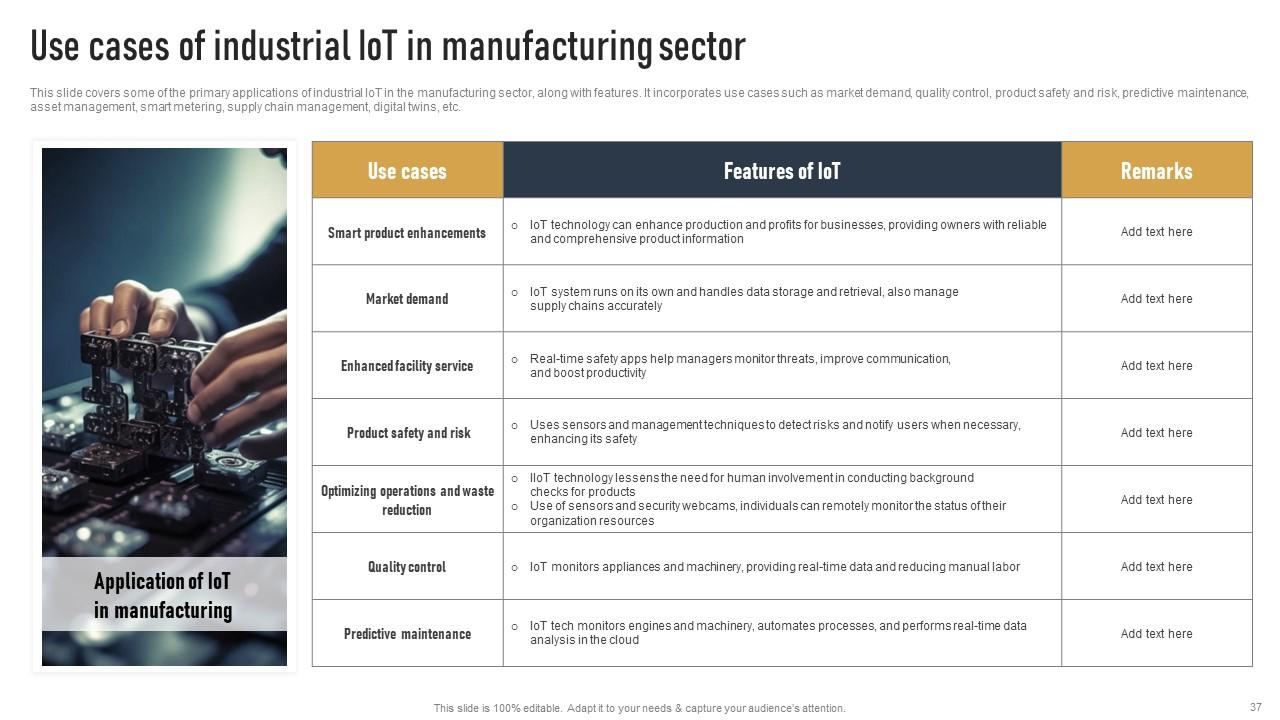
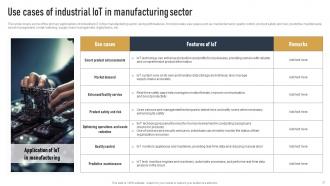
Slide 37: This slide covers some of the primary applications of industrial IoT in the manufacturing sector, along with features.
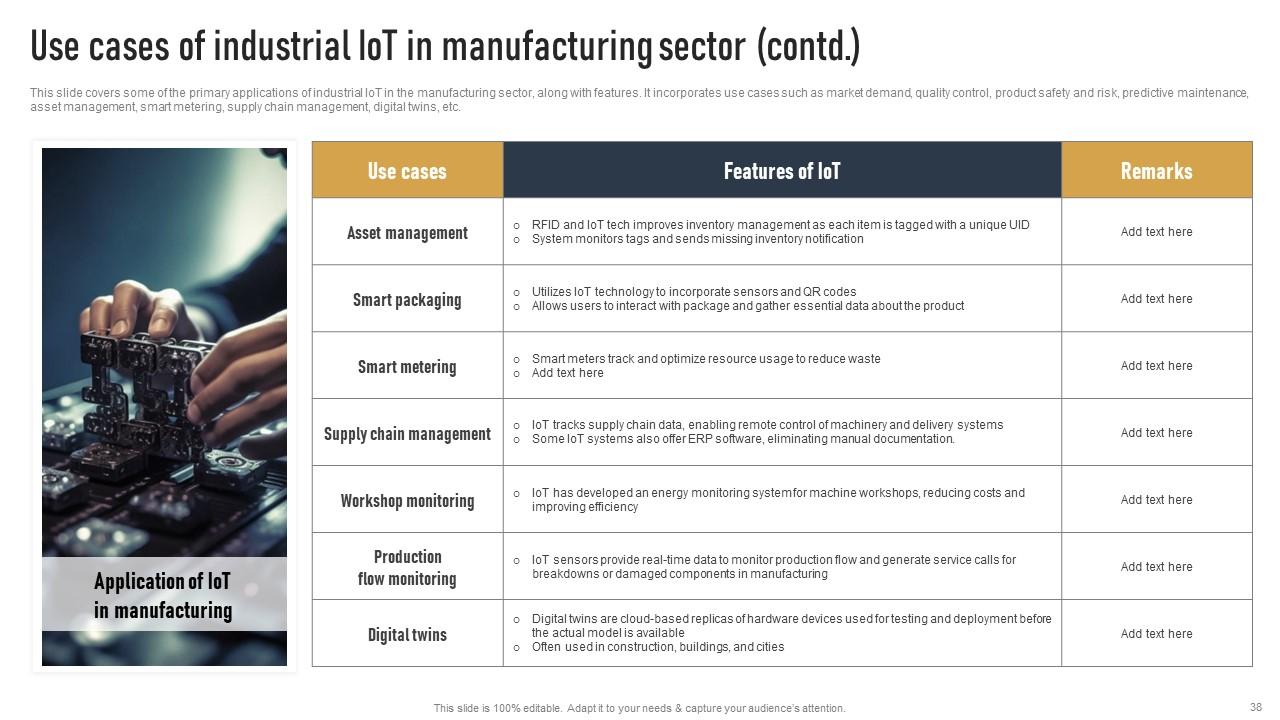
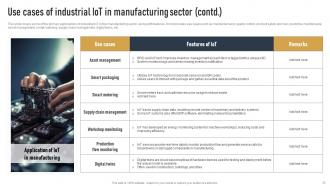
Slide 38: This slide covers some of the primary applications of industrial IoT in the manufacturing sector, along with features.
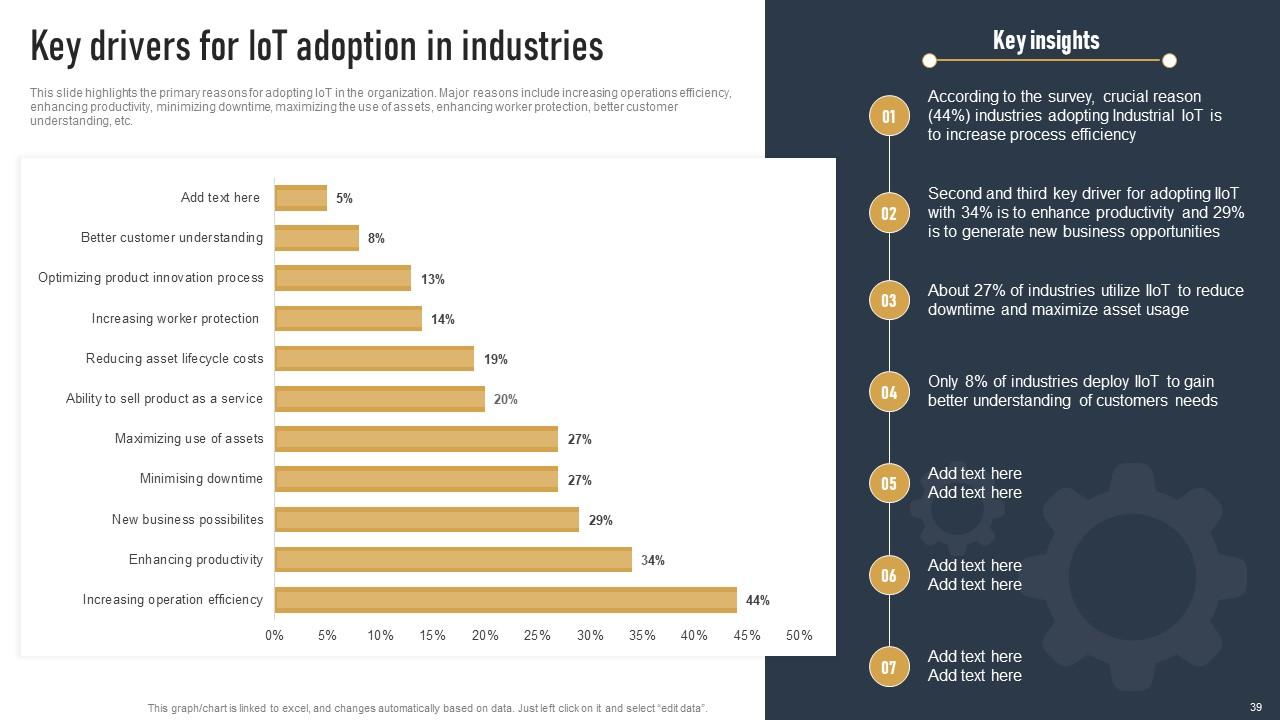
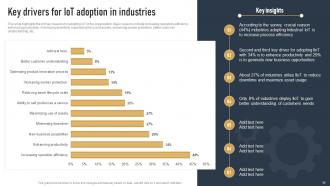
Slide 39: This slide highlights the primary reasons for adopting IoT in the organization.
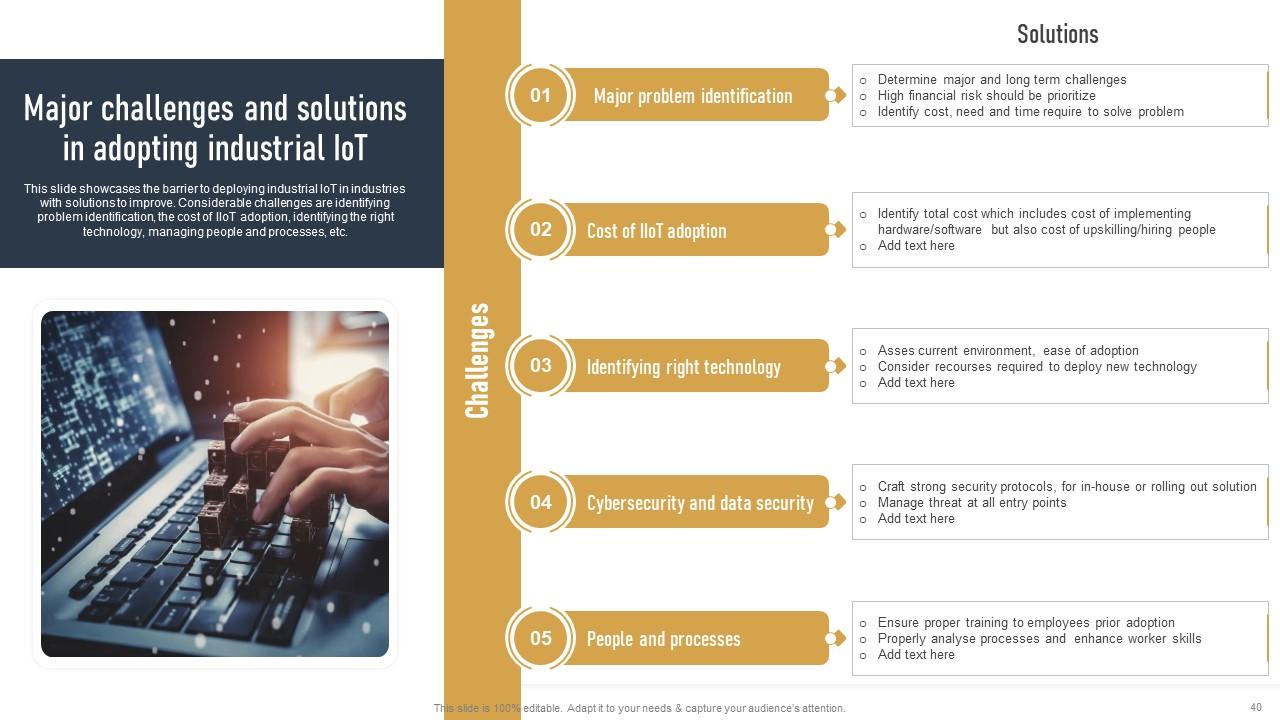
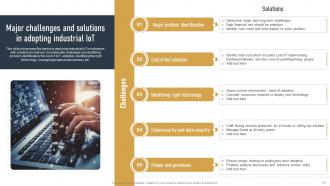
Slide 40: This slide showcases the barrier to deploying industrial IoT in industries with solutions to improve.
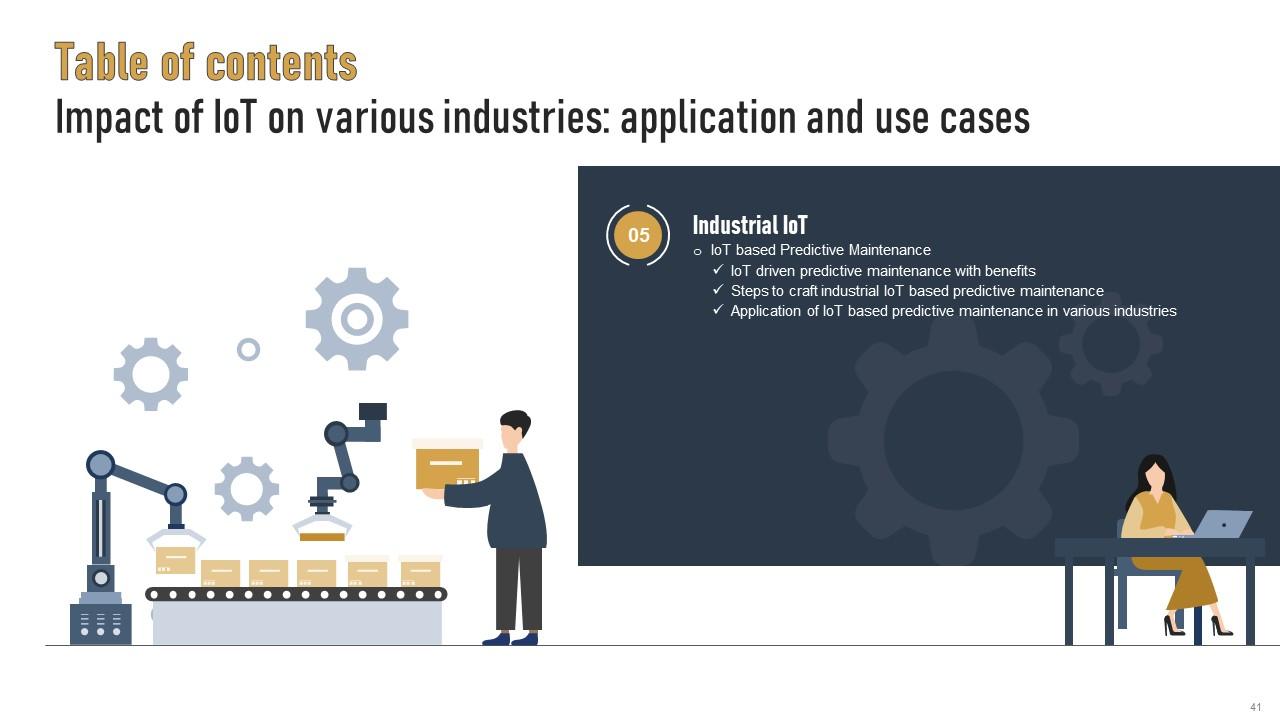
Slide 41: The slide shows another title of contents.
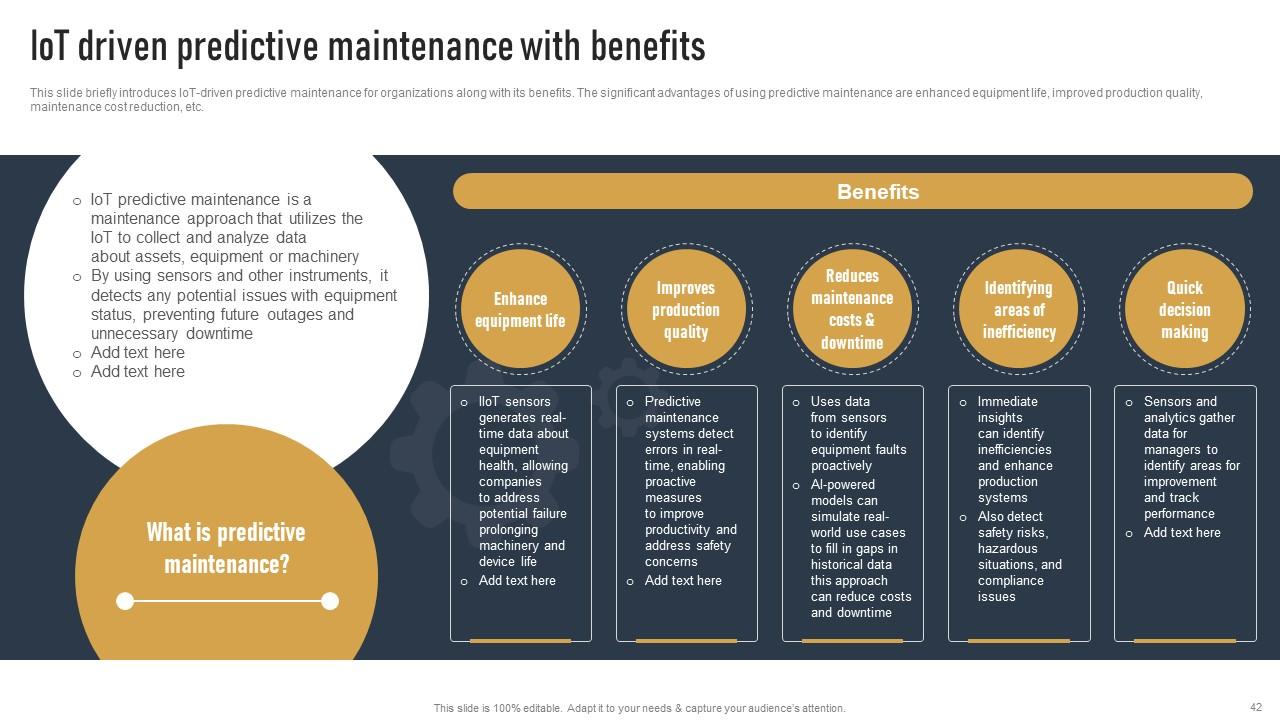
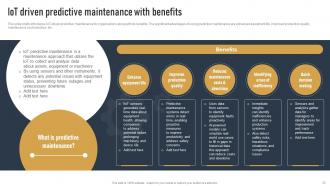
Slide 42: This slide briefly introduces IoT-driven predictive maintenance for organizations along with its benefits.
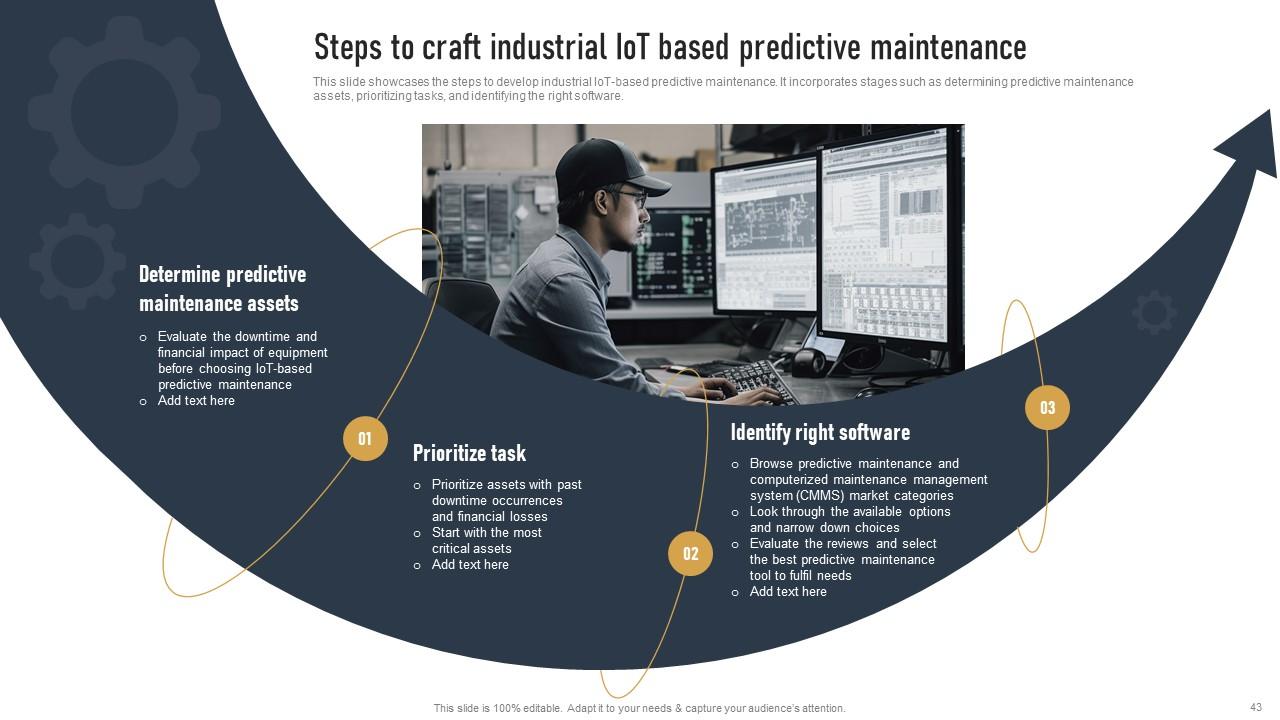
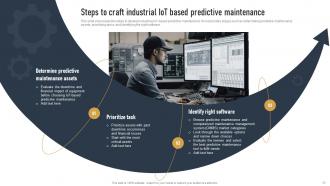
Slide 43: This slide showcases the steps to develop industrial IoT-based predictive maintenance.
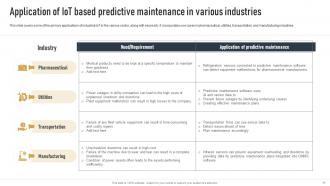
Slide 44: This slide covers some of the primary applications of industrial IoT in the various sector, along with necessity.
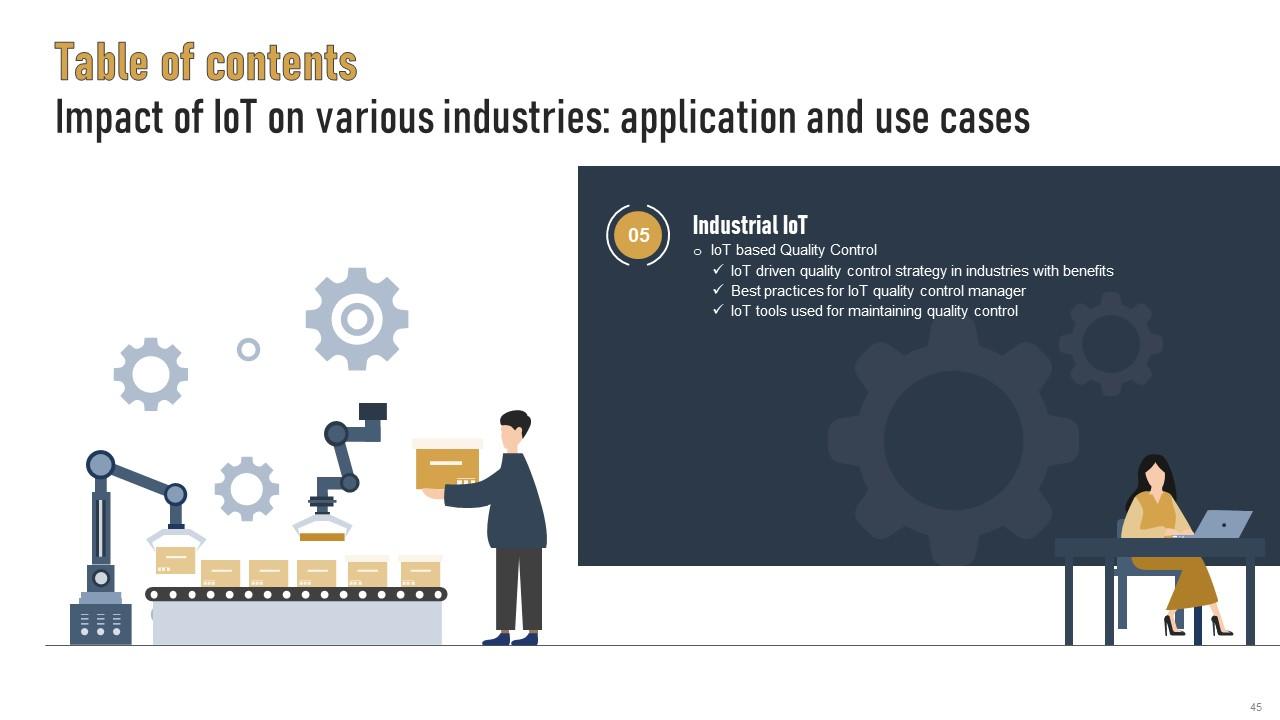
Slide 45: The slide displays Title of contents further.
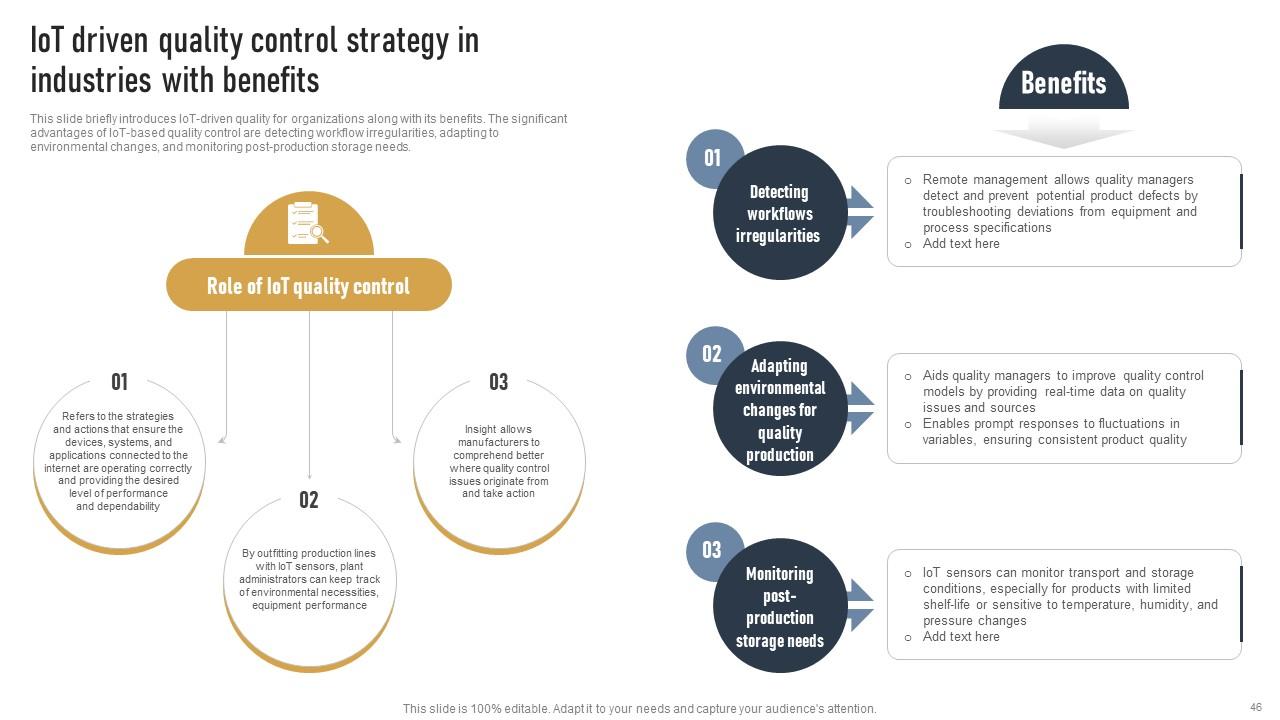
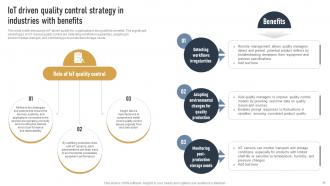
Slide 46: This slide briefly introduces IoT-driven quality for organizations along with its benefits.
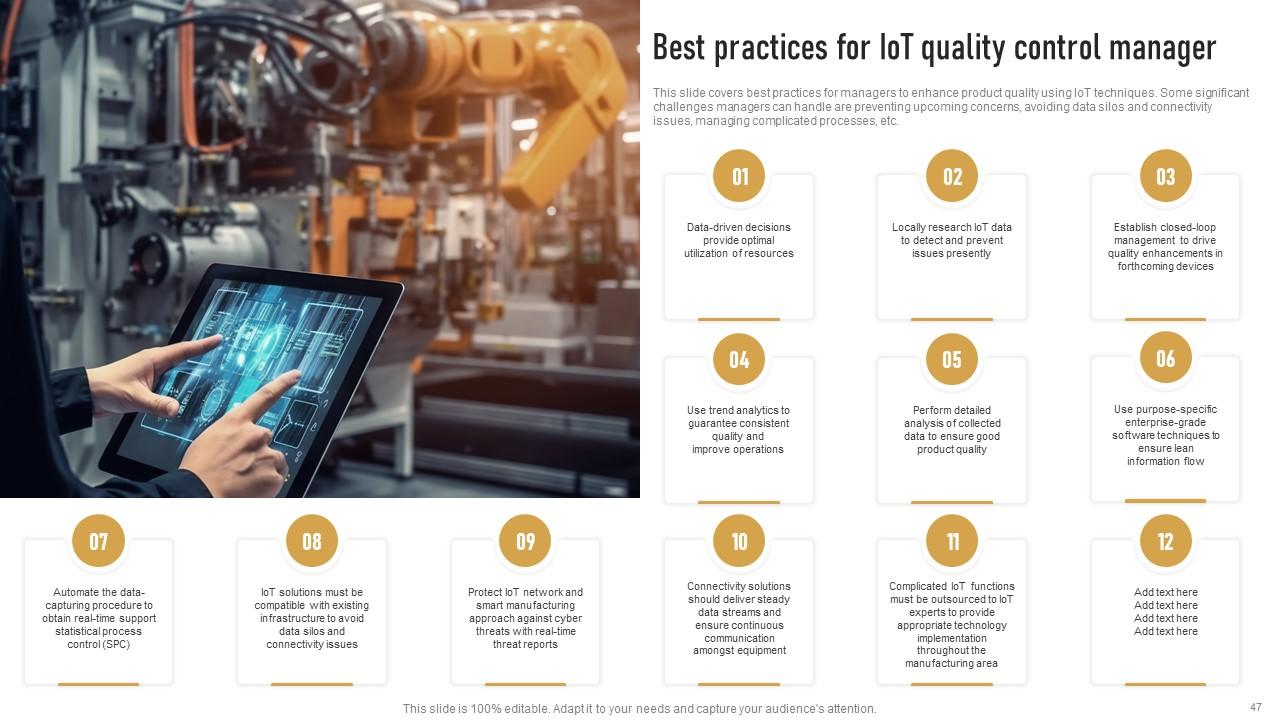
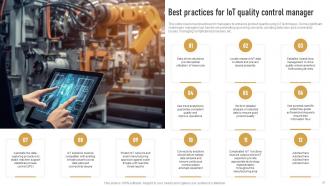
Slide 47: This slide covers best practices for managers to enhance product quality using IoT techniques.
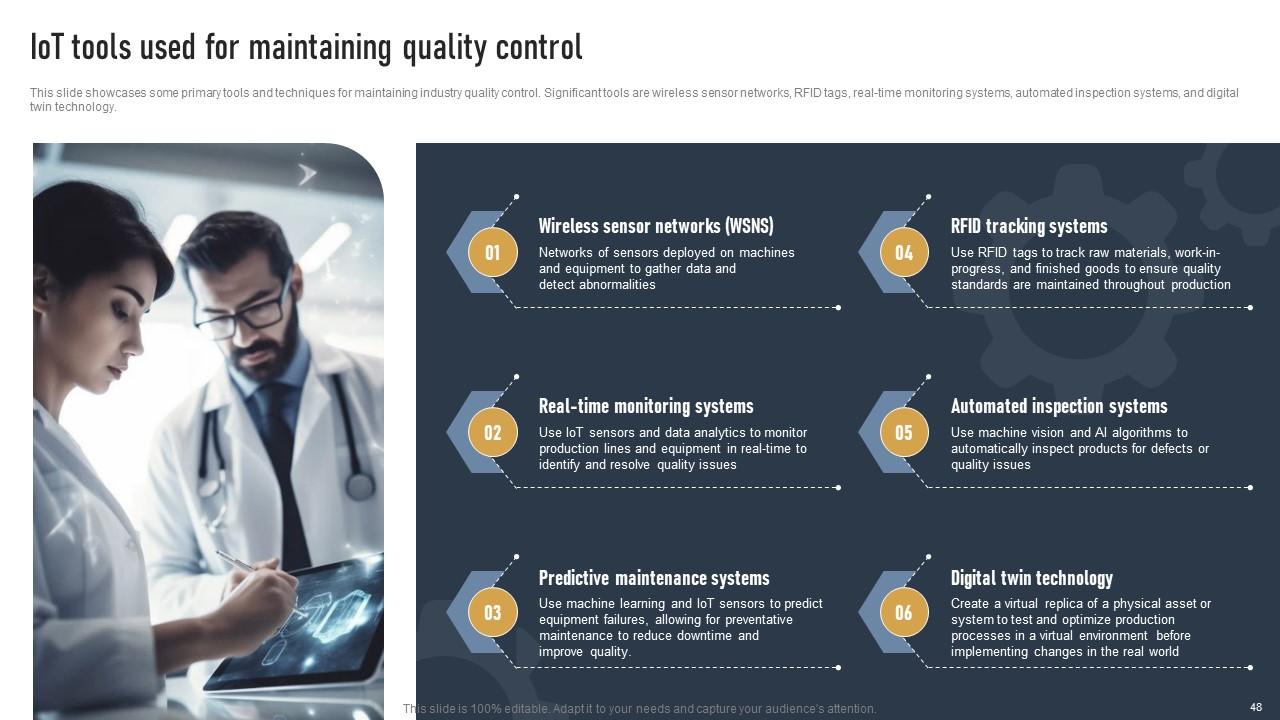
Slide 48: This slide showcases some primary tools and techniques for maintaining industry quality control.
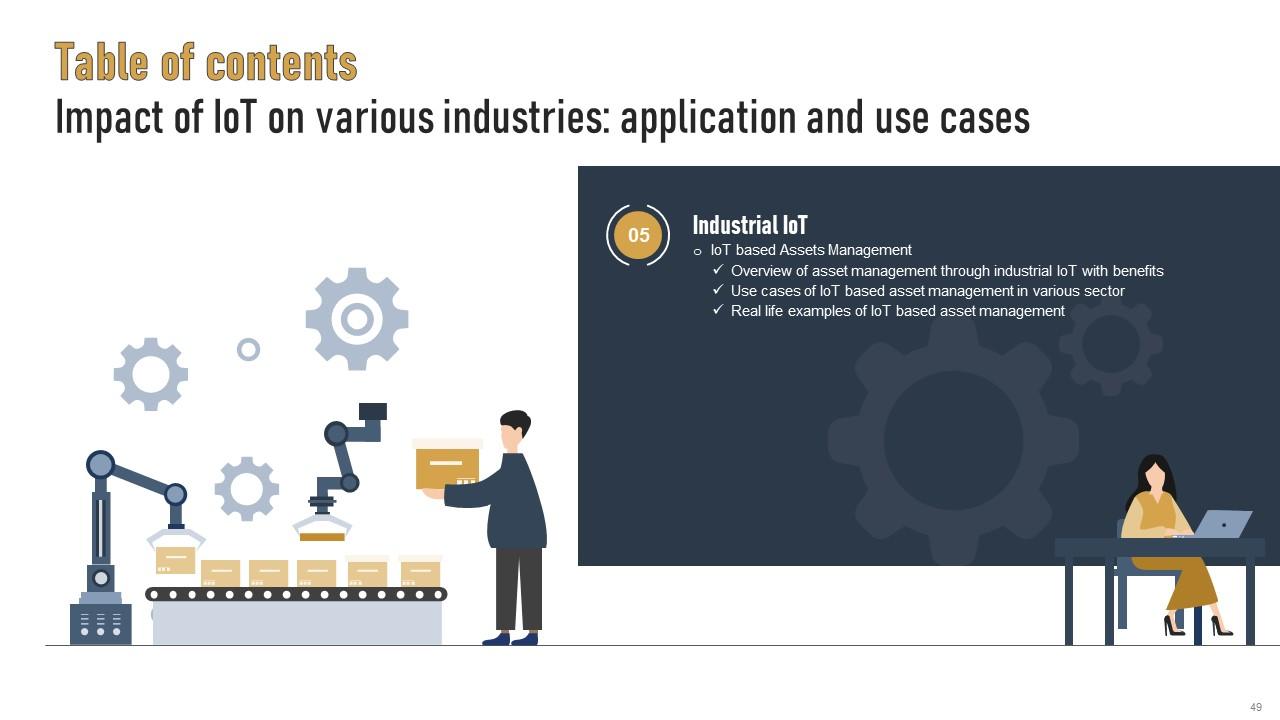
Slide 49: The slide renders another title of contents further.
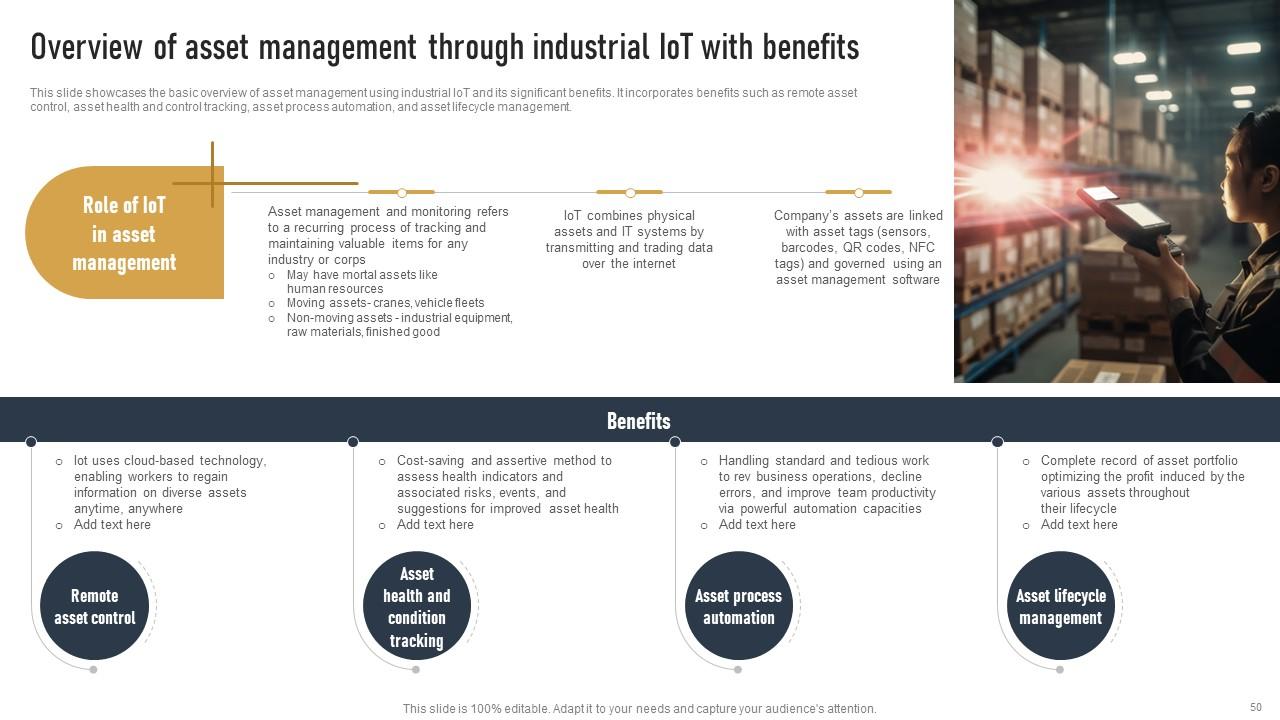
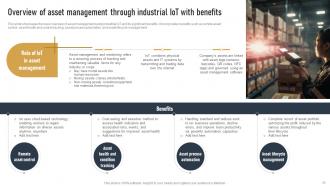
Slide 50: This slide showcases the basic overview of asset management using industrial IoT and its significant benefits.
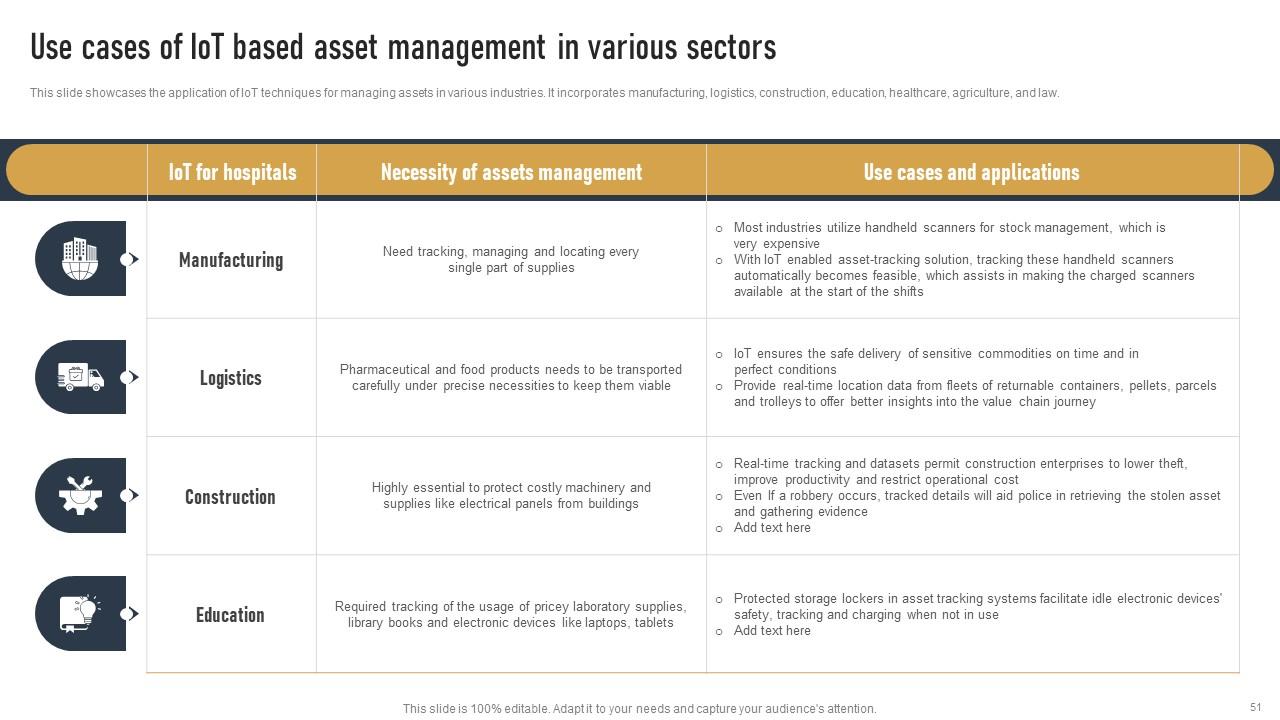
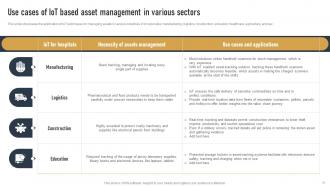
Slide 51: This slide showcases the application of IoT techniques for managing assets in various industries.
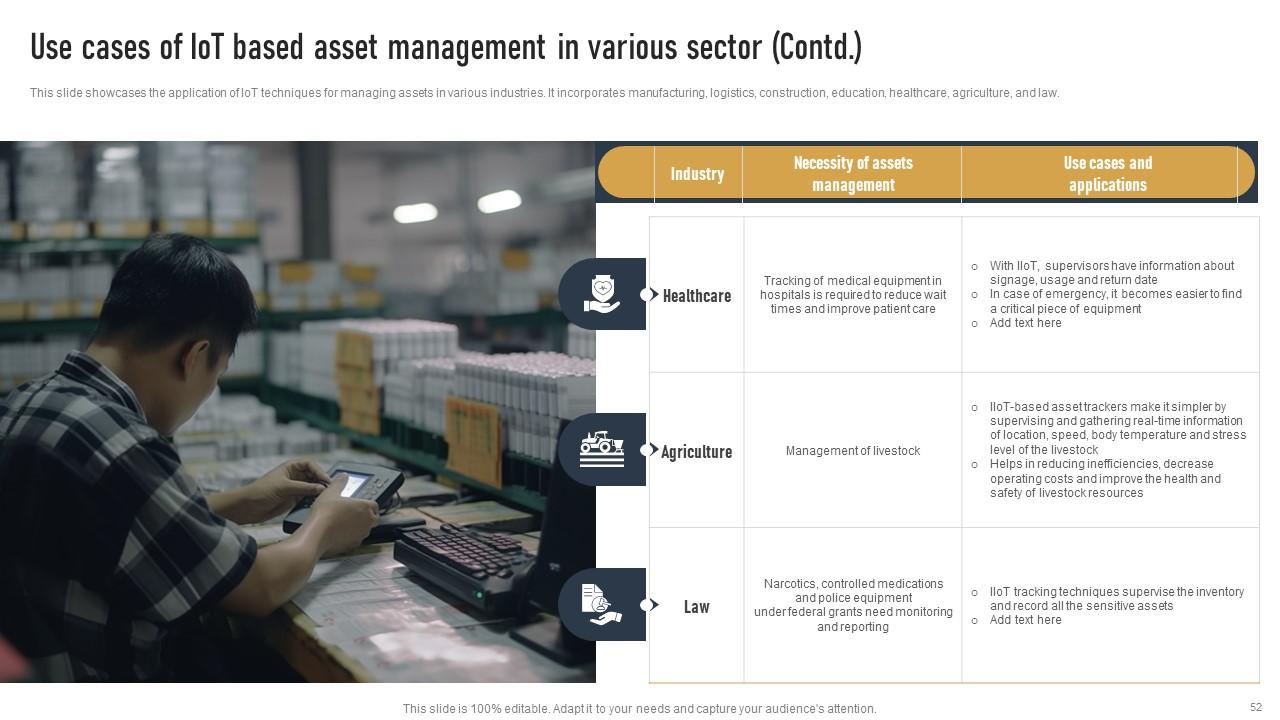
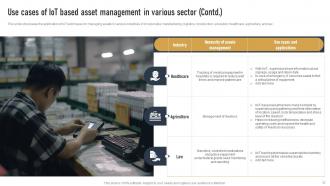
Slide 52: This slide continues the application of IoT techniques for managing assets in various industries.
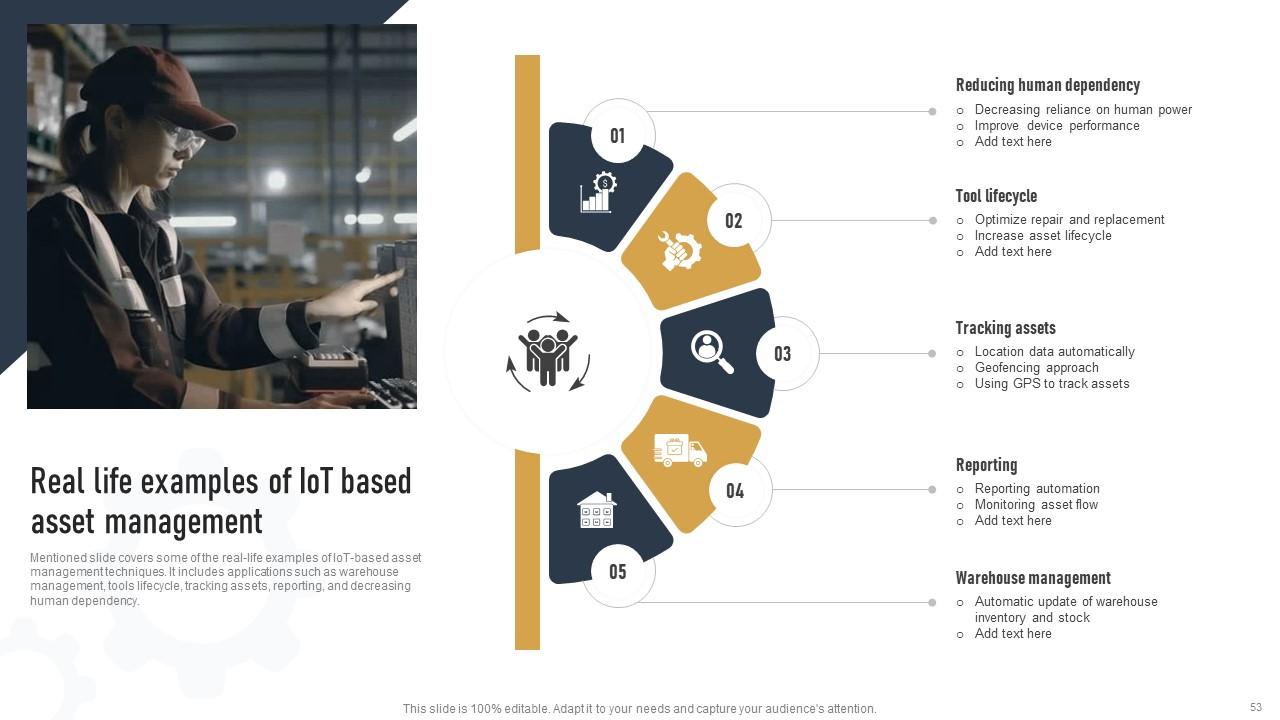
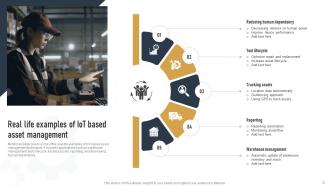
Slide 53: This slide covers some of the real-life examples of IoT-based asset management techniques.
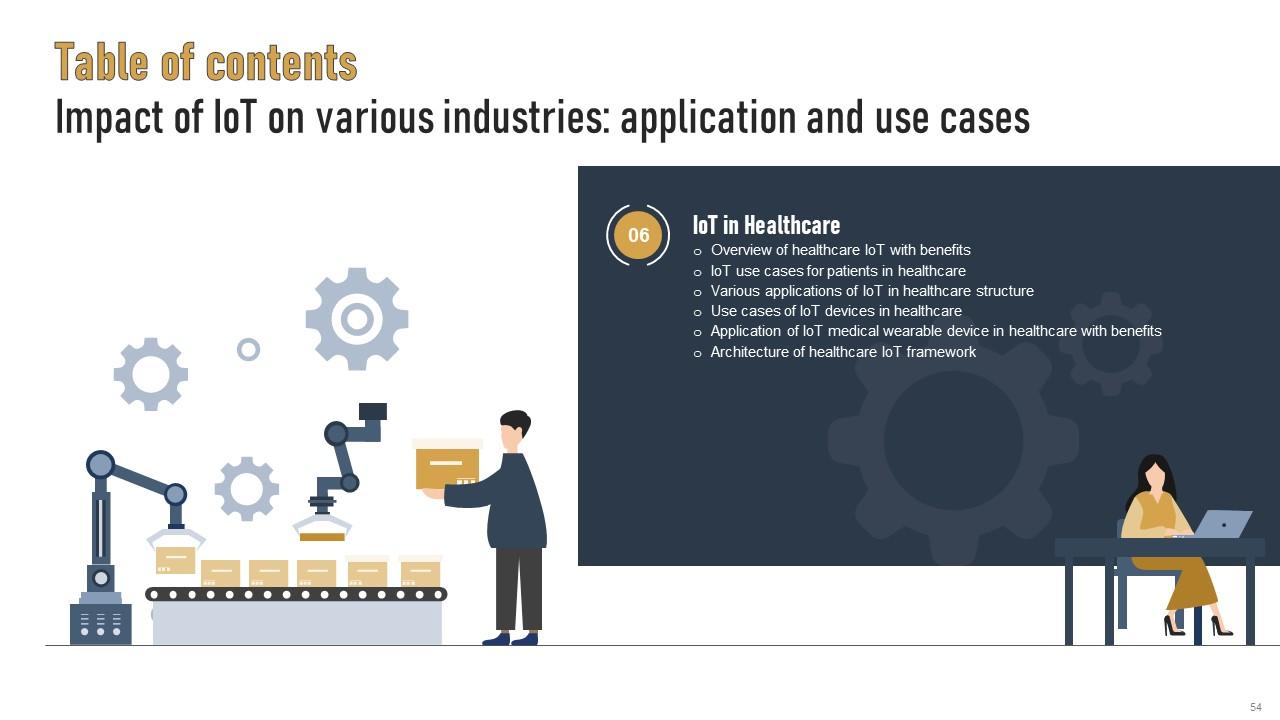
Slide 54: The slide displays title of contents further.
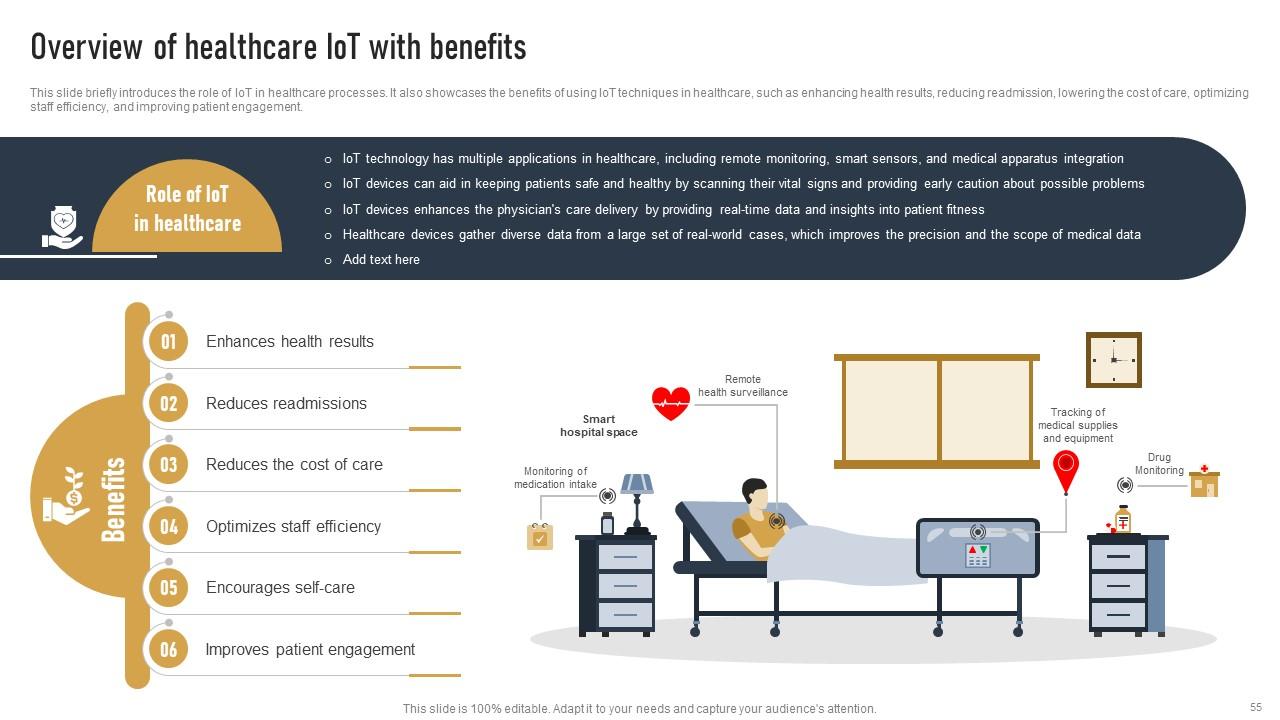
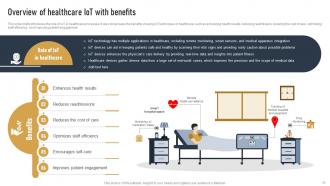
Slide 55: This slide briefly introduces the role of IoT in healthcare processes.
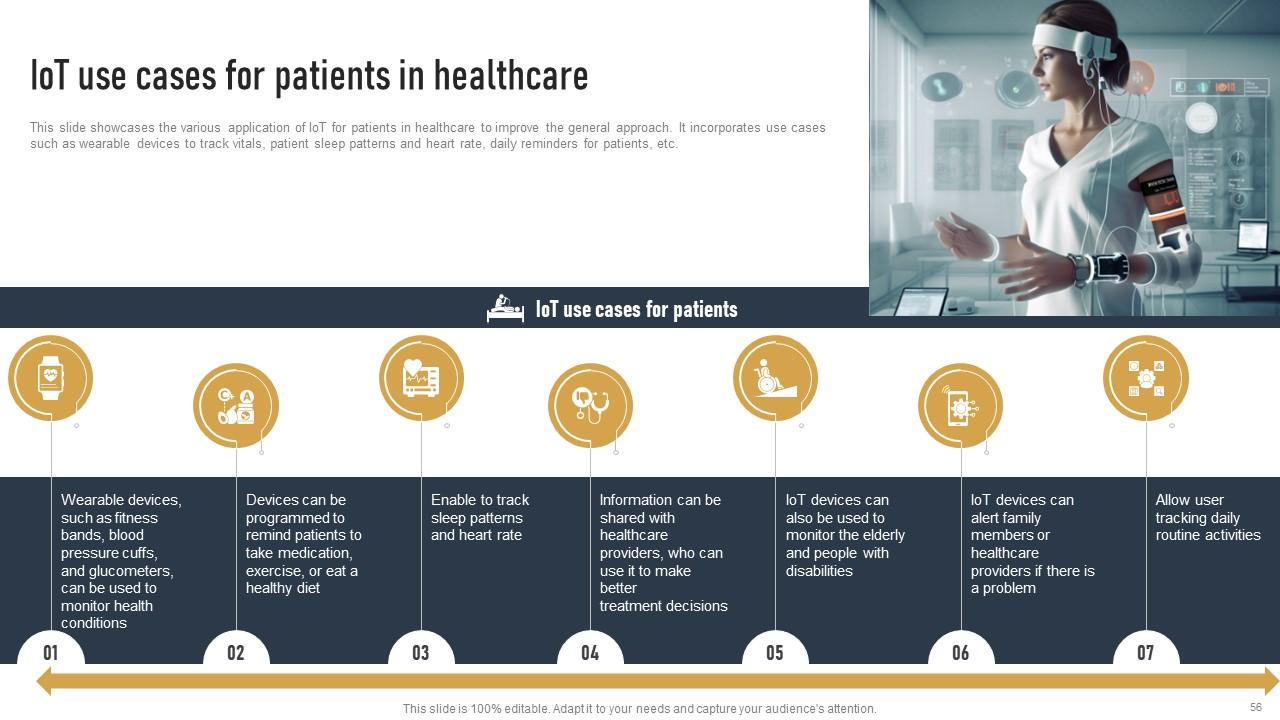
Slide 56: This slide showcases the various application of IoT for patients in healthcare to improve the general approach.
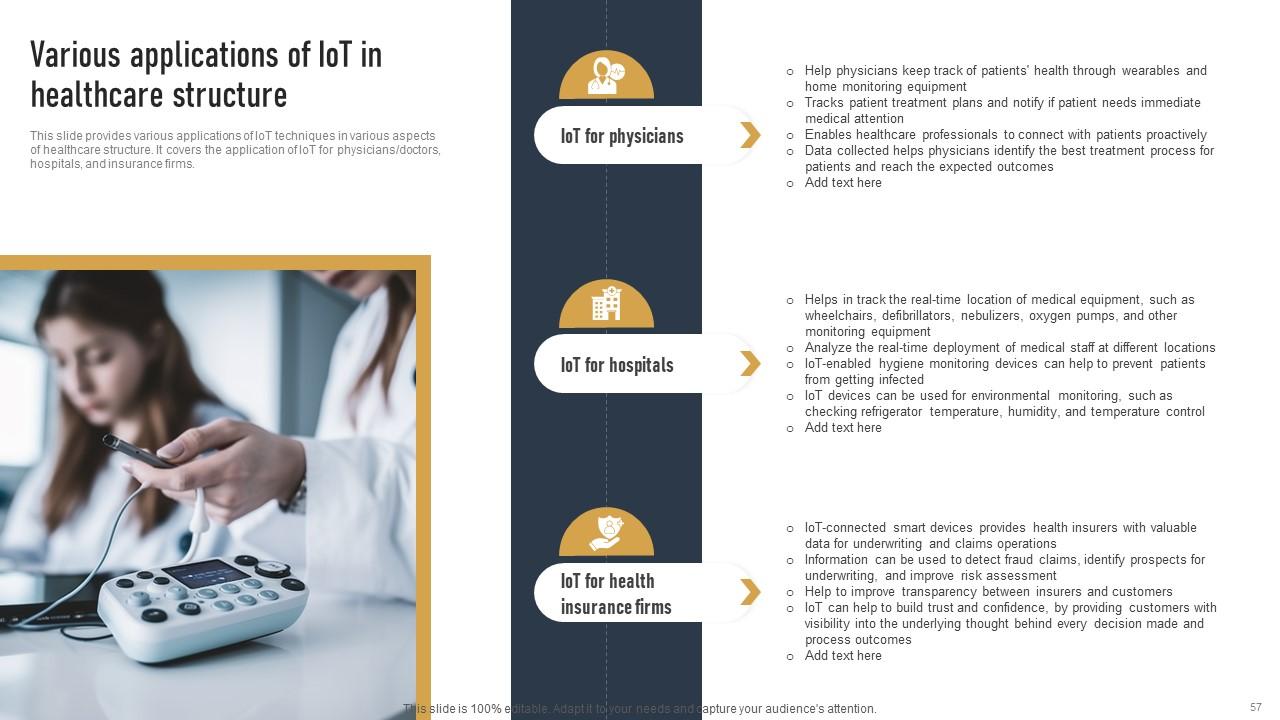
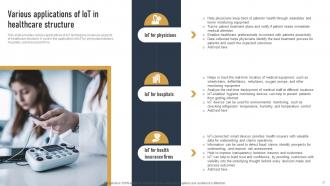
Slide 57: This slide provides various applications of IoT techniques in various aspects of healthcare structure.
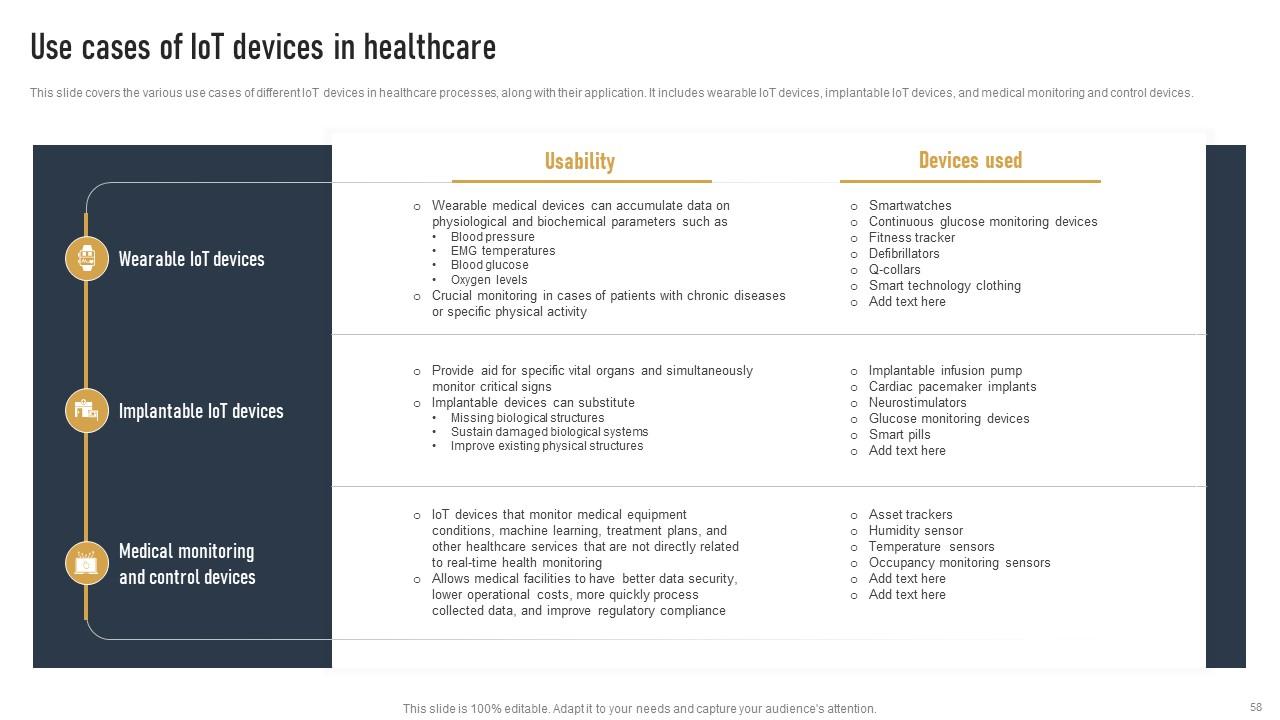
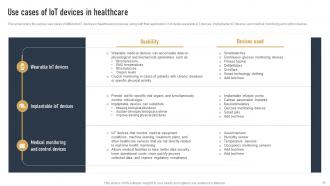
Slide 58: This slide covers the various use cases of different IoT devices in healthcare processes, along with their application.
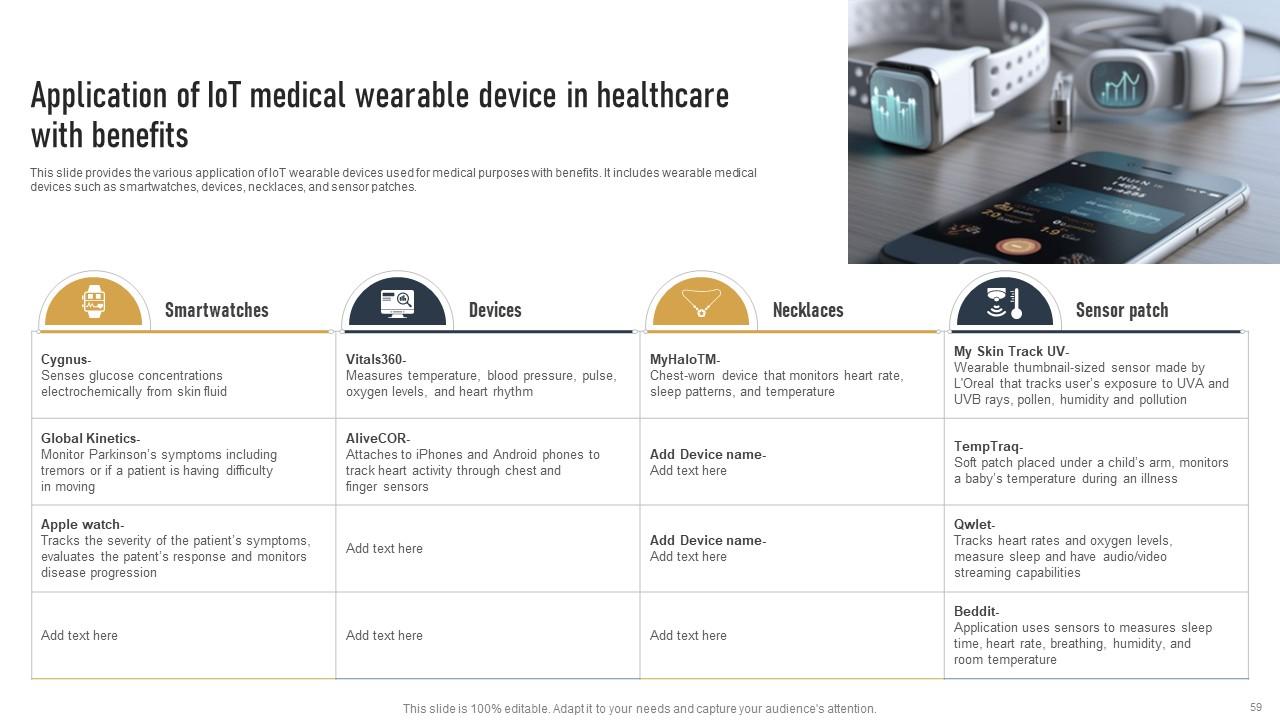
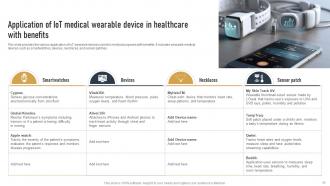
Slide 59: This slide provides the various application of IoT wearable devices used for medical purposes with benefits.
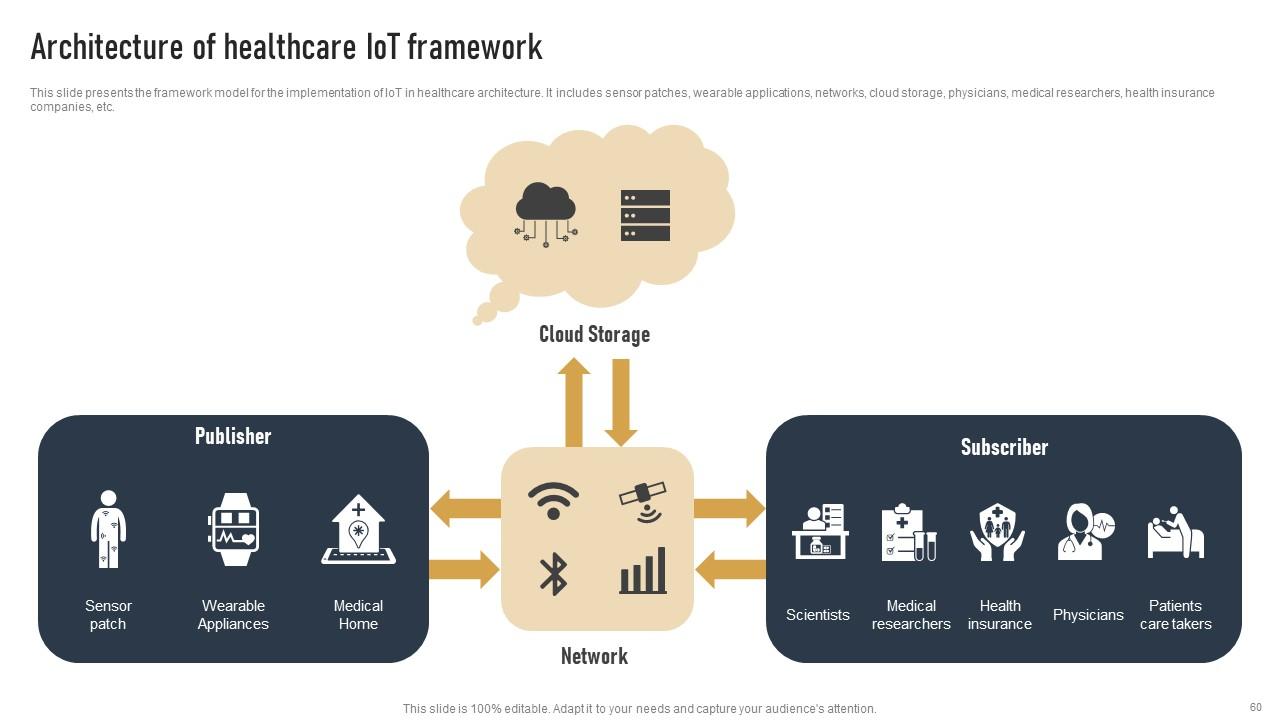
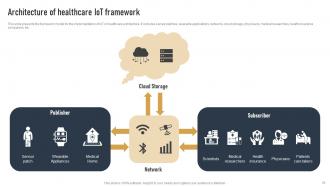
Slide 60: This slide presents the framework model for the implementation of IoT in healthcare architecture.
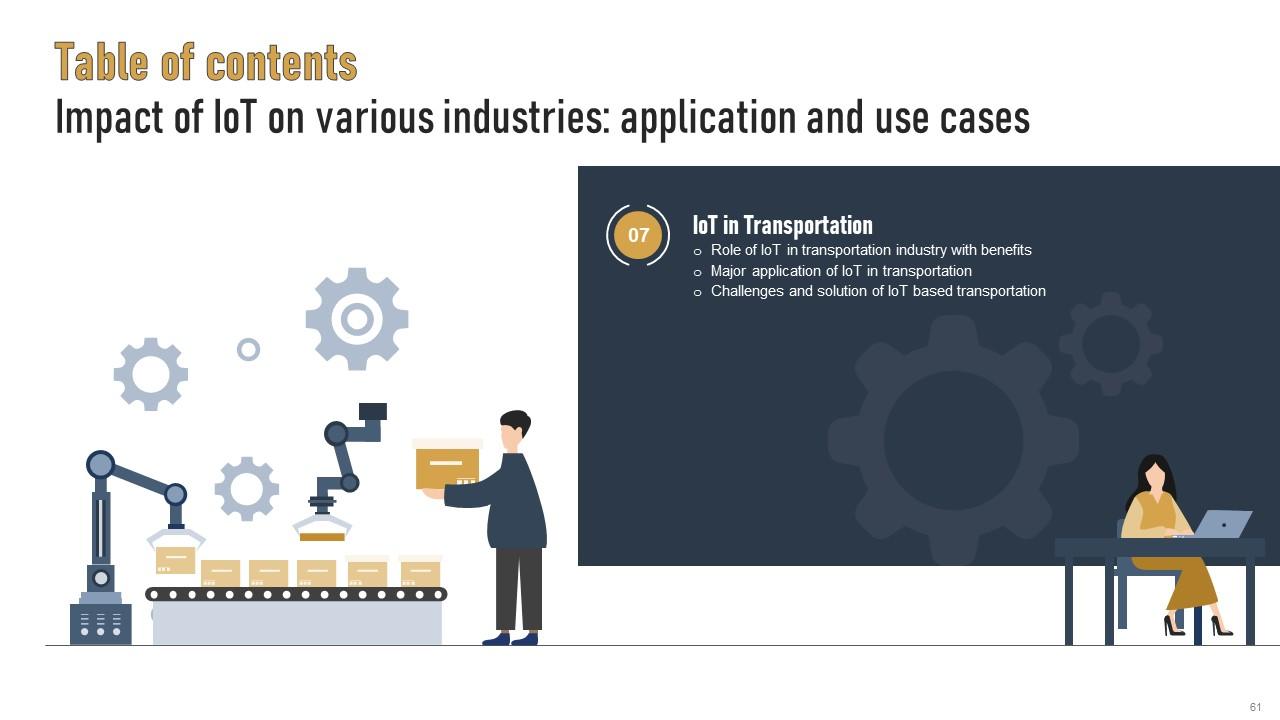
Slide 61: The slide renders another Title of contents.
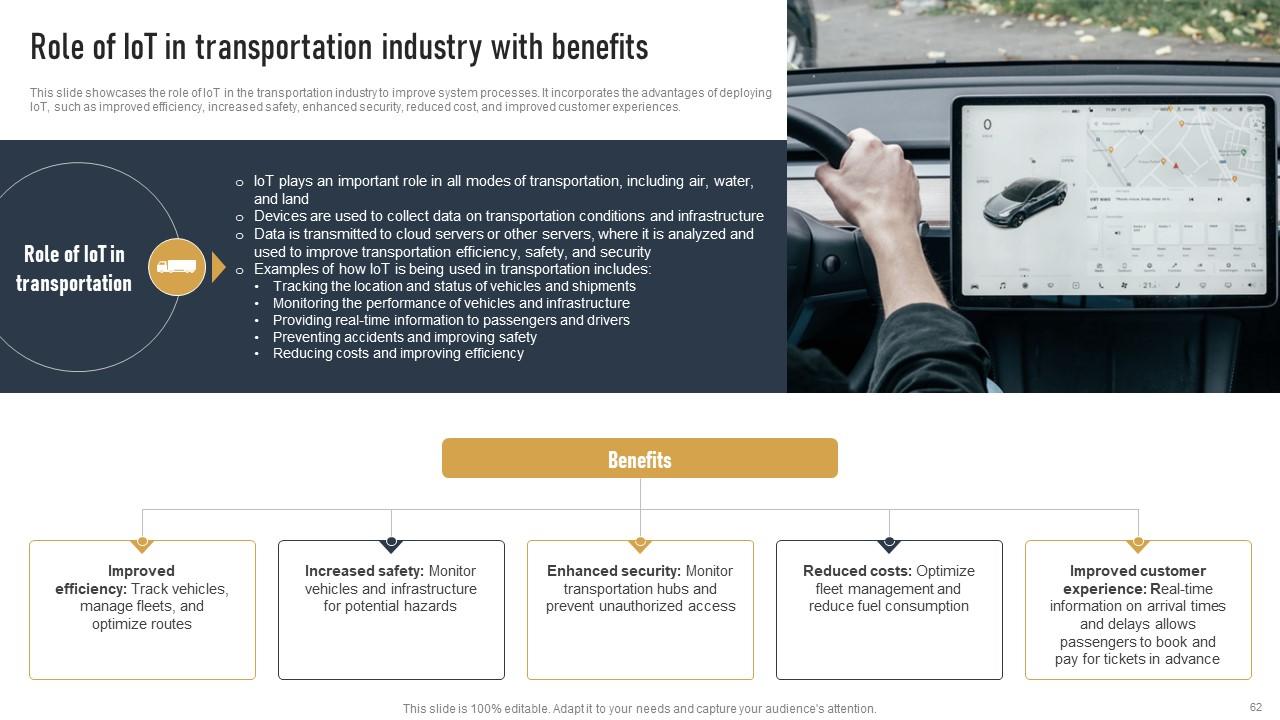
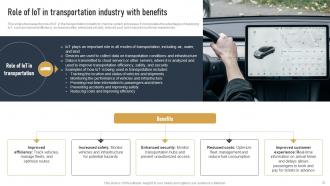
Slide 62: This slide showcases the role of IoT in the transportation industry to improve system processes.
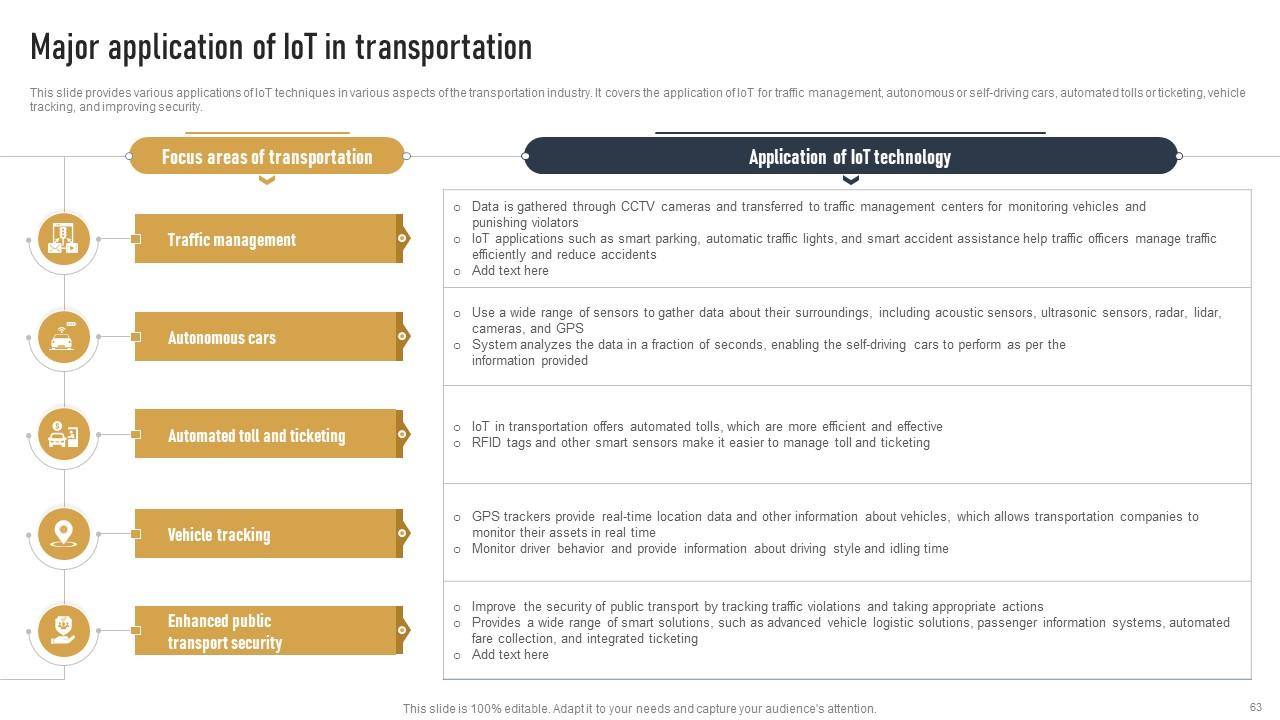
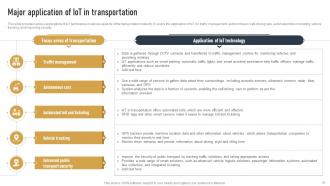
Slide 63: This slide provides various applications of IoT techniques in various aspects of the transportation industry.
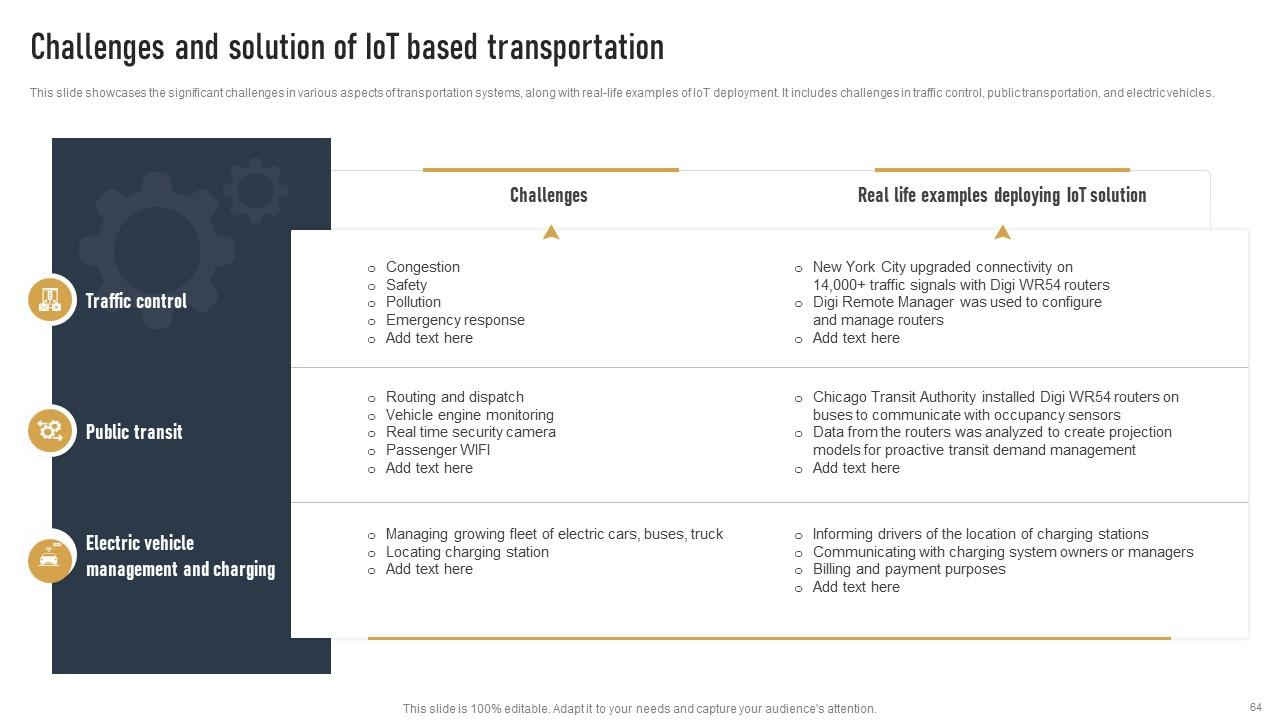
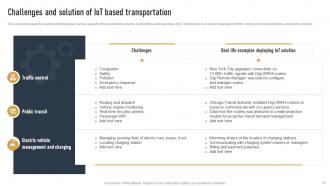
Slide 64: This slide showcases the significant challenges in various aspects of transportation systems, along with real-life examples of IoT deployment.
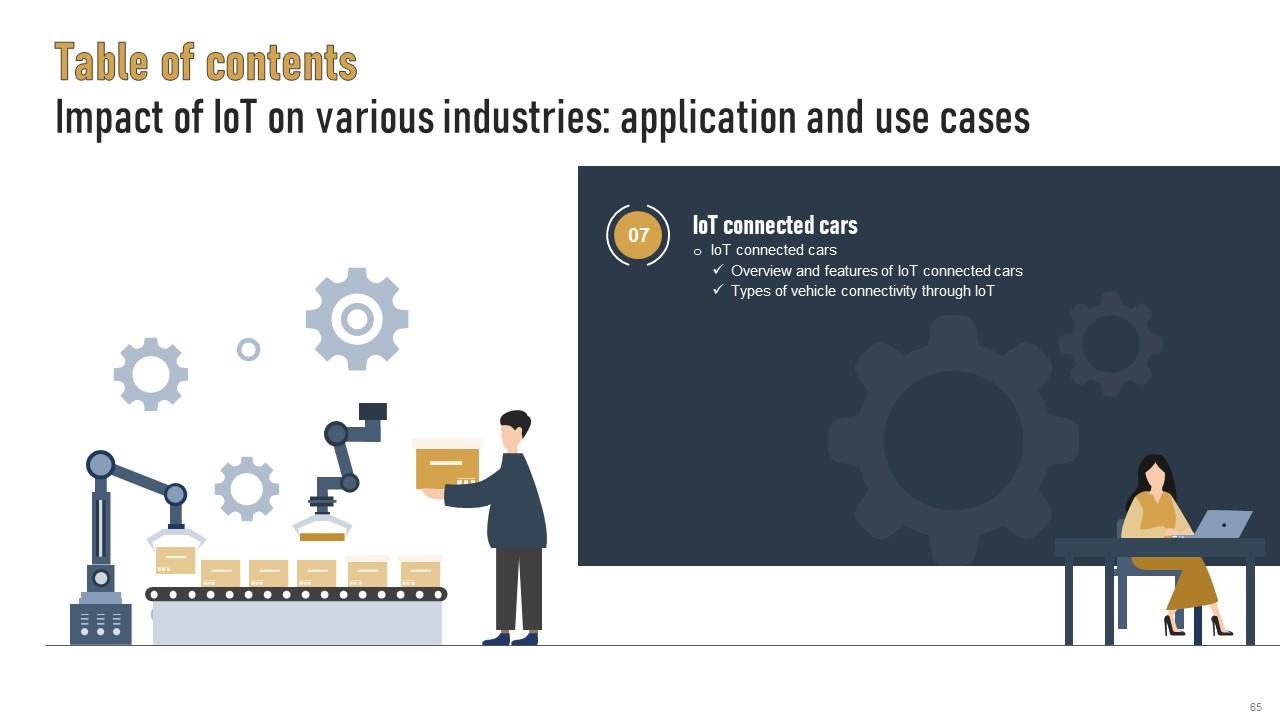
Slide 65: The slide displays title of contents which is to be discussed further.
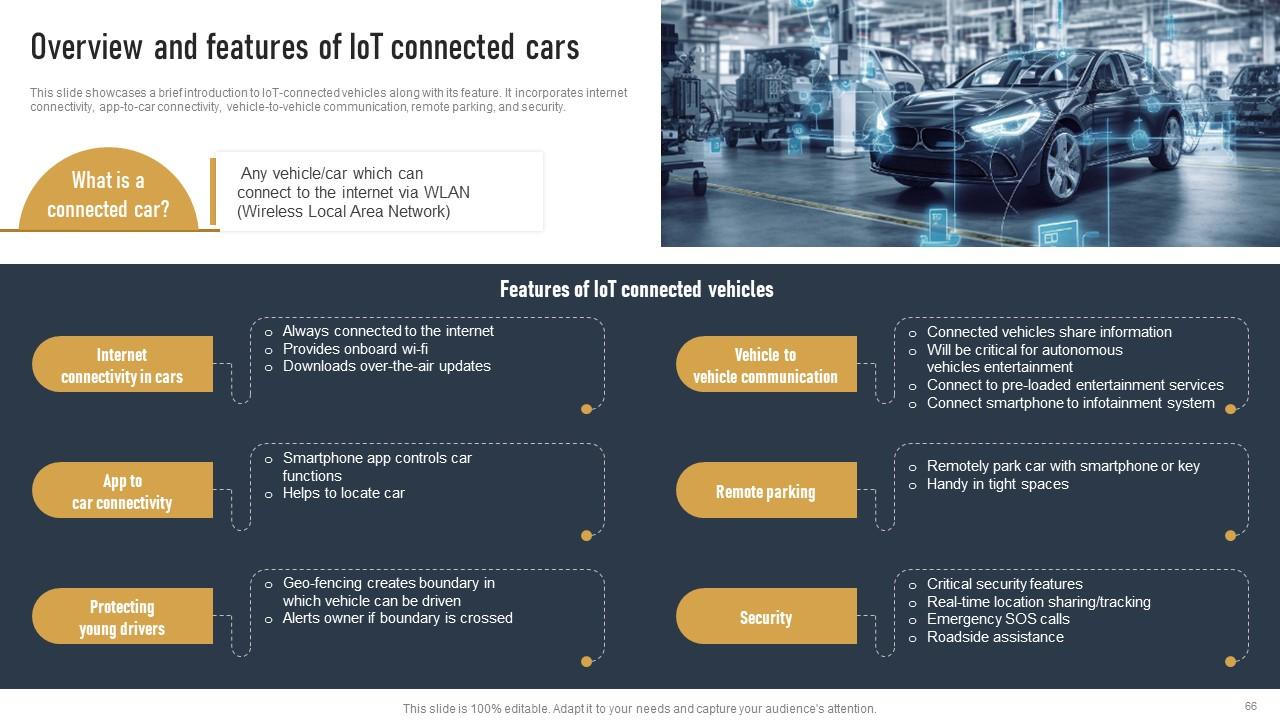
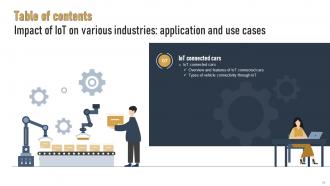
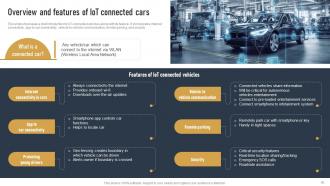
Slide 66: This slide showcases a brief introduction to IoT-connected vehicles along with its feature.
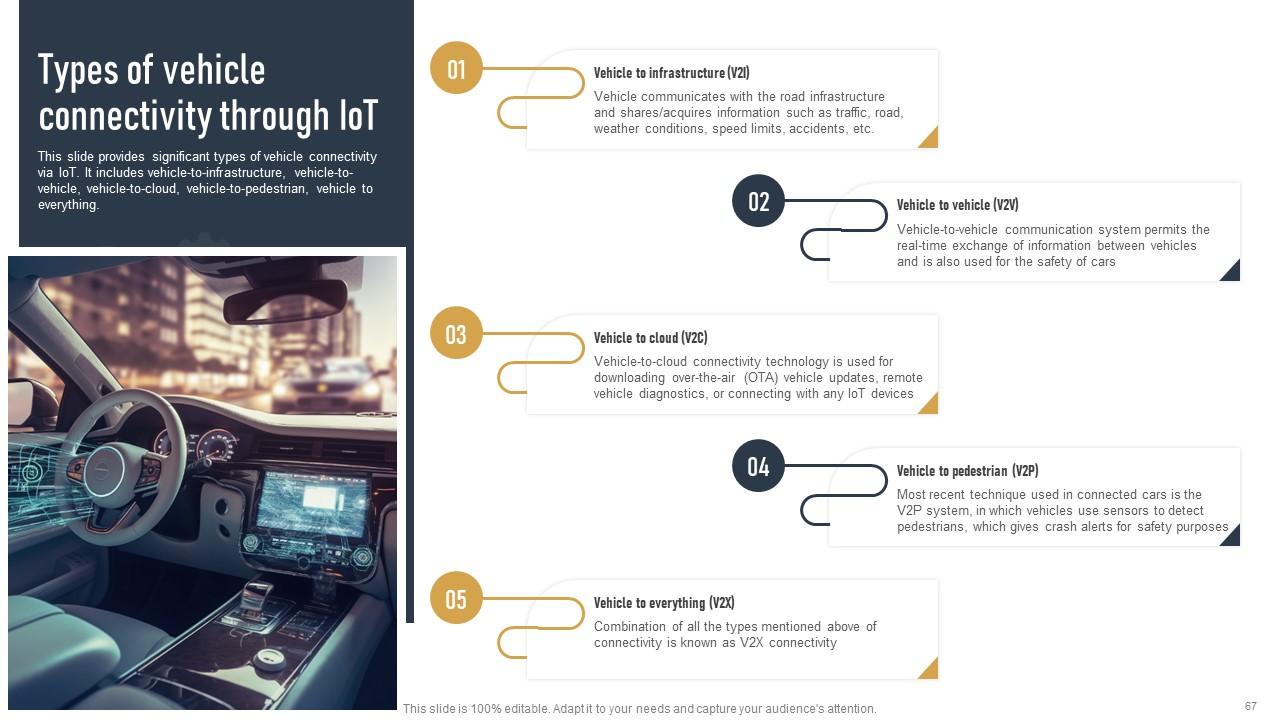
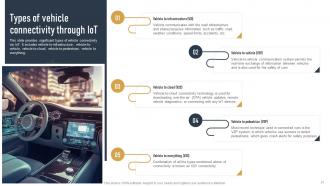
Slide 67: This slide provides significant types of vehicle connectivity via IoT.
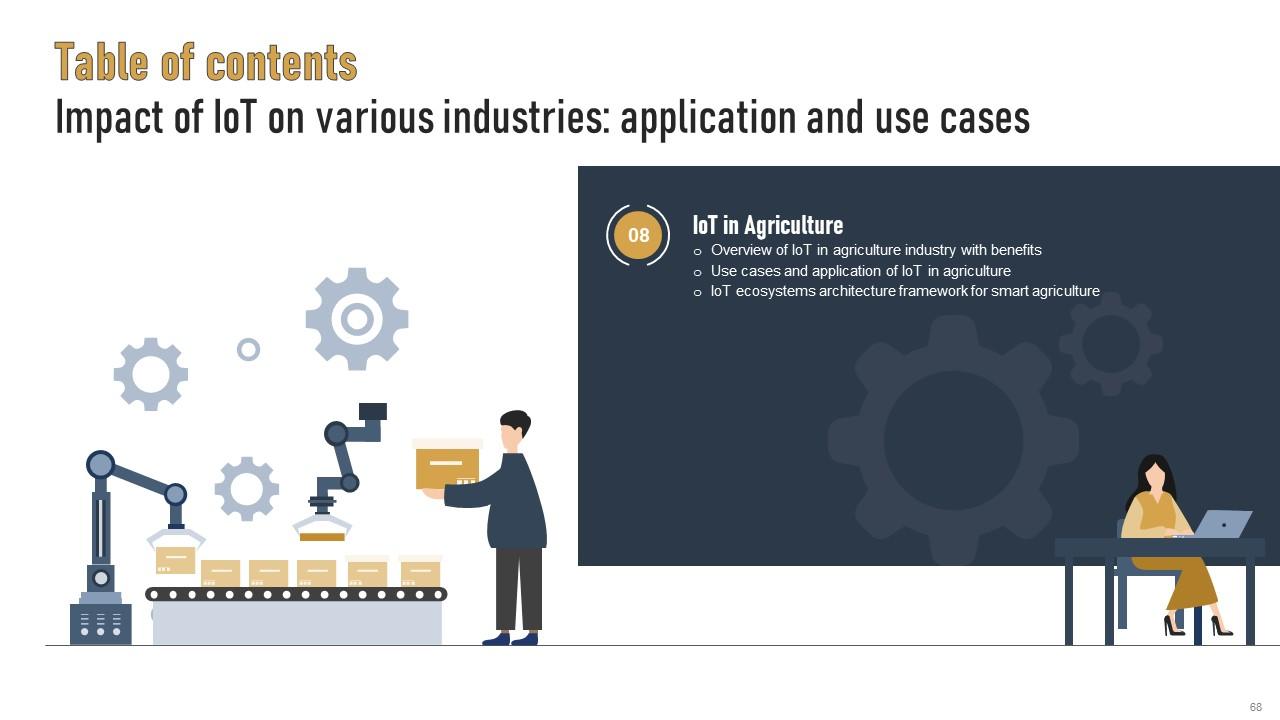
Slide 68: The slide exhibits title of contents further.
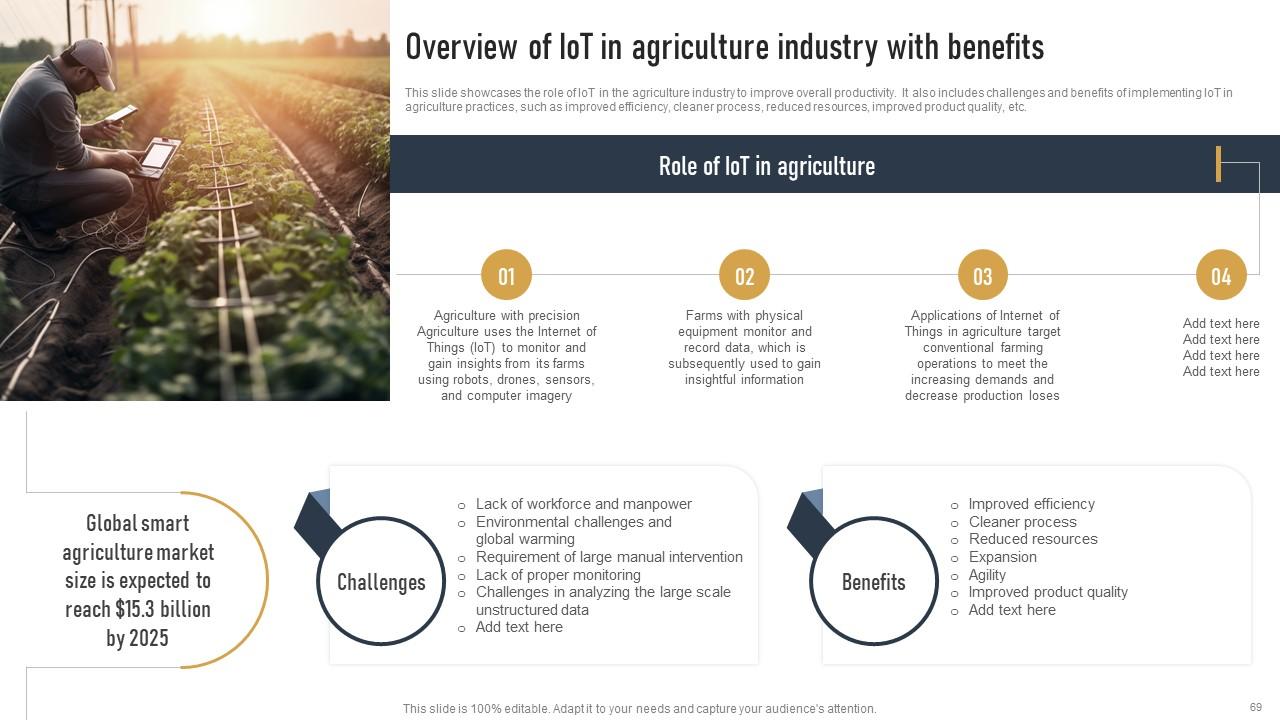
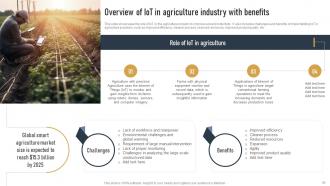
Slide 69: This slide showcases the role of IoT in the agriculture industry to improve overall productivity.
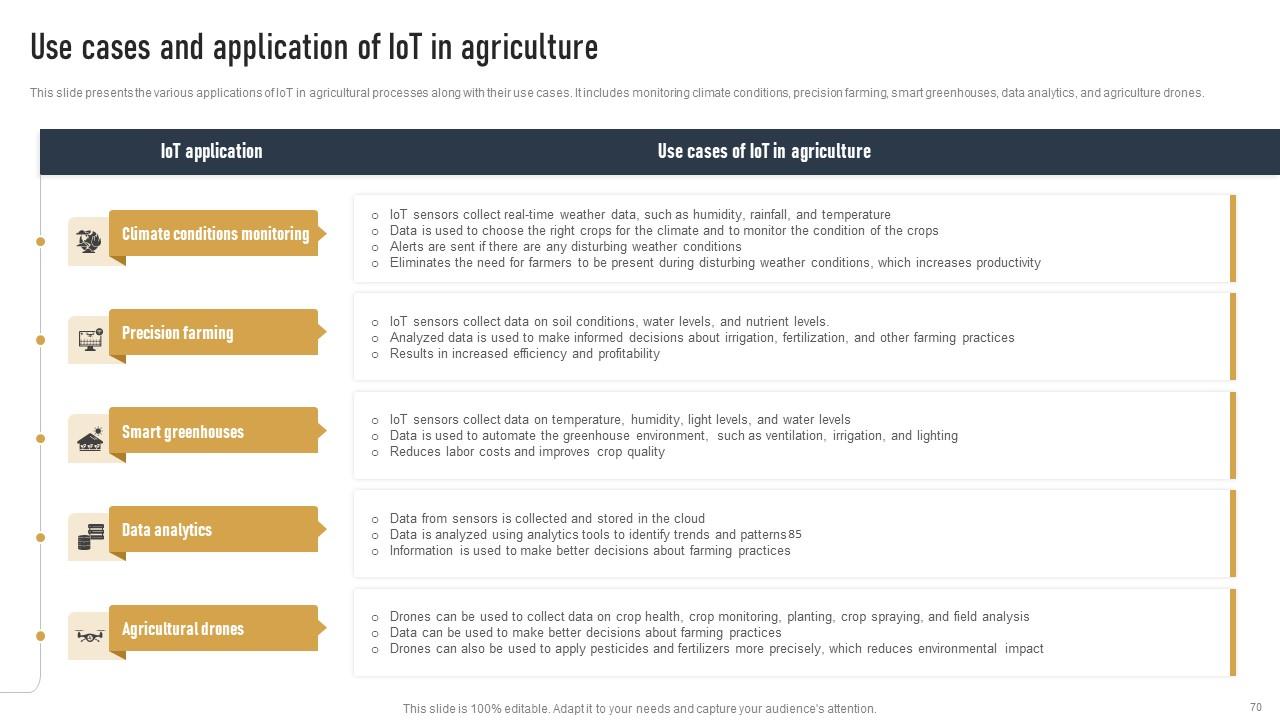
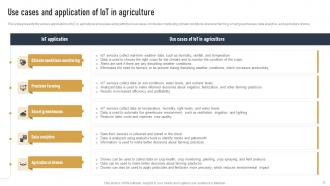
Slide 70: This slide presents the various applications of IoT in agricultural processes along with their use cases.
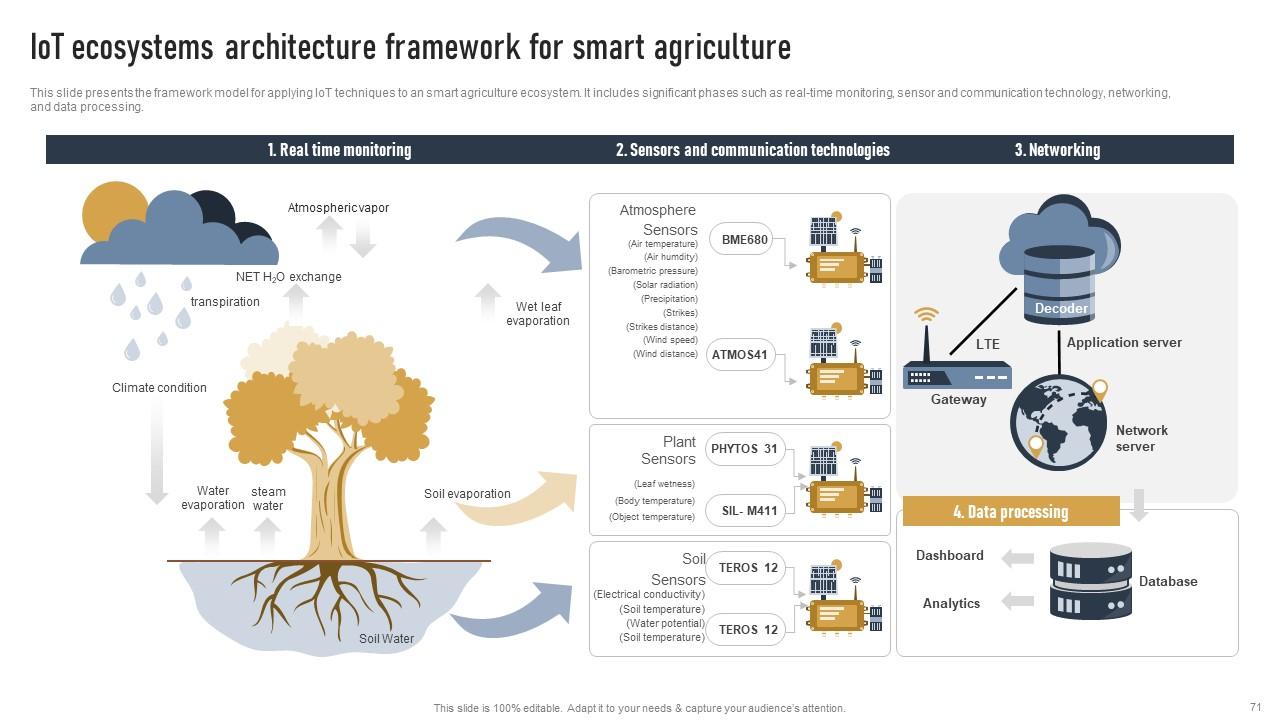
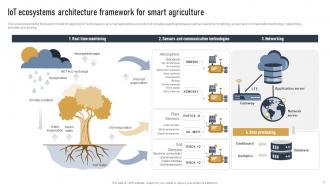
Slide 71: This slide presents the framework model for applying IoT techniques to an smart agriculture ecosystem.
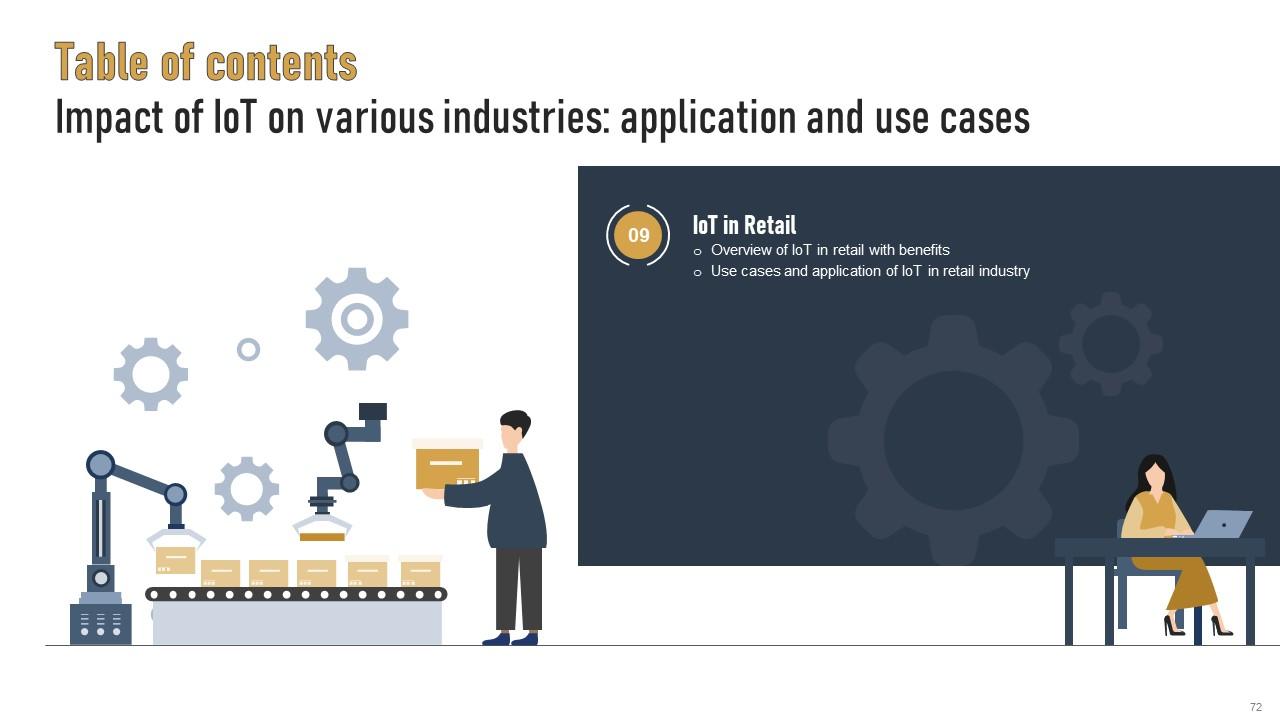
Slide 72: The slide also displays title contents.
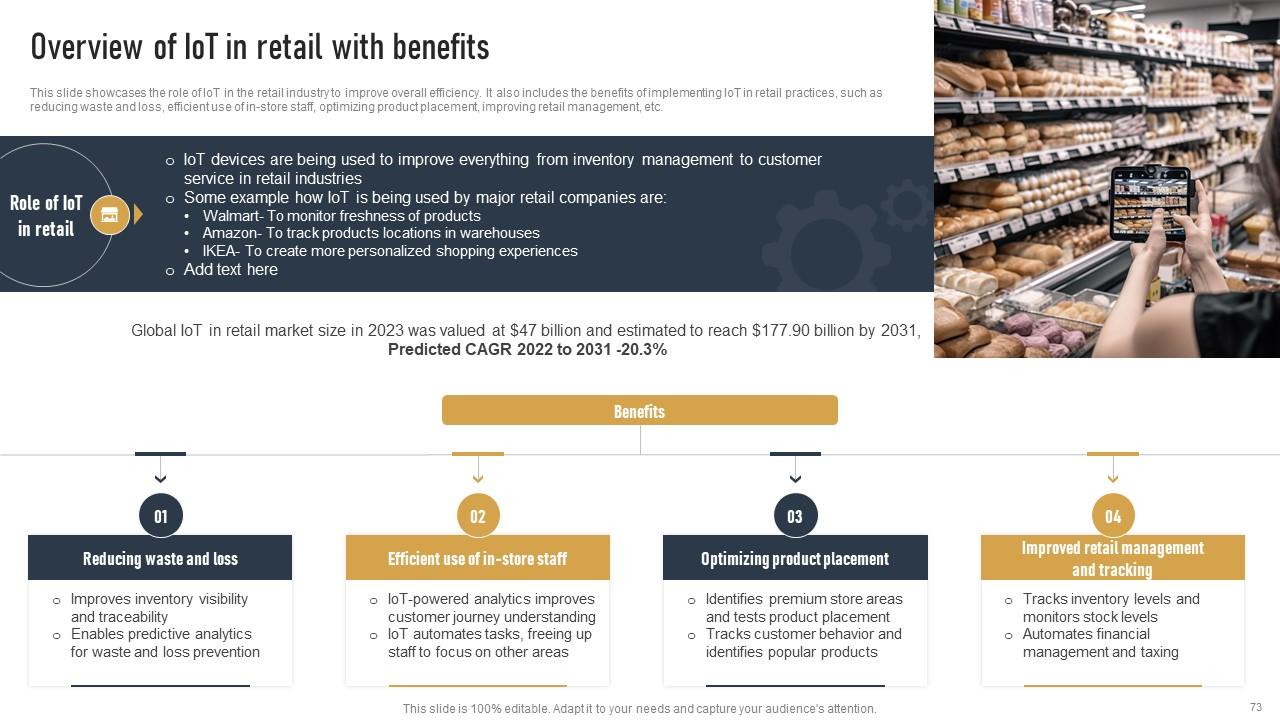
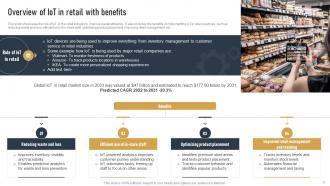
Slide 73: This slide showcases the role of IoT in the retail industry to improve overall efficiency.
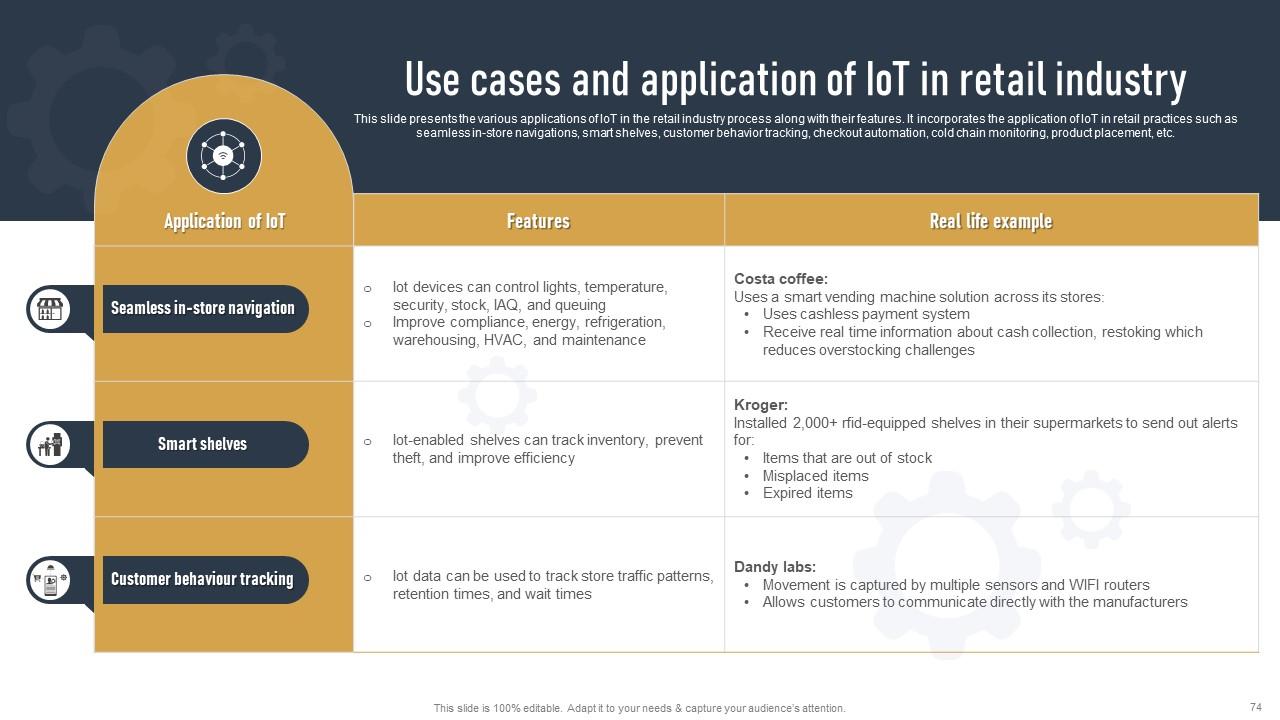
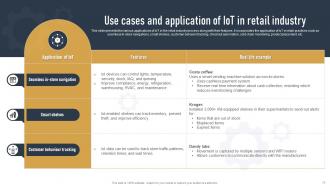
Slide 74: This slide presents the various applications of IoT in the retail industry process along with their features.
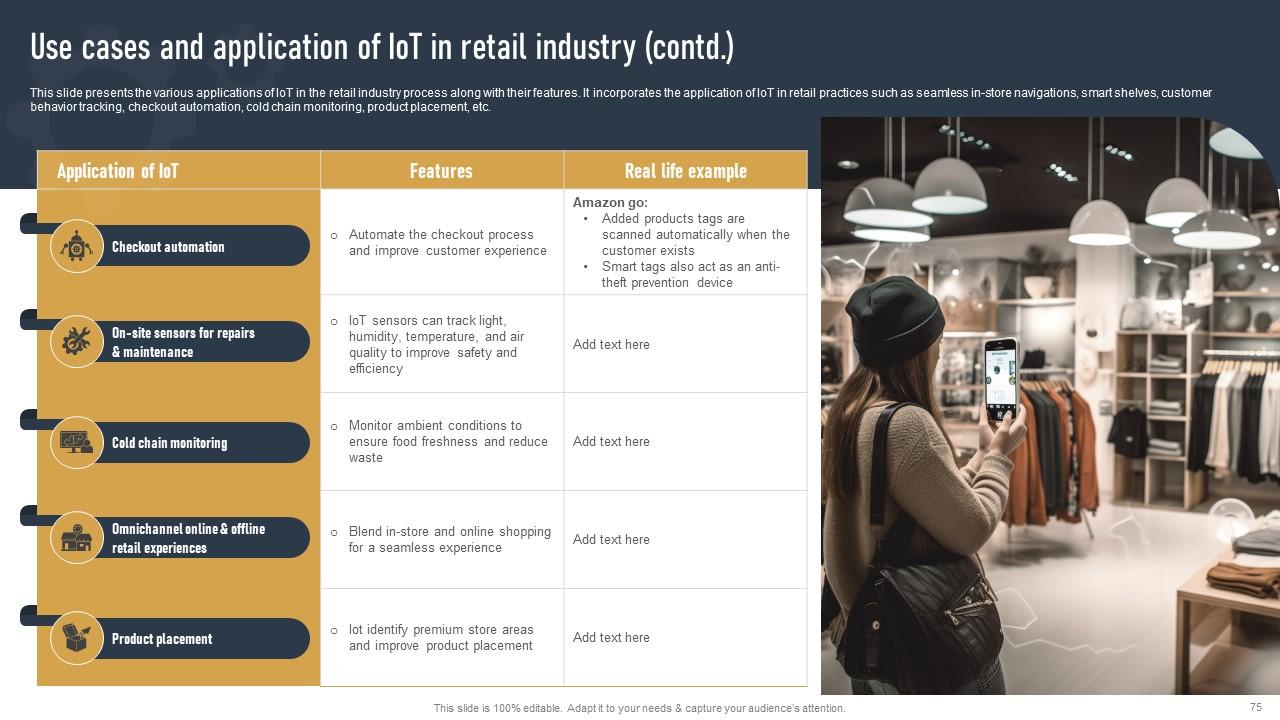
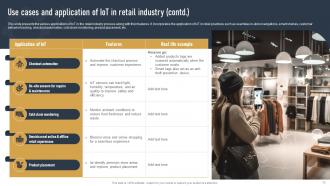
Slide 75: This slide presents the various applications of IoT in the retail industry process along with their features.
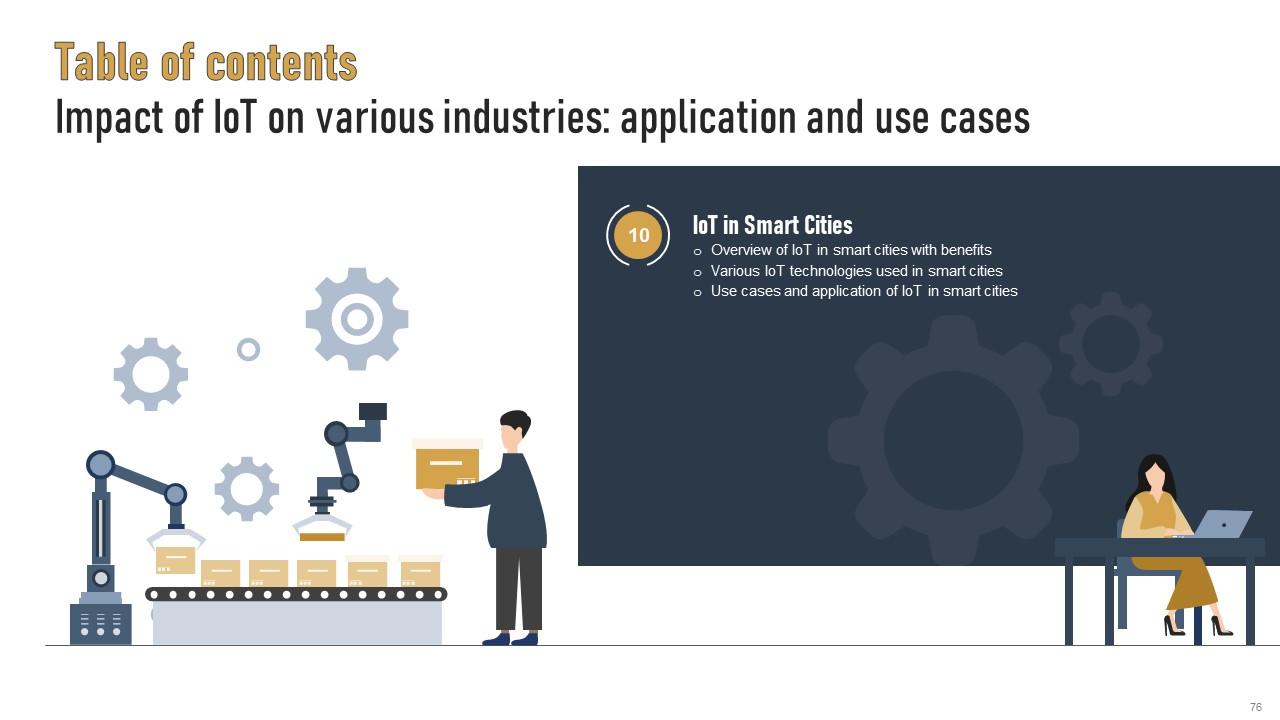
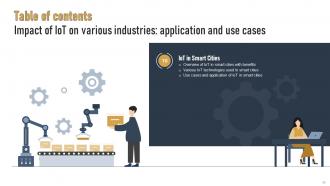
Slide 76: The slide renders another title of contents.
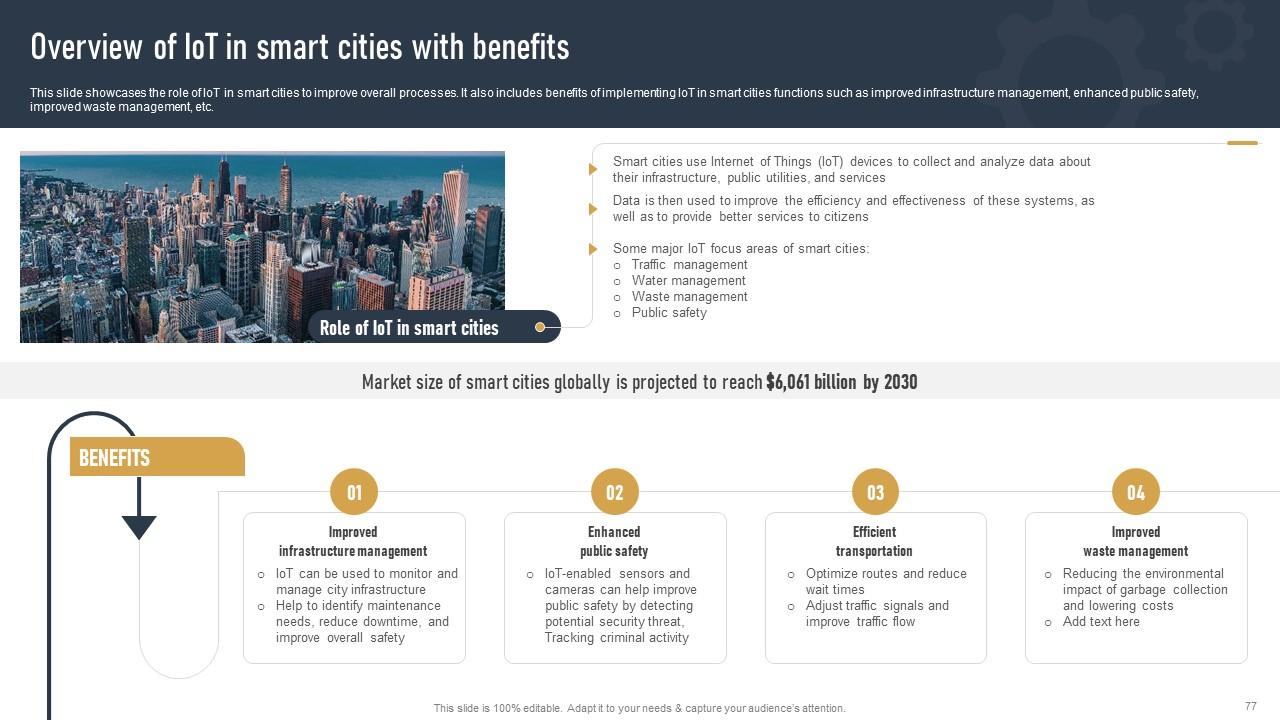
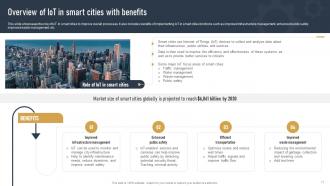
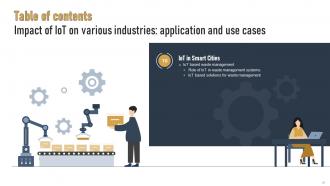
Slide 77: This slide showcases the role of IoT in smart cities to improve overall processes.
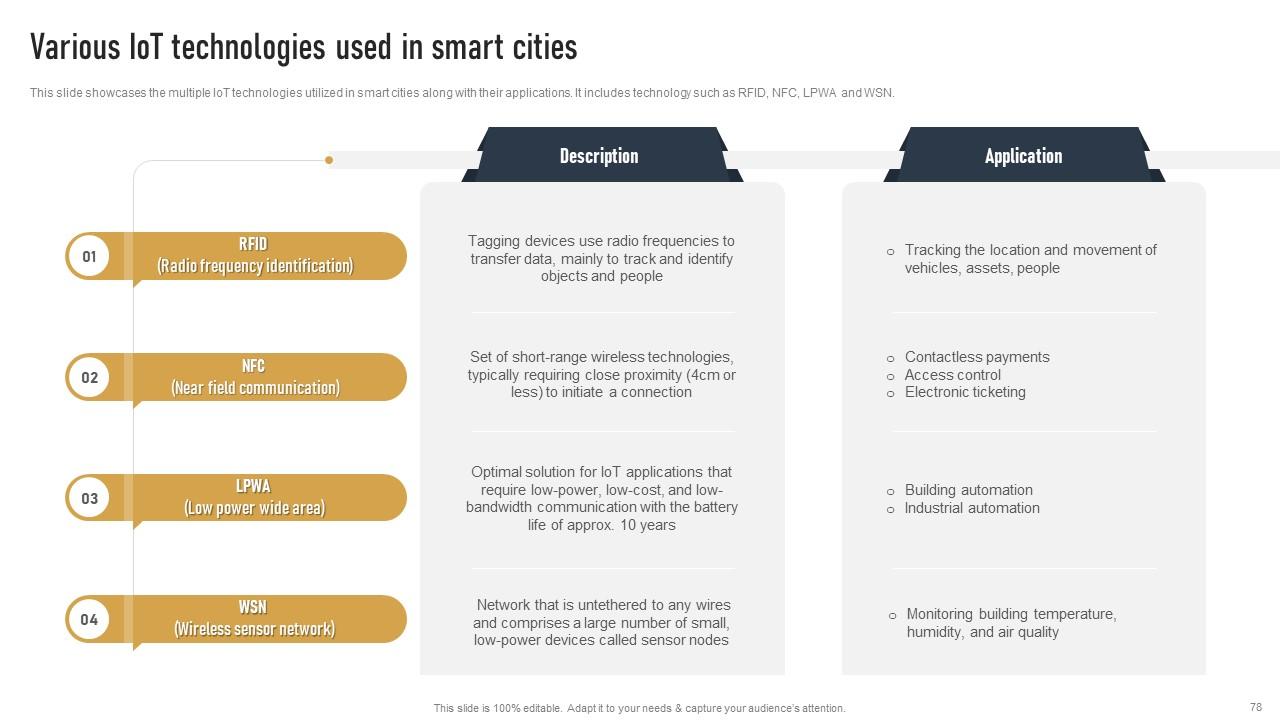
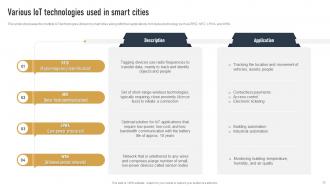
Slide 78: This slide showcases the multiple IoT technologies utilized in smart cities along with their applications.
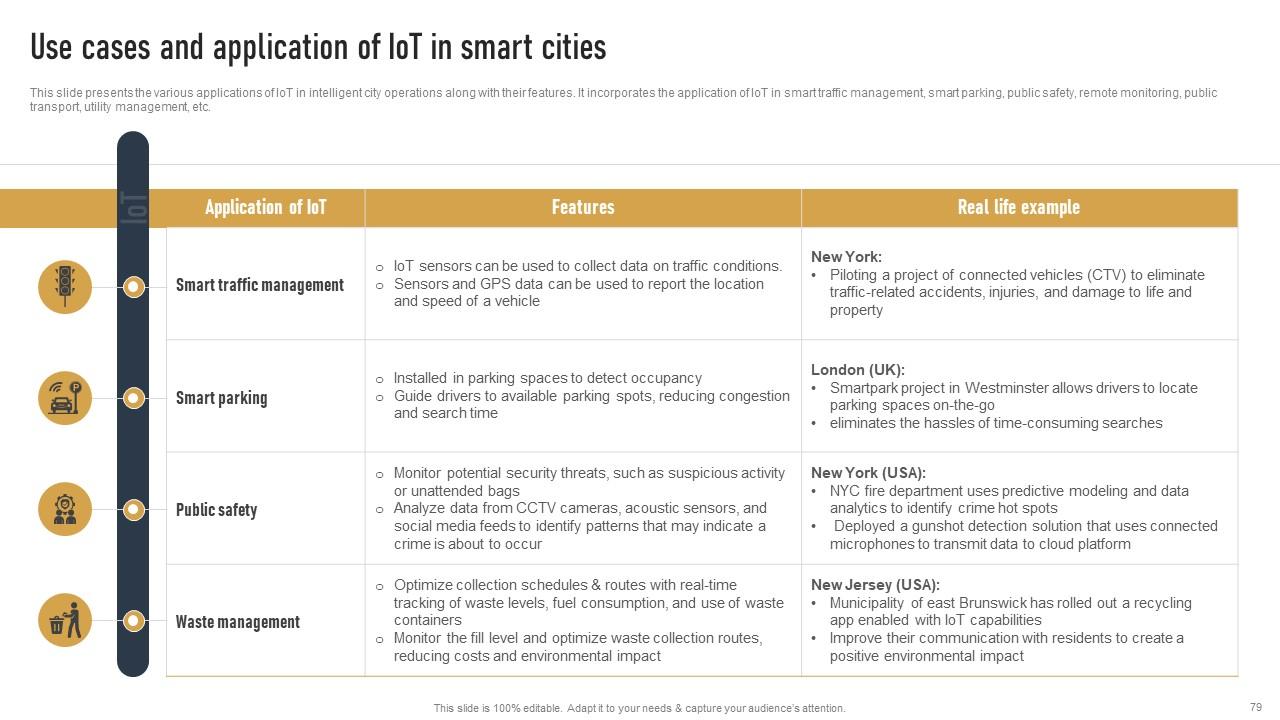
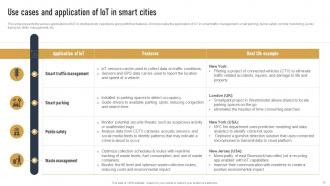
Slide 79: This slide presents the various applications of IoT in intelligent city operations along with their features.
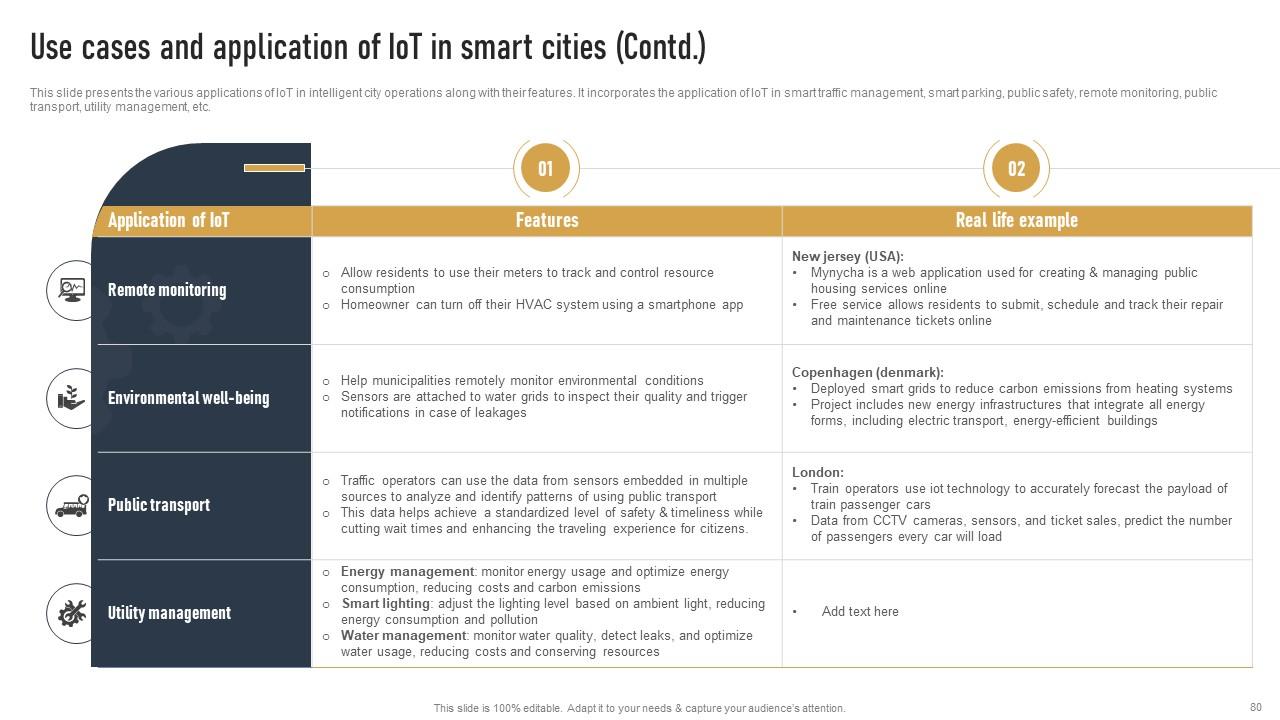
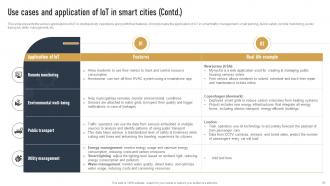
Slide 80: This slide presents the various applications of IoT in intelligent city operations along with their features.
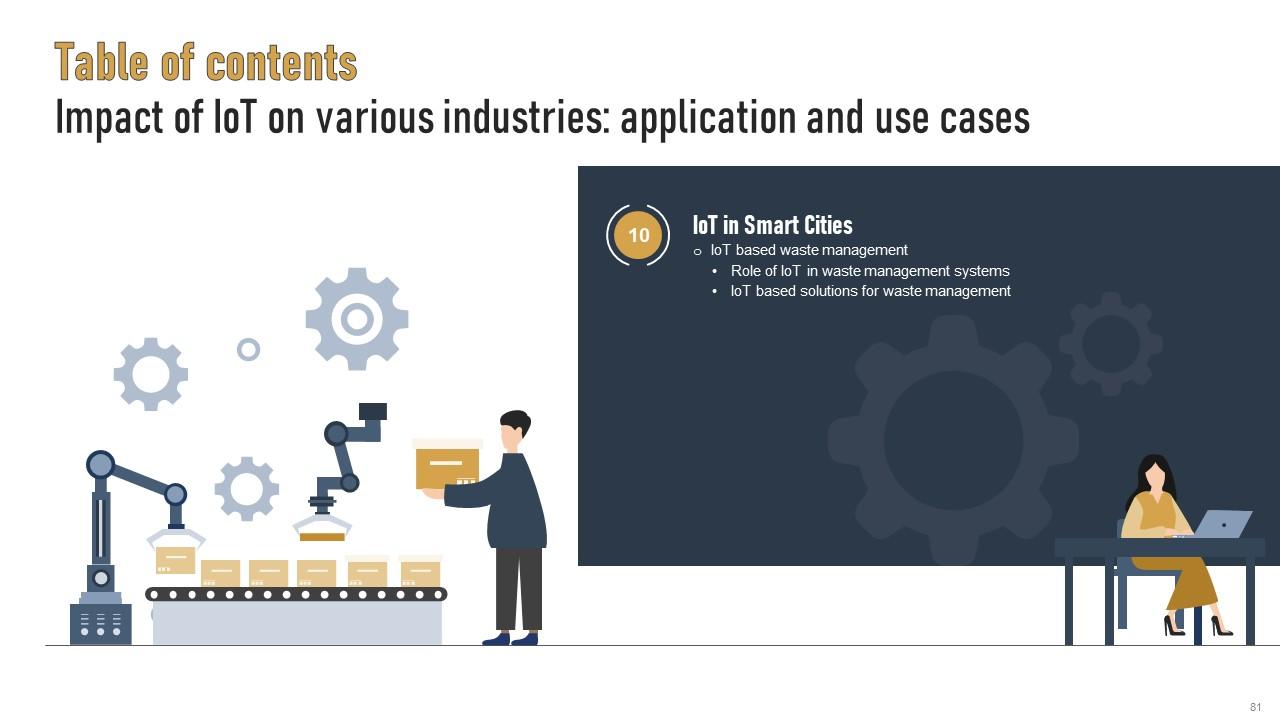
Slide 81: The slide provides title of contents further.
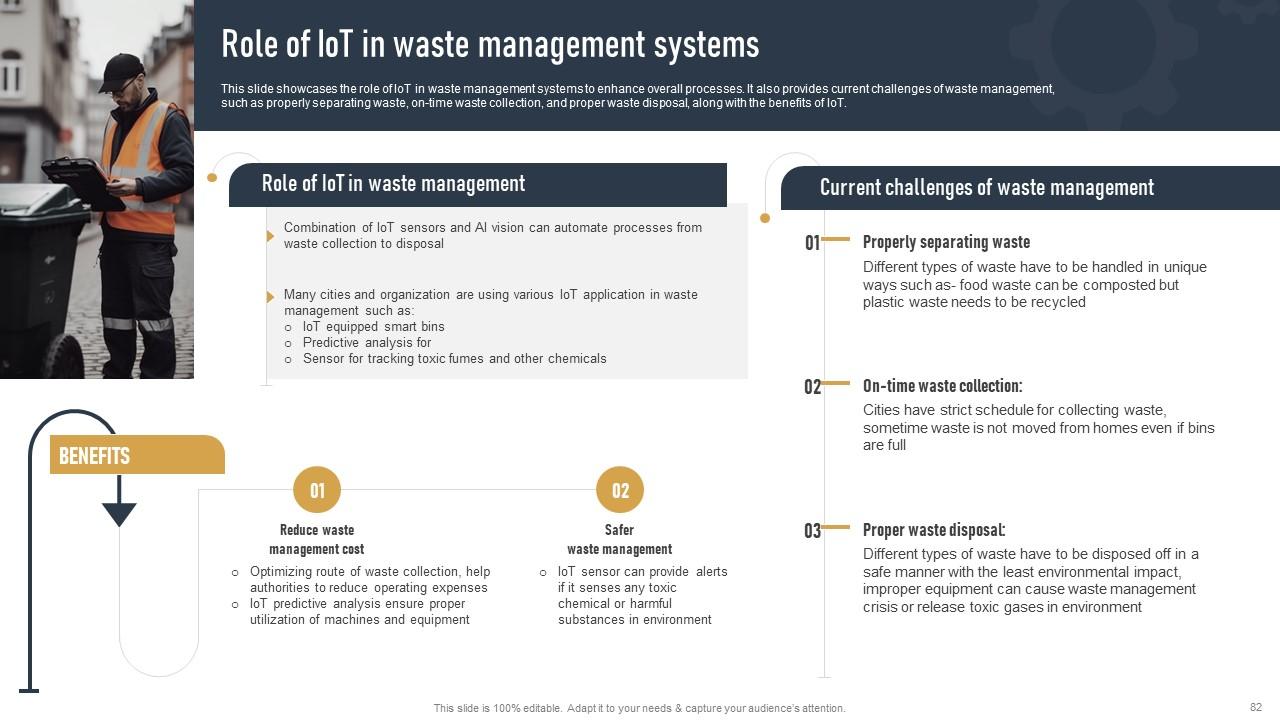
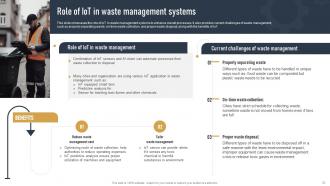
Slide 82: This slide showcases the role of IoT in waste management systems to enhance overall processes.
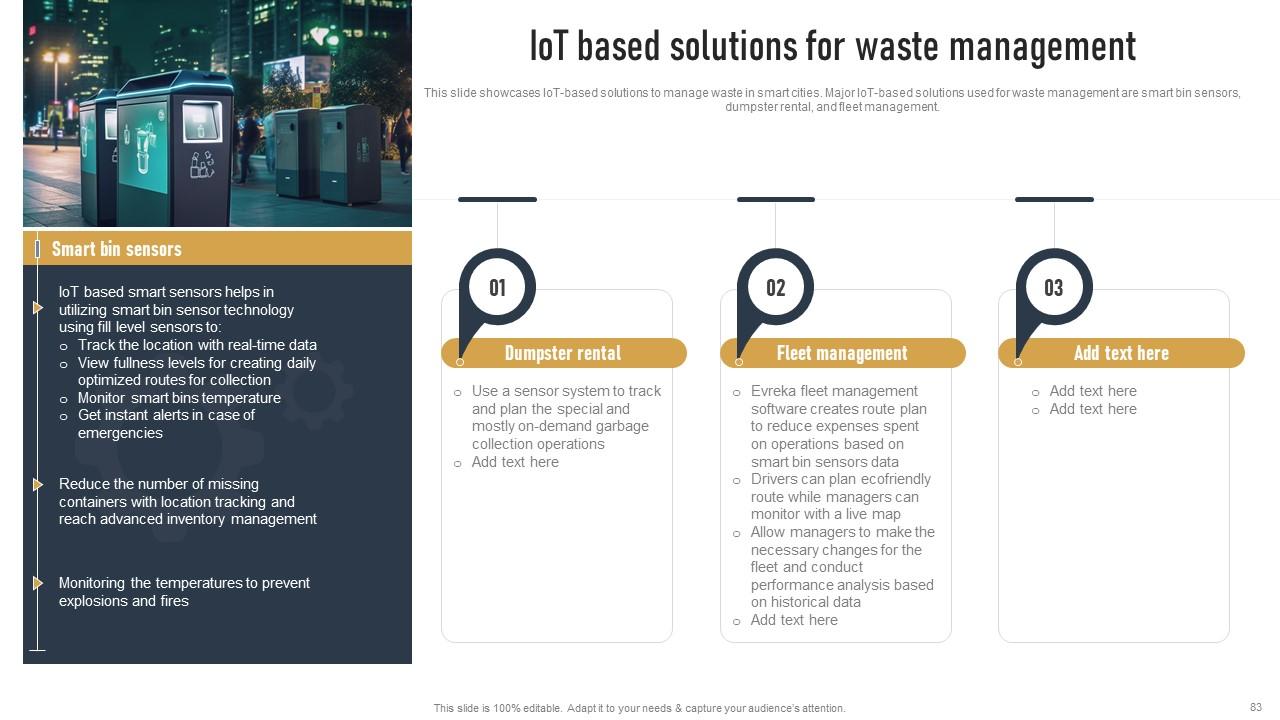
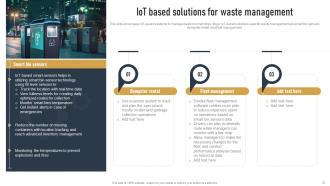
Slide 83: This slide showcases IoT-based solutions to manage waste in smart cities.
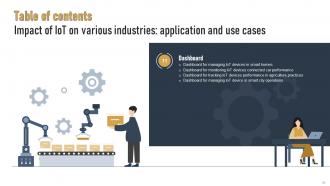
Slide 84: The slide ontains title of contents which is to discussed further.
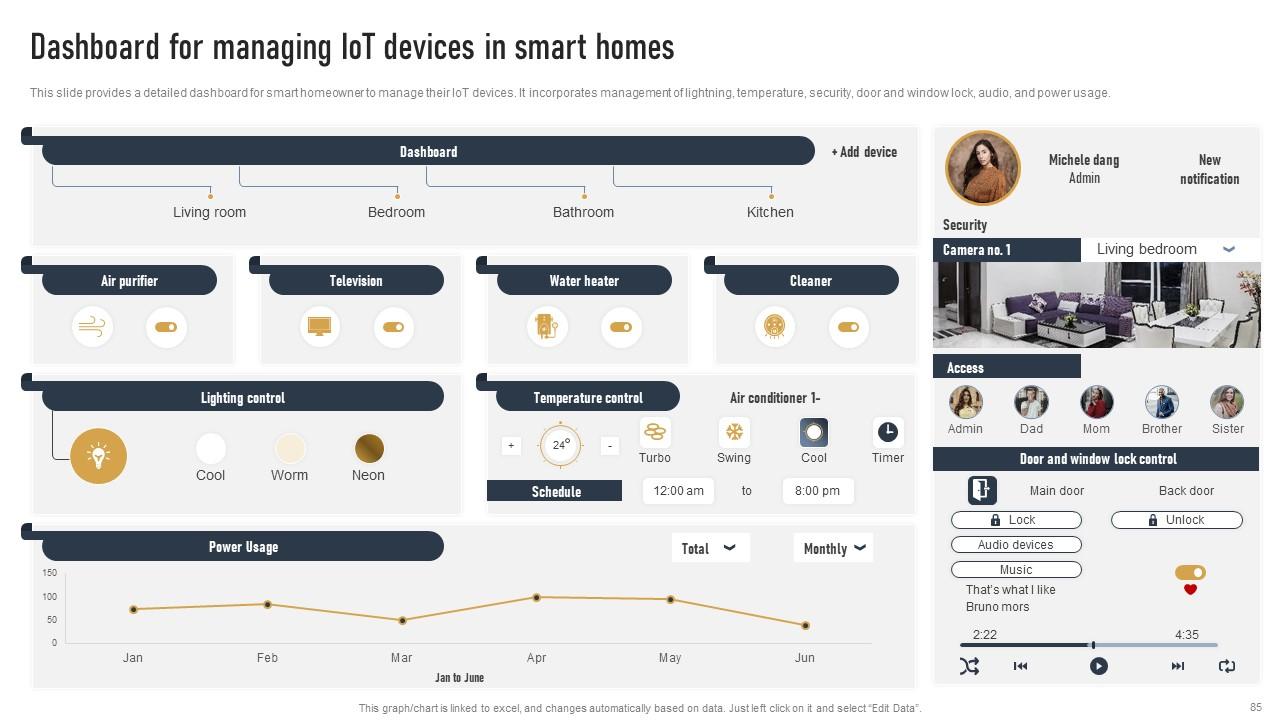
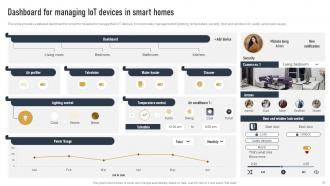
Slide 85: This slide provides a detailed dashboard for smart homeowner to manage their IoT devices.
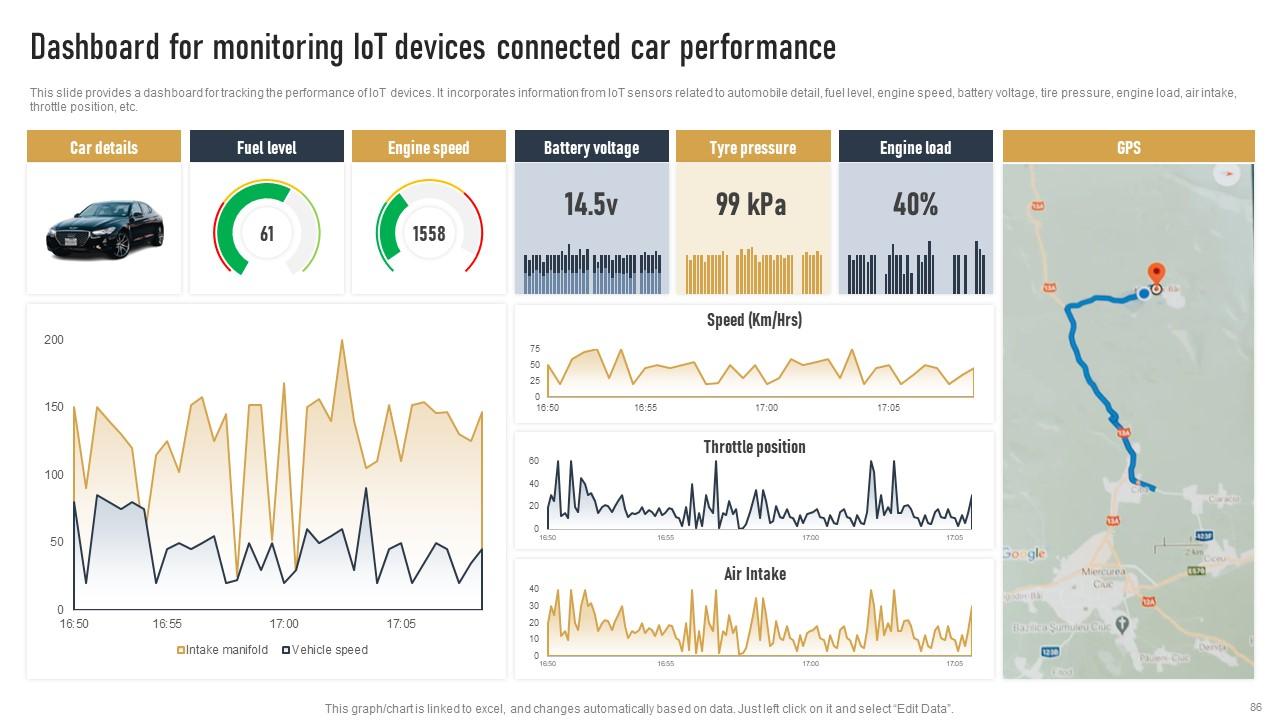
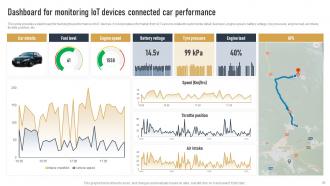
Slide 86: This slide provides a dashboard for tracking the performance of IoT devices.
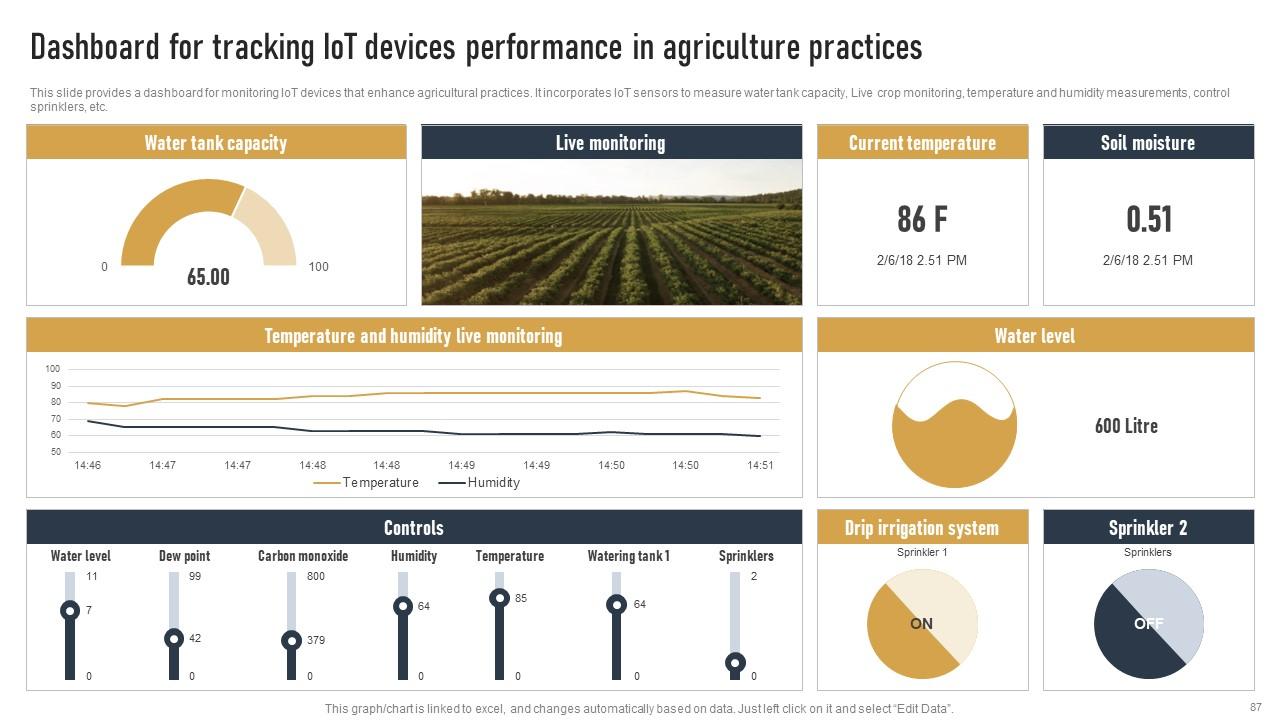
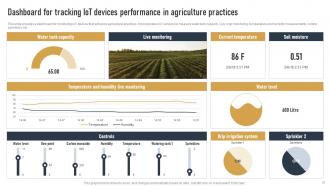
Slide 87: This slide provides a dashboard for monitoring IoT devices that enhance agricultural practices.
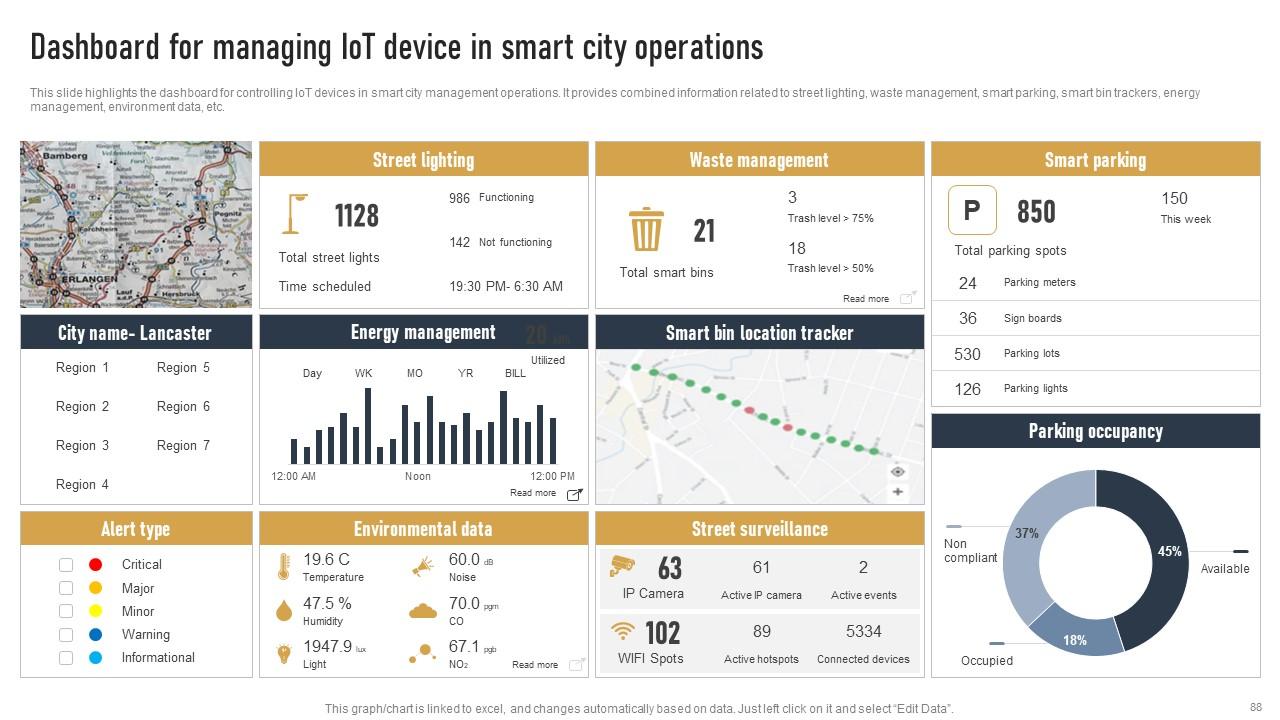
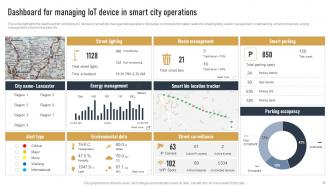
Slide 88: This slide highlights the dashboard for controlling IoT devices in smart city management operations.
Slide 89: This slide shows all the icons included in the presentation.
Slide 90: This is a Thank You slide with address, contact numbers and email address.
Impact Of IoT On Various Industries Application And Use Cases IoT CD with all 99 slides:
Use our Impact Of IoT On Various Industries Application And Use Cases IoT CD to effectively help you save your valuable time. They are readymade to fit into any presentation structure.
-
I really liked their customized design services. I got my desired template made by their expert team. Thank You!
-
Delighted to see unique and eye-catching PowerPoint designs that are so easy to customize.
