

Implementing agile marketing in your organization sprint review




Try Before you Buy Download Free Sample Product
 Impress Your
 Audience
 100%
100% Editable
 Save Hours
 of Time


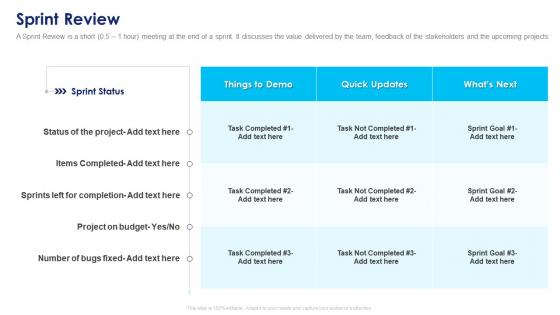
A Sprint Review is a short 0.5 1 hour meeting at the end of a sprint. It discusses the value delivered by the team, feedback of the stakeholders and the upcoming projects.
People who downloaded this PowerPoint presentation also viewed the following :
Implementing agile marketing in your organization sprint review with all 6 slides:
Use our Implementing Agile Marketing In Your Organization Sprint Review to effectively help you save your valuable time. They are readymade to fit into any presentation structure.





FAQs for Implementing agile marketing in your
So agile marketing is basically the opposite of those massive annual campaigns that take forever to launch. Instead, you're constantly testing small stuff, getting feedback, then tweaking things based on what actually works. Your team works in quick sprints - maybe 2-3 weeks max. Way more flexible than traditional marketing where you're stuck with whatever plan you made six months ago (even if it sucks). The whole point is pivoting when real customer data tells you to, not just hoping your original strategy was right. Honestly, it just makes way more sense in 2024. Try it on one small campaign first.
Break your marketing into 1-2 week sprints with clear goals you can actually measure. Those quick daily check-ins? Way better than endless Monday meetings, trust me. Focus on small experiments instead of huge campaigns - you can pivot fast when the data tells you something's not working. Oh, and set up regular team retrospectives where everyone can be honest about what sucked. The hardest part is killing campaigns that aren't performing, but don't throw good money after bad. I learned that one the expensive way!
Honestly, collaboration makes or breaks agile marketing. Without it, you're just doing regular marketing with fancy buzzwords. Daily standups help tons - everyone shares what they're doing and where they're stuck. Tools like Trello keep everyone on the same page visually. I'm big on cross-functional pairing too. Your copywriter should totally work directly with the designer instead of throwing stuff over the fence. Oh, and create that psychological safety thing where people can mess up without getting roasted. Some teams even do "failure parties" to celebrate learning from disasters, which sounds cheesy but actually works.
Track cycle time and how fast you're shipping stuff, plus team happiness and whether you're actually hitting sprint goals. But honestly, the real test is if your marketing numbers improve - conversions, engagement, revenue. That's the hard part though, connecting faster work to better results. I'd set up regular retros where people can be brutally honest about what's working and what sucks. Oh, and don't go overboard with metrics - pick like 3-4 that actually matter instead of drowning in data. You can always add more later if these aren't telling the story.
Trello, Asana, or Monday.com are solid for sprint planning and tracking tasks. For team chat, Slack or Teams work great between standups. Google Analytics plus social media insights will show you what's actually moving the needle - though honestly, half the metrics are vanity anyway. Marketing automation stuff like HubSpot or Marketo can run your campaign workflows if you need that. But here's the thing - doesn't matter which tools you pick if your team won't stick with them consistently. I'd just start with whatever you're already using and upgrade once you've got the agile thing down.
Okay so agile marketing is basically the opposite of those huge campaigns you plan months ahead. You work in short sprints instead - like 2 weeks - and can actually pivot when something's not working. The cool part? You're constantly getting feedback from your audience and tweaking things in real time. No more being stuck with content that falls flat while you wait for the next quarter to try again. Honestly, traditional marketing feels so clunky once you've tried this approach. Start with just one campaign in sprints and you'll see how much more responsive you become. Your customers will actually feel heard too.
Honestly, the hardest part is getting everyone on board - your team's gonna hate ditching those detailed months-ahead campaigns at first. I was stressed when we made the switch too! Measuring success gets weird since traditional ROI doesn't really work with this iterative stuff. Leadership will push back hard because they want concrete timelines and deliverables spelled out. Oh, and the whole thing feels chaotic initially (fair warning). But here's what worked for us - pick one small campaign to test agile principles on. Get some quick wins to show off, then slowly roll it out to other projects. Much easier sell that way.
Honestly, just dump everything into a backlog and rank stuff by impact vs how urgent it actually is. Break those massive campaigns down into chunks you can knock out in a week or two - trust me on this one. Daily check-ins help catch problems before they snowball. The hardest part? Learning to say no to shiny new projects that don't fit your current sprint. I'm still terrible at this sometimes. Start by brain-dumping all your tasks, then be brutal about ranking them by business value versus how much effort they'll actually take.
Testing small changes constantly is a game changer - you're working with actual data instead of just hoping stuff works. Launch tiny tests, see how people respond, then tweak your messaging or who you're targeting. Honestly, it gets pretty addictive when you start seeing real improvements! No more throwing money at campaigns that flop. You can focus your budget on what's actually driving results. Maybe start with something simple this week? Like testing different subject lines or tweaking your ad copy. Even small changes can make a surprising difference.
Honestly, digital tools are gonna be your best friend here. Slack works great for daily updates - way better than another Zoom call nobody wants to attend. Miro and Figma are solid for sprint planning when everyone's scattered. The tricky part is documentation since you can't just walk over to someone's desk anymore. Set up shared dashboards so the whole team can track campaign stuff in real-time. Oh, and don't ditch your retrospectives! They're actually more important when you're remote. I'd start by looking at what tools you're already using and figuring out what's missing from your workflow.
Track your cycle time - basically how fast you go from idea to actually doing something. Sprint velocity matters too (work done per sprint). Customer engagement and lead conversion rates are obvious ones. Honestly, don't sleep on team satisfaction scores though - miserable teams create garbage work, I've seen it happen. How quickly can you pivot when stuff isn't working? Maybe track A/B testing frequency or time-to-market. Oh, and resist the urge to measure absolutely everything at first. Pick 3-4 metrics that actually align with what you're trying to accomplish.
Okay so customer feedback loops are literally the backbone of good agile marketing. Instead of just throwing campaigns out there and hoping they stick, you're actually listening to what people say through surveys, social reviews, conversations - whatever. Then you adjust stuff in real-time based on actual data. Way better than the old "cross your fingers" method if you ask me. The trick is picking regular touchpoints where you collect feedback and then - this is crucial - actually doing something with it. I'd say start with just one channel this week, maybe check it weekly, then tweak your messaging from there.
Honestly, short sprints work best for marketing - like 1-2 weeks max because everything changes so quickly. Set clear goals upfront that you can actually measure, whether it's testing a new campaign or whatever experiment you're running. Those daily check-ins are lifesavers but don't let them drag on forever (15 minutes or everyone's mentally checked out). Actually look at your data when each sprint ends instead of just crossing stuff off lists. The retrospective part is where you figure out what bombed and what killed it. Oh, and don't let your team juggle like ten things at once - focus beats chaos every time.
Honestly, just treat content like you would any project - work in short 2-3 week bursts instead of mapping out months ahead. Create small batches, see how they perform, then adjust. That "perfect" post you're overthinking? Scrap it and publish the rough draft - I swear it usually does better anyway. Try different headlines and formats with smaller groups first. Double down on whatever actually lands with your audience. The whole point is responding to real feedback instead of guessing what people want. Short sprints, quick tests, then pivot or scale up based on what's working.
Dude, there's some really solid examples out there. Spotify's killing it with these cross-functional teams that test playlist campaigns super fast. ING Bank basically rebuilt their whole structure around agile - now they pump out personalized financial content way quicker. HubSpot does these content sprints and honestly their blog output is pretty wild when you see how much they publish. Adobe's probably the craziest transformation though - they went from 6-month campaign cycles down to 6 weeks and their ROI shot up. Each company tweaked agile for their own industry, but they all ditched the silos and got obsessed with testing stuff based on customer feedback.
-
Unique design & color.
-
Great quality slides in rapid time.
-
Great quality slides in rapid time.
-
Amazing product with appealing content and design.