


Project backlog product backlog template implementing agile marketing in your organization




Try Before you Buy Download Free Sample Product
 Impress Your
 Audience
 100%
100% Editable
 Save Hours
 of Time


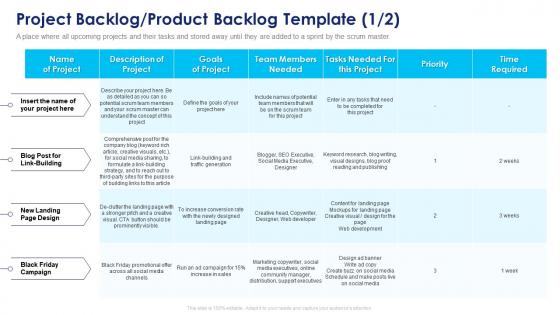
A place where all upcoming projects and their tasks and stored away until they are added to a sprint by the scrum master.
People who downloaded this PowerPoint presentation also viewed the following :
Project backlog product backlog template implementing agile marketing in your organization with all 6 slides:
Use our Project Backlog Product Backlog Template Implementing Agile Marketing In Your Organization to effectively help you save your valuable time. They are readymade to fit into any presentation structure.





FAQs for Project backlog product backlog template implementing agile marketing
So basically, agile marketing is the opposite of those massive campaigns where you plan everything for months then pray it works. You launch fast, test constantly, and pivot when stuff isn't hitting. Customer feedback beats perfect planning every time. Think short sprints instead of marathons - check your numbers weekly and don't be afraid to scrap what's flopping. Honestly, most marketers are way too attached to their "brilliant" ideas. Traditional marketing feels like building a house where you can't change anything once you start. This approach? More like jazz - you improvise as you go.
So basically agile gets everyone doing regular standups and sprint planning together - no more endless email chains, thank god. Your sales and product people are actually in the room talking through what marketing's building. Everything's visible on shared boards, which honestly cuts down on so much confusion. The best part? You're getting feedback constantly, so you won't waste weeks on some campaign that doesn't match what product is doing. I'd start small - maybe just weekly cross-team check-ins to see how it feels. Way less stressful than the old silo situation.
Honestly, customer feedback is what makes Agile marketing actually work. Without it, you're just guessing what people want. I always tell people to think of it like constantly adjusting your route while driving - you don't wait until you're completely lost to check directions, right? You can grab feedback through surveys, watching social media, A/B testing, or just talking to customers directly. The trick is building these check-ins into every sprint so you're tweaking your messaging and tactics as you go. Way better than launching something and crossing your fingers for months.
Honestly, start simple with just a few tools or you'll go crazy trying to manage everything. Trello or Asana work great for tracking sprints - I'm partial to Trello's visual boards myself. You're gonna be glued to Slack or Teams for standups anyway, so get comfortable there. Google Analytics is obvious for data, plus whatever social media and email platforms you're already using. Oh, and Miro's clutch for brainstorming sessions when everyone's throwing ideas around. But seriously, don't download every shiny tool you see. Pick 2-3 max and actually learn them first. You can always add more once your team stops feeling like headless chickens.
So instead of planning everything months out, agile marketing breaks stuff into short sprints. You can test ideas quickly and see what's actually working before you waste your entire budget - honestly such a lifesaver. My team does these regular check-ins where we look at the data and decide if we should keep going, tweak things, or just scrap campaigns completely. Way better than being stuck with some rigid yearly plan when your customers want something totally different. Try running just one campaign in 2-week chunks first. You'll be amazed how much faster you can adapt to what people actually care about right now.
Start with velocity stuff - campaign cycle time, story completion rates, sprint burndown charts. Lead response time and conversion rates matter too, obviously. Customer acquisition cost is huge. Engagement and ROI are still worth tracking, but here's what's interesting - team satisfaction and how well people collaborate actually predict success way better than the hard numbers. Sounds weird but it's true. Don't go crazy though. Pick like 3-5 metrics max at first. Once your team gets the hang of it, then you can pile on more data. Too much tracking upfront just makes everyone miserable.
So you can totally run Scrum with 1-2 week sprints but focus them on campaign launches instead of code releases. Daily standups are actually clutch for keeping everyone on the same page about what's happening. With Kanban, just set up columns like "Ideas," "Review," "Published" - whatever matches your flow. Swap out the technical user stories for marketing goals like boosting email open rates by 10%. Honestly, I'd pick one framework first rather than trying both at once - that's where most teams mess up. The whole trick is treating your campaigns like products you're constantly tweaking. Don't try to copy what the dev team does exactly.
Honestly, the hardest part is convincing people to ditch those huge quarterly campaigns for shorter sprints. Your team's probably gonna resist the whole "fail fast" thing - I mean, who wants to fail, right? Leadership will definitely push back wanting their precious long-term forecasts when you're trying to pivot based on real data. Oh, and your approval processes? They're probably built for the old way of doing things. My advice - pick one tiny pilot project first. Show them some quick wins before you go trying to flip everything upside down at once.
Honestly, I'd set big-picture goals but chop them into quarterly chunks you can actually tweak. Keep your main vision steady - stuff like boosting brand awareness or growing customer value. But your tactics? Those can totally shift based on what you figure out each quarter. I've watched teams get way too stuck on their yearly plans and completely miss amazing opportunities. Think of it like GPS - you know where you're going, but you'll take a different route when there's traffic, right? Review every three months and don't be afraid to pivot your approach. Just keep that main goal visible so you stay flexible without losing sight of what actually matters.
Okay so sprints are like your sanity saver in agile marketing. You get these focused 1-4 week chunks to work on specific campaigns without drowning in chaos. Start by setting clear goals everyone can actually measure - none of that vague "increase engagement" stuff. Break big projects down into bite-sized tasks your team can realistically handle. Don't be heroes and overcommit. Kick off each sprint with a planning session where people commit to deliverables, then do quick daily check-ins. Honestly, the best part is reviewing results afterward - you'll figure out what's working fast and ditch what isn't.
Dude, agile marketing is a game-changer for responding to what customers actually want. You test small pieces first, see what works, then pivot fast based on real data. Way better than launching something huge and crossing your fingers, right? I'm telling you, once you start doing 1-2 week sprints and tracking engagement religiously, you'll get hooked on how much better your numbers get. It's like having actual conversations with your audience instead of just... well, shouting at them. Oh, and set up those feedback loops early - trust me on this one.
Yeah, there's some good stuff to look at! Spotify constantly tweaks their playlist recs and ad formats - boosted engagement by 30%. Pretty smart approach. ING Bank did this whole restructure where they broke marketing into these cross-functional squads, and campaign speed jumped 50%. Adobe ditched their annual campaign thing for continuous testing, which really improved conversions. Oh, and definitely check out ING's case study if you get a chance - they actually documented the whole process really well, unlike most companies who just talk about results without showing how they got there.
Structure actually unleashes creativity - sounds backwards, I know. Use Agile stuff like sprint planning to carve out real time for experimenting. Most teams think frameworks kill innovation, but that's totally wrong. Clear processes for testing ideas fast mean you can swing for the fences without huge consequences. Build brainstorming sessions right into your sprints. Timebox the crazy exploration phases so they don't drag on forever. Then use data to figure out which wild concepts deserve more attention. Oh, and failing fast becomes your best friend here.
Honestly, your execs need to stop just talking about agility and actually do it themselves first. Nobody else will buy in otherwise. Set up some low-stakes testing environments where teams can mess up without getting roasted. Those department walls between marketing, sales, and product? Yeah, tear those down ASAP. I'd probably start with just one small campaign to show it works - easier to get buy-in that way. Don't forget regular check-ins where people can actually say what sucked. And definitely get your team some real Agile training, not just a lunch-and-learn thing.
Honestly, just build dashboards that update daily instead of waiting around for monthly reports - total game changer. During sprints, run A/B tests and don't be afraid to pivot campaigns halfway through if the data's telling you to. We started doing quick data check-ins during our daily standups and now we catch dying campaigns way faster. Oh, and here's the thing - resist the urge to track everything. Pick 3-4 metrics that actually matter for your goals, not just the ones that look pretty. I learned this the hard way after drowning in vanity metrics for months. Keep it simple and actionable.
-
Much better than the original! Thanks for the quick turnaround.