


Implementing balanced scorecard in organization powerpoint presentation slides





Try Before you Buy Download Free Sample Product
 Impress Your
 Audience
 100%
100% Editable
 Save Hours
 of Time


Track the execution of the staff activities using this Implementing Balanced Scorecard In Organization PowerPoint Presentation Slides. Control and monitor the consequences arising from the actions that your team members take with the assistance of this Balanced scorecard SWOT complete deck. This semi-standard structured report PowerPoint presentation consists of 27 fully editable slides that can be altered to suit your needs and preferences. You can also discuss various aspects of building up a great balanced scorecard for your organization. These include barriers, rationale, balanced scorecard model, perspectives of a balanced scorecard, implementation and many more. Exercise strategic control and present a performance management report on the basis of the results obtained. Also, use this visually appealing balanced strategic planning and management system template to showcase your key performance indicators in the form of a digital dashboard. Therefore, without any further ado get access to this professionally structured balanced scorecard template by clicking on the download button now.
People who downloaded this PowerPoint presentation also viewed the following :
Content of this Powerpoint Presentation
Slide 1: This slide introduces Implementing Balanced Scorecard in Organization. State Your Company Name and begin.
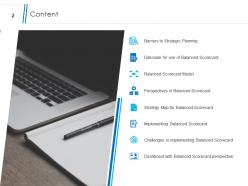
Slide 2: This slide shows Content of the presentation.
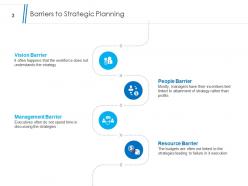
Slide 3: This slide presents Barriers to Strategic Planning describing- Vision Barrier, People Barrier, Resource Barrier, Management Barrier.
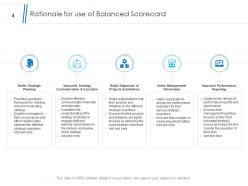
Slide 4: This slide displays Rationale for use of Balanced Scorecard describing- Improved Strategy Communication & Execution, Better Alignment of Projects & Initiatives, Better Strategic Planning, Better Management Information, Improved Performance Reporting.
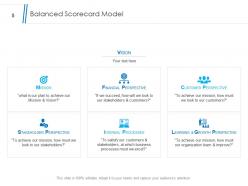
Slide 5: This slide represents Balanced Scorecard Model describing- Mission, financial perspective, customer perspective, stakeholder perspective, internal processes, learning and growth perspective.
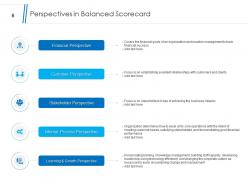
Slide 6: This slide showcases Perspectives in Balanced Scorecard.
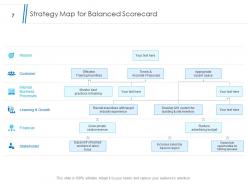
Slide 7: This slide shows Strategy Map for Balanced Scorecard with related diagram.
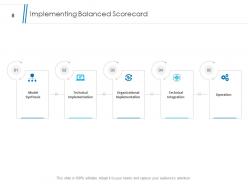
Slide 8: This slide presents Implementing Balanced Scorecard with- Technical Implementation, Organizational Implementation, Technical Integration, Operation, Model Synthesis.
Slide 9: This slide is titled as Model Synthesis.
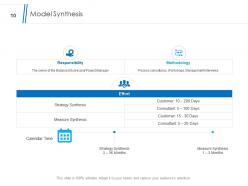
Slide 10: This slide displays Model Synthesis describing responsibility, methodology, and effort.
Slide 11: This slide is titled as Technical Implementation.
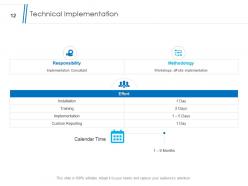
Slide 12: This slide represents Technical Implementation. You can add or edit data as per needs.
Slide 13: This slide is titled as Organizational Implementation.
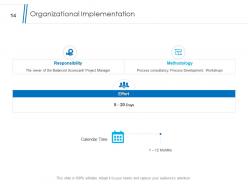
Slide 14: This slide showcases Organizational Implementation with responsibility, methodology and effort as categories.
Slide 15: This slide is titled as Technical Integration.
Slide 16: This slide shows Technical Integration. Use it as per requirements.
Slide 17: This slide is titled as Operation.
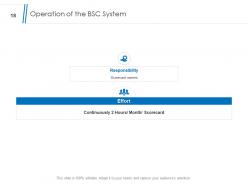
Slide 18: This slide presents Operation of the BSC System with responsibility and effort.
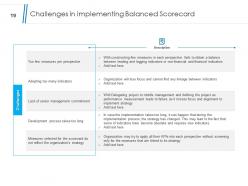
Slide 19: This slide displays Challenges in implementing Balanced Scorecard.
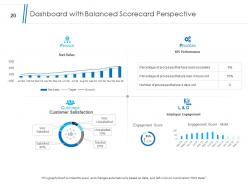
Slide 20: This slide showcases Dashboard with Balanced Scorecard Perspective.
Slide 21: This slide displays icons for Implementing Balanced Scorecard in Organization.
Slide 22: This slide is titled as Additional Slides for moving forward.
Slide 23: This is About Us slide to show company specifications etc.
Slide 24: This is Our team slide with names and designation.
Slide 25: This is Our Mission slide with related imagery and text.
Slide 26: This is a Financial slide. Show your finance related stuff here.
Slide 27: This is a Thank You slide with address, contact numbers and email address.
Implementing balanced scorecard in organization powerpoint presentation slides with all 27 slides:
Use our Implementing Balanced Scorecard In Organization Powerpoint Presentation Slides to effectively help you save your valuable time. They are readymade to fit into any presentation structure.






FAQs for Implementing balanced scorecard in organization
So you've got four main steps to tackle. Define your strategy first and break it into objectives for each BSC perspective. Next comes the metrics and targets - honestly kind of a pain but you can't skip it. Cascading it through your org is step three, and this is where most people screw up by rushing. Don't do that! Your teams need time to actually get how their work fits in. Last step is setting up those regular check-ins to track everything. I'd probably spend extra time on that cascading part if I were you.
Okay so first thing - map your goals to those four BSC areas (financial, customer, internal processes, learning & growth). They should connect logically. Like if you want happier customers, maybe you need better employee training first, which improves how you deliver services, which then boosts revenue. That whole chain reaction thing. Each goal needs real metrics and targets - not just vague stuff. Then you've got to actually communicate this to everyone so they get how their daily work fits the bigger picture. Honestly, that last part's usually where companies mess up the most. People need to see the connection or they won't care.
Honestly, getting leadership on board is usually the hardest part. Most people go absolutely nuts with KPIs at first - I'm talking 50+ metrics that just sit there collecting dust. Data quality will drive you insane too, especially when your systems don't talk to each other properly. Teams always push back because they think it's just more paperwork. Start with maybe 4-5 solid metrics per area and find a few people in each department who actually get it. They'll help sell everyone else on why it's worth doing. Oh, and make sure your data's actually reliable first - learned that one the hard way.
So the Balanced Scorecard is pretty cool - it gets you away from just staring at profit numbers all day. You look at four different angles: money stuff, customer happiness, your internal operations, and how well your team is learning new things. What I love about it is you start seeing connections everywhere. Like, better training actually makes customers happier, which obviously boosts your bottom line. Makes total sense when you think about it. Instead of tracking random metrics that don't really matter, everything ties back to your actual strategy. Just figure out what truly drives value across those four areas and you're golden.
Your executives have to be all-in on this, or you're basically dead in the water. They need to actually use the scorecard data when making decisions - not just nod along in meetings and then ignore it completely. The worst thing? When leaders try to dump this on middle management and walk away. That never works. Your boss should be talking about scorecard results regularly and showing up to reviews. If they're not visibly committed to the whole thing, honestly I'd fix that problem first before rolling it out anywhere else. Resources matter too, but the champion piece is huge.
First thing - figure out what actually matters in your specific industry. Healthcare? Patient outcomes trump everything else, even profit margins. Tech companies obsess over innovation metrics and keeping talent happy. Most generic frameworks totally miss this stuff. You'll want to dig into what really drives success in your space, then build your KPIs around that instead of textbook examples. Frontline people are goldmines for this - they see what's broken daily. Oh, and definitely check what the top performers in your industry are measuring. That's usually pretty telling.
Dude, I've watched so many of these things just die a slow death. Update your metrics quarterly - that part's non-negotiable. Make sure someone's actually responsible for keeping it alive, not just "the team" because that means nobody will do it. Leadership has to use the data in real decisions, otherwise people catch on quick that it's just theater. Monthly meetings with stakeholders work well. Also tie it to performance reviews so there's actual skin in the game. When teams hit wins, celebrate that stuff - shows the scorecard isn't just busy work. Oh and don't be stubborn about changing measures when your strategy shifts.
Honestly, tech just handles all the boring stuff for you. Get a good dashboard tool and automate your key metrics first - way better than some poor soul updating spreadsheets monthly. Analytics software catches trends you'd totally miss across those four BSC perspectives. Cloud platforms are clutch because your whole team can see the same data at once, keeps everyone on the same page with strategic goals. I'd probably start simple though - pick one solid dashboard and get that dialed in before adding more bells and whistles.
Start with impact stuff - how many lives you're actually changing, services delivered, that kind of thing. Financial metrics still matter but think efficiency ratios instead of profit. Your "customers" are really donors and volunteers since they keep you going, so track retention there. Honestly, most nonprofits go overboard and track way too much - it just becomes noise. Staff development is huge for the growth side of things. I'd say pick maybe 3-4 solid metrics per area and actually use them before adding more. You'll get overwhelmed otherwise.
Honestly, you *have* to get people involved or your scorecard will just collect dust. Run workshops with employees, customers, and leadership first - let them tell you what success actually looks like. They'll catch things you'd never think of, especially frontline people who see the real day-to-day stuff. When people help build the metrics, they actually care about hitting them instead of just ignoring another corporate initiative. I've seen too many scorecards fail because someone at the top thought they knew best. Get their buy-in early and build those insights into your four perspectives.
Honestly, just roll it out department by department instead of dumping everything at once. Town halls work great, but also throw up some dashboards around the office - even those break room posters aren't as lame as they sound. Each team needs to hear it in their own language though, not corporate jargon. I'd focus on maybe 2-3 metrics that actually affect what they do every day first. Then you can add more later. The whole thing should feel like a real conversation where people can ask questions, not some boring presentation where everyone's checking their phones.
Honestly, BSC works great with other frameworks - think of it as your strategic backbone. Map those BSC objectives to OKRs for quarterly stuff. Connect them to lean six sigma projects when you need process fixes. Some teams try overlaying agile too, but that can get weird fast if you're not organized about it. Start with whatever frameworks your team already knows. BSC becomes your foundation, then let the other tools handle day-to-day execution. Just find where your BSC objectives naturally plug into those existing initiatives. Way easier than starting from scratch.
Dude, you really can't let your Balanced Scorecard sit there gathering dust. Mine got stale once and everyone just started ignoring it completely. Your metrics become useless when they don't match what's actually happening in your business. Market shifts, priorities change - suddenly you're tracking stuff that doesn't matter anymore. People lose faith in the whole thing fast. I learned this the hard way, honestly. You'll want to refresh it every quarter or so, maybe even monthly if things are moving quickly. Otherwise it's just expensive wall art.
So first thing - start tracking your current numbers now, otherwise you'll have nothing to compare against later. Look at the obvious stuff like revenue growth, costs, profit margins. But don't sleep on customer satisfaction and employee engagement scores either. Those usually turn into real money down the line. The tricky part? All those strategic alignment benefits that are impossible to put a dollar sign on but honestly make the biggest difference. Most companies I know see around 15-25% improvement in their key metrics after like 12-18 months. Just make sure you're actually measuring before AND after - seems obvious but you'd be surprised how many people skip the baseline part.
Honestly, the Balanced Scorecard is clutch during a crisis because it stops you from tunnel vision on just the money stuff. When everything's falling apart, you can see how decisions hit all four areas - financials, customers, internal ops, and learning. Say you're debating between cutting training or laying off customer service people. The scorecard shows you the ripple effects across your whole strategy, which is huge when you're stressed and making quick calls. I'd focus on your most critical KPIs and check them weekly instead of monthly - way more responsive that way. It really helps you think long-term while putting out fires.
-
Unique research projects to present in meeting.
-
The Designed Graphic are very professional and classic.