


Marketing balanced scorecard powerpoint presentation slides




Try Before you Buy Download Free Sample Product
 Impress Your
 Audience
 100%
100% Editable
 Save Hours
 of Time


A marketing scorecard is a data-driven strategic planning and performance management tool that aligns an organizations marketing activities to growth strategies. The marketing team can use the scorecard to monitor their goals and improve their offline and online marketing efforts. Here is an efficiently designed template on the Marketing Balanced Scorecard that focuses the teams attention on awareness, acquisition, and conversion. This set of PPT slides consists of balanced scorecards to plan and track the effectiveness of marketing initiatives from multiple perspectives Financial, Business Processes, Learning and Growth, and Customers. The PowerPoint scorecard deck also contains slides for the strategic planning of digital marketing initiatives. The scorecards PowerPoint deck is 100 percent editable so that the top and middle management marketing individuals can have a quick and comprehensive view of the business for accelerated growth. Book a free demo with our research and design team and customize this 100 percent editable template based on your specific business requirements. Get access to it now.
People who downloaded this PowerPoint presentation also viewed the following :
Content of this Powerpoint Presentation
Slide 1: This slide displays the title 'Marketing Balanced Scorecard'.
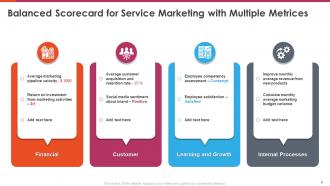
Slide 2: This slide covers the topic 'Balanced Scorecard for Service Marketing with Multiple Metrices'.
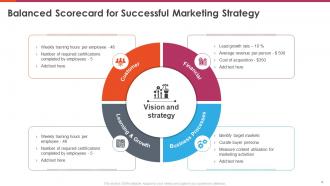
Slide 3: This slide caters to Vision and Strategy under 'Balanced Scorecard for Successful Marketing Strategy'
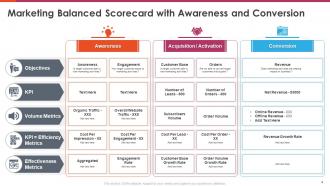
Slide 4: This slide shows Marketing Balanced Scorecard with Awareness and Conversion.
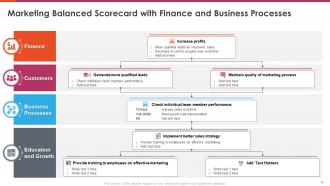
Slide 5: This slide showcases Marketing Balanced Scorecard with Finance and Business Processes.
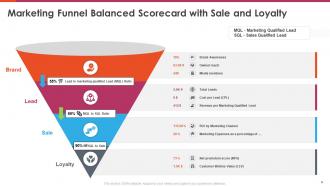
Slide 6: This slide presents the Marketing Funnel Balanced Scorecard with Sale and Loyalty.
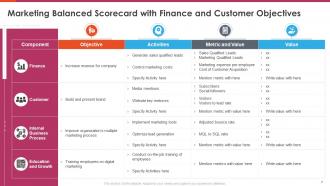
Slide 7: This slide presents Marketing Balanced Scorecard with Finance and Customer Objectives.
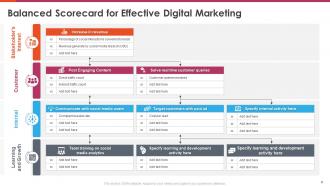
Slide 8: This slide presents the Balanced Scorecard for Effective Digital Marketing.
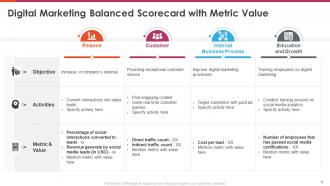
Slide 9: This slide shows the Digital Marketing Balanced Scorecard with Metric Value.
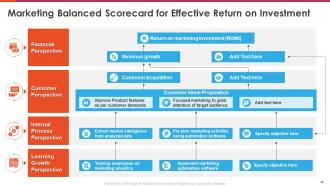
Slide 10: This slide shows the Marketing Balanced Scorecard for Effective Return on Investment.
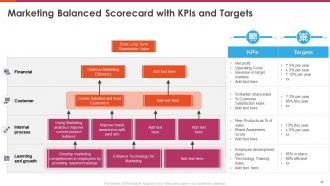
Slide 11: This slide shows Marketing Balanced Scorecard with KPIs and Targets.
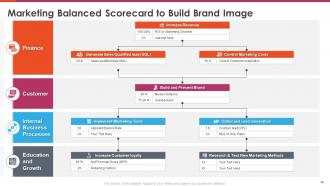
Slide 12: This slide presents Marketing Balanced Scorecard to Build Brand Image.
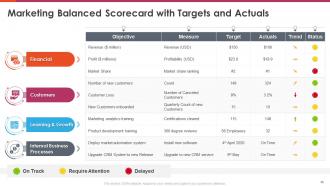
Slide 13: This slide presents Marketing Balanced Scorecard with Targets and Actuals.
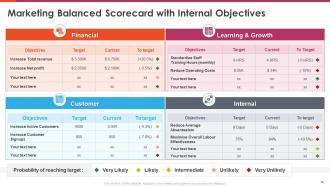
Slide 14: This slide presents Marketing Balanced Scorecard with Internal Objectives.
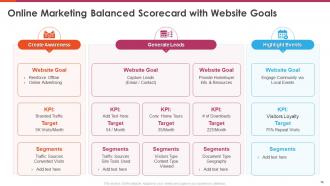
Slide 15: This slide presents Online Marketing Balanced Scorecard with Website Goals.
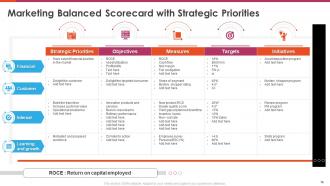
Slide 16: This slide showcases Marketing Balanced Scorecard with Strategic Priorities.
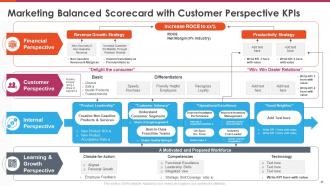
Slide 17: This slide presents Marketing Balanced Scorecard with Customer Perspective KPIs.
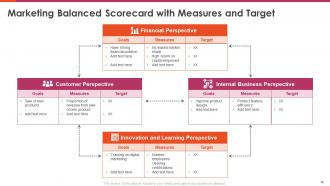
Slide 18: This slide showcases Marketing Balanced Scorecard with Measures and Target.
Slide 19: This is an Icons Slide for Marketing Balanced Scorecard.
Slide 20: This slide presents the title additional Slides.
Slide 21: This slide presents the company's Vision & Mission.
Slide 22: This slide displays a Venn.
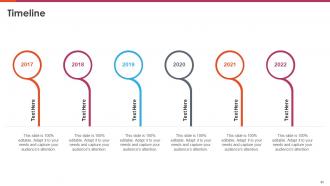
Slide 23: This slide presents a timeline for five years from 2017 to 2022.
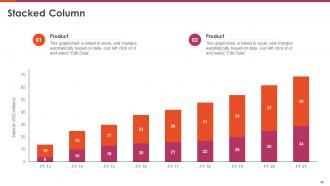
Slide 24: This slide presents a Stacked Column for yearly sales for three products.This graph is linked to excel.
Slide 25: This slide presents company's target.
Slide 26: This slide presents post It Notes.
Slide 27: This slide depicts 30-60-90 days plan for projects.
Slide 28: This is an Idea Generation slide.
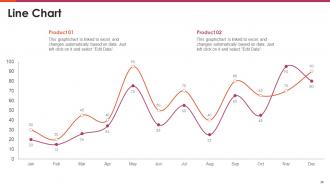
Slide 29: This slide presents a monthly line chart for two products.
Slide 30: This slide presents a Magnifying Glass.
Slide 31: This slide displays a roadmap.
Slide 32: This is a thank you slide with address and contact number etc.
Marketing balanced scorecard powerpoint presentation slides with all 32 slides:
Use our Marketing Balanced Scorecard Powerpoint Presentation Slides to effectively help you save your valuable time. They are readymade to fit into any presentation structure.


FAQs for Marketing balanced scorecard
So there's four main areas to track: financial stuff (revenue, ROI, cost per acquisition), customer metrics (satisfaction, retention, brand awareness), internal processes (how efficient campaigns are, lead conversion, time-to-market), and learning & growth (team skills, innovation, your marketing tech stack). Honestly, it's like having a proper dashboard instead of just staring at sales numbers all day. Everything connects too - when you invest in training your team, it actually shows up in customer satisfaction and then revenue later. I'd start simple though. Pick maybe 2-3 metrics from each area that actually matter for what you're trying to accomplish.
So basically you want to map your marketing stuff to those four balanced scorecard areas - financial, customer, internal processes, and learning. Don't just track random clicks and leads. Connect them to actual revenue, customer happiness, how smoothly campaigns run, all that. The cool part? When you can show brand awareness boosting customer retention, which then drives more revenue. It's like connecting the dots. Quarterly team reviews work great for this - I've seen it click when everyone's looking at all four areas together. Pick maybe 2-3 key metrics per area that actually tie back to what your company's trying to accomplish overall.
Honestly, I'd break it into four buckets. Financial stuff like ROI and acquisition costs. Customer happiness - satisfaction scores, how many people stick around. Then internal processes (conversion rates, how efficient your campaigns actually are). Oh and learning/growth metrics - brand awareness, whether your team's getting better at this stuff. The real trick? Mix leading indicators like website traffic with lagging ones like revenue. Don't go crazy though - pick maybe 2-3 metrics per area that actually move the needle for YOUR business specifically. Start with what matters most, then expand.
So customer satisfaction goes in the "Customer" section of your marketing balanced scorecard - that's where you'll track stuff like surveys, NPS scores, retention rates, and how many complaints you're getting. Here's the thing though: it's basically your crystal ball for revenue. I've seen satisfaction tank and then sales follow like clockwork a few months later. You want to connect those satisfaction numbers to everything else - your processes, team skills, all that. Oh, and don't overthink it. Pick maybe 2-3 satisfaction metrics that actually tie back to your revenue goals and you're good.
Yeah, for sure! The balanced scorecard totally changes how you approach campaigns. Instead of just chasing revenue, you're actually mapping out customer segments and figuring out what makes them tick. Here's what's cool - you end up with way more targeted messaging instead of generic "buy our stuff" campaigns. You're tracking things like engagement and brand perception, not just sales numbers. Honestly, I'd start by just looking at your current campaigns through those four scorecard perspectives. You'll probably spot gaps you didn't even know existed. It's one of those frameworks that sounds boring but actually works.
Look, digital marketing data is what makes your balanced scorecard actually work instead of just being a fancy wishlist. Track your customer acquisition costs and engagement for the customer stuff. Financial perspective? Campaign ROI and conversion rates. Internal processes get fed by email opens, social reach - all that good stuff. A/B test results help with the learning angle too. You're basically flying blind on half your metrics without this data. Oh, and definitely set up automated dashboards because pulling reports manually every month is soul-crushing. Trust me on that one.
Keep it dead simple - grab 3-4 metrics from the main areas: financial stuff like customer acquisition cost, customer retention rates, how fast you respond to campaigns, and whether your team's actually learning new skills. Most small businesses I've seen totally overthink this and then quit after like two months. Just track what you can with whatever tools you already have. Don't go buying fancy software yet. Set up monthly check-ins to see what's working. Honestly, being consistent with a few solid metrics beats trying to track everything perfectly and burning out.
Ugh, the data nightmare is real - getting marketing tied to actual money is brutal. Attribution alone will make you want to scream (seriously, which touchpoint gets credit?). Long sales cycles screw up your quarterly reports, and don't get me started on systems that refuse to talk to each other. Marketing folks hate being judged on stuff they can't control either. Honestly? Start small with maybe 3-4 metrics everyone can live with. Build from there once you're not drowning. Focus on things marketing can actually move - lead quality, engagement rates - rather than just chasing final revenue numbers all the time.
So basically, a marketing balanced scorecard tracks four main things: money stuff, how happy customers are, your internal processes, and team development. Way better than just staring at revenue all day. Think of it like this - you'll actually see how training your people leads to happier customers, which obviously boosts profits. The connections between everything become super clear. Honestly, most companies miss this and wonder why their marketing feels all over the place. Pick 2-3 metrics from each area that actually matter to your business. It's like finally getting a full dashboard instead of just watching your speedometer.
Oh totally! Marketing scorecards can actually fix that whole department silo thing pretty well. What works is picking metrics that force teams to work together - like customer acquisition cost needs both marketing and sales to succeed, you know? Same with satisfaction scores touching marketing, product, and support. Teams stop being territorial once they realize they literally can't hit targets without each other. Honestly, I've seen it happen faster than you'd expect. Just don't pick metrics where departments can work separately and still win. Find maybe 2-3 goals that genuinely require collaboration, not just people doing their own thing in parallel.
FedEx totally crushed this - they connected their brand perception stuff straight to customer costs and lifetime value through their marketing scorecard. Southwest did the same thing, just tracking how marketing spend hit both customer satisfaction and route profits. Best Buy and Target are killing it in retail too, balancing short-term promo results with long-term brand health. Oh, and honestly? Don't stress about building some perfect system right away. Just start with whatever KPIs you've got now and slowly mix in the brand metrics as you go. Way easier than trying to figure it all out at once.
Check your marketing scorecard monthly - catches problems before they snowball. Quarterly is when you'd actually change KPIs or swap out useless metrics. Weekly might work if you're running big campaigns or in a crazy volatile market. Honestly, most teams I know wait way too long and then scramble when numbers tank. Monthly keeps you honest without being obsessive about it. The quarterly deep dives are where real strategy shifts happen. Start monthly and see what clicks for your team's style - some need more frequent check-ins, others don't.
Honestly, I'd just start with Excel or Google Sheets - sometimes keeping it simple is your best bet. You get full control over everything. If you need fancier stuff later, tools like Qlik Sense or Tableau have those automated dashboards and real-time updates (though they can be overkill). Quick question though - are you already using HubSpot or Salesforce? Those platforms usually have scorecard features built right in, which is super convenient since your data's already there. My advice? Don't overthink it. Start with whatever you've got access to now and only upgrade if you're actually hitting limitations.
Yeah definitely include brand perception stuff in your scorecard! I'd stick it under the Customer perspective since that's where it makes the most sense. You can actually measure this through brand surveys, NPS scores, or social sentiment tracking - honestly way more useful than people think. Brand perception usually drives those hard metrics like conversions anyway, so don't skip it just because it's "soft." Pick maybe 2-3 metrics you can track consistently. Brand awareness and customer satisfaction are probably your best starting points since they're pretty straightforward to set up and won't make you want to pull your hair out.
So you'll want to hit three main things with your team: the four BSC perspectives (financial, customer, internal processes, learning & growth), how to define and track KPIs, plus whatever software you're using. Honestly, most teams crash and burn on the metrics part at first. Everyone needs to get how to read the data and actually connect marketing stuff to business results. Oh, and throw in some basic data visualization training - otherwise your presentations will suck. I'd do a half-day workshop on the framework first, then monthly check-ins for three months to keep people on track.
-
Very well designed and informative templates.
-
Very unique, user-friendly presentation interface.
-
Helpful product design for delivering presentation.
-
Designs have enough space to add content.