


Account based marketing powerpoint presentation slides




Try Before you Buy Download Free Sample Product
 Impress Your
 Audience
 100%
100% Editable
 Save Hours
 of Time


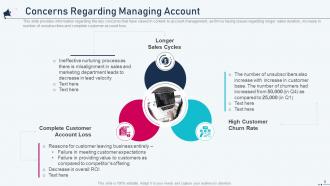
This template will help firm in implementing and optimizing account based systems to generate higher returns on investments and marketing and sales teams alignment. It is go to market strategy that collaborates highly personalized marketing campaigns and sales efforts to attract specific accounts. The present scenario of account management portrays various issues such as longer sales cycles, complete customer account loss and high customer churn rate. Firm will initiate account management process by developing dedicated account based marketing team involving key people such as marketer, account executives, etc. Team will prepare checklist to infer insights about account in terms of company, market information. It will develop ideal customer profile worksheet and will collect firmographic and technographic data. Aligning sales and marketing teams by analyzing, scoring them on certain parameters such as building organizational relationships, pipeline management and lead generation, culture, etc. Effective management of communication will improve overall alignment among teams. Firm will develop account based scoring model to assess various accounts on certain parameters. Based on scores, grades are assigned to individual accounts and account suitability will be determined. Team will prepare account nurturing program by providing selected accounts with personalized content in terms of webinar, emails. Articles, etc. After successful optimization of account management and choosing appropriate automated account management software, firm will be able to improve customer retention rate, increased account engagement, enhanced marketing efforts, improved returns on investment and better sales and marketing alignment.
People who downloaded this PowerPoint presentation also viewed the following :
Content of this Powerpoint Presentation
Slide 1: This slide displays the title i.e. 'Account Based Marketing' and your Company Name.
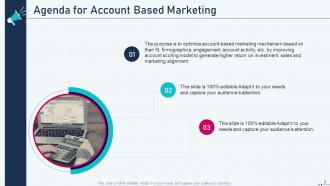
Slide 2: This slide presents the agenda.
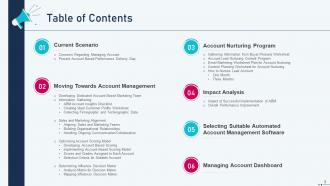
Slide 3: This slide exhibits the table of contents.
Slide 4: This slide shows title for current scenario.
Slide 5: This slide explains the key concerns that have raised in context to account management.
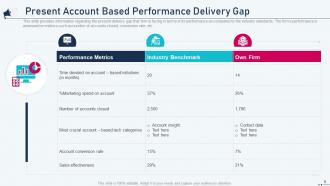
Slide 6: This slide shows present delivery gap that firm is facing in terms of its performance as compared to the industry standards.
Slide 7: This slide displays title for account management information gathering.
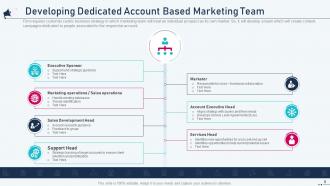
Slide 8: This slide showcases what is developed and dedicated account based marketing team.
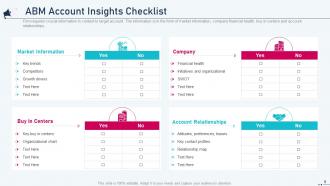
Slide 9: This slide presents ABM accounts insights checklist.
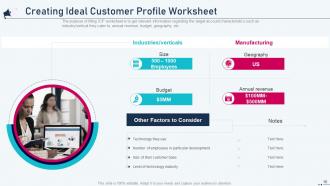
Slide 10: This slide exhibits creating of ideal customer profile worksheet.
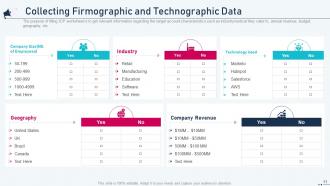
Slide 11: This slide shows collection of technographic and firmographic data.
Slide 12: This slide displays title for account management sales & marketing alignment.
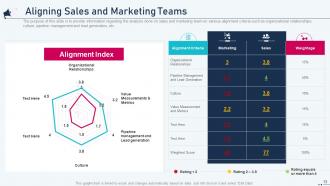
Slide 13: This slide demonstrates aligning of sales and marketing teams.
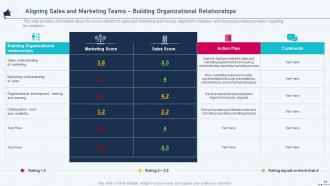
Slide 14: This slide explains scores allotted to sales and marketing team on key alignments initiatives and necessary measures taken regarding the initiatives.
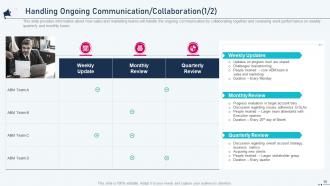
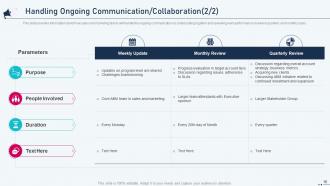
Slide 15: This slide provides information about how sales and marketing teams will handle the ongoing communication by collaborating together.
Slide 16: This slide shows continuing content from above slide.
Slide 17: This slide displays title for optimizing account scoring model.
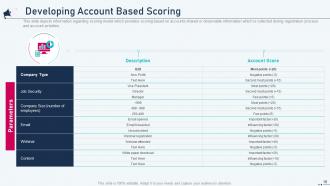
Slide 18: This slide depicts information regarding scoring model which provides scoring based on accounts.
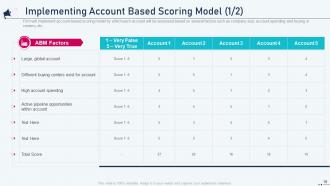
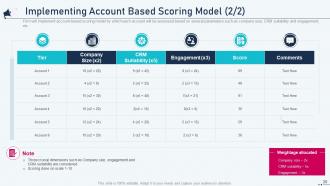
Slide 19: This slide presents implementing account based scoring model.
Slide 20: This slide presents continued content from above slide.
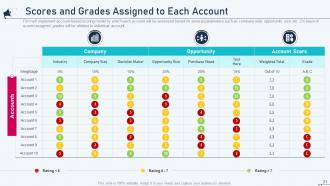
Slide 21: This slide exhibits table for scores & grades assigned to each account.
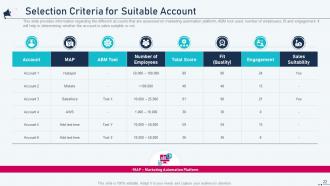
Slide 22: This slide provides information regarding the different accounts that are assessed on marketing automation platform.
Slide 23: This slide shows title for determining influence decision maker.
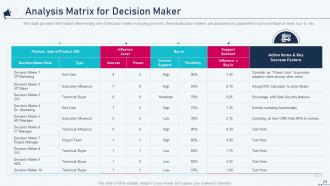
Slide 24: This slide explains role of decision maker in buying process. Several decision makers are assessed on parameters such as influence level, buy in, etc.
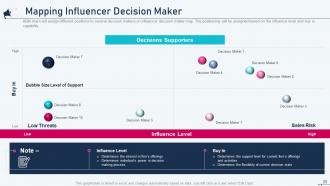
Slide 25: This slide showcases mapping of influencer decision maker.
Slide 26: This slide presents title for account nurturing program.
Slide 27: This slide provide information regarding the data collected by the buyer.
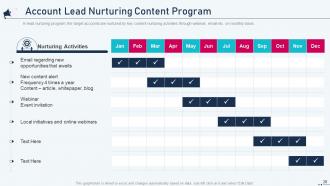
Slide 28: This slide exhibits table for account lead nurturing content program.
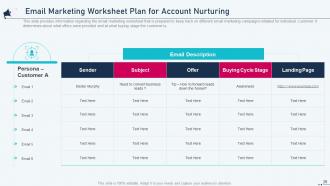
Slide 29: This slide describes email marketing worksheet that is prepared to keep track on different email marketing campaigns initiated for individual customer.
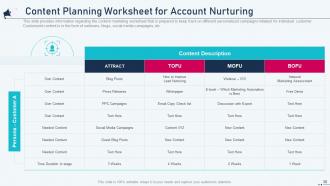
Slide 30: This slide shows content marketing worksheet that is prepared to keep track on different personalized campaigns initiated for individual customer.
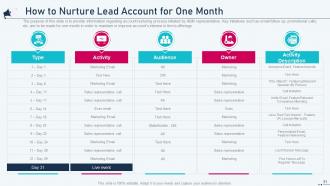
Slide 31: This slide provide information regarding account nurturing process initiated by ABM representative.
Slide 32: This slide shows continued content of above slide.
Slide 33: This slide displays title for impact analysis.
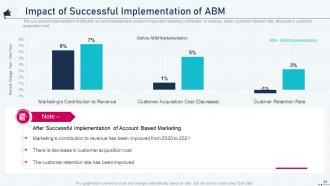
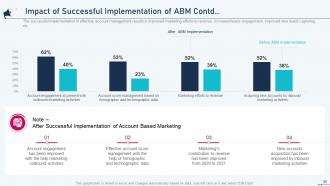
Slide 34: This slide presents graphical presentation for impact of successful implementation of ABM.
Slide 35: This slide exhibits continued content from above slide.
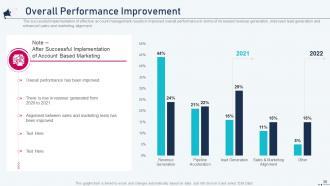
Slide 36: This slide showcases graphs on improvement of overall performance.
Slide 37: This slide demonstrates title for selecting suitable automated account management software.
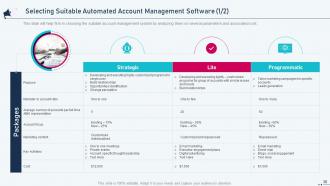
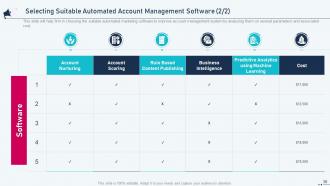
Slide 38: This slide will help firm in choosing the suitable account management system by analyzing them on several parameters and associated cost.
Slide 39: This slide will help firm in choosing the suitable automated marketing software to improve account management system
Slide 40: This slide displays title for managing account dashboard.
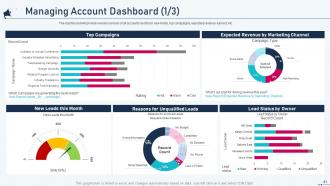
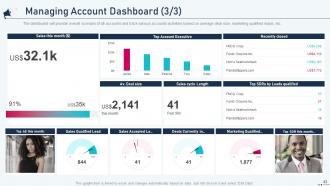
Slide 41: This slide gives graphs presentation of content for above title.
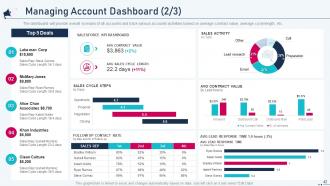
Slide 42: This slide provides continued content.
Slide 43: This slide provides continued content.
Slide 44: This is the icons slide for the project.
Slide 45: This slide showcases the title for additional slides.
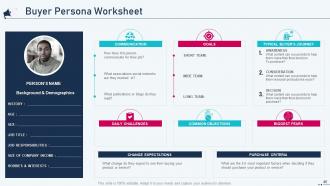
Slide 46: This slide shows buyer persona worksheet.
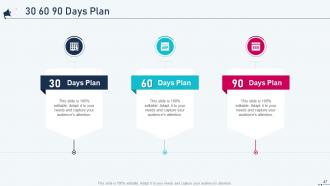
Slide 47: This slide exhibits the 30-60-90 days plan of the project.
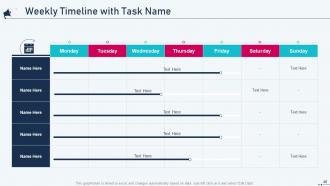
Slide 48: This slide presents weekly timeline of tasks.
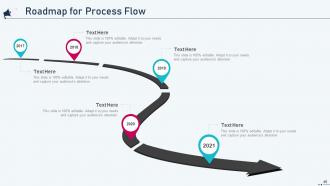
Slide 49: This slide displays the yearly roadmap of your company.
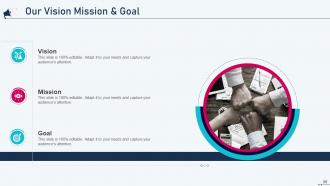
Slide 50: This slide shows the vision, mission and goals of your company.
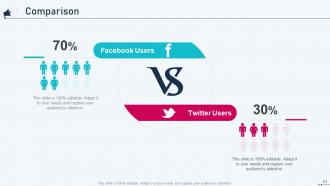
Slide 51: This slide shows comparison of products based on several selects.
Slide 52: This slide is the thank you slide and contains contact details including phone no., office address, etc.
Account based marketing powerpoint presentation slides with all 52 slides:
Use our Account Based Marketing Powerpoint Presentation Slides to effectively help you save your valuable time. They are readymade to fit into any presentation structure.



FAQs for Account based marketing
So basically you flip the whole thing - instead of spraying marketing everywhere, you pick maybe 10-20 dream accounts and go all-in on them. Sales and marketing have to actually work together (shocking, I know). Then you customize everything for each account. Like, really customize - different content, messaging, the works. Each account gets treated like their own little market. Oh and make sure all your touchpoints match up so whether they see your ad or talk to sales, it feels connected. Way more work upfront but actually works.
So instead of spraying marketing everywhere hoping something sticks, ABM targets specific high-value companies right from the start. You're basically treating each account like its own little market. Way more personalized than regular marketing. Sales and marketing actually work together too, which is honestly refreshing. Pick maybe 10-20 dream accounts first. Then customize everything - your content, campaigns, outreach - around those specific companies and their decision-makers. It's like using a sniper rifle instead of throwing confetti and seeing where it lands. Takes more work but the results are usually worth it.
Honestly, ABM lives or dies by your data game. You're basically flying blind without analytics to spot which accounts are worth chasing and what's actually moving the needle. I've seen too many teams burn budget on pretty campaigns that go nowhere. The good news? You can track everything - who's engaging, what content hits different with each stakeholder, where they are in the buying process. ROI gets way clearer when you're measuring accounts instead of random leads. Just make sure you set up attribution tracking across all your channels first, otherwise good luck explaining your results to the boss.
Start with your best customers - dig into what makes them tick. Company size, industry, revenue, that stuff. Then get into the behavioral data: who's hitting your website repeatedly, engaging with content, showing buying signals through third-party tools. Honestly, the data part gets messy but you'll thank yourself later. Check if they actually match your ideal customer profile and have real budget to spend. Build a scoring system that weighs everything, then focus your ABM efforts on whoever scores highest. Don't overthink it too much at first.
Okay so for ABM tools, I'd start with your CRM as the foundation - Salesforce ABM Cloud or HubSpot work well there. Then grab something like ZoomInfo or 6sense for identifying which accounts to actually target. You'll want Outreach or Salesloft for those personalized email sequences too. Oh and display ads - Terminus or Demandbase handle that part pretty well. The whole landscape shifts constantly though, which is honestly exhausting to keep up with. My advice? Don't go crazy buying everything at once. Pick one targeting tool first, see what actually works for your team, then build out from there.
Track pipeline velocity, deal size, and win rates for your target accounts - that's where the money is. Also watch engagement stuff like email opens and site visits from key people at those companies, plus how many contacts you're actually reaching inside each one. Impressions and that fluff? Total waste of time honestly. What really counts is seeing how many target accounts actually move through your funnel and close faster than regular prospects. Oh and definitely check these monthly or you'll lose track. You'll spot patterns pretty quick once you get into the rhythm of it.
Start by becoming obsessed with your top 5 accounts - I mean really stalking their LinkedIn, recent news, leadership shuffles, all that stuff. Generic content is basically useless now. Once you know their world inside out, write like you're speaking directly to them. Use their industry jargon and reference their actual competitors. Dynamic website content helps, plus email sequences tailored to company size and role. Yeah it's a pain initially, but honestly? Most companies are still sending the same boring pitch to everyone, so you'll stand out immediately. Perfect it with those 5 accounts first, then expand.
Honestly, the biggest headaches with ABM are data scattered everywhere, sales and marketing acting like they're on different planets, and trying to prove ROI when deals take forever to close. First thing - get your teams actually talking. Sounds obvious but you'd be surprised how often they're not! Set up shared dashboards and weekly check-ins so everyone's working from the same playbook. Also worth investing in tools that actually connect your CRM and marketing platforms instead of having everything in silos. Oh, and don't go crazy at first. Start with maybe 5-10 target accounts for your pilot - way easier to manage and you'll learn what works.
Sales and marketing alignment is make-or-break for ABM, seriously. I've watched programs crash and burn when these teams aren't synced up on target accounts and messaging. Marketing can't be running campaigns on one set of accounts while sales chases completely different ones - that's just burning money. Both sides need to hash out the account list together upfront. Map out what the buyer journey actually looks like too. The handoff when marketing generates interest has to be smooth, otherwise prospects fall through cracks. Oh, and shared metrics help keep everyone honest about what's working.
Okay so there's some really solid stuff out there! Terminus did these personalized videos for their top 20 accounts - engagement went through the roof. Snowflake's "data never sleeps" campaigns were brilliant, they made custom data stories for each target company's industry. JPMorgan Chase hosted exclusive executive roundtables for key prospects, which honestly sounds way cooler than another boring sales pitch. Healthcare companies like Philips create account-specific content hubs and research reports. Some B2B firms even build entire microsites for big prospects. But here's the thing - don't try copying everything. Pick 1-2 tactics that actually fit your budget and team size.
So instead of blasting all your big accounts the same way, you can actually group them by stuff that matters - like industry, company size, or how they typically buy things. A startup's gonna make decisions way faster than some massive corporation with endless approval chains, you know? Once you figure out those patterns, your messaging hits different because it speaks to their actual problems. Plus your sales team won't be fumbling around trying to guess what approach works. Honestly, just pick 2-3 things that really change how your accounts behave, then build everything around that.
Dude, you need three things: solid research showing you actually get their business, messaging that hits their real pain points, and proof you can solve their specific problems. Nobody wants to hear about your 47 global offices - honestly, that stuff just wastes time. Instead, dig into their industry challenges and what's keeping their executives up at night. Present solutions, not feature lists. I've seen too many people bomb because they just rattled off capabilities. End with clear next steps and timeline so they know exactly what moving forward looks like. Make it stupid simple for them to say yes.
Honestly, LinkedIn is where it's at for ABM - you can target specific companies and job titles with sponsored posts or InMail. Super precise stuff. Facebook and Twitter work too, but only if your people actually hang out there. The trick is ditching generic content for stuff that hits each account's specific problems. I always tell people to figure out where their targets spend time first, then create custom audiences for each account. Oh, and building lookalike audiences from your best customers? Total game-changer for expanding reach without going too broad.
First thing - nail down who your perfect customers actually are, then pick specific accounts worth going after. Your sales and marketing teams need to be on the same page from the start (trust me, I've seen this go sideways when they're not). Personalize everything - emails, content, whatever you're sending. Generic stuff just doesn't work anymore. Oh, and figure out who all the decision-makers are at each company. You can't just talk to one person and hope for the best. Set up tracking early so you know what's actually moving the needle.
Target account feedback is honestly like having a cheat sheet for ABM. You'll discover what messaging actually hit the mark and which content they cared about. The prospects who didn't convert? They're usually the most brutally honest about what sucked. Use this to tweak your personas and fix whatever's broken in your sales process. Sometimes I think we overthink this stuff - just shoot recent prospects a quick 3-question email. Those insights will show you exactly where your outreach went sideways and what resonated with the accounts that mattered.
-
Thanks for all your great templates they have saved me lots of time and accelerate my presentations. Great product, keep them up!