

Implementing Logistics Strategy For Efficient Supply Chain Management Powerpoint Presentation Slides




Try Before you Buy Download Free Sample Product
 Impress Your
 Audience
 100%
100% Editable
 Save Hours
 of Time


A logistics strategy is a set of principles essential for supply chain coordination. Grab our Implementing Logistics Strategy for Efficient Supply Chain Management template. It allows you to increase efficiency in the supply chain while enhancing the supply chain management process. Our Logistics management system deck helps to analyze the implementation of a logistic strategy to improve the operational and financial performance of the company. Additionally, it exhibits the current trends in logistics management, including automation and various strategies like warehousing strategy, strategic logistics planning, etc. Further, our Inventory management PPT incorporates a workflow chart, roles, and responsibilities of the HR manager and team. The module also contains cost analysis and comparative software assessment for enhancing overall performance. Lastly, it provides KPI dashboards and impact analysis for measuring the effectiveness of social media strategies. Get access to our powerful supply chain management ppt templates now.
People who downloaded this PowerPoint presentation also viewed the following :
Content of this Powerpoint Presentation
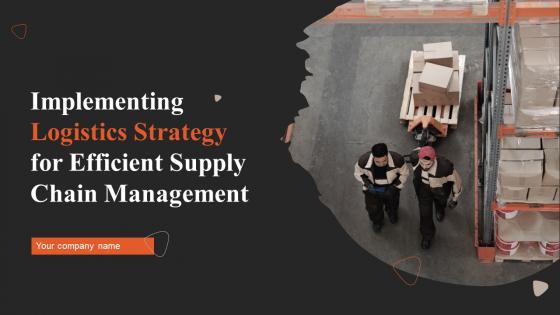
Slide 1: This slide introduces Implementing Logistics Strategy for Efficient Supply Chain Management. Commence by stating Your company name.
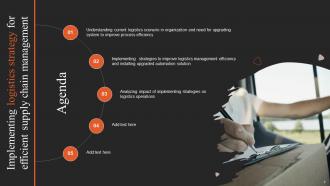
Slide 2: This slide depicts the Agenda of the presentation.
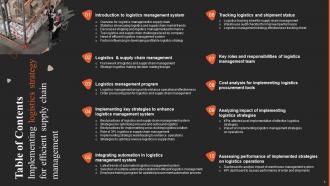
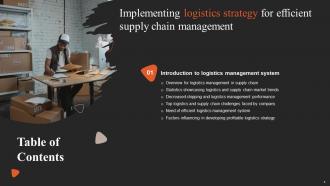
Slide 3: This slide incorporates the Table of Contents.
Slide 4: This slide highlights the Title for the Topics to be further discussed.
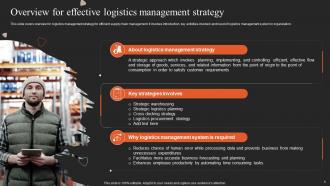
Slide 5: This slide covers the overview for logistics management strategy for efficient supply chain management.
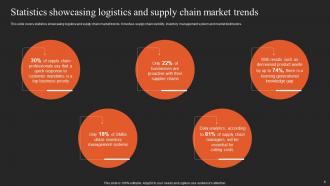
Slide 6: This slide highlights the Statistics showcasing logistics and supply chain market trends.
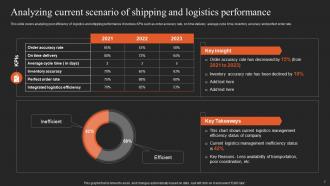
Slide 7: This slide deals with Analyzing current scenario of shipping and logistics performance.
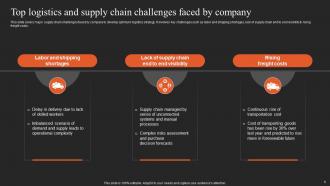
Slide 8: This slide talks about the Top logistics and supply chain challenges faced by company.
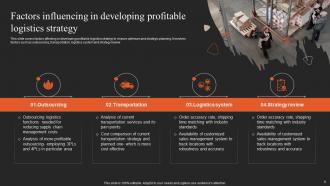
Slide 9: This slide states the Factors influencing in developing profitable logistics strategy.
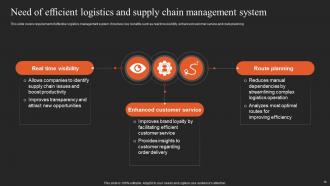
Slide 10: This slide presents the Need of efficient logistics and supply chain management system.
Slide 11: This slide portrays the Heading for the Components to be discussed next.
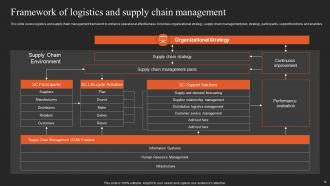
Slide 12: This slide showcases the Framework of logistics and supply chain management.
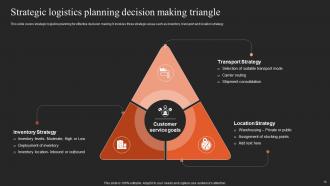
Slide 13: This slide covers strategic logistics planning for effective decision making.
Slide 14: This slide elucidates the Title for the Ideas to be further discussed.
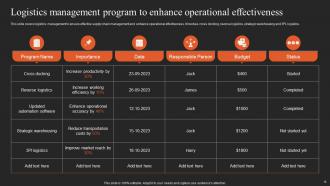
Slide 15: This slide talks about the Logistics management program to enhance operational effectiveness.
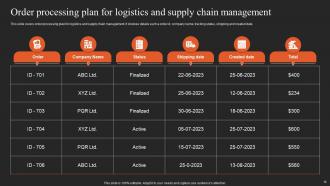
Slide 16: This slide focuses on Order processing plan for logistics and supply chain management.
Slide 17: This slide depicts the Heading for the Ideas to be covered in the forth-coming template.
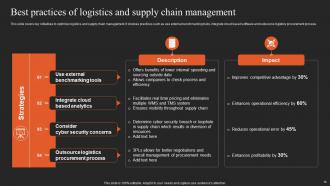
Slide 18: This slide reveals the Best practices of logistics and supply chain management.
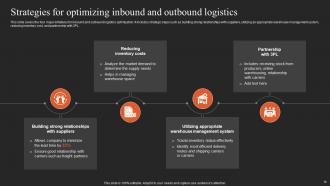
Slide 19: This slide incorporates the four major initiatives for inbound and outbound logistics optimization.
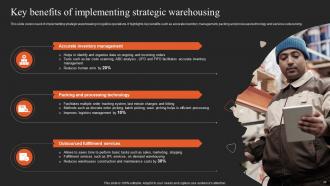
Slide 20: This slide states the Key benefits of implementing strategic warehousing.
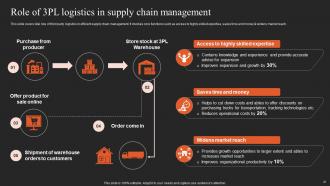
Slide 21: This slide mentions about the Role of 3PL logistics in supply chain management.
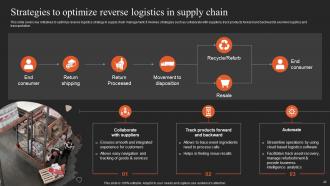
Slide 22: This slide covers key initiatives to optimize reverse logistics strategy in supply chain management.
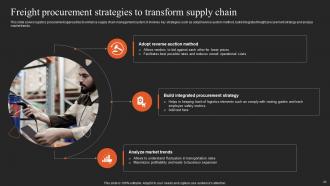
Slide 23: This slide indicates the Freight procurement strategies to transform supply chain.
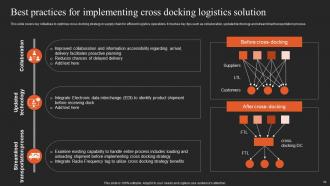
Slide 24: This slide highlights the Best practices for implementing cross docking logistics solution.
Slide 25: This slide showcases the Title for the Components to be further discussed.
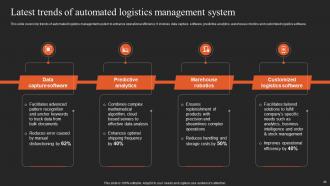
Slide 26: This slide talks about the Latest trends of automated logistics management system.
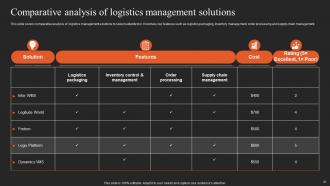
Slide 27: This slide elucidates the Comparative analysis of logistics management solutions.
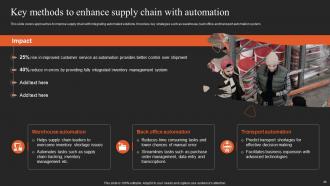
Slide 28: This slide represents the Key methods to enhance supply chain with automation.
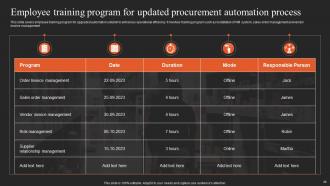
Slide 29: This slide depicts the Employee training program for updated procurement automation process.
Slide 30: This slide indicates the Heading for the Topics to be discussed in the forth-coming template.
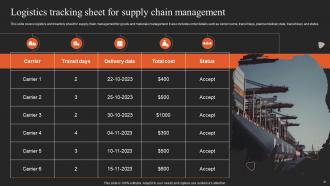
Slide 31: This slide covers logistics and inventory sheet for supply chain management for goods and materials management.
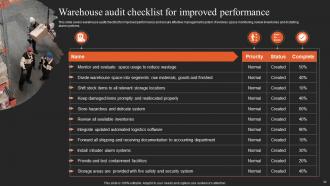
Slide 32: This slide deals with the Warehouse audit checklist for improved performance.
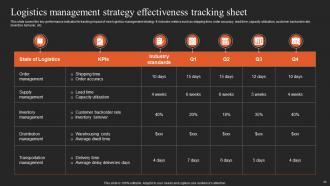
Slide 33: This slide emphasizes on the Logistics management strategy effectiveness tracking sheet.
Slide 34: This slide displays the Title for the Ideas to be discussed further.
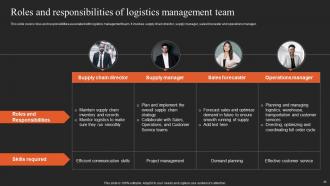
Slide 35: This slide portrays the Roles and responsibilities of logistics management team.
Slide 36: This slide shows the Heading for the Ideas to be covered in the next template.
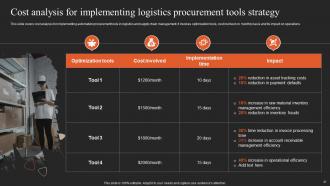
Slide 37: This slide talks about the Cost analysis for implementing logistics procurement tools strategy.
Slide 38: This slide exhibits the Title for the Contents to be discussed further.
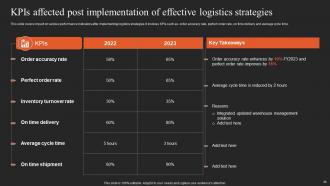
Slide 39: This slide mentions the KPIs affected post implementation of effective logistics strategies.
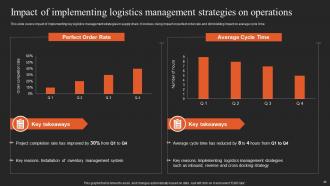
Slide 40: This slide covers impact of implementing key logistics management strategies in supply chain.
Slide 41: This slide elucidates the Heading for the Topics to be covered in the forth-coming template.
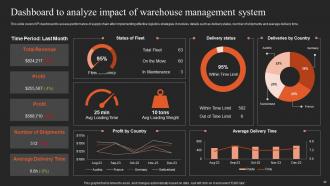
Slide 42: This slide illustrates the Dashboard to analyze impact of warehouse management system.
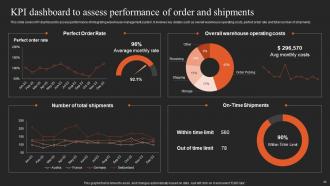
Slide 43: This slide reveals the KPI dashboard to assess performance of order and shipments.
Slide 44: This is the Icons slide containing all the Icons used in the plan.
Slide 45: This slide is used for depicting Additional information.
Slide 46: This is the 30 60 90 days plan sldie for effective planning.
Slide 47: This is Our team slide for stating the team-related information.
Slide 48: This slide shows he Clustered bar.
Slide 49: This is the Puzzle slide with related imagery.
Slide 50: This slide presents the Company Roadmap.
Slide 51: This is the Venn diagram slide.
Slide 52: This slide contains the Post it notes for reminders and deadlines.
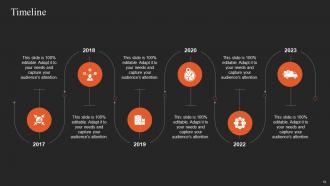
Slide 53: This slide illsutrates the Organization's Timeline.
Slide 54: This is Our goal slide. State your firm's goals here.
Slide 55: This is the Thank You slide for acknowledgement.
Implementing Logistics Strategy For Efficient Supply Chain Management Powerpoint Presentation Slides with all 60 slides:
Use our Implementing Logistics Strategy For Efficient Supply Chain Management Powerpoint Presentation Slides to effectively help you save your valuable time. They are readymade to fit into any presentation structure.












FAQs for Implementing Logistics Strategy For Efficient Supply Chain Management
Look, start by mapping what you've got now - that's step one. Transportation management and warehouse ops are obvious biggies. Inventory optimization matters too, plus your supplier relationships. Demand forecasting is where I see tons of companies screw up though - they just wing it instead of using actual data, which is wild to me. Distribution network design, performance metrics, solid tech integration for visibility... oh and don't skip continuous improvement processes. Honestly? Pick whatever's causing you the biggest headache right now and fix that first. The rest can wait.
Dude, this combo is actually pretty sick for logistics. Sensors automatically track your shipments - temps, location, delivery conditions, all that stuff. No more playing the guessing game. Then AI crunches all that data to predict delays and optimize routes before problems even hit. Honestly, the predictive demand stuff is probably the coolest part - it'll spot patterns you'd never catch. IoT basically feeds AI everything it needs to make smart calls on inventory and warehouse setup. I'd say start with just your expensive shipments first, see how it goes, then expand from there once you're seeing results.
So sustainability is basically everywhere in logistics now - can't ignore it anymore. Most companies are totally restructuring their supply chains around it. Think electric trucks, optimized routes for better fuel efficiency, warehouses running on renewable energy. Customers actually give a damn about this stuff now, plus there's regulatory pressure too. The circular economy thing is getting big where it makes sense. Honestly, the smartest companies bake these green metrics right into their KPIs from the start instead of scrambling later. Way easier than retrofitting your whole operation.
Cost per shipment and on-time delivery are your bread and butter metrics - start there. Inventory turnover matters too, plus customer satisfaction scores since logistics can make or break their experience. Order accuracy is another big one. The real challenge? Figuring out what actually moves the needle for your business. A company focused on being cheap cares about different stuff than one trying to be lightning fast. I'd probably set up a simple dashboard with maybe 5-7 key metrics and check it monthly. That way you catch problems before they blow up. Also warehouse productivity if you're running your own operations.
Dude, cost overruns will kill you every time. Plus your legacy systems won't talk to the new tech - that integration stuff is such a pain. Staff hate change too, especially the ones who've been there forever. Supply chain issues mess up your whole timeline (learned that one the hard way). Different departments never communicate properly either. Start small though - do a pilot first. Get some wins, then expand from there. Way less risky than going all-in right away.
So basically, pick your shipping method based on what matters most for that specific load. Trucks are fast and flexible but pricey. Rail and ocean are way cheaper - just gotta wait longer. Air freight? Yeah, it's crazy fast but will absolutely demolish your budget unless you're shipping diamonds or something. Honestly, I'd start by sorting your shipments into "oh shit we need this yesterday" vs "eh, whenever it gets there." High-value stuff that's time-sensitive? Pay for speed. Regular inventory you can predict? Go cheap and plan ahead. Makes the decision pretty obvious once you think about it that way.
Hey! So working with suppliers can totally transform your logistics setup. Share data with them and your demand forecasting gets way more accurate. Lead times shrink when ordering processes are smoother. Honestly, joint planning sessions are where you'll see the biggest wins - you can both nail inventory levels without getting stuck with products nobody wants. Try consolidating shipments and improving packaging together too. Real-time system integration is amazing but maybe start small? Pick your top two suppliers and pitch a simple data-sharing pilot first.
Dude, analytics stops you from guessing all the time with logistics stuff. You'll actually see what's happening - like which routes always get screwed up or where inventory gets stuck. The forecasting part is honestly pretty sweet though. Instead of scrambling when things break, you can spot demand surges coming and catch disruptions before they mess everything up. Weather and traffic data helps optimize routes too. I'd say just grab one thing that's been annoying you and dive into those numbers first. Way easier than trying to fix everything at once.
Start with demand forecasting - seriously, everything falls apart without that foundation. ABC analysis helps you focus on what actually matters (your high-value stuff), then set up automated reorder points and proper safety stock levels. Real-time visibility is a game changer, trust me on this one. Cycle counts beat those nightmare annual audits every time. Connect your inventory system to warehouse management and transportation - the integration saves so much headache. Look at your turnover rates first though, and hunt down slow-moving inventory. That's where you're bleeding money. It's basically about balancing carrying costs against running out of stock.
Build risk assessment into your planning right from the start. Map out everything that could go wrong - suppliers crapping out, transport issues, crazy demand spikes, weather disasters. Then create backup plans for each scenario. Honestly, being paranoid during planning saves your ass later. Get backup suppliers lined up, diversify shipping routes, keep extra inventory of critical stuff. Don't wait for a crisis to think about this stuff. Every time you make a big logistics call, run through those "what if" scenarios first. Makes all the difference.
Honestly, globalization makes logistics strategy way more complicated than it used to be. Your supply chains get stretched across multiple countries with different currencies and regulations - it's a headache. Time zones alone will drive you crazy when you're trying to coordinate everything. You'll need to factor in customs, shipping rules, currency swings, plus how business works differently in each culture. The tricky part? Balancing global efficiency with being responsive locally. Oh, and trade-offs are everywhere. I'd start by mapping your main international routes first, then figure out where things get stuck most often.
Dude, you've gotta stay on top of your data - like constantly. Watch how customers are behaving, what seasonal stuff is hitting, supply chain mess-ups, all of it. Companies that made it through 2020? They were already doing this right. Get more suppliers so you're not screwed if one fails. Tech that shows you what's happening is worth the money, trust me. Build in some extra capacity where it won't kill your budget. Don't wait around for trends to become obvious - by then you're already behind. Set up regular check-ins with your team and always have backup plans ready. Sounds like a lot but it's better than scrambling later.
Last-mile delivery can absolutely tank your whole operation if you mess it up. Customers basically judge everything based on how that final delivery goes - and honestly, who can blame them? The crazy part is it'll eat up like 50% of your shipping costs, which is just insane when you think about it. But if you get it right? That's where you beat your competition. Fast, reliable delivery creates serious customer loyalty. I'd focus on mapping out your delivery zones better and maybe team up with some local carriers. Keeps costs down while you speed things up.
Honestly, good logistics is like 90% of great customer service. Map out your current process first - find where things get stuck or messy. Speed up your shipping and nail order accuracy. Customers get annoyed fast when stuff's delayed or out of stock. Real-time tracking helps a ton since people are obsessed with knowing where their order is (I check mine like five times a day lol). Focus on your warehouse setup and delivery routes. When you streamline that backend stuff, everything else just flows better for customers.
Think of KPIs as your logistics GPS - they'll show you what's working and what's draining your budget. Track stuff like delivery times, shipping costs, how fast inventory moves, and customer happiness scores. But honestly? Don't go overboard measuring every little thing. Pick maybe 5-7 metrics that actually matter to your goals. The cool part is spotting trends in the data so you can tweak routes, switch carriers, or fix warehouse hiccups. I'd start with your biggest headaches and find KPIs for those first - way easier than trying to boil the ocean.
-
They guys always go the extra mile to meet the expectations of their customers. Almost a year has been associated with them.
-
Awesome presentation, really professional and easy to edit.