

Strategies To Enhance Supply Chain Management Powerpoint Presentation Slides




Try Before you Buy Download Free Sample Product
 Impress Your
 Audience
 100%
100% Editable
 Save Hours
 of Time


A logistics strategy is a set of principles essential for supply chain coordination. Grab our Strategies to enhance supply chain management template. It allows you to increase efficiency in the supply chain while enhancing the supply chain management process. Our Logistics management system deck helps to analyze the implementation of a logistic strategy to improve the operational and financial performance of the company. Additionally, it exhibits the current trends in logistics management, including automation and various strategies like warehousing strategy, strategic logistics planning, etc. Further, our Inventory management PPT incorporates a workflow chart, roles, and responsibilities of the HR manager and team. The module also contains cost analysis and comparative software assessment for enhancing overall performance. Lastly, it provides KPI dashboards and impact analysis for measuring the effectiveness of social media strategies. Get access to our powerful supply chain management ppt templates now.
People who downloaded this PowerPoint presentation also viewed the following :
Content of this Powerpoint Presentation
Slide 1: This slide introduces Strategies to enhance supply chain management. Commence by stating Your company name.
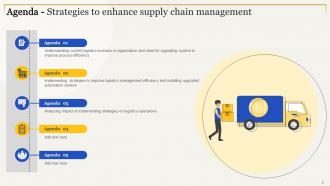
Slide 2: This slide depicts the Agenda of the presentation.
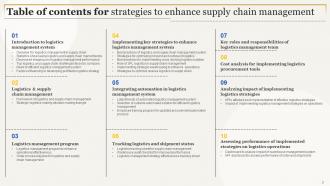
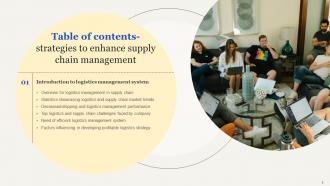
Slide 3: This slide incorporates the Table of Contents.
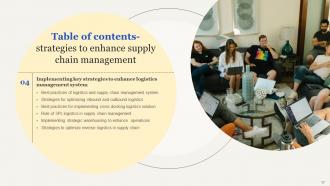
Slide 4: This slide highlights the Title for the Topics to be further discussed.
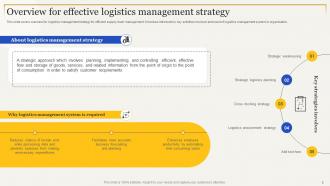
Slide 5: This slide covers the overview for logistics management strategy for efficient supply chain management.
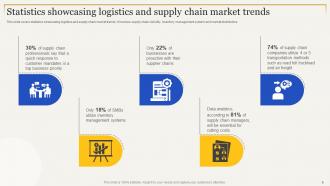
Slide 6: This slide highlights the Statistics showcasing logistics and supply chain market trends.
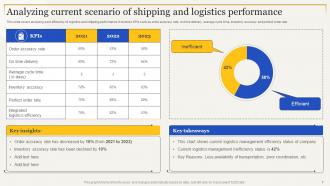
Slide 7: This slide deals with Analyzing current scenario of shipping and logistics performance.
Slide 8: This slide talks about the Top logistics and supply chain challenges faced by company.
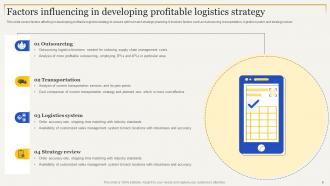
Slide 9: This slide states the Factors influencing in developing profitable logistics strategy.
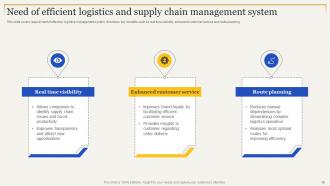
Slide 10: This slide presents the Need of efficient logistics and supply chain management system.
Slide 11: This slide portrays the Heading for the Components to be discussed next.
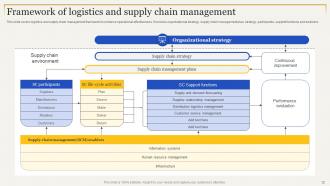
Slide 12: This slide showcases the Framework of logistics and supply chain management.
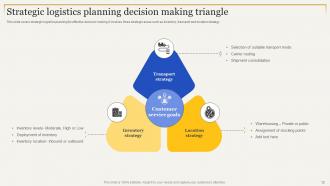
Slide 13: This slide covers strategic logistics planning for effective decision making.
Slide 14: This slide elucidates the Title for the Ideas to be further discussed.
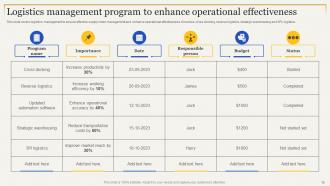
Slide 15: This slide talks about the Logistics management program to enhance operational effectiveness.
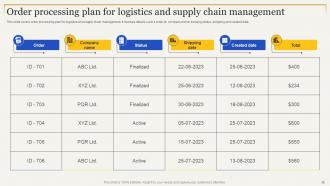
Slide 16: This slide focuses on Order processing plan for logistics and supply chain management.
Slide 17: This slide depicts the Heading for the Ideas to be covered in the forth-coming template.
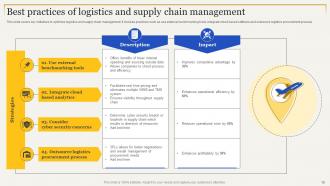
Slide 18: This slide reveals the Best practices of logistics and supply chain management.
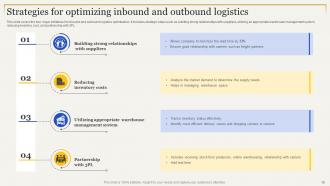
Slide 19: This slide incorporates the four major initiatives for inbound and outbound logistics optimization.
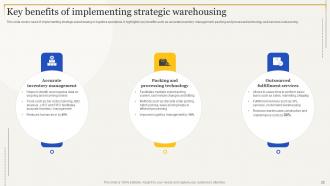
Slide 20: This slide states the Key benefits of implementing strategic warehousing.
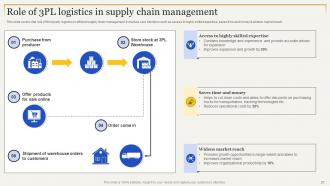
Slide 21: This slide mentions about the Role of 3PL logistics in supply chain management.
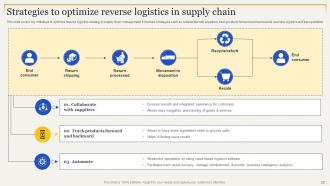
Slide 22: This slide covers key initiatives to optimize reverse logistics strategy in supply chain management.
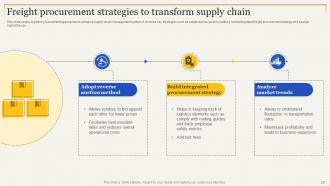
Slide 23: This slide indicates the Freight procurement strategies to transform supply chain.
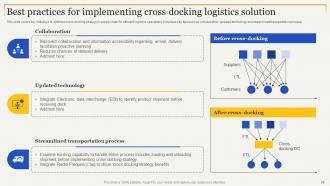
Slide 24: This slide highlights the Best practices for implementing cross docking logistics solution.
Slide 25: This slide showcases the Title for the Components to be further discussed.
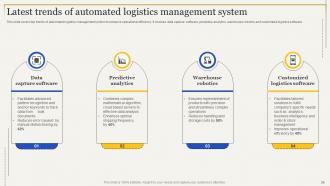
Slide 26: This slide talks about the Latest trends of automated logistics management system.
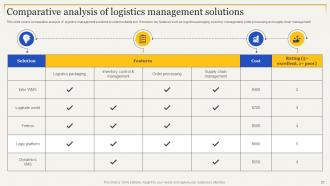
Slide 27: This slide elucidates the Comparative analysis of logistics management solutions.
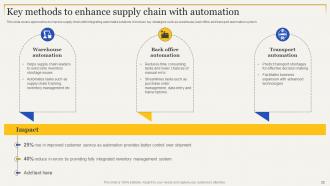
Slide 28: This slide represents the Key methods to enhance supply chain with automation.
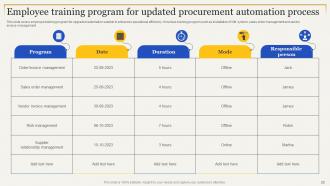
Slide 29: This slide depicts the Employee training program for updated procurement automation process.
Slide 30: This slide indicates the Heading for the Topics to be discussed in the forth-coming template.
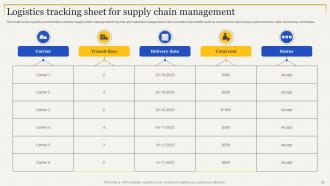
Slide 31: This slide covers logistics and inventory sheet for supply chain management for goods and materials management.
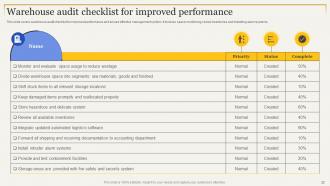
Slide 32: This slide deals with the Warehouse audit checklist for improved performance.
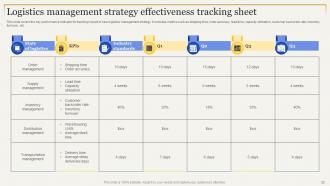
Slide 33: This slide emphasizes on the Logistics management strategy effectiveness tracking sheet.
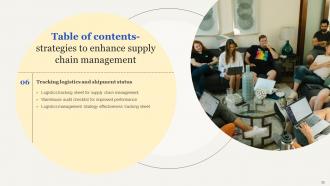
Slide 34: This slide displays the Title for the Ideas to be discussed further.
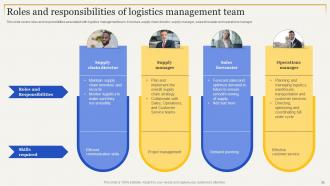
Slide 35: This slide portrays the Roles and responsibilities of logistics management team.
Slide 36: This slide shows the Heading for the Ideas to be covered in the next template.
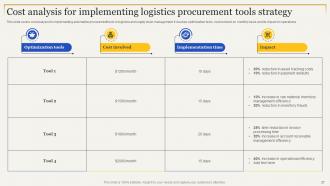
Slide 37: This slide talks about the Cost analysis for implementing logistics procurement tools strategy.
Slide 38: This slide exhibits the Title for the Contents to be discussed further.
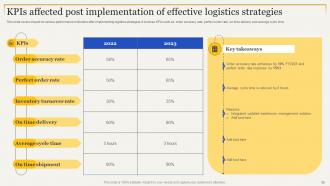
Slide 39: This slide mentions the KPIs affected post implementation of effective logistics strategies.
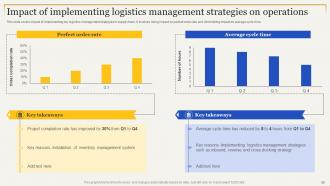
Slide 40: This slide covers impact of implementing key logistics management strategies in supply chain.
Slide 41: This slide elucidates the Heading for the Topics to be covered in the forth-coming template.
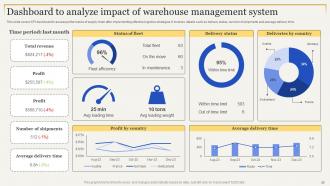
Slide 42: This slide illustrates the Dashboard to analyze impact of warehouse management system.
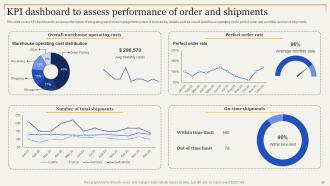
Slide 43: This slide reveals the KPI dashboard to assess performance of order and shipments.
Slide 44: This is the Icons slide containing all the Icons used in the plan.
Slide 45: This slide is used for depicting Additional information.
Slide 46: This is the 30 60 90 days plan slide for effective planning.
Slide 47: This is Our team slide for stating the team-related information.
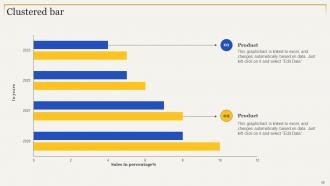
Slide 48: This slide shows he Clustered bar.
Slide 49: This is the Puzzle slide with related imagery.
Slide 50: This slide presents the Company Roadmap.
Slide 51: This is the Venn diagram slide.
Slide 52: This slide contains the Post it notes for reminders and deadlines.
Slide 53: This slide illustrates the Organization's Timeline.
Slide 54: This is Our goal slide. State your firm's goals here.
Slide 55: This is the Thank You slide for acknowledgement.
Strategies To Enhance Supply Chain Management Powerpoint Presentation Slides with all 63 slides:
Use our Strategies To Enhance Supply Chain Management Powerpoint Presentation Slides to effectively help you save your valuable time. They are readymade to fit into any presentation structure.











FAQs for Strategies To Enhance Supply Chain Management
Look, you need four main things: demand forecasting, supplier relationships, inventory optimization, and logistics coordination. Yeah I know, sounds like MBA nonsense but it actually works. Map out your whole supply chain first - seriously, draw it out or whatever. Spot the bottlenecks before they screw you over. Risk management is critical too. Have backup suppliers ready because stuff always goes wrong at the worst times. Good tech helps integrate everything, but honestly clear communication matters more than fancy software. Start with your biggest headaches and work from there.
So basically, AI and IoT make your supply chain way smarter. You'll see everything in real-time - where stuff is, inventory levels, if equipment's about to crap out. The predictive maintenance thing is honestly pretty wild - it knows when machines will break before they actually do. IoT sensors track temperature and location throughout your whole network. Spot problems early, routes get optimized automatically. Way better than just guessing all the time, right? My advice? Don't go crazy - just pick one annoying problem like inventory forecasting and test an AI solution there first.
So data analytics lets you actually see what's happening in your supply chain instead of just guessing. You can forecast demand, catch bottlenecks early, and keep inventory at the right levels. Real-time tracking shows you stuff you'd totally miss otherwise - it's honestly like having superpowers for your operations. Instead of constantly putting out fires, you'll start preventing them. Saves you money and stress in the long run. My advice? Don't try to do everything at once though. Pick something specific like inventory management first, get good at using data there, then expand from that foundation.
Honestly, don't put all your eggs in one basket with suppliers - learned that the hard way during COVID when our main guy just vanished for weeks. Get multiple suppliers spread across different regions so you're covered if one goes down. Real-time visibility tools are clutch for monitoring everything. Also, map out where you're most vulnerable right now and identify those scary single points of failure. Then stress-test different disaster scenarios regularly - sounds boring but it'll save your butt later. Building those relationships takes time but it's worth it when chaos hits.
So demand forecasting is huge - figure out what you'll actually need. Do ABC analysis to sort your stuff by importance. Just-in-time works great but honestly? Keep some buffer stock because suppliers flake out constantly. Set your reorder points based on lead times and safety requirements. Track turnover ratios religiously and watch for dead inventory eating your budget. Oh, and get decent software that talks to your suppliers - real-time visibility saves so much headache. Start by grouping everything by value and how often you use it, then handle each group differently. High-value stuff needs way more attention than random supplies.
So sustainability pretty much changes everything about your supply chain, tbh. You're gonna have to vet suppliers on their green practices now, not just price and quality. Yeah, it costs more upfront for eco-friendly stuff, but customers actually care about this now. Carbon tracking becomes a thing, plus you'll cut packaging waste and maybe bring operations closer to home to reduce shipping. Oh and don't try to fix everything at once - that's a nightmare. Pick something manageable like packaging first, then expand from there. Way less overwhelming that way.
Honestly, I'd focus on the basics first - on-time delivery, inventory turnover, and order accuracy. Those tell you if things are actually working. Cost per order and total supply chain costs are critical too, obviously. Lead times from suppliers matter way more than people think. Your own fulfillment speed does too. Don't sleep on supplier performance scores because bad suppliers will absolutely sink you. Customer satisfaction should be tracked since that's what pays the bills. Oh, and pick maybe 5-7 metrics max - I've seen companies drown themselves trying to track everything.
Good communication is honestly what makes or breaks supply chain partnerships. Share your real-time data and forecasts openly with suppliers and logistics partners - nobody likes getting blindsided by last-minute changes. Think of it like group projects in college where half the team was always out of the loop and scrambling. Regular check-ins help tons. Set up shared dashboards so everyone can see what's happening without constant emails back and forth. You'll get way better demand planning and fewer bottlenecks when people actually trust the info they're getting.
Honestly, the big stuff that'll trip you up is usually money and people being stubborn about change. Teams hate when you mess with their workflow - can't blame them really. Tech integration is a nightmare too, especially when your shiny new system decides it hates everything you already have. Leadership gets spooked by upfront costs, and training always drags on way longer than anyone plans for. Oh, and budget extra time because something will definitely break that you didn't expect. Start with small pilot runs to show it actually works, get the important people on board early, and maybe grab some coffee before those stakeholder meetings.
Ugh, globalization makes supply chains so much more complex - you're suddenly juggling different currencies, regulations, and cultural quirks across countries. Lead times get crazy long too. But honestly? The cost savings from global sourcing can be worth it, plus you get access to way bigger markets. I'd start by actually mapping out where all your suppliers are located geographically. Then figure out what could go wrong in each region, because when something breaks in one country, it somehow always affects everything else. You'll need to find that sweet spot between being efficient and not getting completely screwed when disruptions hit.
Honestly, forecasting is make-or-break for supply chains. Get it right and you'll hit that sweet spot with inventory - no stockouts, minimal waste. Mess it up? You're either buried under excess stock or running around like crazy trying to fill orders you didn't see coming. Everything downstream gets screwed too - procurement, warehousing, shipping costs, all of it. I've seen companies do quarterly forecasts and call it good, but that's pretty outdated thinking. Better approach is mixing your historical data with what's happening right now in the market. Then actually update the thing regularly instead of setting it once and forgetting about it.
Honestly, you've gotta bake risk planning right into every big supply chain call from day one. Figure out where you're most screwed - like having just one supplier for critical stuff, sketchy regions, transport choke points. COVID taught me this lesson brutally when suppliers just vanished overnight. Build backup plans for each risk scenario. Alternative suppliers, different shipping routes, whatever makes sense. The trick is weaving this into your regular supplier reviews and contracts, not scrambling when things go sideways. Oh, and don't overthink it initially - just nail down your top 3 risks and create solid action plans for those.
So blockchain creates this permanent record that tracks everything in your supply chain - like from raw materials to your customer's doorstep. Nobody can mess with it or fake entries, which is huge for spotting counterfeits and sketchy suppliers. You'll get real-time visibility into bottlenecks and can actually verify if your sustainability stuff is legit (not just marketing fluff). Honestly, it's pretty game-changing for catching contaminated products before they become a nightmare. My advice? Don't go crazy right away. Test it on just one product line first to see how it works.
Honestly, partnerships can totally save your ass in supply chain management. You don't have to build everything yourself - just find companies that are killer at what you suck at. They've got the tech, expertise, and networks you need. When shit hits the fan (and it will), having solid partner relationships means you're not scrambling alone. If your main supplier craps out, your partners can jump in. The trick is finding people who complement your strengths, not compete with them. I'd start by figuring out your biggest weak spots first. Then hunt for partners who absolutely crush it in those areas.
Honestly, supplier management is like the foundation of your whole supply chain - mess this up and everything else falls apart. Bad suppliers = higher costs, quality issues, late deliveries, you name it. Don't just treat them like vendors you order from. Build actual partnerships with the good ones. Share forecasts, performance data, work on improvements together. Oh and definitely prioritize - not all suppliers are equally important, so focus your energy on managing the critical ones first. The transactional approach rarely works long-term in my experience.
-
Graphics are very appealing to eyes.
-
I loved the hassle-free signup process. A few minutes and, I had this giant collection of beautiful designs.