


Improvement ideas in workplace powerpoint slide show




Try Before you Buy Download Free Sample Product
 Impress Your
 Audience
 100%
100% Editable
 Save Hours
 of Time


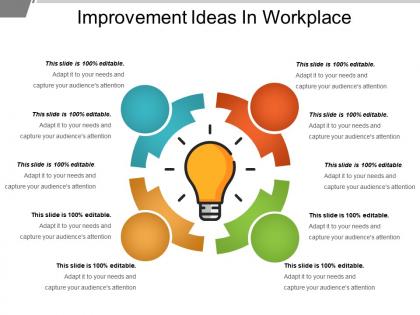
Let our improvement ideas in workplace PowerPoint slide show part of your next presentation. Corporate firms work on different strategies for employee engagement and business development so that they can achieve their goals and objectives. Giving individuals the right direction and encouraging them is the key to success in today’s competitive world. Our PPT template enables you to share details about the innovative ideas that help to make the workplace a better place for the team. Some key aspects that you can present with this presentation graphic are effective communication, support teamwork, establish team rules, be transparent, clarify business objectives, recognize and reward, focus on strengths and show gratitude towards your employees as well as business partners such as investors, shareholders, board of directors and even clients. This PowerPoint visual has been designed with light bulb which helps to communicate the message effectively about the innovative ideas. The presentation layout can also be used to make your team understand the importance of creative thinking. So download this impressive design now. Elaborate on infidelity with our Improvement Ideas In Workplace Powerpoint Slide Show. Delve in depth on the harmful impact.
People who downloaded this PowerPoint presentation also viewed the following :
Improvement ideas in workplace powerpoint slide show with all 5 slides:
Our Improvement Ideas In Workplace Powerpoint Slide Show will get their eye. Your audience will give you a ear.


FAQs for Improvement ideas in workplace
Honestly, you need multiple ways for people to actually talk to you - regular one-on-ones work great, plus anonymous feedback tools. Open-door policies are nice but they're useless if they're just for show. Here's what really matters: own your mistakes in front of everyone. When someone gives feedback, respond publicly even if you can't use their idea. Town halls feel super weird initially but they're worth it. Oh, and this might sound obvious, but ask your team what communication thing annoys them most. Start there.
Honestly, team-building stuff works when people get to know each other outside of just work drama. Like, once you're comfortable with someone, you'll actually speak up in meetings instead of sitting there silently. Escape rooms are pretty solid - way better than those cringe trust exercises nobody wants to do. Coffee chats work too if you're not trying to go all out. The whole point is breaking down weird workplace walls that make everything feel super formal. Maybe start with monthly lunches? I've noticed people act totally different once they've laughed together about something random.
Dude, workspace design is SO underrated for productivity and morale. Bad lighting or cramped spaces? Your team will hate being there. I swear I've seen offices go from depressing to amazing just by adding plants and decent lighting - sounds dumb but it works. Natural light is clutch. You need quiet spots for focus work plus areas where people can actually collaborate without whispering. Oh, and flexible spaces for different work styles. Don't guess what's wrong though - just ask your team what annoys them most about the current setup. They'll tell you exactly where to start fixing things.
Ditch those awful annual reviews and talk to your team weekly instead. Be crazy specific too - not just "nice work" but like "when you explained the budget changes yesterday, it totally cleared up everyone's confusion." Ask them what kind of feedback they actually want from you. Most managers suck at this because they let problems fester for months. I learned this the hard way honestly. Weekly check-ins will help people actually improve instead of just wondering where they stand all year.
Ugh, workplace stress is the worst. Time management helps though - I'm terrible at it but when I actually prioritize stuff and take real lunch breaks, it makes a difference. Setting boundaries with after-hours emails too. Definitely talk to your manager about workload before you hit that breaking point (learned this one the hard way lol). Ask for help when things get crazy. Push back on unrealistic deadlines if you can. Honestly, celebrating the small stuff keeps me sane. Don't wait until you're drowning to start making changes - that never works out well.
Yeah, flexible work is honestly a game-changer for morale and productivity. People feel way more trusted when they can control their schedule and location. Most folks aren't wired for the 9-5 thing anyway - let them work when they're actually sharp, you know? Just don't wing it though. Set up clear communication rules and figure out how you'll measure results so it doesn't turn into total chaos. Oh, and maybe start small with a pilot program? That way if your boss is being weird about it, you've got proof it works.
Honestly, D&I stuff actually works pretty well. Different perspectives make teams way more creative - like, you get better solutions when people think differently. Good candidates research company culture now (kinda crazy how much that matters), so it helps with recruiting. Employee engagement goes up too because people feel heard. Oh, and retention improves, which saves you tons on hiring costs. I'd start with figuring out where you are now culture-wise. Then just build on that.
Honestly, leadership training can make a huge difference. Your managers get way better at giving feedback and coaching people, which cuts down on turnover big time. Communication improves across the board too. The best part? Leaders start catching problems before they blow up into major issues - saves so much headache later. They also get smarter about delegating instead of micromanaging everything. Oh, and conflict resolution skills improve dramatically. My advice is to figure out where your biggest leadership gaps are first, then find training that tackles those specific problems head-on. It's worth the investment.
Honestly, start with just one tool - pick whatever's driving you the most crazy right now. Asana's great for keeping track of all your projects without losing your mind. Zapier can automate the boring stuff between apps (total game changer). Yeah, Slack's everywhere but it'll eat your day if you're not careful. Google Workspace saves you from that nightmare of emailing document versions back and forth - everyone just edits live. Toggl's good for seeing where your time actually disappears to. Don't go overboard though, get one working first before adding more.
Honestly, recognition is such a game-changer for workplace culture. People just want to feel seen, you know? When you call out good work consistently, employees get way more engaged and actually want to put in extra effort. I've noticed they seem genuinely happier too. The trick is being specific about what they did well - not just throwing out random "great job!" comments. Psychological safety gets a huge boost because people know their work matters. You don't need some fancy program either. Just acknowledge wins in meetings or shoot quick thank-you texts. It totally shifts the energy.
Start with making people feel safe to throw out crazy ideas - judgment kills creativity fast. Monthly brainstorming sessions help, but honestly the weirdest suggestions often lead somewhere brilliant. Give everyone like 20% of their time for passion projects if you can swing it. Mix up departments too since outside perspectives are gold. Here's the thing though - you gotta celebrate when stuff doesn't work instead of treating it like failure. People clam up otherwise. Maybe just try one innovation hour monthly at first? Baby steps and all that.
Honestly, mentorship programs are kind of a game-changer for retention. Your employees get paired with experienced people who can share real knowledge and help them figure out the company politics (which, let's be real, exists everywhere). Having someone in your corner makes work way less stressful. People actually stay when they see growth opportunities and feel invested in. The mentors win too - they build leadership skills and stay plugged into different departments. I'd start small though. Do voluntary matching based on goals and see what happens. Track who's participating and getting promoted to measure if it's working.
Get their tech stuff sorted before they even show up - nothing's worse than sitting around waiting for IT to create accounts. Pair them with someone who's not their boss, just a regular person who can answer weird questions about where the bathroom is or how the printer works. I'd also map out what their first 90 days should look like so they're not just drowning in random meetings. Oh, and have lunch figured out! Introduce them to people they'll actually collaborate with, not just executives. You want them feeling useful and welcome right away, not like they're bothering everyone.
Dude, this stuff actually works. Stressed employees can't focus - they're burning mental energy worrying instead of getting shit done. Your team will call out less and stick around longer when they're not overwhelmed. Honestly, the collaboration thing is huge too. Nobody wants to brainstorm with someone who's having a breakdown, you know? The numbers don't lie on ROI either. But don't go crazy right away - start with flexible hours or mental health days. Even small changes boost performance way more than you'd expect.
Honestly, remote work is a mixed bag for team dynamics. You'll miss those random hallway chats that somehow fix issues before they blow up. Everything becomes super deliberate - great for keeping records, but kinda awkward when you just want a quick yes/no. Trust matters way more since nobody can peek over cubicles anymore (not that anyone misses that). But here's what's cool: your quiet teammates often find their voice in virtual meetings, and async messaging lets people actually think before hitting send. My advice? Check in constantly and definitely over-communicate. Better to annoy people than leave them guessing.
-
Awesome use of colors and designs in product templates.
-
Great designs, Easily Editable.