

Business Strategy Innovation Powerpoint Presentation Slides





Try Before you Buy Download Free Sample Product
 Impress Your
Audience
 100%
Editable
 Save Hours
of Time


Introduce new ideas, products, services, methodologies, workflows, and more with content-ready Business Strategy Innovation PowerPoint Presentation Slides. Improve on existing products, services, processes, answer queries, solve problems, and reach out to new customers with business strategy innovation PPT presentation templates. Bring business innovation in an organization to have a positive impact on the overall growth of the company. Create new value, boost growth and productivity, and give new life to a business with professionally designed business strategy innovation PPT presentation diagrams. This deck covers topics like business model innovation framework, business model innovation segments, approaches to business model innovation, business model innovation in different fields, the strategy of innovation, business model innovation equation, and more. Use these templates for better revenue growth, opportunities, save time and money, improve performances, etc. Download business innovation and growth PowerPoint templates to have a better competitive advantage. Help organization grow and excel with business innovation. Ring in the new with our Business Strategy Powerpoint Presentation Slides. Bells of prosperity will begin to peal.
People who downloaded this PowerPoint presentation also viewed the following :
Content of this Powerpoint Presentation
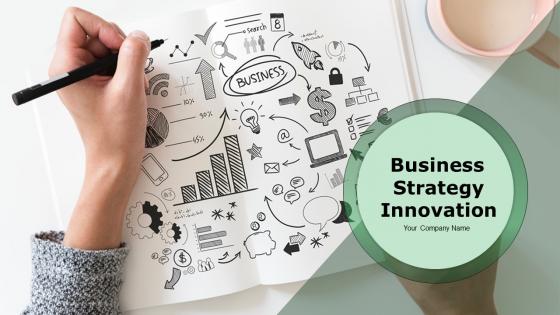
Slide 1: This is an introductory slide for Business Strategy Innovation. State Your Company Name and begin.
Slide 2: This slide shows Business Model Innovation Template displaying- Training / Coaching / Consultancy, Collaboration, CEO Club, Research Studies, BMI Award, Case Studies, Future Events.
Slide 3: This slide showcases Business Model Innovation Framework displaying- Shift from product to service, Shift from product to experience, Shift from Product to Outcome, Redefine the value proposition, Incremental Changes, Support the value proposition with a new operating model, Build New Capabilities, Leverage External Partners, Redefine Interactions with Customers, Leap of Faith, Redefine the value proposition, Redefine the Basis of Differentiation, Develop New Cost Model, Find new Ways to Monetize, Volume Chasing.
Slide 4: This slide presents Business Model Innovation Segments such as- Organizational Model Innovation, Revenue Model Innovation, Customer Model Innovation.
Slide 5: This slide showcases Approaches To Business Model Innovation showing- Mavericks, Reinventors, Adapters, Adventures, Defend, Aspire, Thrust, Motivation, Transform.
Slide 6: This slide presents The Strategy of Innovation showing- Value Chain, Revenue Model, and Value Proposition categorized under- WHY HOW WHAT WHO.
Slide 7: This slide shows Business Model Innovation Equation showing- The new point of departure, The catalysts of needed change, The new drivers & enablers, Powerful incentives, Community exchange, Designed – in experience, Novel partnerships, New market approaches, Leveraging unique assets, Visibility, Reduced complexity, Effect, Impact. Business model innovation through: Unique customer experience New innovative external service
Slide 8: This slide shows Business Model Innovation Framework showcasing- Existing Business Model, Execution, Plan & Forecast, New Business Model, Experimentation, Learn.
Slide 9: This is Business Strategy Innovation Icon Slide. Use the icons as per need.
Slide 10: This is a Coffee Break slide to halt. You can change the image as per requirement/need.
Slide 11: This slide is titled Charts & graph. You may change the slide content as per need.
Slide 12: This is a Stacked Line Chart slide to show product/entity comparison, specifications etc.
Slide 13: This is a Bar Graph slide to show product/entity comparison, specifications etc.
Slide 14: This is a Donut Pie chart slide. State specifications, comparison of products/entities here.
Slide 15: This slide is titled Additional Slides to move forward. You can change the slide content as per need.
Slide 16: This is Our Mission, Vision and Strategy slide. State them here.
Slide 17: This is Our Team slide with names, designation and text boxes.
Slide 18: This is an About Us slide. State company/team specifications here.
Slide 19: This slide showcases Comparison of two entities in tabular form.
Slide 20: This is a Financial score slide. State financial aspects here.
Slide 21: This slide shows Quotes. Display your message, beliefs etc. here. You may change the slide content as per need.
Slide 22: This is a Bulb Or Idea slide. State information, specification, innovative aspects etc. here.
Slide 23: This is a Magnifying glass image slide. State information, specification, scoping aspects etc. here.
Slide 24: This is a Thank You slide with Address # street number, city, state, Contact Numbers, Email Address.
Business Strategy Innovation Powerpoint Presentation Slides with all 24 slides:
Extend a friendly hand with our Business Strategy Innovation Powerpoint Presentation Slides. They will appreciate your goodwill.
-
Business Strategy Innovation
-

Business Model Innovation Template
-

Business Model Innovation Framework
-

Business Model Innovation Segments
-

Approaches To Business Model Innovation
-

The Strategy of Innovation
-

Business Model Innovation Equation
-

Business Model Innovation Framework
-

Business Strategy Innovation Icon Slide
-

Coffee Break
-

Charts Graphs
-

Stacked Line Chart
-

Bar Graph
-

Donut Pie Chart
-

Additional Slides
-

Our Mission
-

Our Team
-

About Us
-

Comparison
-

Financial
-

Business Strategy Innovation
-

Bulb Or Idea
-

Magnifying Glass
-

Thank You
FAQs for Business Strategy Innovation
Honestly, it all comes down to knowing your customers' actual problems and being willing to try stuff that might not work. Your team needs to feel safe experimenting without getting roasted for failing - that's non-negotiable. Use data to guide you, but don't overthink everything to death (I've seen too many companies do this). Short tests work best. Pick something small you can try this quarter and see what happens. The companies that nail this have some structure but can still change direction fast when needed. It's less about having the perfect plan and more about moving quickly.
First thing - make people feel safe to mess up, otherwise they'll never take risks. Give your team actual time to think big picture instead of just putting out fires all day. Leaders have to walk the walk here, which honestly most don't do well. Get different departments talking to each other - that's where the good ideas usually happen. Oh, and tie everything back to real business goals so it doesn't feel pointless. But really, just ask your team what's stopping them from thinking strategically. They'll tell you exactly what's broken.
Think of data analytics as your way to peek into the future before making big bets. You can spot market gaps, figure out what customers actually want, and predict which ideas will flop or fly. Instead of just winging it, you're backing decisions with real evidence. Track what competitors are doing, measure how people feel about your stuff, even catch trends early by watching data patterns. Honestly, gut instincts still count for something though. Start with the questions you need answered, then work backwards to find the data that'll give you those answers. Way better than crossing your fingers and hoping.
Honestly, you've got to look way beyond just your own industry. Social media convos and early adopter hangouts are gold for spotting what's coming. Patent filings are weirdly underrated - companies file months before they launch anything. Set up Google Alerts for keywords that matter and follow the troublemakers on LinkedIn, not just the big names. Here's the thing though - it's all about connecting random dots that don't seem related at first. I keep a basic spreadsheet (nothing fancy) and review it monthly with my team. We catch patterns competitors totally miss.
Honestly, most companies just move way too fast without getting their people on board first. They fall in love with some fancy new strategy and completely skip checking if they can actually pull it off - or if their team will even go along with it. Time estimates? Always wrong. Like, always add 6 months to whatever you're thinking. Also don't let leadership just announce something big then vanish into thin air. I've seen that happen so many times. Keep talking about how it's going and be ready to pivot when reality hits.
Look, partnerships are honestly a game-changer because you get access to stuff you just don't have - resources, expertise, different ways of thinking. Two companies working together can tackle way bigger problems than going solo. Fresh outside perspective is gold too, they'll spot issues you're completely blind to. Risk and costs get split on the experimental stuff, which makes testing crazy ideas actually doable. I'd probably start with something small first though - like a pilot project or whatever - before diving into anything major. Way smarter than betting everything upfront.
Dude, tech can totally wreck your business model overnight. Look at Netflix vs Blockbuster or Uber destroying taxis - that stuff happened so fast it made my head spin. Your competitive edge today? Could be worthless tomorrow when some new tech makes everything cheaper or faster. Customers start expecting different things. Processes you thought needed humans get automated. Sometimes you'll find revenue streams you never even considered before. The smart move is watching what's coming in your space and honestly? Don't be afraid to kill your own products before competitors do it for you.
Track your revenue growth and profit margins obviously, but those numbers show up way too late to be useful. Customer acquisition cost and retention rates? Way better for spotting problems early. Market share matters too, though it's a pain to calculate sometimes. Employee engagement is huge - seriously, if your people hate the strategy it's dead in the water. Pick maybe 3-4 metrics tops. Any more and you'll spend all day staring at spreadsheets instead of actually running the business. Monthly reviews work best for seeing real trends.
Honestly, customer feedback is like gold for innovation. Without it, you're just throwing darts blindfolded hoping something sticks. I've watched so many "brilliant" ideas crash and burn because teams thought they knew what people wanted better than... well, the actual people. The real magic happens when you set up different ways to hear from users - surveys, interviews, beta tests, even just lurking on social media to see what they're saying. Don't wait for complaints to roll in. Make it part of your regular process so you can catch problems early and pivot before you've blown your whole budget on something nobody wants.
Honestly, the biggest thing is making sure your innovation stuff actually ties back to what your company's trying to do overall. I've watched so many teams get distracted by whatever sounds cool at the moment - total waste of time. Set up some basic criteria for judging whether new ideas actually push you toward your main goals. Get leadership involved early too, otherwise you're just spinning your wheels. And definitely explain the reasoning behind each project to your team. People work way better when they get how their piece fits into the whole thing.
Dude, you've got what they don't - speed. Big companies are stuck in endless meetings while you can pivot tomorrow if something isn't working. Find the niches they're ignoring because they're too massive to care about smaller markets. Those legacy firms move like molasses, honestly it's painful to watch sometimes. Get close to your customers, test the weird new tech they're scared of, and build something that messes with how they make money. Oh, and start tiny - prove it works first, then grow like crazy.
Honestly, start small with pilot programs - pick departments that actually want to change first. Cross-functional teams work great when you rotate people between departments. Monthly showcases are clutch too, where teams show off what they tried and what bombed. People love a little friendly competition, right? Build it into your regular processes instead of making it this separate "innovation thing." Oh, and definitely share the failures openly - that's where the real learning happens. Regular knowledge-sharing sessions help spread ideas naturally. The whole point is getting everyone to learn from each other's experiments.
Honestly, going global is like being thrown into a way bigger, messier sandbox - but that's exactly what makes you better. Different countries hit you with wild customer demands and regulations you never saw coming. Forces you to get creative fast. You'll tap into talent pools with completely different perspectives, which is where the magic happens. My advice? Don't try conquering the world right away - that's a recipe for disaster. Pick one market and really dig into what makes it tick first. The companies that can roll with these changes are the ones that survive.
Honestly, you've got three big things to worry about here. First - don't step on anyone's patents or trademarks because those lawsuits are brutal. Check regulatory stuff too, especially if you're in a heavily regulated industry. The ethics piece is huge though - are you screwing over competitors in a shady way? Misleading customers? I'd definitely loop in a lawyer early (like, way earlier than you think you need to). Oh, and do some kind of quick ethics check before you get too deep into this. Better to catch problems now than when you're already committed, you know?
Honestly, find leaders who actually get excited about uncertainty instead of just nodding along in meetings. The good ones ask "what if" constantly and aren't afraid to say "no clue, let's try it." Took me forever to realize that's actually a strength. Give your team space to pitch crazy ideas without immediate shutdown. Small budgets for experiments work wonders. Oh, and celebrate smart failures - sounds cheesy but it matters. Find one person who already thinks this way and let them spread it around. Most people just need permission to be more experimental.
-
Visually stunning presentation, love the content.
-
Appreciate the research and its presentable format.