


Introduction to gender bias and its affect at workplace edu ppt




Try Before you Buy Download Free Sample Product
 Impress Your
 Audience
 100%
100% Editable
 Save Hours
 of Time


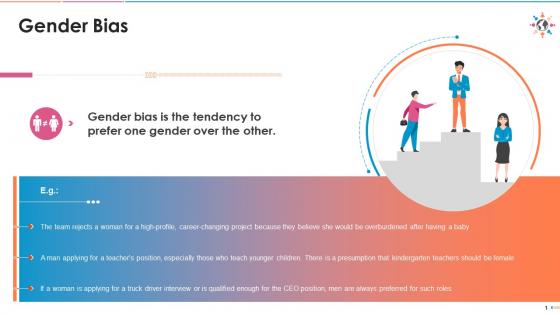
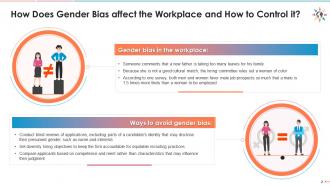
These slides cover the definition of gender bias with examples. Also, they include information on reasons how gender bias affects the workplace and ways to avoid it in the hiring process.
People who downloaded this PowerPoint presentation also viewed the following :
Introduction to gender bias and its affect at workplace edu ppt with all 14 slides:
Use our Introduction To Gender Bias And Its Affect At Workplace Edu Ppt to effectively help you save your valuable time. They are readymade to fit into any presentation structure.





FAQs for Introduction to gender bias and its affect at
Ugh, where do I even start? Pay gaps are huge obviously, but there's also the constant interruptions in meetings - seriously drives me nuts how much women get talked over. You'll probably notice your ideas getting dismissed or some guy taking credit for them later. Oh and they'll definitely ask you to take notes or plan the office party even though that's not your actual job. If you have kids (or even just might someday), good luck getting promoted. That whole "motherhood penalty" thing is so real. Just keep track of this stuff when it happens and find some decent allies who'll actually speak up.
Oh man, unconscious bias is such a sneaky thing. Your brain basically makes these instant judgments about candidates - like assuming men are natural leaders or thinking moms won't be as dedicated. Most managers don't even know they're doing it, which honestly makes it worse. It shows up everywhere too: how you read resumes, run interviews, the whole thing. What's helped me is doing structured interviews with the same questions for everyone. Also get other people involved in decisions - they'll catch stuff you miss. Awareness really does help once you know what to look for.
Ugh, gender bias is such a productivity killer. When people see unfair treatment - like women getting passed over for promotions or their ideas shot down - everyone gets demoralized. Your best employees start wondering if hard work even counts anymore. They'll either mentally check out or just leave (honestly, can you blame them?). You lose all those different perspectives that actually make teams stronger and more creative. Collaboration suffers. Turnover goes up. Deadlines get missed. The whole thing snowballs. Get ahead of it with solid training and clear policies, or you'll watch your team fall apart.
Yeah, there's actually a ton of research on this - it's pretty frustrating honestly. McKinsey does these "Women in the Workplace" reports every year and the numbers are just depressing. Women get promoted way less than men even when their performance is identical. Harvard Business Review found women literally have to outperform their male coworkers by a lot just to be considered for advancement. There's also this whole "think manager, think male" thing where we unconsciously link leadership with masculine traits. If your company's doing this, maybe push for clearer promotion criteria? Bias training helps too, though some places treat it like a joke.
Oh man, this is so real. So like, when someone's dealing with multiple marginalized identities, the biases literally pile on top of each other in ways most people don't get. A Black woman catches heat for being "too aggressive" AND gets questioned about her competence - stuff that white women or Black men face separately, but she deals with both. Add being LGBTQ+ and it's another whole layer. Most diversity programs are kinda terrible at this tbh because they tackle one thing at a time instead of seeing how it all connects. Honestly? Just listen to what people actually tell you about their experiences instead of making assumptions.
Honestly, structured evaluations are your best bet - like actual standardized criteria instead of just winging it based on feelings. Bias training helps too, though some managers get weird about it at first. Blind resume reviews work great when you can pull them off. Oh, and diverse evaluation panels make a huge difference. I'd probably start with just one department to test it out first. Once you've got some solid results to show for it, rolling it out everywhere becomes way easier. The training thing really does work though - showing people real examples of their blind spots with actual data tends to click better than just lecturing them about bias.
Honestly, the biggest thing is actually listening to what women are saying about their experiences. When you're in meetings, speak up if someone gets interrupted or if their idea suddenly becomes "Jim's brilliant suggestion" five minutes later. That stuff happens way more than guys realize. Don't just nod along - use whatever influence you have to push for better policies around flexible work and transparent promotions. And look, we've all got blind spots, so regularly check yourself on assumptions you might be making. The key is being consistent about it, not just performing allyship when your boss is watching.
Honestly, it comes down to leadership and whether they actually walk the walk. When bosses promote based on merit and shut down bias instead of ignoring it, things change fast. But if they let the "boys club" stuff slide? Gender bias just gets worse through all these tiny daily moments. I've watched this happen at different companies - the contrast is wild. Next time you're at work, pay attention to who gets credit for ideas and who lands the good opportunities. Oh, and notice how people react when someone brings up unfair treatment. That'll tell you everything about your company's real culture.
So basically these programs help you catch yourself making biased decisions without even knowing it - like when you're hiring or deciding who gets promoted. They teach you to use actual metrics instead of just going with your "instincts" (which, let's be real, can be super unfair). You'll practice spotting bias in fake scenarios, which is actually pretty eye-opening. Plus they show you how to run meetings where quieter people - often women - actually get heard. Oh, and here's a good exercise: look back at your recent big decisions and honestly ask if gender influenced you at all. Might surprise you what you find.
You'll want to ditch words like "rockstar" and "ninja" - they're total bro-code and scare women away. We made that mistake with a "coding guru" posting and literally only got dudes applying. Use "they" instead of "he/she" too. Skills matter way more than personality stuff anyway, which tends to favor men without you realizing it. There's this tool called Textio that catches biased language you might miss. Honestly, inclusive language just makes sense - you want the best people, right? Focus on what they actually need to do the job rather than making it sound like some exclusive boys' club.
ERGs are pretty solid for fighting gender bias, honestly. They give people a safe place to share stories and push for actual change. Leadership often has no clue about stuff like biased promotions or how certain meeting dynamics shut people out - ERGs surface that. The mentoring aspect is huge too (networking opportunities are insane). Most importantly, they present real data and solutions straight to the C-suite, which gets things moving. Join one if your company has them. No ERGs yet? Grab a few coworkers and pitch it to HR.
Start with whatever data you've already got - hiring numbers, promotions, retention rates, all split by gender. Pay gaps are the obvious one to check first. How fast are people getting promoted? That's usually where the real bias shows up. Exit interviews can be goldmine if people are honest about why they're leaving. Leadership representation matters too, but honestly, that's probably the metric everyone's already watching. Don't overlook the smaller stuff though - who's getting into those high-profile projects, parental leave return rates. Track trends over time instead of just taking random snapshots.
Ugh, remote work and gender stuff is so weird - it's like a double-edged sword. You might get interrupted less on Zoom calls which is nice. But then the "always available" thing hits women way harder, especially when your kids are screaming in the background and everyone can hear it. The appearance judgment is probably less but honestly? You lose out on all that casual coffee chat networking that actually matters for getting ahead. I'd say just make sure you're really obvious about documenting what you do and maybe schedule those random "how's it going" calls that used to happen naturally.
Honestly, social media has completely changed how gender equity plays out at work. Employees are way more likely to call out problems publicly now, which means companies can't just sweep stuff under the rug anymore. Look at
-
Graphics are very appealing to eyes.
-
Innovative and Colorful designs.
-
Informative presentations that are easily editable.
-
Informative presentations that are easily editable.