


Most common types of unconscious bias at workplace edu ppt




Try Before you Buy Download Free Sample Product
 Impress Your
 Audience
 100%
100% Editable
 Save Hours
 of Time


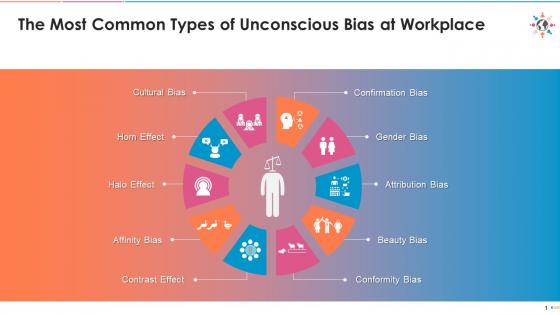
This slide covers types of biases at office space such as affinity bias, beauty bias, conformity and contrast biases, gender bias, halo and horns biases, cultural bias, confirmation bias etc.
People who downloaded this PowerPoint presentation also viewed the following :
Most common types of unconscious bias at workplace edu ppt with all 16 slides:
Use our Most Common Types Of Unconscious Bias At Workplace Edu Ppt to effectively help you save your valuable time. They are readymade to fit into any presentation structure.








FAQs for Most common types of unconscious bias at
Oh man, there's so much stuff we don't even realize we're doing. Like assuming someone's tech skills based on gender - happens all the time. I've noticed people interrupt women way more in meetings too. Then there's that weird thing where we credit a guy's success to talent but say a woman just got lucky. Plus we tend to hire people who remind us of ourselves, which is pretty limiting when you think about it. Another big one? Being overly "nice" to certain groups instead of giving them real feedback. Actually hurts their growth. Best thing is just catching yourself and questioning those snap judgments about what people can do.
Honestly, unconscious bias screws up hiring way more than people think. We all make snap judgments based on names, where someone went to school, even how they look - it's just human nature but pretty awful for finding good talent. I've seen it happen where managers pick people who remind them of themselves or previous "star" employees. The thing is, you end up with teams that all think the same way. What actually helps? Structured interviews where everyone gets asked the same questions. Also having different people involved in the decision, not just one person's gut feeling.
So three main things - get your hiring process locked down first. Same interview questions for everyone, mix up your panels, maybe try those blind resume reviews. Training helps but honestly? It's kinda overrated on its own. What really works is tracking everything with actual numbers. Who's getting hired, promoted, the good assignments - break it down by demographics. I know it sounds boring but the patterns will surprise you. Set up some accountability stuff and check in regularly. Don't just do one workshop and call it done - that's pointless.
Honestly? It can work, but most companies do it totally wrong. Those awareness workshops where everyone realizes they're biased? Pretty useless for actual behavior change. What actually moves the needle is teaching concrete stuff - like how to structure interviews properly, building diverse hiring panels, that kind of thing. You need follow-up too, not just some random Tuesday training session. The real magic happens when you pair it with systematic changes. I've seen places try to fix everything with a single workshop and wonder why nothing shifts. Short answer: focus on practical techniques plus ongoing accountability.
Oh man, this stuff happens constantly and nobody even notices. Your brain just automatically favors ideas from certain people while dismissing others based on random things like how they sound or look. Super annoying but true. You'll see it in meetings when the same voices always get heard while others are ignored. Or when "culture fit" really just means "this person reminds me of myself" - honestly that one drives me crazy. The trick is catching yourself doing it and actually asking who's missing from the conversation. It's not easy but makes a huge difference.
So basically, culture is like your brain's default settings for judging people. You pick up all these stereotypes and assumptions as a kid - through TV shows, what your family says, school, whatever. It's kinda crazy how much we absorb without even thinking about it. Each culture has its own ideas about what traits are "good" or "bad," and that gets baked into how you automatically see different groups. The weird part? It all feels totally normal since you've been marinating in it your whole life. Go back and watch some old shows you loved - you'll cringe at stuff you totally missed before.
So your brain is basically lazy (in a good way though) - it uses shortcuts called heuristics to handle all the info bombarding you constantly. Those shortcuts create unconscious bias because they're built from your past experiences and whatever cultural stuff you've picked up over the years. The annoying thing? This all happens automatically without you realizing it. I mean, your subconscious is literally making snap judgments before you even know what's happening. But here's what's cool - once you understand this is just how brains work, you can actually start noticing it and questioning those instant reactions you have.
Honestly, those implicit bias tests online are pretty eye-opening - they'll catch patterns you didn't even know were there. I'd start there. Then just pay attention to your gut reactions about people, especially when you're making hiring calls or deciding who gets what project. Yeah, it's awkward to examine this stuff but whatever. Maybe keep a quick journal of your interactions? You'll spot patterns after a while. Also try seeking out perspectives that feel weird or unfamiliar to you. The biggest thing though - slow down before making decisions and ask yourself what you're assuming about someone first.
Check out Harvard's Implicit Association Test first - it's free online and covers race, gender, age biases. Fair warning though, it might surprise you more than you expect! Your company probably has workplace assessments too, maybe through Paradigm or those inclusion surveys HR loves. I'd start with the IAT since it's easy to access, then bug your manager about what bias training they actually offer. These tests aren't gonna tell you everything about yourself, but they're decent for figuring out your blind spots. The IAT takes like 10 minutes and you can do it right now if you want.
Ugh, unconscious bias is sneaky as hell - you'll literally treat customers differently without even realizing it. Like giving quicker service to someone who looks like you, or being way more patient with people who fit your mental picture of a "good customer." I catch myself doing this sometimes too. You end up assuming stuff about their budget or how tech-savvy they are just based on appearance or accent. Really messes up the whole customer experience. Best thing? Just pause during conversations and ask yourself if you're making weird assumptions. Sounds simple but it actually works.
Honestly, we all have unconscious biases - myself included, which is kinda humbling to admit. I'd start by looking at your own patterns first. Who's getting the good opportunities? In meetings, try interrupting bias by asking stuff like "who haven't we heard from yet?" You'll want to standardize hiring and promotions too - clear criteria cuts down on those gut-feeling decisions that can be problematic. The trick is being intentional about inclusion instead of just hoping it happens naturally. Maybe start small this week? Like rotating who talks first in meetings. Tiny changes add up.
Honestly, don't just hope people will magically get better at this stuff. You've got to bake accountability right into how things actually work. Make bias recognition part of performance reviews and team goals - way more effective than those one-time training sessions that everyone forgets about. Build spaces where people can call out bias without feeling weird about it, then actually celebrate when they do. The real test though? Track your data. Look at hiring numbers, who's getting promoted, retention rates - that's how you know if you're making real progress or just talking a good game.
Honestly? Unconscious bias is like a slow poison for companies. You'll watch your leadership get less diverse over time. Turnover spikes among underrepresented folks because they feel it. Meanwhile you're missing out on different perspectives that actually drive innovation - kind of a no-brainer but here we are. Your whole culture starts looking the same, which makes it impossible to connect with diverse customers. Good luck attracting talent too since everyone wants inclusive workplaces now. My advice? Start with bias training and structure your hiring process better. Catches these patterns before they snowball into bigger problems.
Honestly, unconscious bias is such a sneaky thing - your brain just defaults to favoring people who remind you of yourself, even when you're trying to be fair. It happens way more than we'd like to admit! Most companies are catching on though, which is why you see all that bias training everywhere now. The trick is building actual systems that force you to slow down and think. Like, question why you immediately liked that one candidate or why you always pick the same people for good projects. I've caught myself doing it too - it's wild how automatic it becomes.
Oh man, there's so many examples. Google's photo app once tagged Black people as "gorillas" - total nightmare because their training data was super biased. McKinsey found that diverse leadership teams outperform homogeneous ones by 35%, which honestly should be obvious by now but whatever. Orchestra auditions are fascinating though - when they started doing blind auditions behind screens, women's selection rates jumped 50%. Same talent, just removed the bias. You'll see this stuff everywhere in hiring and AI systems mostly. Might be worth checking your own workplace processes, just saying.
-
Best way of representation of the topic.
-
Excellent products for quick understanding.
-
Helpful product design for delivering presentation.
-
It saves your time and decrease your efforts in half.
-
Great product with effective design. Helped a lot in our corporate presentations. Easy to edit and stunning visuals.