


Introduction To Iot Powerpoint Ppt Template Bundles




Try Before you Buy Download Free Sample Product
 Impress Your
 Audience
 100%
100% Editable
 Save Hours
 of Time


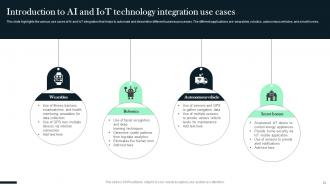
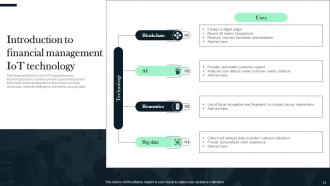
Introducing our comprehensive PowerPoint presentation on Introduction to IoT a cutting edge resource for understanding the transformative world of IoT technology. In this expertly crafted presentation, we delve into the realms of both Commercial IoT technology and Consumer IoT technology, unraveling the potential of interconnected devices in revolutionizing businesses and enhancing daily life. With a keen focus on innovation, we explore the seamless integration of IoT and AI, empowering audiences to harness the power of data driven insights for smart decision making. Whether you are a novice or tech savvy enthusiast, our PPT equips you with essential knowledge to grasp the intricacies of the IoT landscape and its symbiotic relationship with artificial intelligence. Unlock the limitless possibilities of this dynamic duo today
People who downloaded this PowerPoint presentation also viewed the following :
Introduction To Iot Powerpoint Ppt Template Bundles with all 37 slides:
Use our Introduction To Iot Powerpoint Ppt Template Bundles to effectively help you save your valuable time. They are readymade to fit into any presentation structure.






FAQs for Introduction To Iot Powerpoint
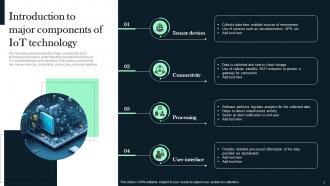
So you'll need four main pieces for IoT architecture. Device/sensor layer collects your data at the edge. Connectivity moves it around - WiFi, cellular, whatever fits. Then data processing (cloud or edge) actually makes sense of all those numbers. Application layer is where users interact with everything. Security needs to be built in from the start though, not added later - learned that one the hard way on a project last year. Map out your data flow first, then pick components that match what you actually need. Don't just grab the latest trendy tech because it sounds cool.
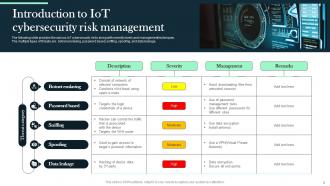
So basically you want devices that encrypt your data - both when it's moving around and when it's stored. Strong passwords and multi-factor authentication are clutch too. Honestly? Most cheap IoT stuff completely skips the security basics, which is terrifying. Regular firmware updates matter a ton. I'd definitely put your smart devices on a separate network from your main computer setup. Oh, and actually research the company's security track record before buying anything. That random smart bulb could literally open up your entire network if it gets hacked.
So edge computing moves the processing right next to your IoT devices instead of shipping everything off to the cloud. Way faster that way. Your latency drops since data isn't traveling across the country, and honestly, your stuff keeps running even when internet gets flaky - which happens more than you'd think with industrial gear. Bandwidth costs go down too because you're not constantly uploading raw sensor data. The big thing though? You can make decisions instantly on-site. For anything that needs quick responses or can't go offline, edge processing is definitely worth looking into.
So IoT analytics takes all that random sensor data and actually makes it useful. Your devices are constantly picking up info on how things are running, what customers do, equipment health - stuff you'd never catch otherwise. The cool part? You can spot patterns to predict when machines need fixing or find ways to make more money. Honestly, the analytics tools are kinda tricky at first, but once you figure them out you're making real decisions instead of just winging it. My advice is pick one thing to focus on first, then expand from there.
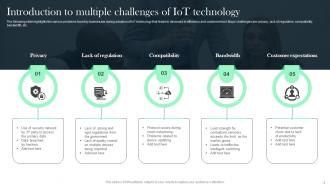
Security's probably your biggest headache right out the gate. Integration with whatever systems you've already got? Total pain. Then there's scalability - things get messy fast when you start adding more devices. Honestly, the data management alone will bury you if you're not careful. All that sensor info just keeps pouring in from everywhere. Budget-wise, these projects always end up costing way more than you think they will. Good luck finding developers who actually know this stuff too - everyone's fighting over the same talent pool. Oh, and managing devices from different vendors is basically hell. My advice? Start super small with a pilot and get security locked down first.
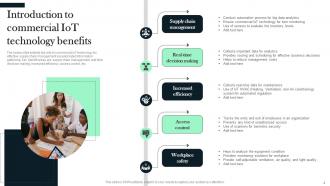
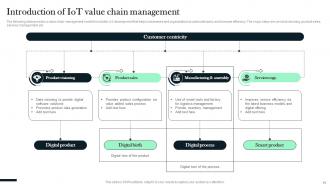
So basically, IoT lets you track inventory and shipments in real-time using sensors. Pretty wild how detailed it gets - temperature, location, humidity, the works. Instead of finding out about delays or quality problems days later, you catch them instantly. Waste goes down, delivery times improve, and you're not making blind decisions anymore. Oh, and don't try to do everything at once - that's a recipe for chaos. Start with whatever's most expensive or critical to track first, then expand from there.
Honestly, just start by making a list of every IoT device you've got and what version they're running. I learned this the hard way when half our sensors went dark last year - nightmare. Set up some kind of monitoring so you catch problems before they blow up. Track firmware updates, security patches, all that boring stuff. Automated alerts are your friend here. Oh, and plan to replace devices before they turn into security holes. I know it sounds like overkill, but treating these things like actual IT equipment instead of random gadgets makes everything way smoother down the road.
Dude, 5G is seriously going to change everything for IoT. You can connect like a million devices per square kilometer without the network choking - which is honestly insane when you think about it. Current networks just can't handle that many sensors talking at once. The latency drops to almost nothing too, so you're finally looking at real-time stuff like self-driving cars actually working. Remote surgery becomes possible (kinda crazy we're there already). Speed boost is obvious but the capacity thing is what really matters. I'd start thinking about 5G in whatever IoT stuff you're planning now.
Ugh, IoT privacy is such a mess. Companies are basically harvesting all your data through these smart devices, and nobody actually reads those insane terms of service agreements - I'm guilty of this too. Your gadgets know way more about you than they should. Security is pretty weak on most of them, which puts your whole network at risk. Plus the whole "consent" thing is a joke when it's buried in legal jargon. Honestly? Just be picky about what smart stuff you actually buy and check your privacy settings once in a while.
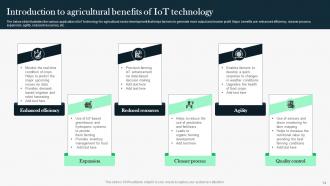
So IoT basically gives you live data on where you're wasting stuff - energy, water, fuel, whatever. Like in farming, soil sensors stop you from overwatering crops. Manufacturing can track emissions better. Even delivery companies use it to cut down on those annoying empty truck routes (which honestly drives me crazy when I see them). Smart sensors replace all the guesswork with actual numbers. Agriculture and logistics see huge wins from this. My advice? Pick one specific sustainability thing you want to fix and start tracking it with IoT. Don't try to do everything at once.
Honestly, just stick to the basics or you'll go crazy trying to get everything to work together. MQTT is solid for lightweight messaging - I use it all the time. CoAP works better if you're dealing with really constrained devices though. Wi-Fi, Bluetooth LE, and Zigbee will handle most of what you need connectivity-wise. You'll definitely want IPv6 since we're basically out of IPv4 addresses (took long enough to become a real problem, right?). OMA LwM2M is pretty good for device management. Don't try supporting every standard - pick what actually fits your setup.
Honestly, just pick one annoying problem and start there. Smart thermostats are great for cutting energy bills, or maybe inventory sensors if you're always running out of stuff. Don't overthink it - I know the full automation dream is exciting, but baby steps work better. Cloud platforms make this way cheaper than before, and lots of solutions just plug into what you already have. Give it 3 months, see if it actually saves money. My buddy tried foot traffic counters first and was shocked how much it helped with staffing. Once you prove it works, then you can go crazy with more tech.
Honestly, healthcare and manufacturing are where IoT is really taking off right now. Doctors are using remote monitoring devices and smart equipment that's completely changing patient care. Manufacturing's huge too - companies are saving crazy money with predictive maintenance stuff. Agriculture might sound boring, but farmers are using sensors for soil and irrigation that actually work really well. Smart cities and transportation are getting there with connected cars and infrastructure. Oh, and if you're thinking about investing in this space, I'd probably start looking at these industries first since they're already proving the ROI.
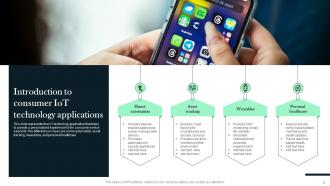
Honestly, IoT is a game-changer for making your house actually smart. Everything learns your routine - lights, thermostat, security stuff - and they all work together without you doing anything. Like your heat kicks on before you get home, or the lights automatically dim when it's movie night. Daily life just flows better when you're not constantly messing with different apps. I started with just a smart thermostat (saved me like $30 a month btw) and kept adding things. The crazy part? It genuinely anticipates what you need. You'll wonder how you lived without it.
Dude, IoT security is honestly a mess. Most people never bother changing those default passwords, so hackers just walk right in. Your data's flying around unencrypted half the time too. And don't get me started on how much random stuff these devices collect - like why does my smart thermostat need to know my browsing habits? Anyway, definitely change those passwords first thing. Keep your firmware updated when you remember to. Oh, and maybe actually read what data they're grabbing. Some of it's genuinely creepy. Compromised devices also get used in those massive botnet attacks, which sucks for everyone.
-
Stunning collection! With a wide variety of options available, I was able to find a perfect slide for my presentation. Thank you, SlideTeam!
-
I discovered some really original and instructive business slides here. I found that they suited me well.