


Investing In Technology And Innovation Powerpoint Presentation Slides




Try Before you Buy Download Free Sample Product
 Impress Your
 Audience
 100%
100% Editable
 Save Hours
 of Time


Technology is considered an essential component of organizational success. Businesses with access to the latest technologies have plus points among their competitors and can achieve their goals more quickly. To make more efficient operations, companies are investing more in innovative technologies. Check out our professionally designed presentation on Investing in Technology and Innovation. It will assist FinTech organizations that want to collect information about the latest technology trends and invest in the one suitable for their business. Firstly, the companies can use sections, namely industry overview, and US market overview, to address critical information about the latest technologies at the global and domestic levels. Sections, namely investing in new technology, how technology will transform the future of work, and seamless customer journey will help the organization in providing in-depth information on IT investment approach, current versus future state of employee working post technology adoption, seamless customer journey map, etc. Lastly, with performance measuring touchpoints and KPI dashboards, organizations can monitor and measure the impact of technology adoption on their businesses. Get access to this powerful template now.
People who downloaded this PowerPoint presentation also viewed the following :
Content of this Powerpoint Presentation
Slide 1: This slide introduces Investing in Technology and Innovation. State Your Company Name and begin.
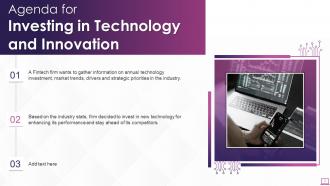
Slide 2: This slide states Agenda of the presentation.
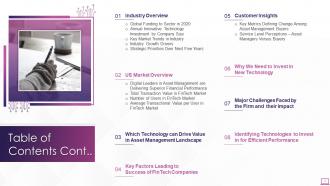
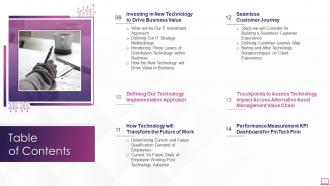
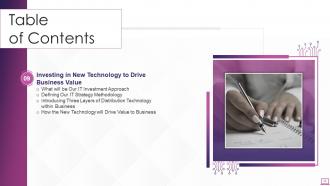
Slide 3: This slide presents Table of Content for the presentation.
Slide 4: This is another slide continuing Table of Content for the presentation.
Slide 5: This slide highlights title for topics that are to be covered next in the template.
Slide 6: This slide shows world map illustrating country-wise funding stats in FinTech sector for the year 2020.
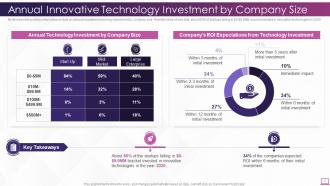
Slide 7: This slide presents Annual Innovative Technology Investment by Company Size.
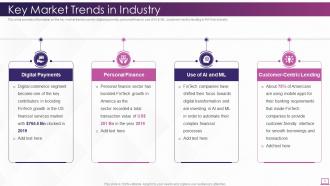
Slide 8: This slide provides information on the key market trends namely digital payments, personal finance, etc.
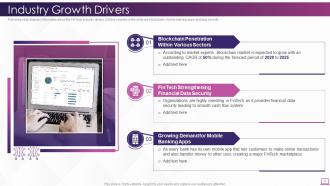
Slide 9: Following slide displays information about the FinTech industry drivers.
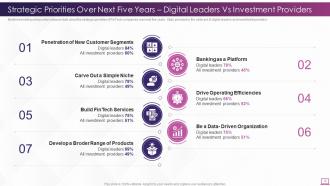
Slide 10: This slide represents stats about the strategic priorities of FinTech companies over next five years.
Slide 11: This slide highlights title for topics that are to be covered next in the template.
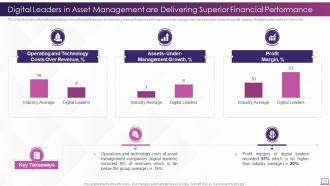
Slide 12: This slide illustrates informational statistics on how the digital leaders are delivering superior financial performance in asset management.
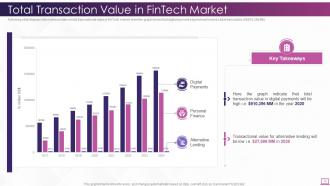
Slide 13: This slide displays Total Transaction Value in FinTech Market.
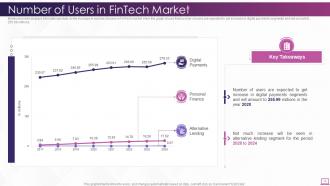
Slide 14: This slide represents Number of Users in FinTech Market.
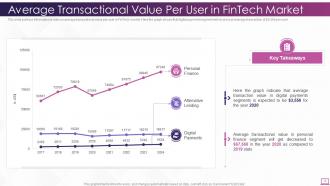
Slide 15: This slide showcases Average Transactional Value Per User in FinTech Market.
Slide 16: This slide highlights title for topics that are to be covered next in the template.
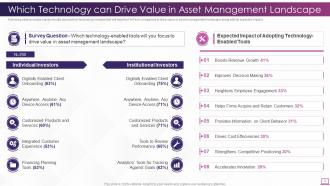
Slide 17: This slide shows Which Technology can Drive Value in Asset Management Landscape.
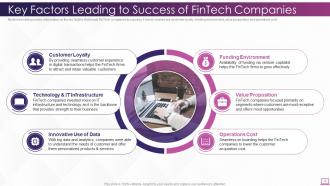
Slide 18: This slide presents Key Factors Leading to Success of FinTech Companies.
Slide 19: This slide highlights title for topics that are to be covered next in the template.
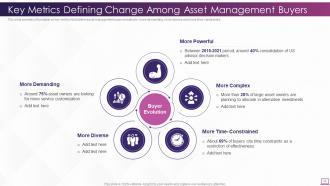
Slide 20: This slide displays Key Metrics Defining Change Among Asset Management Buyers.
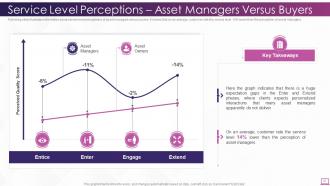
Slide 21: This slide represents service level perceptions of asset managers versus buyers.
Slide 22: This slide highlights title for topics that are to be covered next in the template.
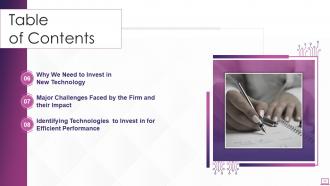
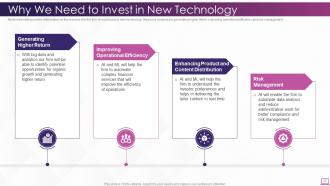
Slide 23: This slide showcases reasons why the firm should invest in new technology.
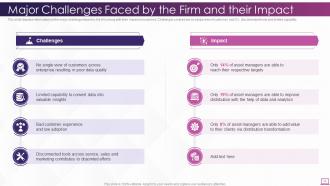
Slide 24: This slide showcases Major Challenges Faced by the Firm and their Impact.
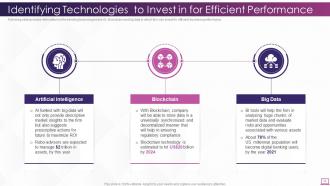
Slide 25: This slide shows Identifying Technologies to Invest in for Efficient Performance.
Slide 26: This slide highlights title for topics that are to be covered next in the template.
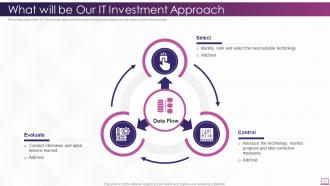
Slide 27: This slide portrays firm’s IT investment approach framework having three stages namely select, control and evaluate.
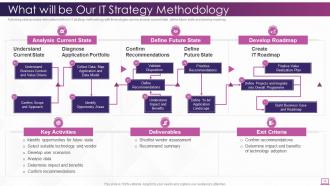
Slide 28: Following slide provides information on firm’s IT strategy methodology.
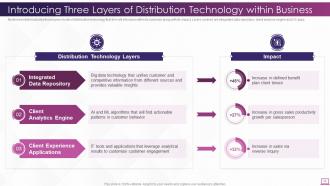
Slide 29: This slide presents Introducing Three Layers of Distribution Technology within Business.
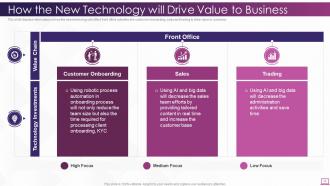
Slide 30: This slide displays How the New Technology will Drive Value to Business.
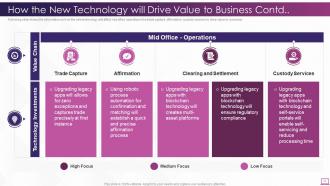
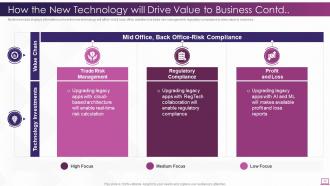
Slide 31: This is another slide continuing How the New Technology will Drive Value to Business.
Slide 32: This is another slide continuing How the New Technology will Drive Value to Business.
Slide 33: This slide highlights title for topics that are to be covered next in the template.
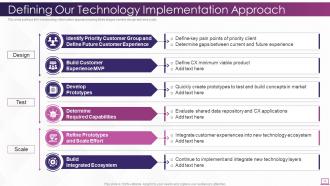
Slide 34: This slide represents Defining Our Technology Implementation Approach.
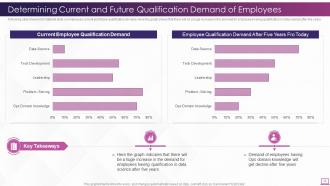
Slide 35: This slide showcases Determining Current and Future Qualification Demand of Employees.
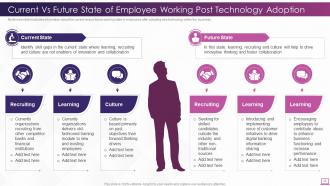
Slide 36: This slide shows Current Vs Future State of Employee Working Post Technology Adoption.
Slide 37: This slide highlights title for topics that are to be covered next in the template.
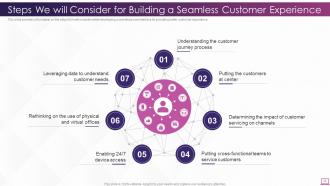
Slide 38: This slide presents Steps We will Consider for Building a Seamless Customer Experience.
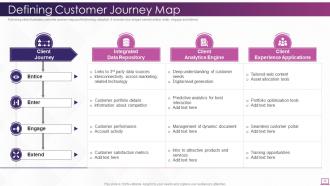
Slide 39: This slide displays customer journey map post technology adoption.
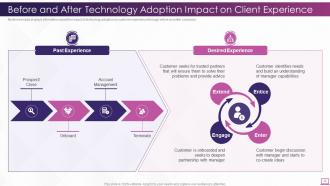
Slide 40: This slide represents Before and After Technology Adoption Impact on Client Experience.
Slide 41: This slide highlights title for topics that are to be covered next in the template.
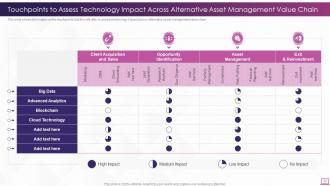
Slide 42: This slide showcases Touchpoints to Assess Technology Impact Across Alternative Asset Management Value Chain.
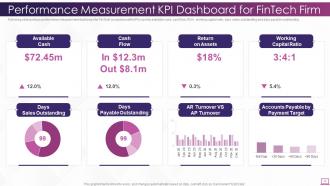
Slide 43: This slide shows Performance Measurement KPI Dashboard for FinTech Firm.
Slide 44: This slide displays Icons for Investing in Technology and Innovation.
Slide 45: This slide is titled as Additional Slides for moving forward.
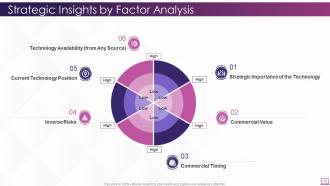
Slide 46: This slide shows Strategic Insights by Factor Analysis.
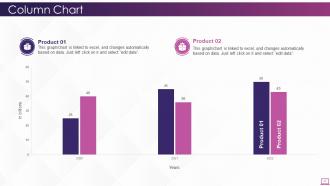
Slide 47: This slide displays Column chart with two products comparison.
Slide 48: This is Our Mission slide with related imagery and text.
Slide 49: This slide displays Mind Map with related imagery.
Slide 50: This slide contains Puzzle with related icons and text.
Slide 51: This is About Us slide to show company specifications etc.
Slide 52: This slide depicts Venn diagram with text boxes.
Slide 53: This slide shows Post It Notes. Post your important notes here.
Slide 54: This is a Comparison slide to state comparison between commodities, entities etc.
Slide 55: This is Our Target slide. State your targets here.
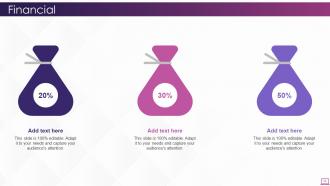
Slide 56: This is a Financial slide. Show your finance related stuff here.
Slide 57: This is a Thank You slide with address, contact numbers and email address.
Investing In Technology And Innovation Powerpoint Presentation Slides with all 62 slides:
Use our Investing In Technology And Innovation Powerpoint Presentation Slides to effectively help you save your valuable time. They are readymade to fit into any presentation structure.
















FAQs for Investing In Technology And Innovation
Dude, everything's AI right now - literally every startup I see throws "machine learning" in their pitch. But honestly? The tech is legit. Cybersecurity and cloud stuff are huge too, that's where the money's flowing. Fintech's still crushing it in places like Southeast Asia. Healthcare tech blew up during COVID and never really came back down. Oh, and anything renewable energy or automation. My advice? Skip the hype trains and find companies actually fixing real problems. That's how you don't lose your shirt when the bubble pops.
Honestly, I'd focus on three things when you're looking at this stuff. Real-world adoption matters way more than flashy marketing - is anyone actually using it? The teams behind these projects are huge too because so many are run by people who've literally never built anything that works. Market size and regulations are the third piece since both AI and crypto could get hammered by policy changes. Oh and don't try picking individual winners - that's basically gambling. Diversified ETFs in these sectors are your safest play to start small.
Honestly, tech startups are risky as hell. Market timing can screw you over, and like 90% of these companies tank within a few years - the stats are pretty depressing. Regulatory stuff can also kill a promising company overnight, which sucks. But you don't have to go all-in on one startup. Spread your bets across several instead. Check out the founders' backgrounds first - do they actually know what they're doing? Make sure there's real traction, not just some flashy pitch deck. I'd cap startup investments at maybe 5-10% of your portfolio. Only use money you won't cry over losing.
Tech stocks always get crushed first when markets go crazy. They're basically betting on future potential instead of actual profits right now, so nervous investors bail fast. Higher interest rates don't help either - makes it way more expensive for these companies to borrow and grow. Honestly, I've learned to expect the wild swings with tech. Sure, utility stocks are boring but they don't drop 20% in a week. If you're gonna stay in tech, maybe buy more when it's down? Dollar-cost averaging helps smooth out the chaos.
Honestly, regulations can completely wreck tech investments or make them explode overnight. GDPR basically wiped out tons of ad-tech companies - poof, gone. But then compliance startups made bank. The trick is watching policy talks before stuff hits. AI rules, privacy laws, antitrust cases - that's where you'll spot the next big moves. I always check what lawmakers are arguing about because it gives you a heads up on which companies are screwed and which ones will benefit. Way better than scrambling after the fact.
Honestly, spread your money across different tech areas - hardware, software, semiconductors, cybersecurity, cloud stuff. I got burned going all-in on flashy trends before, so don't make my mistake. Mix some safe bets like Microsoft and Apple with smaller growth companies. Also worth looking outside Silicon Valley since innovation's happening everywhere now. ETFs are perfect if you're just starting out. You can always pick individual stocks later once you figure out which sectors you actually understand. Oh, and skip crypto for now - way too volatile.
Honestly, forget P/E ratios for tech stocks - they're pretty useless here. Look at revenue growth rate and how fast they're getting new users instead. SaaS companies? MRR is everything. Marketplace stuff needs GMV tracking. But here's what kills me - so many of these companies just burn through cash like crazy, so definitely check that burn rate. Customer acquisition cost vs retention is huge too since getting new users costs a fortune but keeping them is where you actually make bank. Oh and always compare against similar companies, not just random numbers floating around.
Dude, geopolitical stuff totally messes with tech investing. Trade wars hit semiconductor stocks hard - remember the US-China drama? Supply chains get wrecked, new regulations pop up everywhere. Europe's data privacy laws changed how we look at tech companies completely. Currency swings don't help either. Honestly, tracking all this political nonsense while trying to pick stocks is brutal sometimes. But you've gotta consider export controls and which markets companies can actually access. I'd spread investments across different regions and - this sounds boring but whatever - actually follow major policy news. Sectors can get flipped overnight.
So VCs are basically professional gamblers with deep pockets. They take money from rich people and institutions, then bet it on startups that banks think are too risky. In exchange, they get a piece of the company. The cool part is they don't just throw cash at you and disappear - they'll hook you up with connections and advice. Sometimes that guidance is honestly worth more than the funding itself. Oh, and if you're researching a startup, check who's backing them. Good VCs = instant credibility boost.
So basically you're looking at three main things when checking out tech companies. Environmental stuff - how much energy their data centers use, carbon footprint, what they do with old electronics. Then there's the social side: privacy policies, how diverse their workforce is, whether they're screwing over local communities. Governance is about exec pay, board makeup, that kind of transparency stuff. The whole AI ethics thing has made this way messier though. Like facial recognition tech - is it helping people or just creating a surveillance nightmare? Hard to say sometimes. I'd start by seeing if they actually publish ESG reports and have real sustainability targets, not just corporate fluff.
So tech consolidation is kind of a double-edged sword for your portfolio. These massive companies like Amazon have insane scale and can pretty much charge whatever they want across tons of different businesses. But here's the thing - I'm honestly getting worried about how much power they have. When regulators come after them (which happens more now), stock prices can get crushed pretty fast. Competition basically dies too. My advice? Don't just pile into the big names everyone's obsessed with. Spread your bets across different sized companies and tech sectors instead.
Look for tech that fixes stuff you actually hate dealing with every day - massive, clunky markets are goldmines. When old companies call new tech "just toys," that's honestly when I get most excited. Watch for the usual patterns: costs dropping, performance getting better, more people jumping on board. Companies with network effects are your friend - they just keep getting stronger as they grow. Don't put all your money on one horse though. I like buying into the companies that sell tools to disruptors AND the disruptors themselves. Start small, spread it around, and yeah... you'll need patience. Real change takes forever to actually happen.
Honestly, diversification is your lifeline in this crazy tech market. Don't put everything into AI just because it's the hot topic - spread across different sectors instead. I spend maybe an hour each week reading actual earnings reports and industry news, not just whatever's trending on social media. Companies with solid fundamentals beat flashy headlines every time, trust me. Quantum computing and biotech are worth watching too. Track a few key metrics and actually stick to real data when you're adjusting your portfolio. It's boring but it works way better than following random Reddit advice.
Honestly, following consumer trends is like having a crystal ball for tech investing. People start changing their habits - boom, that's where the money flows. Remote work blew up and suddenly cloud stocks were gold. Same with fitness obsessions driving wearable tech investments. The real trick? Catch these shifts before they're obvious to everyone and their mom. I always watch what everyday problems people complain about, then hunt for companies actually fixing those headaches. It's worked pretty well so far.
TechCrunch and VentureBeat are great starting points for startup funding news. Bloomberg Tech gives you the deeper analysis stuff. Honestly, CB Insights has the best reports - their charts are addictive once you get into them. I'd also follow some VC blogs like Andreessen Horowitz since they're usually ahead of the curve. The Information is pricier but worth it if you're serious. Twitter lists of investors work for real-time updates, though it can get noisy. Just pick 2-3 that fit what you're investing in first, then branch out.
-
Stunning collection! With a wide variety of options available, I was able to find a perfect slide for my presentation. Thank you, SlideTeam!
-
I can say with full confidence that all your business, academic, or professional work requirements will be sufficed with SlideTeam. Their gallery is as rich as 2Million+!!