

IT OT Convergence Strategy Powerpoint Presentation Slides





Try Before you Buy Download Free Sample Product
 Impress Your
Audience
 100%
Editable
 Save Hours
of Time


IT or OT integration helps combine production structures that monitor physical activities and procedures with back-end hardware and information conveyance and retrieval applications. Grab our efficiently designed IT OT Convergence Strategy template covering IT or OT convergence integration of information technology IT systems with operational technology OT systems. In this presentation, we have covered the strategy to make Operational technology OT and information technology IT converge and become increasingly the same based on data, security, and Competencies. Further, it includes Enterprise Technical Challenges, IT or OT Convergence Challenges, Catalysts, Model Of Integration, and Fully Integrated services and systems. It also covers the Representation of IT or OT technological convergence and Representation of convergence through the pooling of IT or OT competencies and Corporate Actors Affected By IT or OT Convergence. This PPT presentation covers the IT or OT Convergence Suggested General Approach and broader subjects. It includes Data Flow- Distribution of Responsibilities Between IT or OT Teams, Convergence Data Platform, Scaling-up Mechanism of Data Projects, and The Organizational Structure Around Data Use. In this presentation, we have also covered Two-way Interactions between Safety, Security, and Cybersecurity, the Launch of Cyber IT or OT Strategy, IT or OT Organizational Structure, etc. Customize this 100 percent editable template now.
People who downloaded this PowerPoint presentation also viewed the following :
Content of this Powerpoint Presentation
Slide 1: This slide introduces IT OT Convergence Strategy. State Your Company Name and begin.
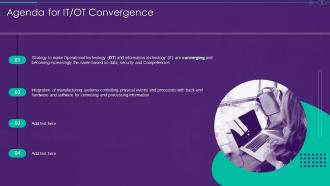
Slide 2: This slide states Agenda of the presentation.
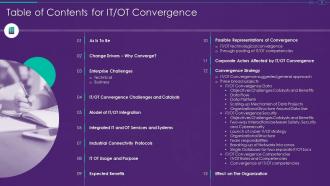
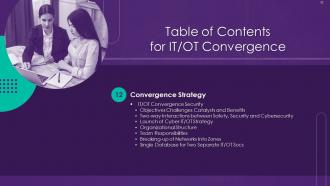
Slide 3: This slide presents Table of Content for the presentation.
Slide 4: This slide highlights title for topics that are to be covered next in the template.
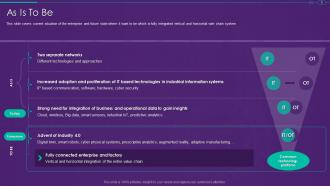
Slide 5: This slide covers current situation of the enterprise and future state where it want to be.
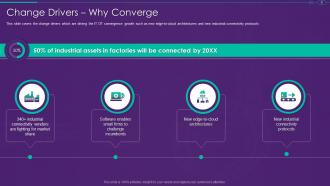
Slide 6: This slide covers the change drivers which are driving the IT OT convergence growth.
Slide 7: This slide highlights title for topics that are to be covered next in the template.
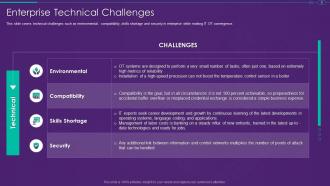
Slide 8: This slide covers technical challenges such as environmental, compatibility, skills shortage and security.
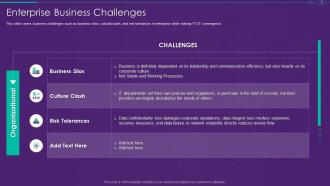
Slide 9: This slide presents business challenges such as business silos, cultural clash, and risk tolerances.
Slide 10: This slide highlights title for topics that are to be covered next in the template.
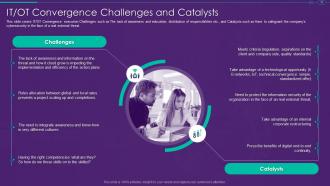
Slide 11: This slide displays IT/OT Convergence Challenges and Catalysts.
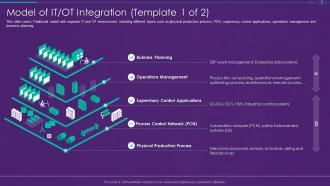
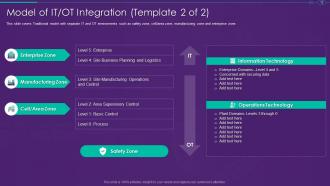
Slide 12: This slide represents Traditional model with separate IT and OT environments.
Slide 13: This is another slide continuing Model of IT/OT Integration.
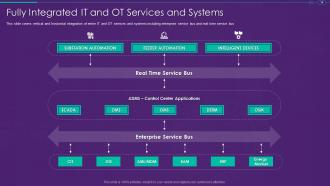
Slide 14: This slide showcases Fully Integrated IT and OT Services and Systems.
Slide 15: This slide highlights title for topics that are to be covered next in the template.
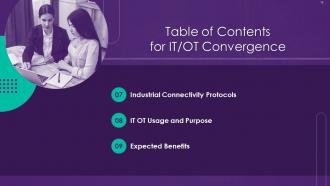
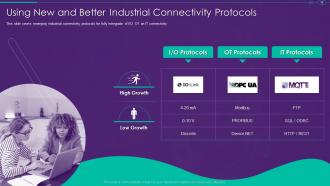
Slide 16: This slide shows Using New and Better Industrial Connectivity Protocols.
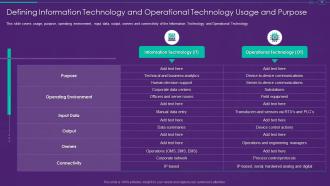
Slide 17: This slide presents Defining Information Technology and Operational Technology Usage and Purpose.
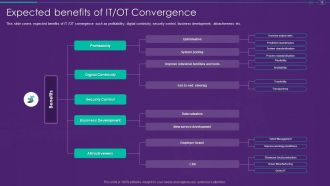
Slide 18: This slide displays Expected benefits of IT/OT Convergence.
Slide 19: This slide highlights title for topics that are to be covered next in the template.
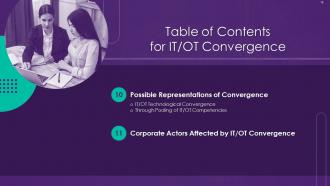
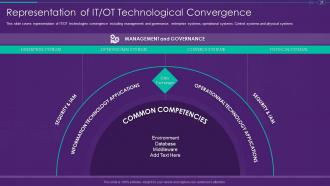
Slide 20: This slide represents Representation of IT/OT Technological Convergence.
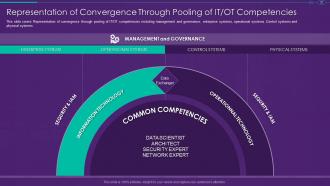
Slide 21: This slide showcases Representation of Convergence Through Pooling of IT/OT Competencies.
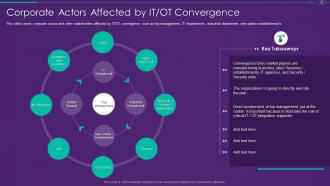
Slide 22: This slide shows Corporate Actors Affected by IT/OT Convergence.
Slide 23: This slide highlights title for topics that are to be covered next in the template.
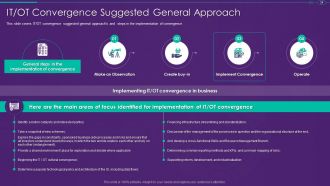
Slide 24: This slide presents IT/OT Convergence Suggested General Approach.
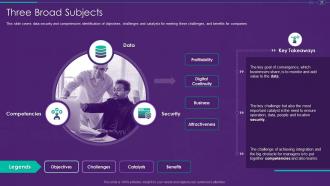
Slide 25: This slide covers data security and competencies identification of objectives.
Slide 26: This slide highlights title for topics that are to be covered next in the template.
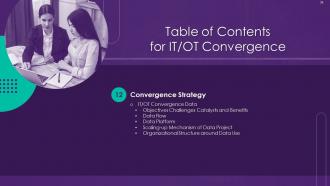
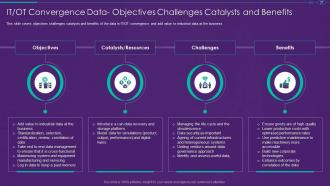
Slide 27: This slide displays IT/OT Convergence Data- Objectives Challenges Catalysts and Benefits.
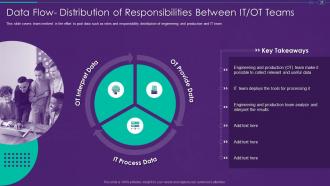
Slide 28: This slide represents Data Flow- Distribution of Responsibilities Between IT/OT Teams.
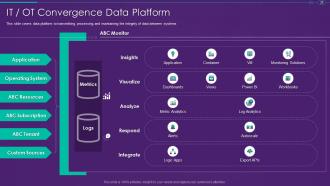
Slide 29: This slide covers data platform to transmitting, processing and maintaining the integrity of data between systems.
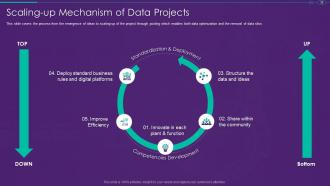
Slide 30: This slide showcases Scaling-up Mechanism of Data Projects.
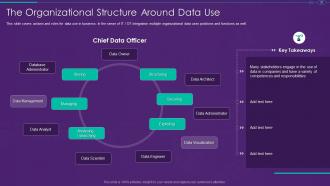
Slide 31: This slide shows The Organizational Structure Around Data Use.
Slide 32: This slide highlights title for topics that are to be covered next in the template.
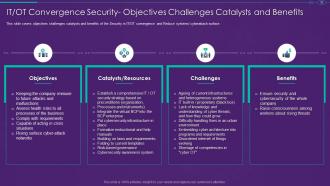
Slide 33: This slide presents IT/OT Convergence Security- Objectives Challenges Catalysts and Benefits.
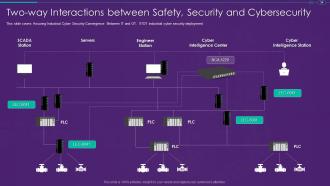
Slide 34: This slide displays Two-way Interactions between Safety, Security and Cybersecurity.
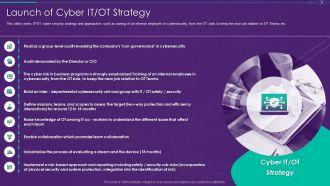
Slide 35: This slide covers IT/OT cyber security strategy and approaches.
Slide 36: This slide represents IT/OT Organizational Structure based on Target and Culture Sharing.
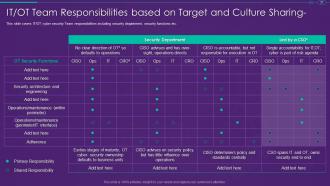
Slide 37: This slide showcases IT/OT Team Responsibilities based on Target and Culture Sharing-.
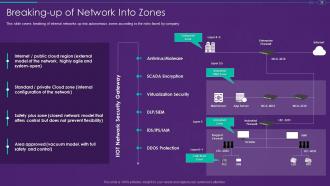
Slide 38: This slide covers breaking of internal networks up into autonomous zones.
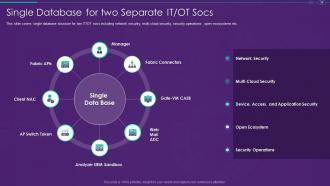
Slide 39: This slide shows Single Database for two Separate IT/OT Socs.
Slide 40: This slide highlights title for topics that are to be covered next in the template.
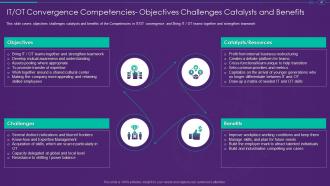
Slide 41: This slide presents IT/OT Convergence Competencies- Objectives Challenges Catalysts and Benefits.
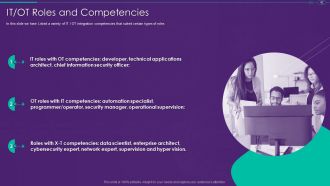
Slide 42: This slide displays variety of IT / OT integration competencies that suited certain types of roles.
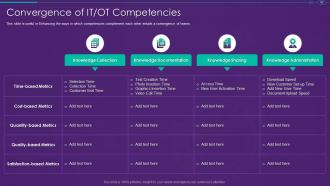
Slide 43: This slide is useful in Enhancing the ways in which competencies complement each other.
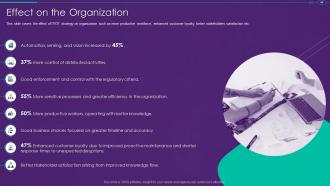
Slide 44: This slide covers the effect of IT/OT strategy on organization.
Slide 45: This slide displays Icons for IT OT Convergence Strategy.
Slide 46: This slide is titled as Additional Slides for moving forward.
Slide 47: This is Our Mission slide with related imagery and text.
Slide 48: This is About Us slide to show company specifications etc.
Slide 49: This is Our Team slide with names and designation.
Slide 50: This is Our Goal slide. State your firm's goals here.
Slide 51: This slide shows Post It Notes. Post your important notes here.
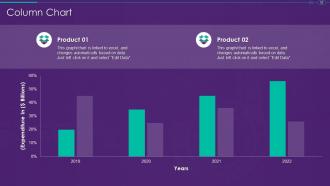
Slide 52: This slide displays Column chart with two products comparison.
Slide 53: This is a Timeline slide. Show data related to time intervals here.
Slide 54: This is a Thank You slide with address, contact numbers and email address.
IT OT Convergence Strategy Powerpoint Presentation Slides with all 59 slides:
Use our IT OT Convergence Strategy Powerpoint Presentation Slides to effectively help you save your valuable time. They are readymade to fit into any presentation structure.









FAQs for IT OT Convergence Strategy
Dude, the game-changer is getting live data from your factory floor straight into your dashboards. No more waiting around for those useless reports that are already old news by the time you get them. Your IT finally talks to the actual machines - it's wild how much clearer everything becomes. Predictive maintenance will save your butt on downtime, plus quality control gets way tighter. Decision-making? Lightning fast now. Oh, and don't go crazy at first - just test it on one production line. Trust me on that one, I've seen companies bite off more than they can chew.
So IT-OT convergence just means your factory floor stuff finally talks to your business systems. No more waiting around for reports - your sensors feed data straight into dashboards that update live. Pretty game-changing honestly. Instead of finding out about problems hours later through some janky spreadsheet, you're seeing issues as they happen. Optimization becomes way easier when you can actually see what's going wrong in real-time. I'd start by figuring out which operational data you're dying to analyze instantly - that's your biggest win right there.
The main issue? You're mixing two totally different security worlds. IT systems think about cybersecurity first, but OT was built for keeping things running - hackers weren't really on their radar back then. Connecting them creates new attack routes. Malware can literally hop from your regular corporate network straight into critical infrastructure, which is honestly terrifying when you think about it. OT systems also hate traditional security tools since they mess with operations. First step - map out every connection you have, then segment your IT and OT networks properly.
Start with workshops where both teams can actually talk to each other - IT's all about data and connectivity, OT just wants things to stay running safely. Give them joint projects so they're working together instead of against each other. The whole "us vs them" thing is so ingrained in most places, it's ridiculous. Regular check-ins help, maybe even swap people between teams for a bit. Show each side how working together actually helps *their* goals specifically. That's what gets people to buy in - not some vague company benefit they don't really care about.
So IoT devices are pretty much what makes IT and OT actually talk to each other. Sensors on factory equipment, smart meters, that kind of stuff - they grab data from your operational gear and send it to IT systems for analysis. What's neat is they can handle both OT protocols and regular network stuff, so no more working in silos. Remote monitoring becomes way easier, plus you can predict when things might break before they actually do. Honestly, that's where the real money is. I'd start by figuring out which equipment would benefit most from being connected.
Basically, IT-OT convergence connects all your sensors and machinery directly to your IT systems, so you get real-time data instead of waiting around for manual updates. Game changer, honestly. You'll spot bottlenecks way faster and can optimize routes automatically. Your whole supply chain becomes more responsive - inventory, shipments, production status, all of it flows together. The coordination between suppliers and manufacturing gets so much smoother. I'd start by figuring out where you're currently blind to what's happening, then see what operational data you could actually feed into your planning systems. Makes such a difference once it's all connected.
Honestly, don't even think about bridging IT and OT without rock-solid segmentation first. Get both teams in the same room early - they literally speak different languages and will hate each other's priorities. Map your current setup and figure out what protocols you're working with. Phase it gradually, trust me on this. Use something like OPC-UA for compatibility between systems. Oh, and sandbox everything before touching production - I've seen OT downtime cost companies insane money. The IT folks always want to rush but manufacturing can't afford those kinds of mistakes.
So IT-OT convergence is basically hooking up all your factory sensors and PLCs straight to your computer systems for real-time analysis. Game changer for maintenance because now you can actually see what's happening with your equipment instead of guessing. No more data stuck in silos where nobody can use it. Machine data flows right to analytics that predict failures before they wreck your day. You'll get access to cloud tools and AI stuff that used to be IT-only. Honestly, start by figuring out which critical machines aren't talking to your maintenance crew yet - that's where you'll see the biggest wins.
Honestly, you'll need to build a governance framework that works for both IT and OT - but here's the thing, they're totally different beasts. IT cares about security and compliance. OT? They just want stuff to keep running without breaking down. So your policies need to handle real-time requirements and safety stuff that OT demands. Map out how data currently flows between your systems first - that'll show you where the gaps are. Then set up clear ownership rules and access controls that don't piss off either side. The tricky part is finding those intersection points where IT and OT data actually meet up.
So IT-OT convergence basically throws you into this nightmare where different regulatory frameworks clash. You've got your usual IT compliance stuff - cybersecurity, data protection - but now it has to work with operational tech regulations too. Power grids have NERC, manufacturing deals with FDA, that kind of thing. Honestly, it gets confusing quick. What you need to do is figure out where these requirements contradict each other or leave gaps. Different auditors will expect totally different things, which is fun. My advice? Get your governance processes sorted early so you're not panicking later trying to explain why nothing lines up properly.
Honestly, cloud tech makes IT-OT convergence way less of a headache. Instead of managing your business systems and factory stuff separately, you get everything in one spot. Factory sensor data can run through the same analytics as your ERP data - saves so much time. When production scales up, you won't hit those annoying hardware limits anymore. The security tools are actually pretty solid too, covering both sides. My advice? Pick something simple first, like predictive maintenance, then build out from there. Way easier than trying to do everything at once.
Siemens boosted productivity by 1000% at their Amberg factory using digital twins - honestly crazy numbers. Shell connected their offshore rigs to cloud analytics for way better predictive maintenance. BMW's doing some cool smart factory stuff too. Bosch linked production lines directly to enterprise systems for real-time quality control, which makes total sense when you think about it. The biggest thing isn't just the tech though. It's how IT and operations teams actually started working together instead of being in silos. My advice? Don't try to do everything at once - pick one process first and see how it goes.
So edge computing puts IT processing power directly on your OT equipment instead of sending everything back to central servers. Way faster response times that way. Your sensor data gets analyzed right there on the factory floor - no waiting for cloud round trips. Security's better too since that sensitive operational stuff stays local instead of traveling across your whole network. Honestly, the latency difference alone makes it worth considering. I'd say start small though, maybe just put edge nodes at a few critical spots where you really need that instant IT-OT connection.
You're basically becoming a translator between two teams that hate each other lol. Learn both sides - IT security stuff AND how factory systems actually work. Communication is everything because you'll spend half your time explaining why production equipment can't just update like Windows. Get hands-on with industrial protocols if you can swing it. Risk frameworks and project management help too. Honestly, shadow both teams first - IT and operations people have totally different priorities and you need to get why they're always butting heads. Once you understand their daily headaches, you can start bridging that gap.
Map out what protocols your OT stuff is using first - some of that legacy equipment is a real pain to deal with. Focus on standard protocols like Ethernet/IP, OPC-UA, or MQTT since they play nice with both sides. Protocol converters can do the translation work between your proprietary OT gear and regular IT networks. You don't have to rip and replace everything at once, which is nice. Create one communication layer that ties it all together. Honestly, I'd test this on just one area first before going company-wide - saves you from massive headaches later.
-
Their templates are super easy to edit and use even for the one like me who is not familiar with PowerPoint. Great customer support.
-
I have just started downloading templates for my presentations and I must say this is a great design. It helped accelerate my presentation design process and made it more visually appealing.