


Job design powerpoint presentation slide template




Try Before you Buy Download Free Sample Product
 Impress Your
 Audience
 100%
100% Editable
 Save Hours
 of Time


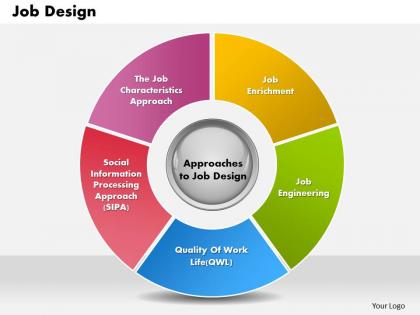
Job design or job plan is one of the fundamental tasks that is required to be completed by human resource management. PPT ideas are an important part of this process. All technical and functional requirements of any job are met if this step is incorporated in analysis. Human behavior, attitudes and characteristics are all taken into considered while carrying out this procedure. Are you a businessman or a human resources official who is interested in employing a powerful tool for presentation purposes? Do you feel that there is scarcity of one such PPT slide online? You have certainly come to the right place. Our website is a one stop solution for all your professional needs. Click, download and employ our job design PowerPoint slide background image. This example of PPT can bring a refreshing change among the target audience. You can be sure of a functional, aesthetic and apt PPT background once start using it in business meetings and meetups. Impress your clientele with our Job Design powerpoint presentation slide template. They will definitely click with your customers.
People who downloaded this PowerPoint presentation also viewed the following :
Job design powerpoint presentation slide template with all 6 slides:
Convey your ideas with elan. Use our Job Design powerpoint presentation slide template as the medium.


FAQs for Job design powerpoint
Key elements of effective job design include task variety, autonomy, skill utilization, feedback mechanisms, and clear role definition. These components enhance employee engagement by providing meaningful work, decision-making authority, and growth opportunities, while streamlining organizational efficiency through improved productivity, reduced turnover, and better alignment between individual capabilities and business objectives.
Job design impacts employee motivation and productivity by creating clear role expectations, providing skill variety, and establishing meaningful work connections that enhance engagement and performance. Through strategic job structuring, organizations streamline workflows, reduce burnout, and increase job satisfaction, with many companies finding that well-designed positions deliver higher retention rates, improved efficiency, and ultimately stronger competitive advantage in talent management.
Employee feedback plays a crucial role in job design by identifying task inefficiencies, role clarity issues, workload imbalances, skill mismatches, and collaboration barriers that impact performance. Through structured surveys, focus groups, and performance reviews, organizations can redesign roles that enhance job satisfaction, reduce turnover, and improve productivity, with many companies finding that employee-informed job design delivers significantly better engagement and operational outcomes.
Job design reduces turnover by enhancing employee satisfaction through meaningful work, appropriate skill utilization, clear role clarity, and balanced workload distribution. Organizations implementing strategic job redesign initiatives often see significant retention improvements, with companies in sectors like healthcare, retail, and manufacturing finding that well-structured roles increase engagement and career development opportunities, ultimately delivering lower recruitment costs and improved organizational stability.
Job enlargement increases task quantity horizontally, job enrichment adds responsibility and autonomy vertically, and job rotation systematically moves employees across different positions. These approaches enhance employee engagement by expanding scope, deepening authority, or broadening experience respectively, with many organizations finding that strategic combinations of these methods significantly improve retention, skill development, and operational flexibility while reducing monotony.
Technology revolutionizes modern job design through AI-powered analytics, automation tools, remote collaboration platforms, and data-driven performance measurement systems. These technologies streamline workflow optimization, enhance role flexibility, and enable real-time job crafting, with organizations across manufacturing, healthcare, and financial services finding that strategic technology integration ultimately delivers improved employee engagement and operational efficiency.
Psychological theories underpinning effective job design include Herzberg's Two-Factor Theory, Hackman and Oldham's Job Characteristics Model, Self-Determination Theory, and Social Cognitive Theory. These frameworks enhance employee motivation by incorporating autonomy, skill variety, task significance, and feedback mechanisms, with many organizations finding that strategic job redesign ultimately delivers improved performance, reduced turnover, and enhanced workplace satisfaction.
Job design contributes to positive workplace culture by creating meaningful roles, promoting employee autonomy, and establishing clear expectations that align with organizational values. Well-structured positions enhance employee engagement, facilitate collaboration, and reduce workplace stress, with companies in sectors like healthcare and technology finding that thoughtful job design ultimately delivers higher retention rates and stronger team cohesion.
Job design enhances team collaboration and communication by creating interdependent roles, establishing shared objectives, and implementing cross-functional workflows that require regular interaction. Through strategic role structuring, organizations streamline information sharing, minimize silos, and foster collaborative problem-solving, with many companies finding that well-designed positions ultimately deliver improved project outcomes and stronger team cohesion.
Job design challenges in remote or hybrid environments include maintaining role clarity, ensuring effective collaboration, managing performance visibility, balancing autonomy with accountability, and creating meaningful connections across distributed teams. These complexities require organizations to restructure communication protocols, redefine productivity metrics, and establish new boundaries, with many companies finding that strategic job redesign ultimately enhances flexibility while maintaining operational effectiveness.
Job design can be tailored through flexible work arrangements, personalized role structures, adaptive scheduling options, skills-based task allocation, and individualized development pathways. These approaches enable organizations to accommodate varying work styles, career stages, and personal circumstances across their workforce, while maintaining productivity standards and ultimately delivering enhanced employee satisfaction, reduced turnover, and stronger competitive advantage in talent retention.
Job design effectiveness can be evaluated through employee satisfaction surveys, productivity metrics, turnover rates, absenteeism levels, and performance quality indicators. These measurements help organizations assess whether role structures enhance operational efficiency, reduce recruitment costs, and improve workplace engagement, with many companies finding that well-designed positions ultimately deliver higher retention and competitive advantage.
Legal and regulatory considerations significantly impact job design by establishing safety standards, accessibility requirements, compensation frameworks, and compliance protocols that organizations must integrate into role structures. These regulations, particularly in sectors like healthcare, finance, and manufacturing, ensure workplace safety and fair employment practices while driving companies to create more inclusive, compliant positions that ultimately enhance operational transparency and reduce legal risks.
Companies like Google with flexible work arrangements and cross-functional teams, Zappos through holacracy and self-managed teams, and Toyota via lean manufacturing and employee empowerment demonstrate successful innovative job design. These organizations streamline operations by enhancing employee autonomy, reducing hierarchical constraints, and fostering collaborative decision-making, ultimately delivering improved productivity and workplace satisfaction.
Companies can leverage job design to enhance employee well-being by implementing flexible work arrangements, autonomous decision-making opportunities, varied task assignments, clear role boundaries, and supportive feedback systems. These strategic approaches streamline daily operations while reducing burnout, with many organizations finding that redesigned positions ultimately deliver improved productivity, higher retention rates, and stronger competitive advantage in talent acquisition.
-
Graphics are very appealing to eyes.
-
The content is very helpful from business point of view.