


Kaizen continuous improvement model successes ppt powerpoint presentation ideas portrait




Try Before you Buy Download Free Sample Product
 Impress Your
 Audience
 100%
100% Editable
 Save Hours
 of Time


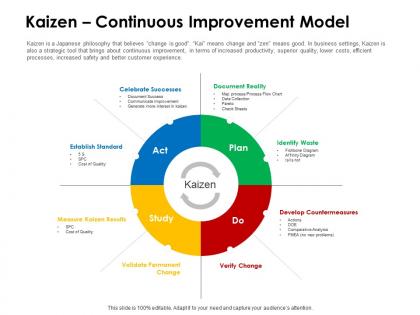
Kaizen is a Japanese philosophy that believes change is good. Kai means change and zen means good. In business settings, Kaizen is also a strategic tool that brings about continuous improvement, in terms of increased productivity, superior quality, lower costs, efficient processes, increased safety and better customer experience.
People who downloaded this PowerPoint presentation also viewed the following :
Kaizen continuous improvement model successes ppt powerpoint presentation ideas portrait with all 2 slides:
Give your audience a fulfilling experience. They will find our Kaizen Continuous Improvement Model Successes Ppt Powerpoint Presentation Ideas Portrait elevating.
FAQs for Kaizen continuous improvement model successes ppt powerpoint
So Kaizen is basically about tiny improvements instead of massive changes. Get your whole team involved - seriously, the person doing the actual work usually has the best ideas. I'd start with quick weekly check-ins where people can bitch about what's slowing them down. Pick one annoying process that everyone hates and fix that first. Don't make it some big corporate thing though. Just build the improvement mindset into your normal routine. Small tweaks add up way faster than you'd think, and people actually stick with it since it's not overwhelming.
So Kaizen is basically about getting everyone hooked on tiny daily improvements instead of waiting for some massive company restructuring (which never happens anyway). Your whole team starts hunting for those 1% better moments every day. Pretty addictive once it clicks. The magic happens when you let everyone suggest fixes, not just the bosses - suddenly people actually care because it's their idea. I'd start small though. Have your team pick one annoying thing they deal with constantly and tackle it together. That early win creates momentum that just snowballs naturally.
Honestly, gemba walks are a game changer - just walk around with your team and watch how work actually gets done instead of assuming you know. Daily 15-minute huddles work great for spotting little problems before they blow up. Try the 5 Whys method when something goes wrong, and put up a simple board where people can throw their improvement ideas. The trick is making everyone feel like they're part of it, not like management's forcing another dumb program on them. I'd start small though - short focused sessions build way more momentum than trying to do everything at once.
Honestly, kaizen works because people actually get to own their improvements instead of just following orders from management. Your team starts spotting problems and fixing them directly - which feels pretty damn good. Everyone becomes a problem-solver instead of just going through motions. Those small wins add up fast and people see their ideas actually matter. Teams bond when they're collaborating on solutions too. I'd start simple - maybe ask everyone for one small improvement idea each week? Then actually use the good ones. The momentum builds itself once people realize you're serious about listening.
Dude, leadership makes or breaks Kaizen - seriously. If your bosses aren't walking the walk, forget it. They need to jump into improvement stuff themselves, not just tell everyone else to do it. The absolute worst is when executives talk a big game about continuous improvement then crush people's ideas or freak out over mistakes. Your leaders also gotta clear roadblocks when teams hit problems they can't handle solo. Honestly, I've seen so many companies fail at this because management gives zero genuine support. People need to feel safe suggesting changes without getting their heads bitten off. Make sure leadership's actually committed and visible, not just checking boxes.
Just track the basics first - cycle times, defect rates, how much each person's getting done, waste percentages. Get your baseline numbers before you change anything or you'll have no clue if it's working. Honestly, I've watched teams drown themselves measuring like 20 different things. Pick maybe 3-5 that actually matter for what you're trying to fix. Customer satisfaction and how your people feel about work can show you the bigger picture too. Start with whatever's easiest to measure, then add more stuff later once everyone's bought in.
So I'd definitely start with 5S - it's super straightforward and gets people hooked on the whole improvement thing. PDCA cycles are clutch for structuring everything (Plan-Do-Check-Act if you haven't seen it). Value stream mapping helps spot waste, and honestly Six Sigma pairs ridiculously well with Kaizen. Root cause analysis when stuff breaks, obviously. Visual management boards keep everyone on track. Oh and gemba walks - that's where you actually walk around and see what's happening instead of just sitting in meetings talking about it. Way more effective than you'd think.
Honestly, small businesses crush it with Kaizen compared to big companies. You don't need three meetings just to change how you answer the phone, you know? Pick something tiny - like cutting 5% of your inventory waste or making customer onboarding smoother. The magic happens with daily tweaks, not some perfect overhaul. Big corporations are drowning in approvals while you can just... do stuff. Grab your team this week and brainstorm one process that's bugging everyone. That's literally it. Your size is actually your biggest advantage here since changes happen fast.
Honestly, the biggest pain is just getting people on board - nobody likes change even when it helps them. Your managers have to actually care too, not just pretend they're into it. Start with small stuff that shows quick results. Train everyone properly so they get why you're doing this, not just what to do. I'd probably celebrate wins pretty loudly and actually give people time to work on improvements. Oh, and make sure people can suggest ideas without feeling like idiots or getting blamed for pointing out problems. That psychological safety thing is huge - without it, you're basically screwed from the start.
So Kaizen is basically about getting your team to constantly hunt for tiny inefficiencies instead of waiting for some massive company-wide overhaul. People spot these little "aha!" moments where they can cut stupid steps or streamline something. Honestly gets pretty addictive once everyone's doing it. Manufacturing folks trim material waste, office people kill redundant paperwork - whatever. The trick is letting anyone suggest fixes without jumping through bureaucratic hoops (which defeats the whole point, right?). Just have your team find one daily waste to start. Those small changes stack up way faster than you'd think.
Toyota's the classic case - they literally created modern Kaizen for their factories. Canon used it too and cut their product development time like crazy. Even Boeing jumped on board, which honestly surprised me at first since it's so associated with Japanese companies. Amazon does it constantly now for their warehouses and shipping stuff. The cool thing? It works everywhere - manufacturing, tech, logistics, whatever. My advice would be start tiny with your team. Pick one small process and improve that first. Don't try to overhaul everything at once or you'll burn out.
So Kaizen is all about tiny daily improvements - everyone gets involved and it feels way more democratic. Six Sigma? That's the heavy-duty stuff with black belts doing statistical analysis to fix major problems. Honestly, Six Sigma sounds intimidating as hell to most people. Kaizen gives you quick wins because it's just small tweaks that build momentum. Lean falls somewhere in the middle, focusing on cutting waste. If you want buy-in from your team, I'd start with Kaizen. People don't freak out about making little changes, and you'll actually see progress faster.
Start with mapping out your current process - there's software for this that'll show you exactly where things get stuck. Set up digital suggestion boxes so people can throw ideas at you anytime instead of waiting for meetings. Honestly, automation is where you'll see the fastest wins - just tackle those mind-numbing repetitive tasks first. Use data analytics to actually measure if your changes work instead of just hoping they do. Oh, and don't go crazy - pick one process, digitize it, get feedback, then tweak from there.
Honestly, your frontline workers are the real MVPs here - they're doing the actual work every day and catching stuff management totally misses. Kaizen only works if people feel comfortable speaking up without getting shot down. I'd start by just asking your team what bugs them most about their daily routine. Those little annoyances? Pure gold for improvements. The whole point is getting everyone involved, even with tiny suggestions. Create that safe space where ideas flow freely. Your workers know where the real problems are way better than anyone sitting in an office.
Honestly, kaizen is perfect for places like hospitals and schools where you're always dealing with the same processes over and over. Hospitals can tweak patient handoffs, cut down wait times, or fix their medication tracking - basically anything that happens daily. Schools? They can improve classroom stuff or how they handle student assessments. The trick is getting everyone to spot problems and try quick fixes instead of waiting around for some massive change. I'd say just pick whatever process annoys your team most and brainstorm small tweaks you could test this week. Works way better than you'd think.
No Reviews