


Key accomplishments powerpoint presentation slides





Try Before you Buy Download Free Sample Product
 Impress Your
 Audience
 100%
100% Editable
 Save Hours
 of Time


Use these key accomplishments PowerPoint presentation slides to boost your business presentation in your firm. It includes various PowerPoint presentation templates to help in studying progressive wise experiments. The key accomplishments can be expressed in an innovative way with the help of these presentation slides. There are various shape templates in this key accomplishments PowerPoint presentation to choose from. The key winners PPT can also be used as an opportunity to express the success of a particular project or assignment in the form of a complete PowerPoint deck. The key points of an achievement can be displayed step by step through this slideshow. This key achievements PPT can be used by planners to plan way ahead of time to design a roadmap for success for a company. Also, firms can use this PPT to monitor their progress and implement their plan of action accordingly. This PowerPoint presentation gives a very professional look to your business PPT. Point the needle with our Key Accomplishments Powerpoint Presentation Slides. Direct your thoughts to the path they need to take.
People who downloaded this PowerPoint presentation also viewed the following :
Content of this Powerpoint Presentation
Slide 1: This slide introduces Key Accomplishments. State Your Company Name and begin.
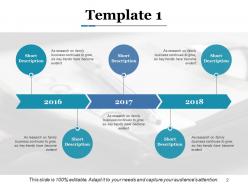
Slide 2: This slide displays Template 1 for your key accomplishments in a timeline form. Describe your accomplishments in related text boxes.
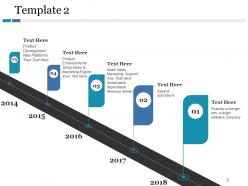
Slide 3: This slide shows another Template describing five year accomplishments.
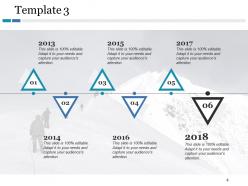
Slide 4: This slide presents Template 3 for your key accomplishments.
Slide 5: This slide showcases Template 4 in a timeline form with related text boxes to go with.
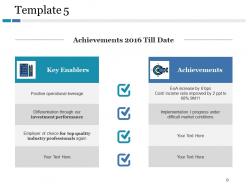
Slide 6: This slide represents Template 5 describing Key enablers and achievements.
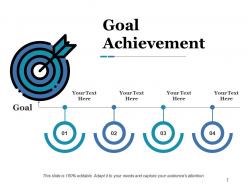
Slide 7: This slide displays Goal achievements with telated imagery and text.
Slide 8: This slide shows Key Accomplishments Icons.
Slide 9: This slide is titled Additional slides for moving forward. You may change the content as per need.
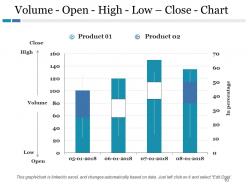
Slide 10: This slide displays Volume - Open - High - Low – Close - Chart.
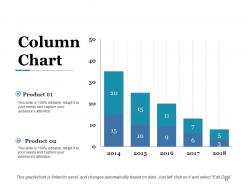
Slide 11: This slide shows a Column Chart for two product comparison.
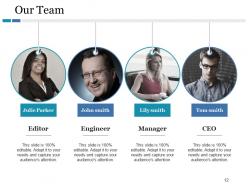
Slide 12: This is Our team slide with names and designation.
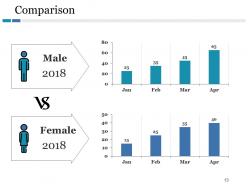
Slide 13: This is a Comparison slide between male vs female accomplishments in a bar graph form.
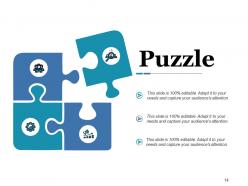
Slide 14: This slide shows a Puzzle with text boxes. You may add or edit text as per requirement.
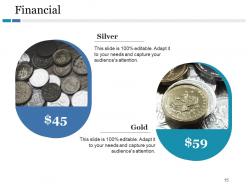
Slide 15: This slide is titled as Financials. Show finance related stuff here.
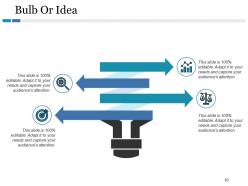
Slide 16: This is a Bulb or Idea slide to state a new idea or highlight specifications/information etc.
Slide 17: This is a Thank You slide with Address# street number, city, state, Contact Number, Email Address.
Key accomplishments powerpoint presentation slides with all 17 slides:
Cut the risks with our Key Accomplishments Powerpoint Presentation Slides. Your thoughts will have a better chance to impress.


FAQs for Key accomplishments
Honestly, COVID was the biggest shake-up - literally forced everyone online overnight. LMS platforms like Canvas became essential pretty much everywhere. AI personalizing learning paths is huge now too, adapting content for each student automatically. Mobile learning exploded (which makes sense, everyone's glued to their phones anyway). VR and AR are finally making weird abstract concepts actually visual, especially for science stuff. If you want to stay relevant, focus on AI integration and mobile-first approaches - that's where all the innovation's happening. Those two areas are driving most of the big decisions right now.
Dude, sustainability wins have literally made companies flip their whole playbook. Carbon neutrality, waste reduction, ethical sourcing - that stuff isn't just PR fluff anymore. Companies are building entire strategies around it because early adopters proved there's actual money in it. Crazy how fast things shifted, right? Investors now care about your environmental metrics as much as your revenue numbers. Most companies track sustainability KPIs alongside profit now. Honestly, if you're not measuring your environmental impact yet, you're already behind. It's become basic credibility stuff at this point.
Honestly, AI is completely changing how healthcare works. Diagnostic accuracy has gotten insane - it beats human doctors in radiology and pathology pretty consistently now. The coolest part? Machine learning predicts when patients are about to crash hours before doctors would normally catch it. Drug discovery used to take like 20 years, but AI's shrinking that to just a few years. Oh, and personalized treatment is huge - it analyzes your genes, lifestyle, everything to create treatments just for you. The real shift though is preventive care becoming predictive. We're talking about catching diseases before you even feel sick.
Okay so Facebook basically changed everything in 2007 with targeted ads - suddenly you could actually reach the right people. Instagram proved visuals are king. Then TikTok just came out of nowhere and dominated short videos (seriously, nobody saw that coming). LinkedIn made B2B advertising actually work, which was huge for professional stuff. Twitter showed you could build brands through real conversations instead of just talking at people. Bottom line? Each platform works differently, so you can't just copy-paste the same strategy everywhere. That's like... marketing 101 but people still mess it up constantly.
Honestly, the game changer was solar and wind getting cheaper than fossil fuels - that flipped the whole conversation from "should we do this?" to "how fast can we go?" Germany's feed-in tariffs proved it could work economically, then China basically flooded the market with cheap solar panels (kinda took over the whole supply chain but whatever). Tesla's battery stuff made storage actually viable too. Paris Agreement helped but the economics drove everything. If you want to track real policy changes, look at how countries use those cost numbers in their energy planning - that's where you'll see actual movement happening.
Dude, e-commerce has totally changed how people shop. One-click buying made impulse purchases way too easy - I'm definitely guilty of this. Now customers expect everything personalized, plus mobile shopping means they're buying stuff literally everywhere (grocery store lines, commutes, you name it). Same-day delivery killed patience completely. People went from "I can wait a week" to "why isn't this here yet?" in like five years. Social media turned into shopping platforms too. Bottom line? Your customers want instant gratification and personalized experiences across everything now. You've gotta design knowing they expect way more than they used to.
Room-scale tracking changed everything - you can actually walk around now instead of standing like a statue. Quest 2's resolution bump was a game changer too, early VR made reading feel like looking through fog. Hand tracking lets you ditch controllers completely, which feels way more natural. Honestly, haptic feedback is probably underrated - you don't realize how much you miss physical sensations until they're back. Eye tracking's getting pretty solid now too. Oh, and if you're building VR stuff, just make things work like real life. People get frustrated when virtual objects don't behave how they expect.
Personal wins outside work totally carry over to your job performance. Like, when you crush something hard - running a marathon, learning Spanish, whatever - you're building discipline and problem-solving skills without even realizing it. I swear the confidence boost alone is worth it. You'll start speaking up more in meetings and actually volunteering for bigger projects. Plus proving to yourself you can handle tough goals makes work stress feel way less overwhelming. Honestly, just start connecting the dots between your personal accomplishments and how they're making you better professionally.
So basically GDPR dropped in 2017 and totally changed everything - any company dealing with EU users had to scramble and add those cookie pop-ups we all hate now. Then California jumped in with CCPA in 2020. But honestly? Apple's iOS update might've been the biggest blow to Facebook's whole business model since it made apps actually ask before stalking you around the internet. The good news is you've got way more control now. Companies can't just grab your data without telling you, and you can actually opt out of most tracking stuff. Still annoying to click through all those privacy settings though.
So global health stuff has really changed the game over the past couple decades. Those massive vaccination drives reached places that were basically cut off from healthcare. Community health worker programs trained millions of people locally - that was huge. Digital platforms let patients connect with doctors through smartphones, which is pretty wild if you think about it. The medication access programs might be the most impressive though - HIV drugs and malaria treatments became way more affordable in poor countries. They also built actual health infrastructure from scratch. Oh, and if you're getting into this field? Partner with local organizations. That's been the key to making things stick long-term.
Honestly, Agile and Scrum changed everything for project teams. Daily standups mean people actually talk instead of disappearing into their own bubbles. Kanban boards are clutch too - seeing what's stuck or moving makes such a difference. I know it sounds basic, but visibility really matters. Teams went from these weird rigid hierarchies to everyone collaborating across departments. Your developers and designers start working together instead of against each other. Maybe try one new thing this quarter? Even something small will show results pretty fast. It's crazy how much smoother projects run when communication isn't terrible.
Digital payments and mobile banking are huge right now. Apps like Venmo made everything so smooth compared to old-school card processing. Open banking APIs let you see all your accounts in one dashboard, which is pretty convenient. Robo-advisors democratized investing too - you don't need to be rich anymore to get decent portfolio management. Blockchain's still figuring itself out honestly, but DeFi is creating some interesting lending models. Oh and AI-powered services are everywhere now. If you're looking at your company's setup, I'd start by finding which manual stuff you can automate first.
Dude, remote work tech has totally changed the game for businesses. You can hire people from anywhere now instead of being stuck with whoever's local. Cloud platforms and video calls make it super easy to manage teams spread across different cities (or countries, honestly). Most companies I know are way more productive than when everyone was crammed in an office together. Plus you save money on rent and employees are actually happy with the flexibility. The crazy thing is we proved you don't need to be in the same room to get stuff done. You should definitely look at your current setup and see what else you can optimize.
Look at Copenhagen - they went all-in on bike lanes and now everyone cycles everywhere. Singapore's housing thing is pretty genius too, mixing income levels so you don't get those awful segregated neighborhoods. Barcelona did those "superblocks" where they basically told cars to buzz off and gave streets back to people. Game changer. Portland drew a line around the city and said "no sprawl beyond this point" which kept their green spaces intact. Oh, and they packed density inside smartly. The cities that nail it don't just focus on one thing - they balance transport, housing, and public spaces all at once.
Dude, so basically when companies nail their cybersecurity stuff - like stopping big attacks or getting those compliance certs - it builds crazy trust with everyone. Customers feel safer. Investors get more confident. Partners actually want to work with you because they know you're not gonna be the weak link that gets breached. Each win just stacks up over time, ya know? It's weird how much perception matters in business, but security victories literally become competitive advantages. Oh and definitely make sure you're talking about these wins publicly - most companies are terrible at this part but it's huge for building that reputation.
-
Use of icon with content is very relateable, informative and appealing.
-
Very unique and reliable designs.