


Auto Repair Shop Business Plan Powerpoint Presentation Slides





Try Before you Buy Download Free Sample Product
 Impress Your
 Audience
 100%
100% Editable
 Save Hours
 of Time


Check out our professionally designed Auto Repair Shop Business Plan PPT, which includes detailed information on auto repair industry statistics, growth drivers, market trends, critical industry challenges, and lucrative opportunities. Moreover, the Vehicle Maintenance template focuses on the company overview, which includes vision, mission, goals, start up expenses, essential products offered, and success factors. Also, the Vehicle Repair Services template describes the customer analysis for the auto repair industry, buyers persona, and market sizing. Additionally, Service Station PowerPoint covers the competitor analysis, SWOT analysis, Porters framework, and detailed marketing plan. Lastly, the Auto Body Paint Service PPT also covers a financial summary section, including a revenue model, economic impact, profit and loss statement, break even analysis, etc. Get access to this powerful template now.
People who downloaded this PowerPoint presentation also viewed the following :
Content of this Powerpoint Presentation
Slide 1: The slide represents Auto Repair Shop Business Plan.
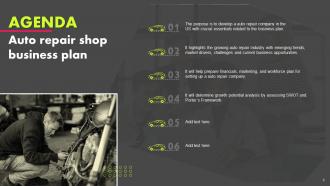
Slide 2: This is an Agenda slide. State your agendas here.
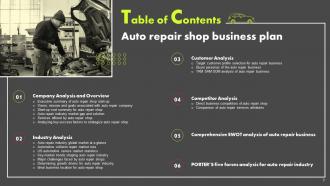
Slide 3: The slide displays Table of Contents for presentation.
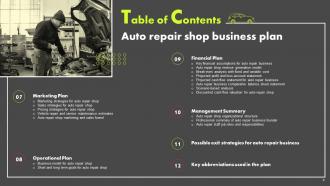
Slide 4: The slide continues Table of Contents.
Slide 5: The slide renders Table of Contents further.
Slide 6: This slide provides a glimpse of the auto repair company including a quick pitch that describes the current market status of the industry.
Slide 7: This slide covers the auto repair company vision, mission, and goals.
Slide 8: This slide provides information about start-up expenditures that incur during the process of establishing a auto repair company.
Slide 9: This slide covers the problem associated with the auto repair industry.
Slide 10: This slide highlights the services offered by auto repair shop.
Slide 11: This slide covers the essential points to be considered while offering auto repair services in the market.
Slide 12: The slide displays another title of Contents.
Slide 13: The purpose of this slide is to highlight the market size of the global auto repair shop industry.
Slide 14: The purpose of this slide is to highlight the automotive collision repair market size.
Slide 15: This slide highlights the United states automotive service market statistics.
Slide 16: This slide highlights the key market trends that have the potential to change the current market scenario.
Slide 17: This slide continues the key market trends that have the potential to change the current market scenario.
Slide 18: This slide portrays details about various challenges faced by the auto repair industry.
Slide 19: This slide continues details about various challenges faced by the auto repair industry.
Slide 20: This slide caters to details about various growth drivers for auto repair industry.
Slide 21: This slide portrays an ideal business location for a auto repair business.
Slide 22: The slide depicts title of Contents further.
Slide 23: This slide covers an assessment of how the company’s service will fit into a particular market.
Slide 24: This slide provides a glimpse of how to better understand the target audience, to fine-tune marketing campaigns, and increase e-commerce personalization.
Slide 25: The purpose of this slide is to depict the market potential of auto repair shop industry in terms of TAM, SAM, and SOM.
Slide 26: The slide renders title of Contents which is to be discussed further.
Slide 27: The slide is to provide a glimpse of major participants and key competitors of the industry.
Slide 28: The slide is to provide a glimpse of major participants and key competitors of the industry.
Slide 29: The slide displays Title of Contents further.
Slide 30: The slide is to identify the industry' strengths, weaknesses, opportunities, and threats related to the business.
Slide 31: The slide again renders title of Contents further.
Slide 32: The slide highlights porter’s five forces model and its implications in the US auto repair industry.
Slide 33: The slide shows title of Contents further.
Slide 34: This slide highlights the marketing strategies for auto repair shop.
Slide 35: This slide renders the top pricing strategies for auto repair shop.
Slide 36: This slide again illustrates the top pricing strategies for auto repair shop.
Slide 37: The slide shows car repair and service maintenance estimates which include standard service pricing, brake service, tire service and other services.
Slide 38: This slide highlights customer journey mapping to track users' actions and key touch points across levels.
Slide 39: The slide title of Contents further.
Slide 40: This slide highlights the business model for auto repair shop.
Slide 41: This slide renders the short-term and long-term milestones.
Slide 42: The slide displays title of Contents further.
Slide 43: This slide provides a glimpse of important financial assumptions in terms of income, expense, and balance sheet.
Slide 44: The slide shows the effective revenue model of the auto repair industry, which displays the cost incurred and the various sources of income.
Slide 45: The slides highlight the break-even analysis of the firm.
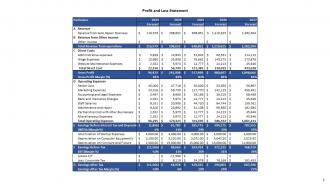
Slide 46: The slides provide a glimpse of the projected profit and loss statement.
Slide 47: The slides continues a glimpse of the projected profit and loss statement.
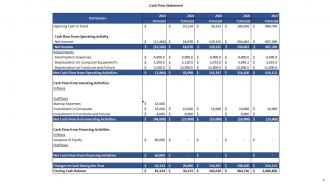
Slide 48: The slides highlight the company's cash flow statement to provide a detailed picture of what happened to a business's cash.
Slide 49: The slides continues the company's cash flow statement to provide a detailed picture of what happened to a business's cash.
Slide 50: The slides cover the snapshot of the company's financial position at a specific time by showing the details of the assets of the company.
Slide 51: The slides continues the snapshot of the company's financial position at a specific time by showing the details of the assets of the company.
Slide 52: The slide is to examine the effects of potential future events on the company’s performance.
Slide 53: The slide continues to examine the effects of potential future events on the company’s performance.
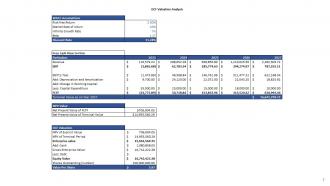
Slide 54: The purpose of this slide is to calculate the amount of money an investor would get from an investment after adjusting for the time value of money.
Slide 55: The slide renders title of Contents further.
Slide 56: The slide represents the organizational hierarchy in the company.
Slide 57: This slide highlights the founder’s biggest professional achievements and most valuable skills.
Slide 58: This slide covers the job roles and responsibilities of auto repair staff to determine what kind of job has to be done.
Slide 59: This slide continues the job roles and responsibilities of auto repair staff to determine what kind of job has to be done.
Slide 60: The slide covers title of Contents further.
Slide 61: This slide represents exit strategies such as sell-offs, IPOs, mergers, and acquisitions.
Slide 62: The slide depicts title of Contents which is to be discussed further.
Slide 63: The purpose of this slide is to highlight the shorter version of existing words to save time and take up less space.
Slide 64: This slide shows all the icons included in the presentation.
Slide 65: This slide is titled as Additional Slides for moving forward.
Slide 66: This slide contains Puzzle with related icons and text.
Slide 67: This is Our Target slide. State your targets here.
Slide 68: This is a Financial slide. Show your finance related stuff here.
Slide 69: This is an Idea Generation slide to state a new idea or highlight information, specifications etc.
Slide 70: This is a Quotes slide to convey message, beliefs etc.
Slide 71: This is a Thank You slide with address, contact numbers and email address.
Auto Repair Shop Business Plan Powerpoint Presentation Slides with all 79 slides:
Use our Auto Repair Shop Business Plan Powerpoint Presentation Slides to effectively help you save your valuable time. They are readymade to fit into any presentation structure.









FAQs for Auto Repair Shop Business Plan
Okay so definitely nail down your startup costs and revenue projections first - that's what they'll flip to immediately. Target market research is huge, plus you need solid info on location and what services you're doing beyond basic repairs. Honestly, the competition section trips up so many people because they just wing it instead of actually researching. Oh and don't lowball your equipment costs, that always comes back to bite you. Staffing plans, marketing strategy, break-even analysis - all that matters too. Just be realistic with numbers because lenders spot BS projections instantly.
Look at your local demographics first - income levels, how many people own cars, that kind of stuff. Check out other shops too and see what they're charging, what services they do. Honestly, most people skip the location thing but foot traffic makes a huge difference. Are you gonna focus on budget fixes or go after the luxury car crowd? Maybe specialize in hybrids or something. The data helps you spot gaps in the market and figure out realistic revenue numbers. Oh, and it shows you what actually makes you different from the competition down the street.
Hey! So for your auto shop plan, definitely map out 3 years of financials. Startup costs, monthly expenses, realistic revenue forecasts - the whole deal. Equipment financing is huge since lifts and diagnostic stuff will drain your budget quick. Don't forget seasonal spikes - everyone needs repairs before winter hits and summer road trips. Include break-even analysis and P&L projections too. Oh, and factor in parts inventory costs plus whatever labor rates are normal in your area. Honestly, lowball your revenue estimates at first. Way better to crush conservative numbers than scramble when you're overly optimistic.
Start by checking out your area's demographics - household income, how many people own cars, average vehicle age. Drive around and see what other shops are doing (honestly kinda fun to be nosy about it). DMV records show registered vehicles and ages if you can access that data. I'd focus on a specific group instead of trying to be everything to everyone - maybe families with older cars on tight budgets, or luxury owners, or local fleet businesses. Survey people about where they currently get repairs done and what sucks about it. Getting laser-focused on one type of customer instead of casting a wide net is what actually builds loyalty. Makes your marketing way easier too.
Dude, location will literally make or break you. High visibility from main roads is huge - customers need to actually find you. My buddy learned this the hard way when his shop got buried in some random strip mall. Nobody could see it! Drive around potential spots at different times to check real traffic patterns, not just what looks good on paper. Make sure people can get in and out without it being a nightmare. Oh, and definitely scope out the competition first - you don't want to set up shop right next to three other mechanics unless there's seriously enough business to go around.
Dude, reviews are everything - I can't stress this enough. Get on Google My Business first, then basically beg your happy customers to leave reviews because people don't trust repair shops by default. Local SEO stuff matters too so you pop up for "auto repair near me" searches. Hook up with other local businesses for referrals, throw some first-time discounts around. Social media's actually decent for this - post before/after shots of jobs you're proud of. Maybe some quick maintenance tips. Loyalty programs work for repeat customers too. Really though, it's all about proving you're not gonna rip people off before they even show up.
Honestly, I'd pick what makes you different from every other shop on the block. Mobile repairs? Specializing in Hondas or whatever? Upfront pricing so people aren't getting hit with surprise bills? Customer experience matters way more than you'd think. Same-day service is gold. Clean waiting room with actual good coffee - I know it sounds dumb but trust me, people remember that stuff. Digital inspection reports with photos are pretty slick too. Don't spread yourself too thin though. Pick like 2-3 things you can nail consistently instead of being mediocre at everything.
Honestly, cash flow will kill you - parts cost a fortune upfront. Finding good techs is brutal too, everyone wants them. Supply chain issues constantly mess up your schedule, and your equipment will break down at the absolute worst moments. Job estimates are tricky since you never know what you'll find once you start digging in. Customers hate surprises, even necessary ones. Insurance stuff is always hanging over your head given how dangerous this work can be. Start building solid relationships with suppliers now. Keep cash reserves for when your own equipment craps out - trust me on this one.
Call around to 5-10 shops nearby and see what they charge for oil changes, brake jobs, basic stuff like that. That's your starting point. Then calculate your real costs - parts, labor, keeping the lights on - and mark up labor maybe 20-30%, parts around 40-50%. Here's the thing though: don't be the cheapest guy on the block. Customers think cheap means sketchy when it comes to their car. I'd rather be the shop that's upfront about pricing and does solid work. You can always adjust later, but it's way harder to raise prices than lower them.
So you'll need a general business license plus those specialized auto repair permits - they're different everywhere though, super annoying. Environmental stuff is probably the trickiest part since you're dealing with oil and chemicals. Liability insurance is obvious but don't skip the OSHA safety requirements for your workers. Also check if there's any weird zoning rules where you want to set up shop. Honestly, I'd just bite the bullet and talk to a business lawyer early on. Way better than finding out later you missed something important that could've been avoided.
Dude, get yourself some shop management software - it'll track repairs and send customer updates automatically. No more drowning in paperwork. Digital inspections with photos are huge for building trust, plus online scheduling means people can book whenever. Payment apps speed things up too. The diagnostic tools that sync directly with your system? Game changer - everything gets logged without you lifting a finger. Honestly, I'd probably start with just one thing though. Maybe the management software since that touches everything else. You don't want to go crazy and overwhelm yourself right off the bat.
Start with certified mechanics - ASE guys who can actually diagnose stuff, not just parts swappers. You'll want a service advisor too since they deal with customers and translate all the car gibberish. Office manager's key for scheduling and invoicing chaos. Finding decent mechanics is brutal right now though - everyone's fighting over the same talent pool. I'd go with 2-3 solid people first. Honestly, hire for attitude over everything else. You can teach skills but can't fix lazy. Oh, and reliable is huge - customers hate when their car sits for days waiting on techs.
So first thing - figure out your main customer types. Busy professionals wanting quick fixes, families watching their budget, car enthusiasts who expect the works. Then build your services around that: express options for simple jobs, maybe payment plans for big repairs, premium packages with loaners. Communication's huge too - some people want constant texts, others prefer calls. Actually, you should train your team to spot which type they're dealing with right away. Ask about timeline and budget upfront instead of guessing. Honestly, most shops mess this up by treating everyone the same.
First thing - get tight with parts suppliers. NAPA, AutoZone for the basics, then find specialized ones for whatever brands you'll work on most. Their reps are actually gold once they know you, trust me on that. Towing companies are huge for referrals, same with insurance adjusters and local dealers when they're swamped. Oh and tire suppliers if you're going that route. Payment terms matter way more than you think - everyone says 30 days but seriously push for 45 or 60 if possible. Makes cash flow so much easier.
Look, investors want to see real numbers - monthly growth around 5-10%, plans for more service bays, that kind of thing. Honestly, I'd focus hard on electric/hybrid repair since that's where everything's going anyway. Map out your staffing timeline and when you'll buy new equipment. Seasonal stuff matters too - don't forget winter's usually slower. Build a solid 3-year plan showing specific revenue targets and maybe even a second location down the road. Digital marketing's huge for expanding your customer base. Basically, prove you know your local market and aren't just throwing darts at a board.
-
Their templates are super easy to edit and use even for the one like me who is not familiar with PowerPoint. Great customer support.
-
Thank you for offering such helpful pre-designed templates. They are really beneficial to me in my job.