


Computer Shop Business Plan Powerpoint Presentation Slides





Try Before you Buy Download Free Sample Product
 Impress Your
 Audience
 100%
100% Editable
 Save Hours
 of Time


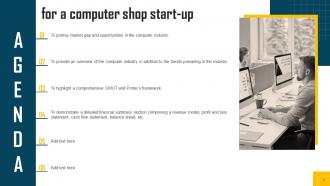
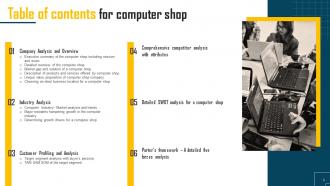
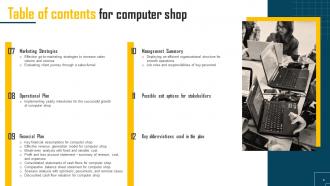
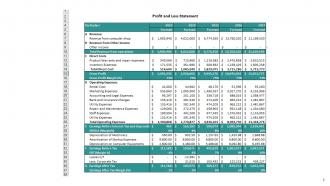
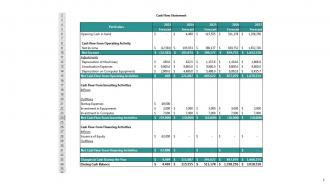
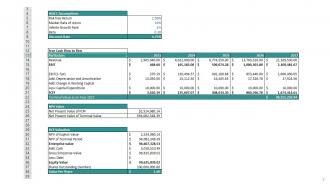
Download our professionally crafted presentation for a comprehensive computer shop business plan that covers all essential elements. This well structured presentation includes an executive summary and a company summary section encompassing crucial details such as entity information, mission, vision, goals, and objectives. Additionally, it provides an in depth industry analysis segment, presenting factual information and trends pertaining to the computer and related industries. The presentation also focuses on customer profiling, competitor analysis, SWOT analysis, Porters framework, and a comprehensive marketing plan that outlines pricing, promotional strategies, sales strategies, and the sales funnel. Furthermore, it includes a detailed financial plan featuring a Profit and Loss statement, revenue model, cash flow analysis, balance sheet statement, DCF valuation, and more. To cater to stakeholders interests, the presentation also discusses potential exit options. Take advantage of this opportunity and download the computer shop business plan PowerPoint presentation now.
People who downloaded this PowerPoint presentation also viewed the following :
Computer Shop Business Plan Powerpoint Presentation Slides with all 75 slides:
Use our Computer Shop Business Plan Powerpoint Presentation Slides to effectively help you save your valuable time. They are readymade to fit into any presentation structure.






FAQs for Computer Shop Business Plan
Honestly, start by scoping out your local area first - that's gonna tell you everything you need to know. Your business plan should hit the usual stuff: who you're competing against, what services you'll offer (repairs, sales, custom builds), and all the financial boring stuff like startup costs and cash flow. Location is huge though - way more than people realize. I learned this the hard way with my cousin's shop. You need decent foot traffic or you're screwed. Don't forget marketing plans and how many people you'll need to hire. Really though, just walk around your neighborhood first and see what's already out there.
Look, market analysis sounds boring but it's what separates successful shops from ones that close in six months. Find out what people actually need - gaming builds, basic work laptops, repairs, whatever. Check your competition's pricing too. Maybe they're all charging crazy amounts for simple stuff? That's your opening right there. Don't just guess what customers want (we're all terrible at that honestly). Students might need budget builds, small businesses want reliable setups. Do the research first, then stock your inventory based on real data. Way smarter than winging it.
Break it into three chunks: inventory, equipment, and operational stuff. Your computer/accessory stock will eat up like 40-50% of everything - that's the big one. POS systems, security gear, furniture come next. The boring expenses (licenses, insurance, deposits) add up fast though. I'd keep 3-6 months of rent money as backup because something always goes wrong. Most people lowball their estimates by 20-30%, so definitely pad those numbers. Hit up multiple suppliers for quotes and maybe scope out similar shops first? Trust me, you don't want any surprises once you're committed.
Start by figuring out who actually needs your services around town. Students, small businesses, gamers, older folks needing tech help - that's your bread and butter. Scope out competitors and see who's coming in. Google Analytics helps if you've got a website up. Customer surveys work too for getting age, income, buying habits. Oh, and don't assume it's just young tech guys - parents buying laptops for their kids are honestly some of your best customers. Small business owners too. Match what you stock to what people actually want, not what seems cool.
Dude, location will literally make or break your shop. Find somewhere with decent foot traffic - near offices, schools, neighborhoods where people actually need tech help. Street visibility is huge, trust me on that one. Don't pick a spot that'll eat your budget alive though. Also think about parking since customers drag in heavy computers and stuff. I'd drive around your potential areas at different times to see what traffic's really like. Oh and definitely check out 3-4 places before you commit to anything.
Dude, you've gotta stay on top of what your local competition is charging - match them or go a bit lower. Also check Amazon and Newegg since that's what customers do anyway. Honestly, people price-check everything on their phones now so the markup thing is pretty rough. I'd probably update prices weekly, maybe throw in a price-matching policy. Oh and bundle stuff like setup or extended warranty - that's where you can actually make money since it's not just about the hardware anymore. Tech support packages work well too.
Honestly, local SEO is where it's at - you need to dominate those "computer repair near me" searches. Google My Business reviews are basically everything now, so hit up customers for reviews right after fixing their stuff. Social media actually works pretty well too, like posting quick tech tips or showing off builds. Word-of-mouth is still king though since people get super stressed about tech problems and will never forget good service. Oh, and definitely partner with local schools and gaming cafes for referrals. Trust me, that relationship stuff pays off way more than you'd think.
Honestly, tracking tech trends is like having a cheat code for inventory. Gaming laptops with RTX 4000 series? Yeah, stock those up. But traditional HDDs for regular consumers? I'd scale back - everyone's switched to SSDs already. Got burned last year sitting on outdated RAM modules, not fun. Google alerts are clutch for major announcements so you can adjust orders before everyone else catches on. Follow gaming releases and seasonal stuff too - back-to-school rushes, crypto booms if that's still a thing. The trick is getting ahead of demand instead of scrambling to catch up after.
So you'll need revenue projections, startup costs, operating expenses, and cash flow for at least 3 years. Break down your revenue streams - hardware sales, repairs, accessories, maybe consulting. Holiday seasons are crazy for tech sales, so factor that in. Operating expenses include rent, utilities, wages, inventory, insurance - the usual suspects. Do a break-even analysis to see when you'll actually make money. Oh, and build in a buffer for random expenses because trust me, something will always go wrong at the worst possible time. I'd start conservative with your numbers honestly.
Dude, customer service is seriously your secret weapon here. Big box stores can't compete when you actually listen to what people need instead of just pushing whatever's on sale. Most folks are pretty intimidated by tech stuff anyway, so being patient and not talking down to them goes a long way. Same-day repairs? House calls for setup? Custom builds? Amazon can't touch that. I'd focus on becoming the person everyone trusts when their computer decides to have a meltdown at 9pm on a Sunday. That's where you'll crush the competition.
So you'll need to register your business first and grab an EIN from the IRS. Your city probably wants a general business license too. Sales tax permit is mandatory since you're selling stuff. Here's where it gets annoying - some states need special electronics repair licenses, but the rules are all over the place depending where you are. Zoning permits matter if you're renting commercial space. Oh, and definitely hit up a local business lawyer because I'm probably forgetting something region-specific that could bite you later.
Honestly, you gotta think like everything's gonna change tomorrow. Don't put all your eggs in one basket - sure, sell hardware, but also do repairs, tech support, maybe some custom builds. Even basic training classes if you're into that. Order small batches and flip them fast, especially the fancy new stuff that'll be "last year's model" in like 6 months. Build solid relationships with suppliers who won't screw you over when you need to return slow-moving inventory. Oh and definitely track which products become obsolete fastest - that data's gold for adjusting your orders later.
Honestly, just build real relationships first - suppliers don't want to deal with another faceless buyer. Research distributors like Ingram Micro or Tech Data, then hit up their channel managers directly. Be upfront about your expected volumes from day one. Trade shows are gold for meeting reps face-to-face (way better than random cold emails). Pay invoices on time and don't ghost them when problems come up. I know it sounds basic, but you'd be surprised how many people screw this up. Once you've proven you're not a flake, then push for better terms like extended payment windows or volume discounts.
Honestly, going online is a game-changer because you're not stuck with just walk-in customers anymore. People can buy from you at 2am if they want to. Plus you'll reach folks who'd never make the drive to your actual store. Your website can show way more products than your showroom - I mean, space is always an issue, right? The data you get is pretty sweet too; you'll see what people browse before they even show up. Your physical store becomes more like a pickup spot and demo center. Even a basic online setup beats losing those late-night impulse buyers completely.
Definitely start with product knowledge - specs, basic software stuff, troubleshooting the usual issues. Your customers will ask the most random questions, trust me. Sales training helps too, like how to actually listen to what they need and suggest accessories that make sense. Soft skills are huge - dealing with angry customers, explaining warranties without confusing people. I'd set up monthly team meetings and maybe get your tech people some CompTIA certifications if you can swing it. Also track what trips up your staff during real customer conversations. That's where you'll find the gaps you didn't think about.
-
The website is jam-packed with fantastic and creative templates for a variety of business concepts. They are easy to use and customize.
-
The designs are super attractive. Me and my team love using SlideTeam’s presentations.