


Kyc aml onboarding process n462 powerpoint presentation icons




Try Before you Buy Download Free Sample Product
 Impress Your
 Audience
 100%
100% Editable
 Save Hours
 of Time


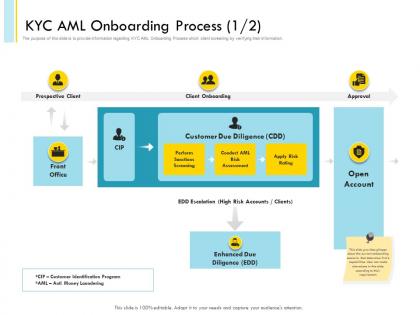
The purpose of this slide is to provide information regarding KYC AML Onboarding Process which client screening by verifying their information.
People who downloaded this PowerPoint presentation also viewed the following :
Kyc aml onboarding process n462 powerpoint presentation icons with all 2 slides:
Use our KYC AML Onboarding Process N462 Powerpoint Presentation Icons to effectively help you save your valuable time. They are readymade to fit into any presentation structure.

FAQs for Kyc aml onboarding process n462
So you've got four main things to nail down: customer ID, risk assessment, ongoing monitoring, and documentation. Start by checking government IDs and screening against sanctions lists - pretty straightforward stuff. Then figure out their risk level based on what they do, where they operate, transaction patterns, all that. High-risk customers need enhanced due diligence, which honestly gets pretty tedious but whatever. Don't forget regular reviews since people's situations change. Oh, and document literally everything - regulators are obsessed with paperwork and you'll hate yourself during audits if you skimp on this part.
So basically every country has different rules for KYC/AML stuff, which is honestly a pain. You'll need to collect different documents and do different identity checks depending on where your customers are. The EU tends to be stricter than the US, and Asia's kind of a mixed bag - some places are super strict, others not so much. What works for verification in one country might be totally useless in another. Best bet is figuring out each region's requirements upfront so you can build onboarding flows that adapt without having to rebuild everything later. Trust me, it's way easier than scrambling to fix compliance issues after launch.
Dude, tech completely transforms KYC onboarding by handling all that mind-numbing manual work. AI verifies documents now, OCR pulls data instantly, and automated systems screen against sanctions lists in real-time. What used to take days happens in minutes. The accuracy is way better too since you're not relying on someone manually checking their 200th application of the day - honestly, I don't know how people did this before automation. My advice? Figure out where you're getting stuck first, then find tools that fix those specific problems.
You'll want to set up automated screening first - sanctions lists, PEP databases, all that stuff. Then layer on document verification and source of funds checks. The balance between being thorough and not annoying customers is honestly the hardest part. Risk scoring helps though - fast-track the boring low-risk people while doing deep dives on anyone sketchy. Watch for weird data inconsistencies and unusual transactions from day one. Oh, and don't forget regular review cycles since this stuff changes constantly. Nobody wants to discover their "legitimate businessman" customer made headlines for the wrong reasons six months later.
Ugh, the false positives are absolutely the worst - nothing like blocking your actual customers! But honestly, most of the pain comes from clunky verification that takes forever, regulations changing every five minutes, and crappy customer data. I'd start by mapping where people bail out of your current process first. Then look into automated document tools and streamline that digital onboarding flow. Regular compliance training helps too, though I know that sounds boring. You just gotta find the balance between being thorough and not making customers want to throw their phone across the room.
So basically, customer segmentation tells you how much digging you need to do during KYC. High-risk folks like PEPs or sketchy cash businesses? They get the full workup - enhanced checks, source of funds, the works. Regular retail customers just need basic ID stuff. It's pretty straightforward but honestly saves so much hassle when you set clear criteria upfront. Your team won't waste time overthinking every case. Although I guess the tricky part is figuring out those risk buckets in the first place - some edge cases can be weird.
Start with automation for your low-risk customers - save the heavy scrutiny for the sketchy ones. Most delays? Manual document review, which is honestly such a pain. Good OCR tech will change your life here. Pre-fill forms wherever you can and stop bouncing people between departments like a pinball. Real-time monitoring beats batch processing every time. Your team needs clear escalation rules too, or they'll just sit on weird cases forever. Map out your current mess first though - find the worst bottlenecks and fix those. You'll see the biggest wins there.
Honestly, AI is a game-changer for KYC stuff. Document verification happens automatically now, and the systems catch sketchy patterns as they happen. What used to take days gets done in minutes - which is huge because nobody wants to wait around forever to open an account. The really smart part? These systems learn from past cases, so they get better at spotting fraud over time. False positives drop way down too, meaning fewer angry customers getting blocked for no reason. If you're still manually reviewing everything... well, your competitors probably aren't, and that's where customers are going.
Dude, don't mess around with KYC compliance - the fines are insane, like millions of dollars insane. Regulators can literally shut you down overnight if they catch major violations. Your reputation gets destroyed too, which honestly might be worse than the money because banks won't touch you afterward. Criminal charges are even possible in bad cases. Oh, and once you're on their radar? You'll get stuck with extra monitoring that makes everything take forever. I'd definitely make sure someone's double-checking those onboarding processes regularly and training staff properly.
Honestly, start with encrypting everything - customer data sitting in your system AND when it's moving around. Don't let just anyone access sensitive stuff either. Set up proper controls so only the right people can see what they need to see. Please tell me you're not still emailing SSNs around? Use secure upload portals instead. MFA is a must for anyone getting into the system. Oh, and create retention policies that auto-delete old data you don't need anymore. Map out where customer info currently goes in your process first - you'll spot the problem areas pretty quick. Regular security audits help too.
Track your completion rates and how long approvals take - that's your baseline stuff. False positives are honestly the worst part of this job, so definitely monitor those. You don't want to spend half your day dealing with angry legitimate customers who got flagged. Watch where people drop off during onboarding too, plus what each successful signup actually costs you. Customer satisfaction scores matter more than people think since KYC is literally their first real experience with you. Oh, and keep an eye on any audit findings. Set up some dashboards so you'll catch problems early instead of scrambling later.
Individual KYC is pretty simple - just ID, address, and where your money comes from. Corporate stuff? Total nightmare honestly. You're dealing with business registration docs, finding all the beneficial owners (anyone with 25%+ stake), running directors through sanctions lists, plus understanding what the company actually does. Takes forever because you're basically doing KYC on the business AND every person involved. Oh, and always ask for their corporate structure charts right away - trust me, it'll save you from going back and forth a million times.
So these third-party verification companies handle all your KYC stuff - identity checks, document verification, database searches. Way easier than building that whole system yourself. They've got access to tons more data sources than you'd ever have internally, and honestly they're just better at it since that's literally all they do. You get to focus on running your actual business instead of dealing with compliance nightmares. Just pick someone reputable and make sure you know exactly what they're checking. Oh and they're usually way faster too.
Training basically turns your team into compliance detectives who know what they're doing. Your staff will catch issues early when they understand red flags and documentation standards - way better than letting sketchy customers slide through. AML rules change constantly (seriously, it's ridiculous how often), so regular sessions keep everyone current. You'll also cut down on human error and inconsistent decisions across different cases. My advice? Figure out where your team's knowledge gaps are first. Then build training around real scenarios they'll actually face during onboarding. Makes a huge difference.
Honestly, you need to focus on AI automation and real-time monitoring - that's where everything's heading. Digital identity verification is becoming standard everywhere now. Blockchain for identity stuff is picking up steam too, though I'm kinda tired of hearing how it'll "change everything" lol. But here's what's actually happening: regulatory reporting is getting way more standardized across countries, and companies are ditching cookie-cutter compliance for risk-based approaches. Get your hands on API-first platforms ASAP and level up your team's data skills. The early adopters are gonna crush it when this tech really takes off.
-
Topic best represented with attractive design.
-
Content of slide is easy to understand and edit.