


KYC Onboarding Process Flow In Customer Due Diligence




Try Before you Buy Download Free Sample Product
 Impress Your
 Audience
 100%
100% Editable
 Save Hours
 of Time


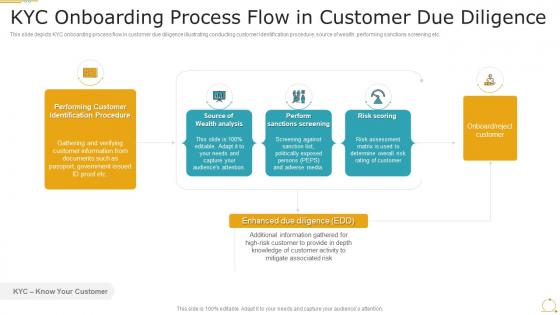
This slide depicts KYC onboarding process flow in customer due diligence illustrating conducting customer identification procedure, source of wealth, performing sanctions screening etc.
People who downloaded this PowerPoint presentation also viewed the following :
KYC Onboarding Process Flow In Customer Due Diligence with all 6 slides:
Use our KYC Onboarding Process Flow In Customer Due Diligence to effectively help you save your valuable time. They are readymade to fit into any presentation structure.





FAQs for KYC Onboarding Process Flow In
Yeah so KYC stuff is a total mess because every region does it differently. US has all the BSA/AML rules - you need identity verification plus that beneficial ownership info. Europe's got MLD5 which is honestly pretty intense about monitoring and politically exposed persons. Asia-Pacific? It's literally everywhere - Singapore's crazy detailed but other countries are more chill (though that's shifting). Here's what I'd do: map out where your customers actually are first, then build separate workflows for each place. Trust me, don't try making one universal system work - I've seen that go badly.
Honestly, start by figuring out what's actually annoying your customers most. Mobile uploads are a game-changer - nobody wants to drive somewhere just to show an ID anymore. Pre-fill whatever info you already have so they're not typing their address for the hundredth time. AI verification tools can handle most of the heavy lifting now (some are scary good). Break everything into bite-sized steps with progress bars - makes it feel way less overwhelming. Only ask for docs you truly need upfront. Oh, and definitely automate the verification where possible instead of having someone manually review every single application.
Dude, automation is where it's at for KYC stuff. AI can scan and verify IDs in literally seconds now - way faster than any human could. You'll want to connect APIs that pull from different databases to check customer details automatically. Machine learning catches sketchy patterns too, which is pretty cool. Honestly, the manual paper process was such a pain before this tech came around. Set up workflows so only the weird edge cases get kicked to your actual team. Oh, and start with whatever's eating up most of your time manually - that's usually the low-hanging fruit for automation wins.
Honestly, go with zero-knowledge verification - collect bare minimum data and encrypt everything right away. Third-party identity services are your friend here. They'll verify someone's legit without you having to store their sensitive stuff on your servers. Way less liability that way. Only keep what you absolutely need, not everything "just in case" (I swear some companies are digital hoarders). Set up auto-purging for anything past legal requirements. Oh, and let customers see what you've got stored about them - transparency goes a long way.
Document quality is your biggest nightmare - blurry photos, expired IDs, names that don't match up. People will bail if your process drags on too long (seriously, anything over 5 minutes and they're gone). Third-party verification services love to randomly slow down when you need them most. High-risk customers create compliance headaches, plus regulations keep changing so you're constantly tweaking requirements. Build clear error messages and show progress bars. Always have manual review ready when your automation inevitably breaks down.
So AI basically automates all that tedious document checking your team's doing manually right now. It cross-references everything against tons of databases instantly and catches fraudulent docs way faster than humans can. Honestly, the pattern recognition is wild - it spots sketchy stuff we'd totally miss. The system gets smarter with each case too, so your accuracy just keeps getting better. Plus no more inconsistent decisions from different team members. I'd start with document authentication first since that's where you'll see results immediately. Way less human error that way.
Honestly, just stay on top of those regulatory changes - they shift constantly and it's annoying but necessary. Keep your documentation tight because auditors will dig through everything. Train your team regularly on compliance stuff, and actually *use* the data you're collecting instead of just hoarding it. I'd set up automated monitoring for sketchy activities, plus have clear steps for when something suspicious pops up. Review existing customer files periodically too. Oh, and document literally everything - regulators are obsessed with paper trails. Seriously though, the companies that fail are usually the ones treating it like a checkbox exercise rather than actually managing risk.
So first, walk them through exactly what docs you need and explain why - half the time people have stuff they just didn't realize would work. Check that alternatives list we have (bank statements, utility bills, whatever). Honestly, most customers just need extra time to dig everything up, which makes sense. Document everything you tried in their file though. If they're genuinely stuck after you've gone through all the options, that's when you bump it up to compliance. They'll tell you what to do next. Some cases are just tricky like that.
Start with completion rates - see how many people actually make it through without bailing. Time matters too since nobody wants to sit there uploading docs all day. Customer satisfaction is pretty critical here, honestly - pissed off customers will just bounce to a competitor. False positives are expensive as hell when you're flagging legit users by mistake during verification. Compliance pass rates and any regulatory feedback should be on your radar too. Monthly dashboards work well for spotting trends, though I'd probably check weekly if you're just getting started.
So blockchain makes this tamper-proof record of KYC stuff that can't be messed with once it's there. Instead of your info sitting in some random company's database, it gets spread across multiple secure spots. The cool part? You actually own your verified identity and can use it anywhere without doing the whole verification dance again. Every step gets permanently logged too, which is nice for audits I guess. Oh and apparently a bunch of KYC companies are already doing this - might be worth checking out what's already out there before you dive in.
So it totally depends on your industry's risk level, honestly. Banks and fintech companies go all-out with document verification, fund sources, ownership details - the whole nine yards. Crypto exchanges are just as intense, sometimes worse because of money laundering stuff. E-commerce and SaaS? Usually just basic ID checks unless they're processing payments. Gaming and gambling get really strict too - fraud is huge there. Healthcare's weird because they need standard KYC plus all those privacy rules on top. Just figure out what regulations hit your specific industry and how risky your business model is. That'll show you exactly how thorough you need to be with onboarding.
Dude, don't mess around with KYC compliance - the penalties are brutal. Fines can hit the millions, and I'm talking per violation sometimes. Regulators will sanction you, executives can face criminal charges, plus you risk losing your business license entirely. The reputational hit alone is rough. Oh, and once you're on their radar? Good luck with future audits - they'll be crawling all over your business for years. Different countries have different rules but none of them go easy on violators. Honestly, it's way cheaper to just build solid KYC processes upfront than deal with this nightmare later.
Just do risk-based KYC - way easier than trying to verify everyone upfront. Get basic verification done first so customers can actually get in the door, then dig deeper based on their risk level and what they're doing with their accounts. Most fintech companies work this way now (honestly, I don't know why anyone still does the old method). Use automated document checks and digital ID tools for the initial stuff. Flag sketchy customers for manual review later. You can even give limited functionality while you finish verification in the background. Speed wins.
Start with the mandatory KYC certification - covers all the AML stuff and customer ID procedures you'll need. The scenario workshops are actually pretty good too, way better than sitting through boring slides. Oh and there's webinars for when regulations change, which happens more than you'd think. Your compliance team should hook you up with the internal knowledge base - it's got templates and real cases. I'd do certification first, then add workshops based on what your team actually deals with. People need to get the reasoning behind it all before they jump into customer onboarding, otherwise they're just going through motions.
Honestly, those generic "rate your experience" surveys are trash - you need way more specific questions. Ask customers exactly where they got stuck or frustrated during KYC. Post-onboarding surveys work great, plus exit interviews when people bail mid-process. Also try some usability testing sessions if you can swing it. Once you start collecting feedback, look for the obvious patterns. Like if everyone's complaining about document upload issues or getting confused at the same verification step. Then just fix whatever's hitting the most people first. Oh, and don't make this a one-and-done thing - keep the feedback loop going so you're always tweaking stuff.
-
“I always have a wonderful experience with SlideTeam. It's my ""go to"" when I need a template.”
-
SlideTeam offers so many variations of designs and topics. It’s unbelievable! Easy to create such stunning presentations now.