

Leadership Strategies And Practices Powerpoint Presentation Slides





Try Before you Buy Download Free Sample Product
 Impress Your
 Audience
 100%
100% Editable
 Save Hours
 of Time


Wish to implement leadership strategies that influence, engage and encourage excellence performance in the organization? SlideTeam has come up with content ready Leadership Powerpoint Presentation Slides to portray the management abilities of the workforce. Moreover, Develop and retain leaders who can guide your organization through times of change. Get your hands on content ready leadership strategies and practices PowerPoint presentation slides to develop necessary skills in your potential leaders. Moreover, our pre-designed professionally leadership strategies and practices PowerPoint presentation slides will leave great impact on the audience while presenting organization’s long-term goals. To achieve more, our leadership plans and policies presentation layout contains templates slides like leadership vs management, formal & informal leadership, autocratic leadership, democratic leadership, laissez-faire leadership, likert’s style of leadership, transactional and transformational leadership, managerial grid, fiedler’s model, path-goal theory, decision model, participation leadership and many more. Apart from this, with our leadership management PPT slides, you can also highlight various other concepts like strategic management, trait leadership, leadership skills & training, qualities of leadership, effective leadership planning and many more. So, don’t wait for it! Quickly click to download our leadership strategies and practices presentation graphics slides. Explain the importance of each ingredient with our Leadership Strategies And Practices Powerpoint Presentation Slides. Elaborate on integral elements.
People who downloaded this PowerPoint presentation also viewed the following :
Content of this Powerpoint Presentation
Slide 1: This slide introduces Leadership Strategies and Practices. State company name here and get started.
Slide 2: This is an Agenda slide. State your agenda here.
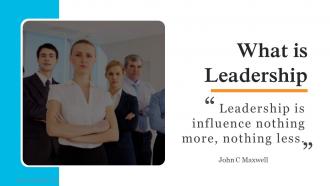
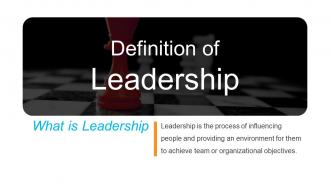
Slide 3: This slide states What is Leadership.
Slide 4: This slide showcases the Definition of Leadership. Add/ change text as per need.
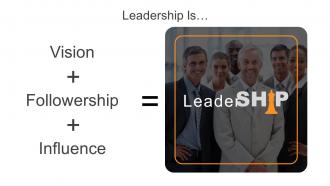
Slide 5: This slide states what Leadership Is.
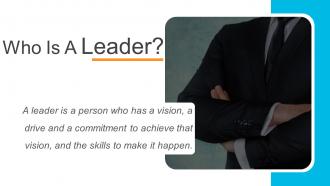
Slide 6: This slide states Who Is A Leader?
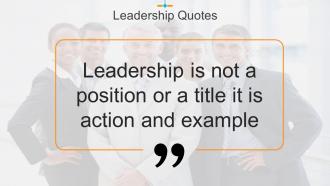
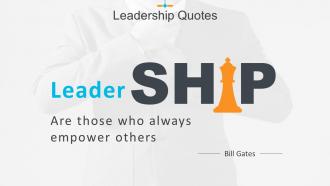
Slide 7: This slide presents Leadership Quotes. You may change/alter the slide content as per need.
Slide 8: This is another Leadership Quotes slide.
Slide 9: This too is a Leadership Quotes slide.
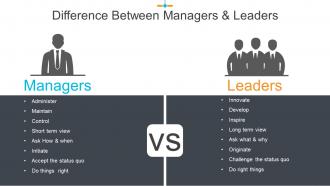
Slide 10: This slide states the Difference Between Managers & Leaders in points.
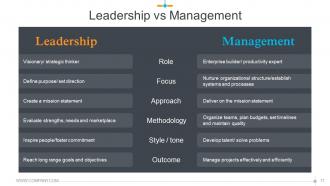
Slide 11: This is Leadership vs Management slide to state a comparison between the two.
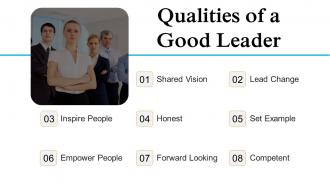
Slide 12: This slide states the Qualities of a Good Leader which are- Inspire People, Empower People, Shared Vision, Honest, Forward Looking, Lead Change, Set Example, Competent.
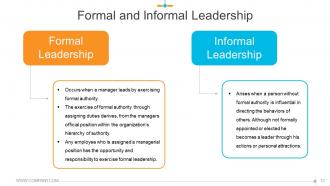
Slide 13: This is Formal and Informal Leadership slide with description in points.
Slide 14: This slide states the Styles of leadership with imagery. Change/ alter contents as per need.
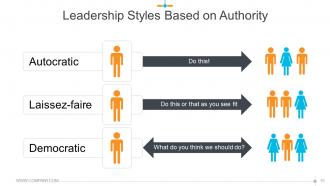
Slide 15: This slide showcases the Leadership Styles based on Authority which include- Authoritarian, Democratic, Free–rein (Laissez faire).
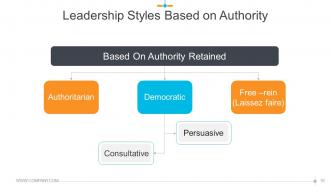
Slide 16: This too is Leadership Styles Based on Authority slide.
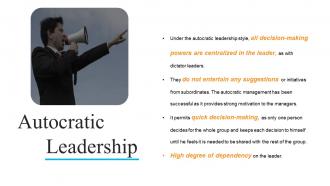
Slide 17: This slide states Autocratic Leadership with imagery and text boxes. You can alter it as per need.
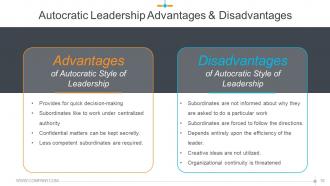
Slide 18: This slide states Autocratic Leadership Advantages & Disadvantages. You can state yours on the basis of your requirements.
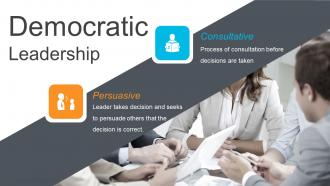
Slide 19: This slide states Democratic Leadership which is divided into- Consultative, Persuasive.
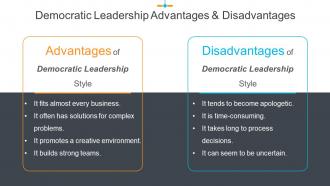
Slide 20: This slide states Democratic Leadership Advantages & Disadvantages. You can state yours on the basis of your requirements.
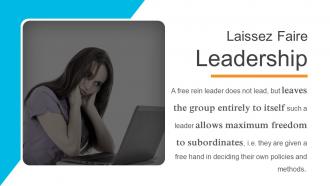
Slide 21: This slide states Laissez Faire Leadership with relevant imagery.
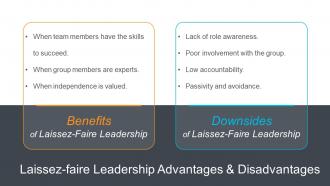
Slide 22: This slide states Laissez-faire Leadership Advantages & Disadvantages in points. You can refine them on the basis of your requirements.
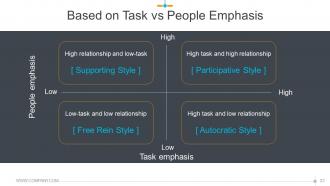
Slide 23: This is a Based on Task vs People Emphasis matrix slide with high and low parameters.
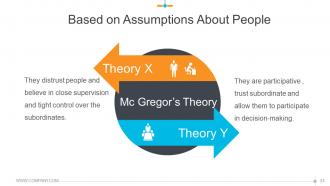
Slide 24: This is Based on Assumptions About People slide explaining Mc Gregor’s Theory.
Slide 25: This slide presents Likert's Styles Of Leadership in 4 styles- Benevolent Authoritative, Consultative Leadership, Participate Leadership, Exploitative Authoritative.
Slide 26: This slide states Entrepreneurial Leadership in points.
Slide 27: This slide states Transactional Leadership with imagery. You can alter contents as per need.
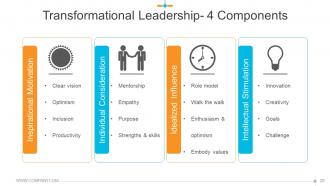
Slide 28: This slide states the 4 components ofTransformational Leadership. These are- Inspirational Motivation, Individual Consideration, Idealized Influence, Intellectual Stimulation.
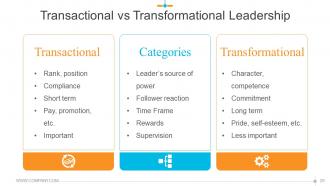
Slide 29: This is Transactional vs Transformational Leadership slide stating a comparison.
Slide 30: This slide states Theories of Leadership. You can change/ alter content on the basis of your requirement.
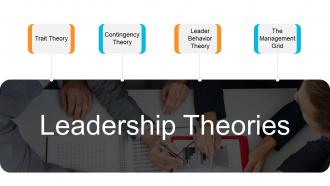
Slide 31: This slide states Leadership Theories which includes- Trait Theory, Contingency Theory, Leader Behavior Theory, The Management Grid.
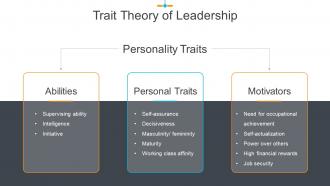
Slide 32: This slide states Trait Theory of Leadership majorly focused on Personality Traits.
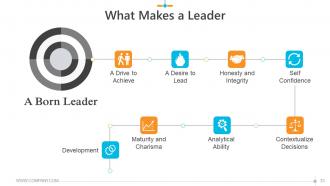
Slide 33: This is What Makes a Leader slide which showcasing- Development, Maturity and Charisma, Analytical Ability, Contextualize Decisions, Self Confidence, Honesty and Integrity, A Desire to Lead, A Drive to Achieve, A Born Leader.
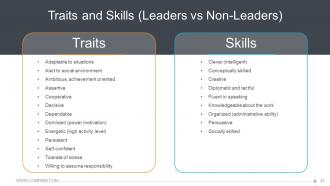
Slide 34: This slide showcases various Traits and Skills (Leaders vs Non-Leaders). Alter them or change as per requirement.
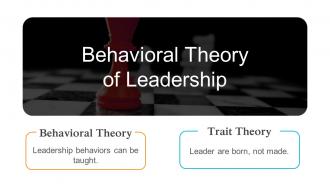
Slide 35: This slide states Behavioral Theory of Leadership consisting- Behavioral Theory Trait Theory.
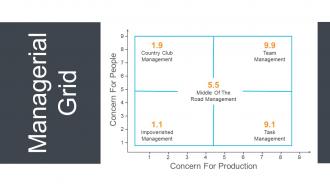
Slide 36: This is a Managerial Grid matrix slide showing- Team Management, Country Club Management, Task Management, Impoverished Management.
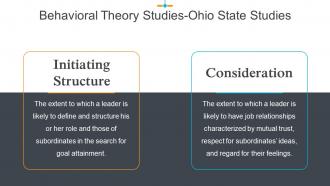
Slide 37: This slide presents Behavioral Theory Studies-Ohio State Studies
Slide 38: This is University of Michigan Studies slide stating- Employee-oriented, Production-oriented Leader.
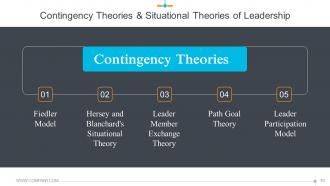
Slide 39: This slide displays Contingency Theories & Situational Theories of Leadership. These include- Fiedler Model, Hersey and Blanchard's Situational Theory, Leader Member Exchange Theory, Path Goal Theory, Leader Participation Model.
Slide 40: This is Take a Break slide with imagery for a halt. You may alter the content as per need.
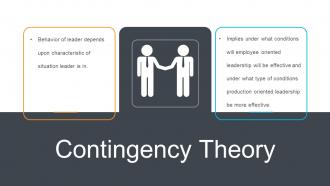
Slide 41: This slide states Contingency Theory with human imagery.
Slide 42: This slide displays Fiedler's Model.
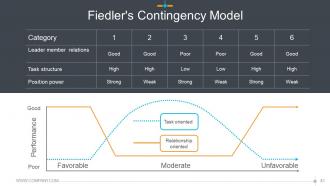
Slide 43: This slide showcases Fiedler's Contingency Model with chart/ graph.
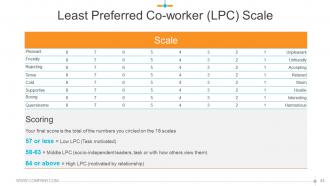
Slide 44: This slide presents Least Preferred Co-worker (LPC) Scale with its Scoring.
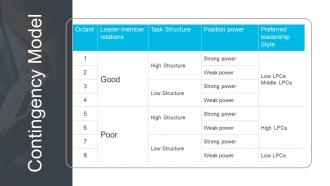
Slide 45: This is another slide displaying the Contingency Model.
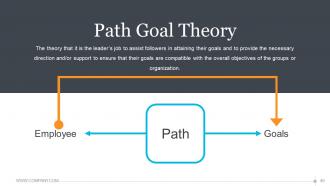
Slide 46: This slide displays the Path Goal Theory.
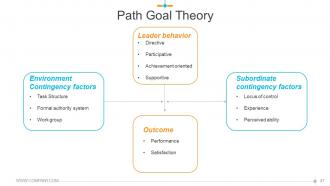
Slide 47: This too is a Path Goal Theory slide divided into- Environment Contingency factors, Subordinate contingency factors, Outcome, Leader behavior.
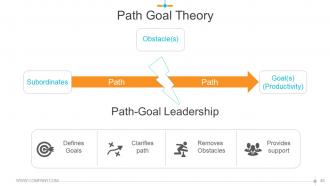
Slide 48: This too is a Path Goal Theory slide showcasing Path-Goal Leadership.
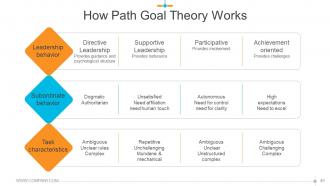
Slide 49: This slide states How Path Goal Theory Works with the following sub headings- Subordinate behavior, Task characteristics, Leadership behavior.
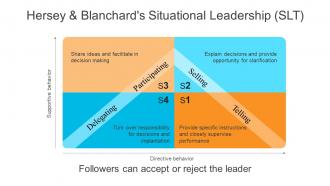
Slide 50: This is a Hersey & Blanchard's Situational Leadership (SLT) matrix slide. You can add or modify text as per need.
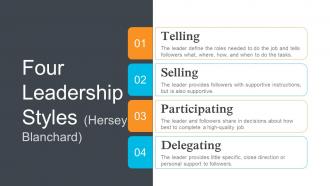
Slide 51: This slide states Four Leadership Styles (Hersey & Blanchard) which involve- Telling, Selling, Participating, Delegating.
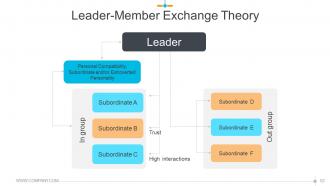
Slide 52: This slide presents Leader-Member Exchange Theory.
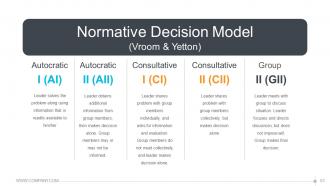
Slide 53: This slide presents the Normative Decision Model (Vroom & Yetton ).
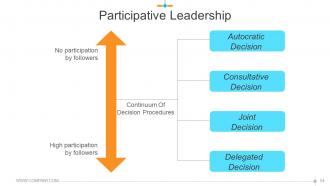
Slide 54: This slide presents Participative Leadership with No participation by followers and High participation by followers parameters.
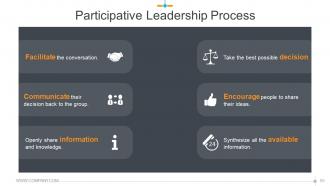
Slide 55: This slide displays Participative Leadership Process with their respective icons.
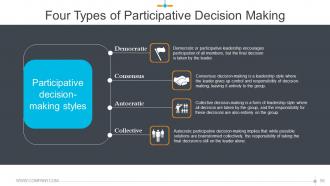
Slide 56: This slide states Four Types of Participative Decision Making. These are- Democratic, Consensus, Collective, Autocratic.
Slide 57: This slide showcases Icons For Leadership. Use them as per your preference.
Slide 58: This slide is titled Additional Slides to proceed further. You may alter the slide content as required.
Slide 59: This is Our Vision & Our Mission slide with text boxes. State your mission, vision, target etc here.
Slide 60: This is Meet our Team slide with text boxes to fill information.
Slide 61: This is a About Us slide to state specification, company information etc.
Slide 62: This slide presents Our Main Goals which include- Satisfaction, Values, Communication.
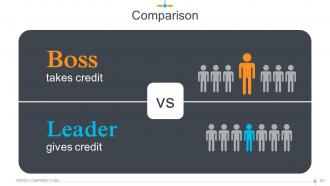
Slide 63: This slide presents Comparison between two entities. You can compare anything specific here.
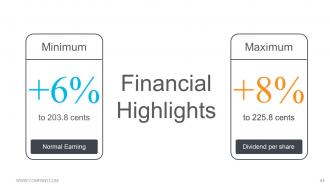
Slide 64: This slide showcases Financial Highlights with respect to- Normal Earning, Dividend per share.
Slide 65: This is Dashboard slide to show information in percentages etc.
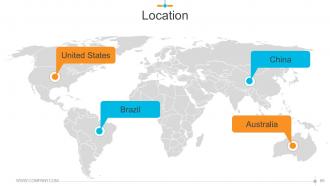
Slide 66: This slide showcases Locations on a World map image and text boxes to make it explicit.
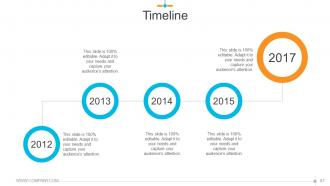
Slide 67: This is a Timeline slide to show company growth, evolution, milestones etc.
Slide 68: This is a Post it slide to mark reminders, events, important information etc.
Slide 69: This slide presents a Newspaper image with text boxes to flash company news, position etc.
Slide 70: This is Business Puzzle. State business related information, specifications etc. here.
Slide 71: This is Target Achievement slide to state your achievements etc. here.
Slide 72: This is a Venn diagram image slide to show information, specifications etc.
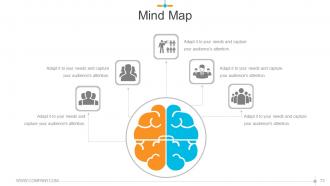
Slide 73: This slide shows a Mind map for representing entities.
Slide 74: This is a LEGO slide with text boxes to show information.
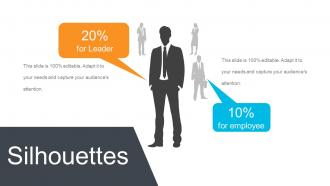
Slide 75: This is a Silhouettes slides with text boxes. State people specific information etc. here.
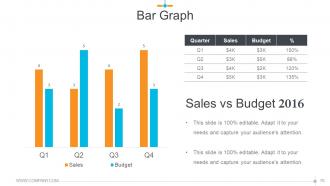
Slide 76: This slide presents a Bar Graph for product growth etc.
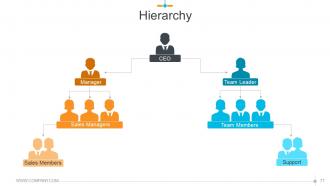
Slide 77: This slide presents a Hierarchy image to state information, specifications etc. You can easily add or remove the number of stages as per requirement.
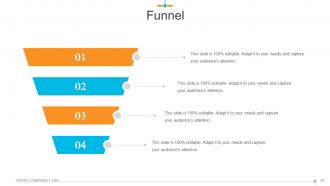
Slide 78: This is Funnel image slide to showcase funneling aspects etc.
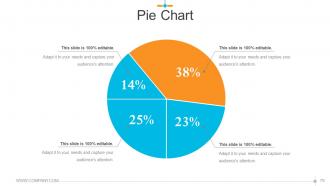
Slide 79: This is a Pie Chart slide to show product comparison, specifications etc.
Slide 80: This is a Thank You slide with Address# Street number, city, state, Email Address, Contact Numbers.
Leadership Strategies And Practices Powerpoint Presentation Slides with all 80 slides:
All eyes are on you. Make sure they like what they see with high quality Leadership Strategies And Practices Powerpoint Presentation Slides.












FAQs for Leadership Strategies And Practices
Emotional intelligence is huge - you've gotta read the room. Communication matters too, making sure people actually get what you're asking. The old boss-from-above thing? Doesn't work anymore. People want to feel heard, not just told what to do. Being adaptable is key since everything changes constantly anyway. Authenticity really counts - your team will spot BS instantly. Oh, and actually listen to your people instead of just waiting for your turn to talk. Being transparent about problems you're all facing together makes a difference too.
Honestly, paying attention to emotions - yours and your team's - makes such a difference. I used to completely miss when people were struggling and then wonder why everything fell apart later. Now I check my own stress levels before making big decisions. Watch for those little signals in meetings, you know? Someone being quieter than usual or seeming checked out. Address it head-on but kindly. Weekly emotional check-ins sound cheesy but they're actually a game changer. The real skill is reading the room and switching up how you communicate based on what people need. Creates that safe space where everyone feels heard.
Honestly, communication makes or breaks you as a leader. Like, I've watched brilliant people completely tank because they couldn't explain their ideas clearly. Your team needs to know what you want AND why it matters - otherwise your great strategies just sit there doing nothing. Regular check-ins are huge. Don't assume anyone "gets it" automatically (I learned this the hard way). Always circle back and ask if your message actually made sense. It sounds basic, but being intentional about how you communicate is what separates good leaders from the ones who just talk a lot.
Honestly, start with making sure people don't feel like idiots for speaking up. I've watched too many managers claim they want fresh ideas then shut down anything risky. Give your team actual time to mess around with new stuff - no pressure for instant wins. Celebrate the failures that teach you something, not just successes. Ask "what if" questions in meetings. Schedule brainstorming where literally nothing's off limits, then help sort the gold from the garbage. But here's the thing - you gotta actually listen when someone brings you something weird. Don't micromanage every little test they want to run.
Honestly, it's all about being super clear since you can't just walk over and clarify things. Do regular one-on-ones and use video whenever possible - faces really do make everything less awkward. Be way more explicit about deadlines than you normally would. Set up some casual virtual hangout spaces too, like a random chat channel or coffee breaks. Otherwise people get weird and isolated. Check in frequently but don't hover - there's definitely a difference. Oh, and make yourself more available than feels necessary at first. Everyone's gonna be figuring out the new rhythm and you'll save yourself headaches later.
So here's what I've learned the hard way - match your style to the situation. Crisis mode or you're clearly the expert? Just make the call. But if everyone's gonna be affected by it, get their input first. I used to be way too democratic about everything and it slowed us down like crazy. Now I'm upfront about my approach. I'll literally say "I'm deciding this one, here's why" or "talk me through your thoughts before I choose." Your team will actually respect you more when they know what to expect instead of guessing.
So here's the thing - servant leadership works because you're basically flipping the script on traditional management. Instead of just barking orders, you actually focus on helping your people grow and succeed. It sounds cheesy, but when employees feel like you genuinely care about them (not just their output), they'll move mountains for you. The whole dynamic changes. People start taking more risks, sharing ideas, bringing their A-game because they feel safe to do so. My old boss used to do this - game changer. Try asking "what do you need from me?" instead of just checking if they hit their numbers.
Honestly, just ask people straight up - your boss, teammates, whoever. One-on-ones are perfect for this, or even after meetings when things are fresh. The hard part? Don't get all defensive when they actually tell you stuff (I'm terrible at this lol). Once you start hearing the same things repeatedly, that's your cue. Pick maybe two things max to focus on - trying to change everything is exhausting and doesn't work. Circle back with people later to see how you're doing. Makes it feel less like a performance review and more like you actually care.
So here's what actually works - get your best people paired up with senior leaders who'll mentor them through messy, real situations. Then throw stretch assignments at them that are just above what they can handle right now. That's honestly where you see the biggest growth happen. Leadership training helps but skip the boring theoretical stuff - make it hands-on. Oh, and cross-functional rotations are huge for creating well-rounded leaders. First step though? Figure out who your top talent actually is and build individual plans for each of them. Sounds like a lot but it's worth it.
Adaptability? Total game-changer for leaders, honestly. Markets shift overnight, team drama happens, crisis hits - you can't stick to some rigid playbook anymore. Here's what actually works: ask for feedback and don't get defensive about it (even when it hurts). Do scenario planning with your team. Challenge your own assumptions because we're all wrong sometimes. Take on projects you know nothing about - being uncomfortable builds that muscle. The whole "stay curious instead of defensive" thing sounds cheesy but it's legit. When stuff goes sideways, that's your cue to adapt, not dig in harder.
Okay so first thing - actually listen to both people before you try fixing anything. I know it's tempting to jump straight into solution mode but don't. Ask open questions to figure out what's really going on beneath all the surface stuff. Try to separate the actual problem from the personalities involved, which honestly is harder than it sounds. Stay neutral and help them come up with their own fixes instead of telling them what to do. Sometimes you gotta talk to each person separately first. Oh and deal with it fast - conflicts just get worse when you ignore them.
Honestly? Just do what you say you're gonna do. Sounds basic but most managers mess this up constantly. When I had to announce budget cuts, I tried being all diplomatic about it - huge mistake. People saw right through that BS. Now I'm just straight up about decisions, even ugly ones. Oh, and actually listen when your team complains instead of planning your response. That's hard for me sometimes. Here's the thing though - you gotta trust them first before they'll trust you back. Give them real work, not busy stuff, and don't hover. I know it's tempting but resist!
Dude, stories are pure gold for connecting with your team. People will forget all the data you throw at them, but they'll remember that story about how you screwed up a client presentation five years ago. Use them to paint your vision or celebrate wins - honestly, it's way more effective than rattling off bullet points. Plus it makes you seem less robotic as a boss, which... let's be real, most managers need help with. Next meeting, try opening with something personal that ties to your point. Maybe how a customer's feedback changed everything. You'll see people actually lean in instead of checking their phones.
Look, diversity isn't just some HR checkbox anymore - it's genuinely how you build better teams. Different backgrounds bring different solutions to problems. Pretty simple. Your people will make smarter decisions when they're not all thinking the same way. And honestly? Good talent won't stick around if they feel excluded or unheard. I learned this the hard way at my last job actually. The real work starts after you hire diverse people - you've got to create space where everyone actually speaks up. Check your own blind spots first, then actively pull quieter voices into conversations. Most breakthrough ideas come from unexpected places anyway.
Honestly, weekly check-ins are way better than waiting for formal reviews - you'll catch issues before they blow up. Get both the hard numbers (deadlines, quality stuff) and create space for people to actually tell you what's blocking them. Retrospectives are clutch for this, though I know they sound corporate-y. Don't assume what your team needs - just ask them directly. Oh, and track things regularly but make it feel like you're all working together to improve, not like you're grading them. Maybe pick one small thing to try this week?
-
Out of the box and creative design.
-
Very unique, user-friendly presentation interface.
-
i need to this one