

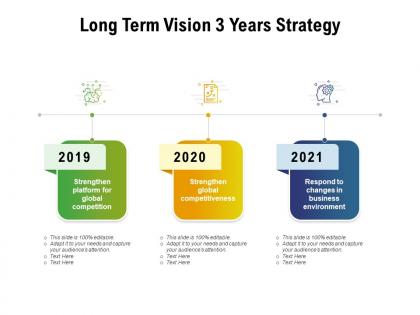
Long term vision 3 years strategy




Try Before you Buy Download Free Sample Product
 Impress Your
 Audience
 100%
100% Editable
 Save Hours
 of Time


Display enchanting grace with the help of our Long Term Vision 3 Years Strategy. Be able to charm them off their feet.
People who downloaded this PowerPoint presentation also viewed the following :
Long term vision 3 years strategy with all 2 slides:
Effectively answer your critics with our Long Term Vision 3 Years Strategy. They will be forced to back down.

FAQs for Long term vision
Definitely start with mission/vision statements and a good look at where you're at right now. SWOT analysis is kinda basic but honestly still works great for seeing the whole picture. Set clear objectives that you can actually measure - vague goals are useless. Action plans with deadlines are crucial, plus figure out what resources you'll need. Oh, and KPIs to track how you're doing. One thing most people forget? Schedule regular check-ins to review everything. I'd keep it simple at first though - my last team went way overboard initially and it was a mess. You can always make it fancier once everyone gets the hang of it.
Okay so basically you gotta flip it around - start with your mission and vision, then figure out what goals actually make sense. Like, strip away all the corporate speak and ask yourself what those statements really mean day-to-day. What would prove you're actually living up to them? Those are your goals right there. Here's the thing though - I've worked at places where leadership sets these flashy goals that sound great but have literally nothing to do with their supposed "why." Super simple test: if you hit this goal, does it obviously move you toward your mission? If not, ditch it.
Get people from different departments involved - they'll spot stuff you totally missed. Surveys and interviews are clutch for backing up your gut feelings with actual data. Honestly? The best SWOT meetings I've done felt super casual, like we were just bouncing ideas around. Try dot voting to rank things in each section (way better than arguing forever). Don't just make lists though - dig into WHY each thing matters. Then connect the dots: match your strengths with opportunities and figure out which weaknesses could really bite you if threats happen.
Dude, you can't just make some rigid 5-year plan and call it a day anymore. Markets are insane right now. What I'd do is set up quarterly check-ins to see what's actually happening in your space. Scenario planning helps too - like gaming out different "what if" situations before they smack you in the face. Honestly, I think most companies still treat their strategic plans like they're written in permanent marker or something. Your plan should be more like a Google doc that everyone's constantly editing. Start scheduling those regular strategy sessions now though - that's the biggest thing.
Look, stakeholder engagement can totally make or break your whole plan. Get them involved from day one - they know the market realities and what'll actually work operationally. Without their buy-in early on? You're screwed when it comes to execution later. I've seen too many brilliant strategies fail because nobody bothered to get people on board. These engaged folks become your biggest advocates, spreading the word and making things happen across the company. Start by mapping who matters most, then build in regular check-ins for feedback throughout the process.
At minimum, do it yearly, but quarterly is way better if you can swing it. Monthly works too if your industry moves fast. The annual thing lets you step back and see the big picture - what's actually working, market changes, all that. But quarterly catch-ups? Those save you from small problems turning into disasters later. Honestly, I've watched companies stick to plans that made zero sense anymore just because they wrote it down once. Don't be those people. Set reminders so you don't forget, and definitely revisit everything when something major hits - market crash, new competitor, whatever. Keep it flexible, not gathering dust somewhere.
Track both leading and lagging indicators - revenue growth, profit margins, customer satisfaction, employee engagement. The usual suspects. Process stuff matters too like project completion rates. But here's the thing - I've watched teams get completely buried trying to measure every single thing. Pick maybe 5-7 metrics that actually connect to your main goals. More than that and you'll go crazy. Set up a basic dashboard, check it monthly so you can pivot when things go sideways. Oh and market share changes - definitely keep an eye on those too.
Honestly, templates are lifesavers because they stop you from reinventing the wheel every single time. Your team stays on track with goals, deadlines, and who's doing what instead of having those meetings that spiral into random ideas for three hours. Been there way too many times! You can actually compare different strategies when everything's laid out the same way. Plus you won't forget important stuff. I'd grab a basic one that fits how your team works - nothing fancy at first. Then just tweak it once you figure out what actually helps vs. what's just fluff.
Honestly, Miro or Mural are clutch for visual stuff - your team can map out strategies together without the usual meeting chaos. For day-to-day chats, Teams or Slack work fine. Once you've got your strategy nailed down, Asana or Monday.com are solid for tracking everything. But here's the thing - I've watched teams waste weeks debating tools instead of actually doing the work. Sometimes Google Workspace is perfectly fine if you're not trying to reinvent the wheel. Pick whatever your people already know how to use. You can always switch later if it sucks.
Oh man, culture totally changes everything when you're planning strategy for different markets. Some places love building consensus - which honestly takes forever but gets better buy-in. Others? CEO decides and boom, you're moving. Communication styles are huge too. Like, getting direct feedback in Japan vs Germany? Completely different approaches needed. Your timelines, risk appetite, growth targets - it all has to flex based on where you're operating. Don't even think about copying your home market playbook. Get local teams involved from day one instead of dropping some headquarters plan on them.
Don't set vague goals - that's a recipe for disaster. I've watched so many teams try to do everything at once and completely flame out. Actually involve the people who'll be doing the work, not just the executives in their ivory towers. Your plan will become useless fast if you don't check in regularly since things change constantly. Oh, and please don't make it some fancy document that never gets touched again. Keep it simple and specific. Reference it often so it stays relevant instead of collecting dust somewhere.
Honestly, you've gotta nail down who owns what first. Pick specific people for each big initiative and give them real deadlines - none of that wishy-washy stuff. Monthly check-ins are clutch, but make them report actual numbers and roadblocks, not just "everything's going great!" I swear, most strategic plans just collect dust because nobody's actually watching them. Build a simple red/yellow/green tracker so you can see what's working at a glance. Oh, and don't try to do everything at once - that's a recipe for disaster. Start with your top 3 priorities this week and assign owners. Make these reviews non-negotiable or they'll disappear fast.
Data analytics platforms are game-changers for tracking KPIs and market insights in real-time - way better than just winging it. Monday or Asana break your big strategic goals into actual doable tasks. AI competitor analysis is honestly getting freaky good at spotting patterns you'd totally miss. Cloud collaboration tools let everyone jump in from wherever they are. Oh, and scenario planning software? Super helpful for those "what happens if everything goes sideways" moments. My advice: pick one tool that fixes your biggest headache first, then build from there.
Honestly, you've got to bake innovation right into your main goals and actually fund it. Give people dedicated time to mess around with new ideas - Google does that 20% thing for a reason. Mix up your teams so they're not stuck in their usual bubbles. The weirdest part? Celebrate when stuff fails because it gets people taking risks. Track innovation metrics just like you do sales numbers. Oh, and partner with some startups or local universities for outside perspectives. Pick one area to test this quarter and see what happens.
Look, scenario planning basically stops you from getting blindsided when things go sideways. Pick 3-4 realistic situations that could mess with your business - economic crash, new competition, whatever keeps you up at night. Then figure out how you'd handle each one before it happens. Honestly, most people skip this because it feels like extra work, but it's way better than panicking later when your original plan falls apart. I learned this the hard way a few years back. Focus on your biggest external risks and build your backup plans around those. You'll thank yourself when something unexpected hits.
No Reviews