


Manufacturing cost composition powerpoint presentation slides




Try Before you Buy Download Free Sample Product
 Impress Your
 Audience
 100%
100% Editable
 Save Hours
 of Time


Introducing this attention-grabbing Manufacturing Cost Composition PowerPoint Presentation Slides. Showcase the composition of costs by classifying them into two direct and indirect categories using our PPT themes. The production costs PowerPoint slideshow depicts elements of prime expenses such as direct material costs, direct labor costs and other premium costs. Take the assistance of the production cost PowerPoint slide deck to present the elements of indirect cost. Discuss the production overheads and administration overheads effectively with the help of this PPT theme. Showcase the detailed analysis of the inventory of different products by including information on costing and units sold. Utilize our modern-designed cost components PPT templates and analyze the cost sheet ratio. Download this ready-to-use production cost components PPT slides and understand the types of cost of production and methods to calculate the cost.
People who downloaded this PowerPoint presentation also viewed the following :
Content of this Powerpoint Presentation
Slide 1: This slide introduces Manufacturing Cost Composition. State Your Company Name and begin.
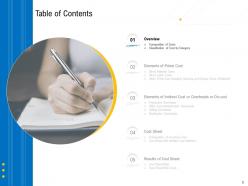
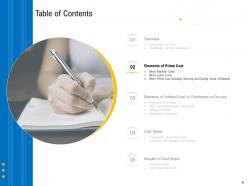
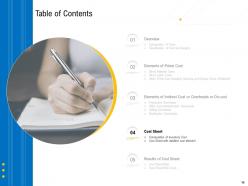
Slide 2: This slide shows Table of Content describing- Overview, Elements of Prime Cost, Cost Sheet, etc.
Slide 3: This slide presents Table of Content highlighting Overview.
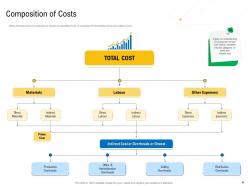
Slide 4: This slide displays Composition of Costs describing - Indirect Cost, Overheads, Oncost, etc.
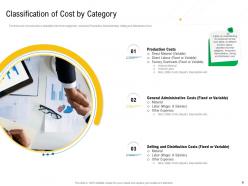
Slide 5: This slide represents Classification of Cost by Category including Production, Administration, Selling and Distribution cost.
Slide 6: This slide shows Table of Content highlighting Elements of Prime Cost.
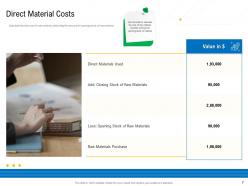
Slide 7: This slide shows Direct Material Costs including aw material, closing and opening stock of material, etc.
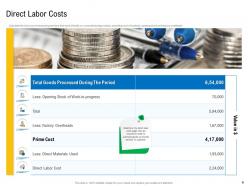
Slide 8: This slide presents Direct Labor Costs that work directly on a manufacturing product.
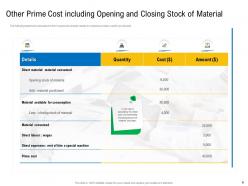
Slide 9: This slide displays Other Prime Cost including Opening and Closing Stock of Material.
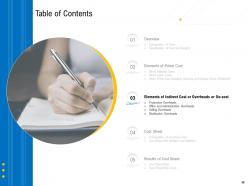
Slide 10: This slide represents Table of Content highlighting Elements of Indirect Cost or Overheads or On-cost.
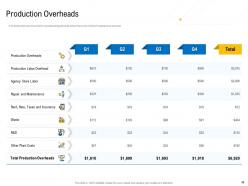
Slide 11: This slide shows Production Overheads describing Rent, Rate, Taxes and Insurance.
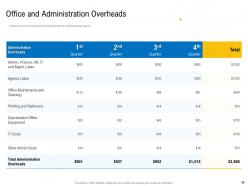
Slide 12: This slide shows Office and Administration Overheads.
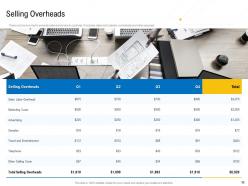
Slide 13: This slide presents Selling Overheads including salesman’s salaries, commission and other expenses.
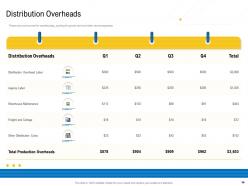
Slide 14: This slide displays Distribution Overheads like warehousing , packing for goods sent and other service expenses.
Slide 15: This slide represents Table of Content highlighting Cost Sheet.
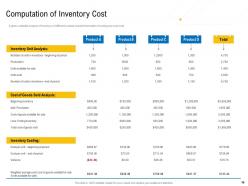
Slide 16: This slide shows Computation of Inventory Cost.
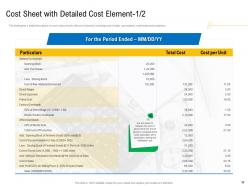
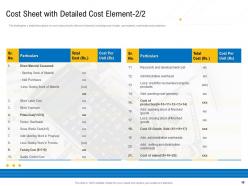
Slide 17: This slide shows Cost Sheet with Detailed Cost Element.
Slide 18: This slide presents cost of good sold at the end of period, including cost of sales, raw material, overheads and production.
Slide 19: This slide displays Table of Content highlighting Results of Cost Sheet.
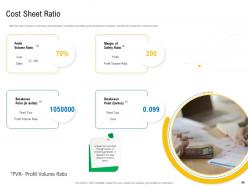
Slide 20: This slide represents Cost Sheet Ratio describing overhead, administration overhead and selling and distribution overhead.
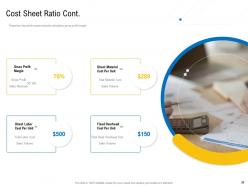
Slide 21: This is another slide continuing Cost Sheet Ratio.
Slide 22: This slide shows Icons for Manufacturing Cost Composition.
Slide 23: This slide is titled as Additional Slides for moving forward.
Slide 24: This is Our Mission slide with related imagery and text.
Slide 25: This is About Us slide to show company specifications etc.
Slide 26: This is Our Goal slide. State your firm's goals here.
Slide 27: This is a Comparison slide to state comparison between commodities, entities etc.
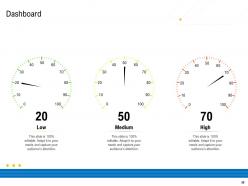
Slide 28: This slide shows Dashboard with additional text boxes to show information.
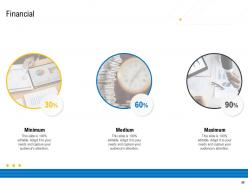
Slide 29: This is a Financial slide. Show your finance related stuff here.
Slide 31: This slide shows Puzzle with additional textboxes.
Slide 32: This is Target slide. State your targets here.
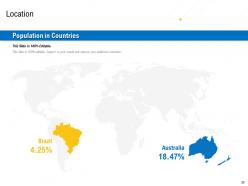
Slide 33: This is a Location slide with maps to show data related with different locations.
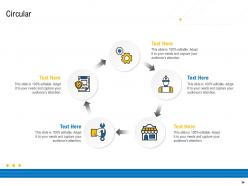
Slide 34: This slide shows Circular diagram with related icons.
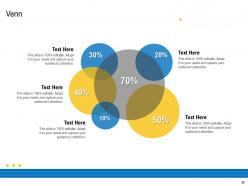
Slide 35: This slide presents Venn diagram with text boxes.
Slide 36: This slide displays Mind Map. Add data accordingly.
Slide 37: This slide represents Silhouettes with text boxes.
Slide 38: This slide showcases Magnifying Glass to highlight information.
Slide 39: This is Bulb or Idea slide with related imagery.
Slide 40: This is an Idea Generation slide to state a new idea or highlight information, specifications, etc.
Slide 41: This is a Thank You slide with address, contact numbers and email address.
Manufacturing cost composition powerpoint presentation slides with all 41 slides:
Use our Manufacturing Cost Composition Powerpoint Presentation Slides to effectively help you save your valuable time. They are readymade to fit into any presentation structure.














FAQs for Manufacturing cost composition
So manufacturing costs basically fall into three buckets. You've got direct materials - that's your raw ingredients. Then direct labor, which is paying the people who actually make stuff. Everything else gets lumped into overhead - utilities, rent, equipment wearing out, all that background noise. It's like baking honestly. Flour and eggs are materials, the baker's wage is labor, and keeping the lights on is overhead. Overhead's always the pain to figure out since it's so scattered. When you're trying to price something or figure out where money's going, just tackle each category one at a time. See which one's eating up most of your budget first.
Fixed costs don't change no matter what - rent, insurance, that kind of stuff. You'll pay the same whether you're cranking out 10 units or 1,000. Variable costs are different though. More production = more materials and labor costs. Like with your widget idea - factory rent stays put regardless. But steel and plastic? Those go up and down with how much you actually make. Honestly, once you get this down it makes pricing decisions way easier. Just track them separately and you can figure out your break-even point without pulling your hair out.
Honestly, fixing your processes is the fastest way to slash manufacturing costs without cutting corners on quality. You'll waste way less material and labor when everything flows better. Catching defects early beats dealing with expensive fixes later - trust me on that one. Downtime kills your budget too. The smoother things run, the more stuff you can pump out for the same overhead costs. I'd start by sketching out your current workflow and spotting the worst bottlenecks. Those are your goldmines for quick savings.
So basically, lean manufacturing is all about cutting out waste - stuff like having too much inventory sitting around, making more than you need, or workers walking back and forth constantly. The waiting times alone probably cost you way more than you think! Once you start streamlining things and catching defects early, you'll save on rework costs. Just-in-time production helps too since you're not storing as much. Honestly, I'd start with just one production line and actually map out where you're bleeding time and materials. You'll probably find some pretty obvious stuff you missed before.
Ugh, supply chain issues are the worst - they hit you from everywhere at once. Raw material costs go crazy when suppliers can't deliver, so you're stuck paying rush fees or finding pricier alternatives. Your labor costs spike too because everyone's working overtime trying to catch up. And don't get me started on inventory - suddenly you need way more safety stock, which eats up cash and storage space. It's honestly this messy domino effect. Best thing? Build those backup supplier relationships now, not when everything's already on fire.
Look, tech can seriously cut your manufacturing costs if you do it right. Real-time data shows you exactly where you're bleeding money - those production hiccups that cost a fortune. Predictive maintenance catches problems before machines break down (learned this the hard way at my last job). Automating repetitive tasks saves on labor costs too. IoT sensors are honestly game-changers for spotting bottlenecks early. Don't try to digitize everything though. Pick your biggest headaches first, then find specific solutions for those problems. Way more effective than going overboard.
Raw material costs are killing everyone right now, so here's what's actually worked for me. Lock in long-term contracts with suppliers when you can - it shields you from those crazy price swings. Diversify your supplier base too because relying on one guy is just asking for trouble. Bulk purchasing saves money if you've got the storage space and cash flow can handle it. Building real relationships with suppliers matters way more than people think. They'll cut you deals and work with payment terms when they actually like you. Oh, and don't forget to look into alternative materials that won't tank your quality. Start by reviewing your current contracts first - I bet there's savings hiding in there.
Labor eats up like 20-35% of your manufacturing costs, which is massive. When wages jump, your unit costs go up unless you can automate or get more efficient somehow. Benefits and overtime add up too - not just the base pay. I'd track labor cost per unit if you're not already. That metric shows whether you're getting better or worse over time. Honestly, it's such a pain to balance because you need good people but costs keep climbing. Training new folks isn't cheap either, so factor that in.
Cost per unit is your main thing to watch - everything else feeds into that. I'd also track material costs, labor efficiency, and scrap rates. Manufacturing variance is critical because it shows when your actual costs are going off the rails from budget (which honestly happens more than you'd think). Capacity utilization matters too since unused equipment just eats cash. Don't go crazy with metrics though - pick maybe 4 or 5 that actually help you make decisions. Start with cost per unit and add others based on what's really impacting your specific operation.
So basically, the more stuff you make, the cheaper each unit gets. Your rent and equipment costs don't change whether you're cranking out 100 widgets or 10,000. Higher volumes mean those fixed costs get spread around more. Plus suppliers give you way better deals when you're buying materials in bulk - they're always chasing those big orders. Your workers get faster too since they're doing the same tasks over and over. Honestly, finding that sweet spot is kinda tricky though. You want max volume without your quality going to hell or overwhelming your whole operation.
Dude, overhead is massive - like 2-3x your direct costs sometimes. Rent, utilities, equipment, all that background stuff that keeps you running. You've gotta spread those costs across your products or you'll price everything too low and go broke. Most people allocate based on labor hours or machine time, but honestly the tricky part is just getting it right. I update my overhead rates every quarter because things change fast. Oh and don't forget indirect labor - that adds up quick too. Without proper allocation you're basically guessing at prices.
Look, you gotta figure out what quality stuff your customers actually care about first. Sometimes we're blowing money on features they don't even see. Put your budget there, not everywhere. Lean manufacturing is pretty solid for cutting waste without tanking your standards - learned that the hard way at my last job. Track your defect rates religiously though. If you cheap out in the wrong spots, you'll just pay more later fixing returns. Short sentences work. The trick is being picky about where you spend vs. where you don't.
Your energy bills usually run about 10-25% of total manufacturing costs. Heavy machinery and furnaces? You're looking at the higher end. Steel and chemical plants can get hammered with 30%+ - absolutely brutal. Even lighter manufacturing adds up quick when you're running multiple shifts. Here's the thing though - energy prices are super unpredictable. One month you're fine, next month you're getting crushed by rate hikes. I'd definitely look into fixed-rate contracts with your utility company. Also build some cushion into your budget because those surprise spikes will bite you if you're not ready.
Yeah, outsourcing usually does cut costs - you're not buying equipment or dealing with overhead. Labor's way cheaper too. But here's the thing, shipping gets expensive fast and you lose control over quality timing stuff. I've watched companies save like 20-30% on parts then get burned by coordination nightmares. Honestly? Start with something small that won't kill you if it goes wrong. Test out a supplier first. Just make sure you actually calculate shipping and all the random fees that pop up - those "savings" disappear quick if you don't.
Ugh, compliance costs are brutal. You're looking at new equipment, hiring people who actually know this stuff, plus redesigning half your processes. The paperwork side? Absolute hell - I've been there. Budget around 10-15% extra because audits and testing add up fast. Production gets slower too since everything needs verification now. Here's the thing though - getting fined for screwing up compliance will cost way more than doing it right upfront. Build those requirements in from the start or you'll hate yourself later.
-
Comprehensive and colorfull PPT
-
Qualitative and comprehensive slides.
-
Best way of representation of the topic.
-
Easy to edit slides with easy to understand instructions.
-
Informative presentations that are easily editable.
-
Great designs, Easily Editable.
-
Innovative and Colorful designs.
-
Best Representation of topics, really appreciable.
-
Much better than the original! Thanks for the quick turnaround.
-
The content is very helpful from business point of view.
-
Page:
- You're currently reading page 1
- Page 2
-
