


Maritime Cybersecurity Powerpoint Ppt Template Bundles




Try Before you Buy Download Free Sample Product
 Impress Your
 Audience
 100%
100% Editable
 Save Hours
 of Time


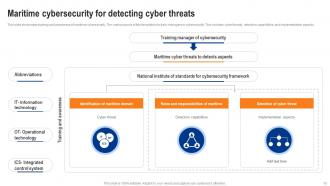
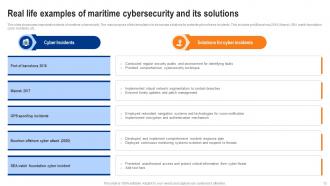
Embark on a voyage to fortified waters with our Maritime Cybersecurity PPT, an all encompassing guide to safeguarding vessels and port infrastructures against evolving digital threats. Explore the complexities of protecting shipboard systems, ensuring resilience against cyber intrusions. Delve into the critical realm of port cybersecurity, where robust defenses shield vital maritime infrastructure. Unveil the nuances of countering maritime threats, empowering maritime stakeholders with the knowledge to navigate the digital seas securely. This presentation illuminates the pivotal role of cybersecurity in safeguarding vessels, ports, and shipboard systems, providing insights into comprehensive defense strategies. Equip your team with the tools to fortify maritime operations effectively against the challenges of the digital era with our insightful Maritime Cybersecurity PPT.
People who downloaded this PowerPoint presentation also viewed the following :
Maritime Cybersecurity Powerpoint Ppt Template Bundles with all 25 slides:
Use our Maritime Cybersecurity Powerpoint Ppt Template Bundles to effectively help you save your valuable time. They are readymade to fit into any presentation structure.















FAQs for Maritime Cybersecurity Powerpoint
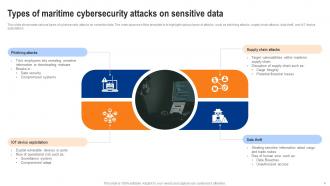
**INPUT**: What are the primary cyber threats facing the maritime industry today? **OUTPUT**: Primary cyber threats facing the maritime industry include ransomware attacks on port operations, GPS spoofing of vessel navigation systems, malware targeting cargo management platforms, phishing schemes against crew communications, and unauthorized access to ship control systems. These vulnerabilities particularly impact container terminals, cruise operations, and offshore drilling platforms, with many shipping companies finding that integrated cybersecurity frameworks significantly reduce operational disruptions while ensuring cargo security and regulatory compliance. [Word count: 60]
Maritime organizations can assess their cyber risk posture through comprehensive network audits, vulnerability assessments, penetration testing, compliance evaluations, and threat intelligence analysis. These cybersecurity frameworks enable shipping companies, port authorities, and offshore operators to identify vulnerabilities in navigation systems, cargo management platforms, and communication networks, while ultimately delivering enhanced operational security, regulatory compliance, and protection against increasingly sophisticated maritime cyber threats.
Crew training plays a critical role in maritime cybersecurity by developing threat recognition skills, establishing incident response protocols, and creating security awareness across all operational levels. Through comprehensive cybersecurity education, maritime personnel can identify phishing attempts, secure communication systems, and maintain proper access controls, with shipping companies increasingly finding that well-trained crews serve as the first line of defense against cyberattacks.
The Maritime Cyber Risk Management Framework helps shipping companies by establishing systematic threat assessment protocols, incident response procedures, and crew training standards that protect critical navigation and cargo systems. Through structured risk identification and mitigation strategies, companies can prevent costly cyberattacks on operational technology, maintain regulatory compliance, and ensure uninterrupted global supply chain operations while safeguarding sensitive cargo data.
Maritime operators must comply with IMO Resolution MSC.428(98), ISO/IEC 27001, NIST Cybersecurity Framework, port state control requirements, and flag state regulations. These standards enhance operational security by establishing risk assessment protocols, incident response procedures, and crew training requirements, with many shipping companies finding that comprehensive compliance ultimately delivers competitive advantage and ensures seamless port operations globally.
Securing vessel communication systems requires implementing encrypted satellite communications, network segmentation, regular software updates, multi-factor authentication, and continuous monitoring protocols. These measures enhance maritime operations by protecting navigation data, cargo information, and crew communications from cyber threats, while enabling secure real-time connectivity with shore operations, ultimately delivering operational continuity and regulatory compliance.
IoT significantly expands maritime cybersecurity vulnerabilities by connecting navigation systems, cargo sensors, engine controls, communication devices, and port infrastructure to networks. While IoT enhances operational efficiency and real-time monitoring, it creates multiple attack vectors that cybercriminals increasingly exploit, with shipping companies finding that comprehensive endpoint security and network segmentation ultimately deliver safer, more resilient maritime operations.
Maritime cybersecurity incident response strategies include immediate threat containment, network isolation protocols, forensic analysis procedures, stakeholder communication plans, and recovery protocols. These frameworks enable shipping companies, port authorities, and offshore operators to minimize downtime, preserve critical navigation systems, and maintain supply chain continuity, while ensuring regulatory compliance and operational resilience.
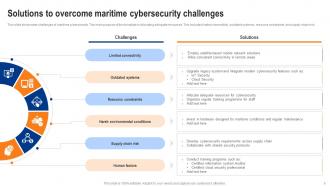
Shipping companies protect critical infrastructure through network segmentation, regular security audits, employee training programs, multi-factor authentication, and automated threat detection systems. These cybersecurity measures enhance operational resilience by isolating navigation systems, monitoring port communications, and securing cargo tracking networks, with many maritime organizations finding that comprehensive protection ultimately delivers uninterrupted operations and competitive advantage.
Securing electronic navigational aids involves implementing multi-layered defense systems, regular software updates, network segmentation, access controls, and continuous monitoring protocols. These cybersecurity measures enhance maritime safety by isolating critical navigation systems, authenticating user access, and detecting anomalous activities, with many shipping companies finding that proactive security frameworks ultimately deliver operational resilience and regulatory compliance.
Supply chain vulnerabilities create cascading cybersecurity risks in maritime operations by introducing compromised hardware, unsecured software updates, and third-party access points that attackers can exploit. These weaknesses enable cybercriminals to infiltrate port management systems, shipping logistics networks, and vessel navigation equipment, ultimately disrupting cargo flows, compromising sensitive trade data, and threatening operational continuity across global maritime supply chains.
Technological advancements enhancing vessel cybersecurity include AI-driven threat detection, blockchain for secure communications, zero-trust network architectures, advanced encryption protocols, and real-time monitoring systems. These technologies streamline security by automating threat response, securing data transmission, and enabling continuous network surveillance, with shipping companies finding that integrated cybersecurity solutions ultimately deliver operational resilience and regulatory compliance.
Collaboration between maritime stakeholders enhances cybersecurity through shared threat intelligence, standardized security protocols, coordinated incident response, and unified regulatory compliance efforts. This strategic partnership enables ports, shipping companies, technology providers, and government agencies to create comprehensive defense networks, minimize vulnerabilities across supply chains, and respond faster to cyber threats, ultimately delivering stronger maritime infrastructure protection.
Threat intelligence sharing enables maritime organizations to identify emerging cyber threats, vulnerabilities, and attack patterns through collaborative data exchange with industry partners, government agencies, and cybersecurity firms. This proactive approach helps shipping companies, ports, and offshore operators anticipate attacks, strengthen defenses, and respond faster to incidents, ultimately reducing operational disruptions and protecting critical maritime infrastructure from sophisticated cyber adversaries.
The maritime industry can learn critical lessons from healthcare data breaches, financial sector ransomware attacks, and energy grid vulnerabilities, including the importance of multi-layered security, employee training, and incident response planning. These sectors demonstrate that proactive cybersecurity investments, regular system updates, and cross-industry threat intelligence sharing significantly reduce attack surfaces and recovery times, with many organizations finding that comprehensive security frameworks ultimately deliver operational resilience and competitive advantage.
-
The slides are remarkable with creative designs and interesting information. I am pleased to see how functional and adaptive the design is. Would highly recommend this purchase!
-
Easily Editable.