Cyber Resilience Powerpoint Ppt Template Bundles
Try Before you Buy Download Free Sample Product
Audience
Editable
of Time
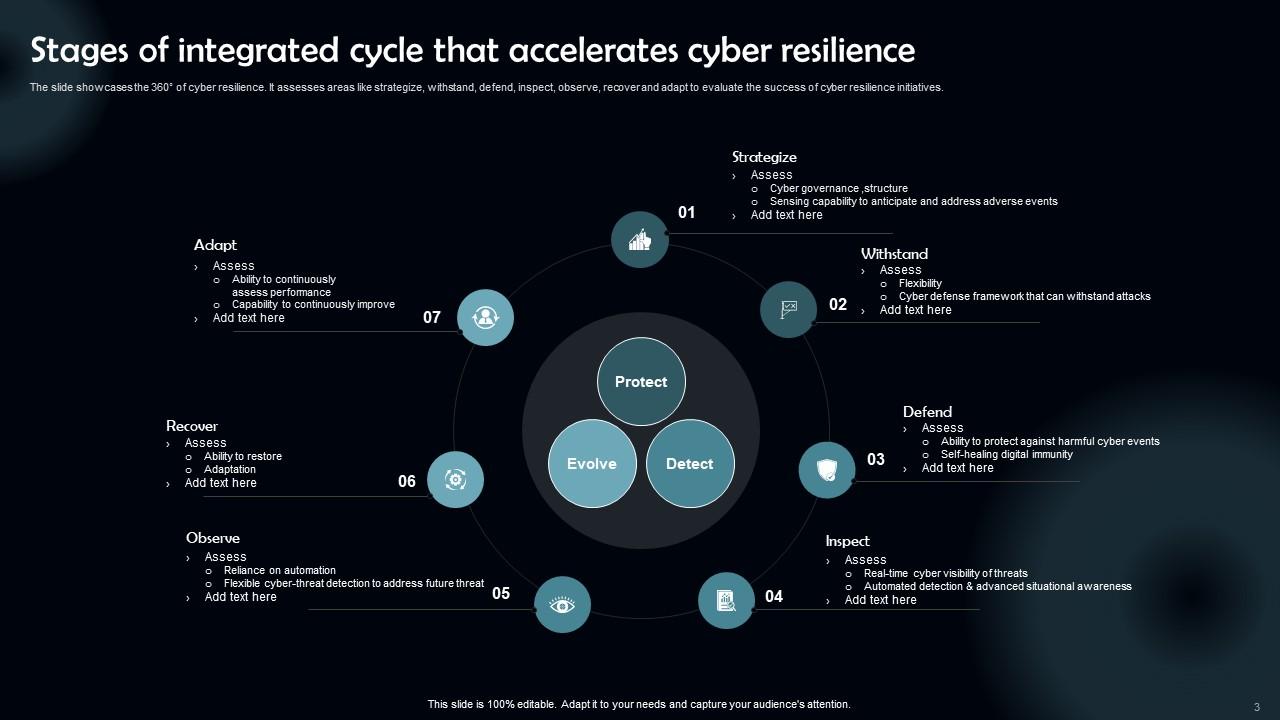
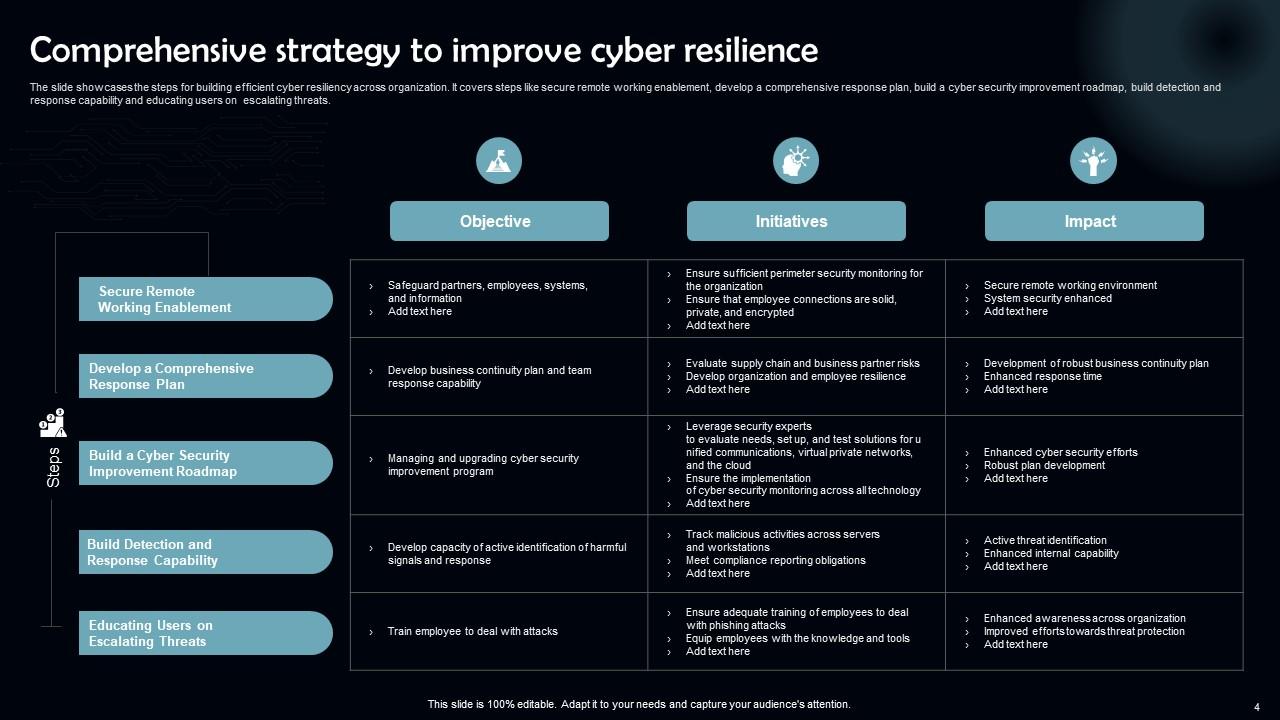
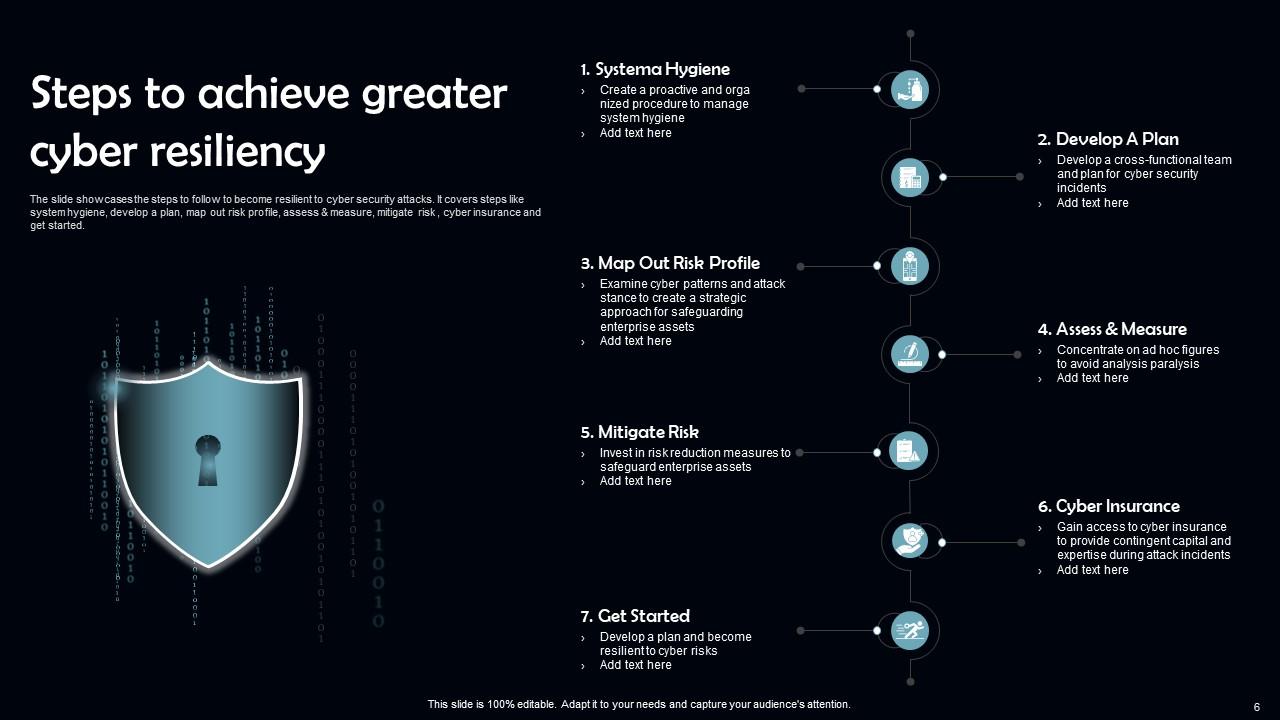
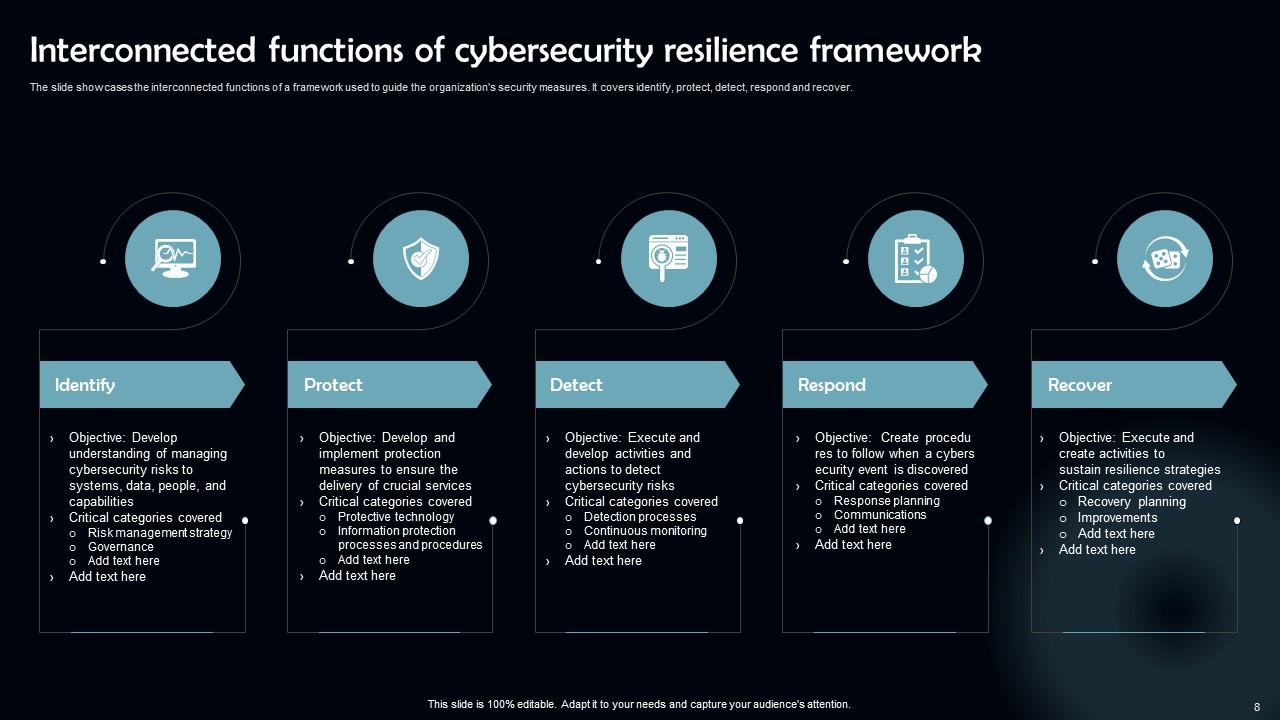
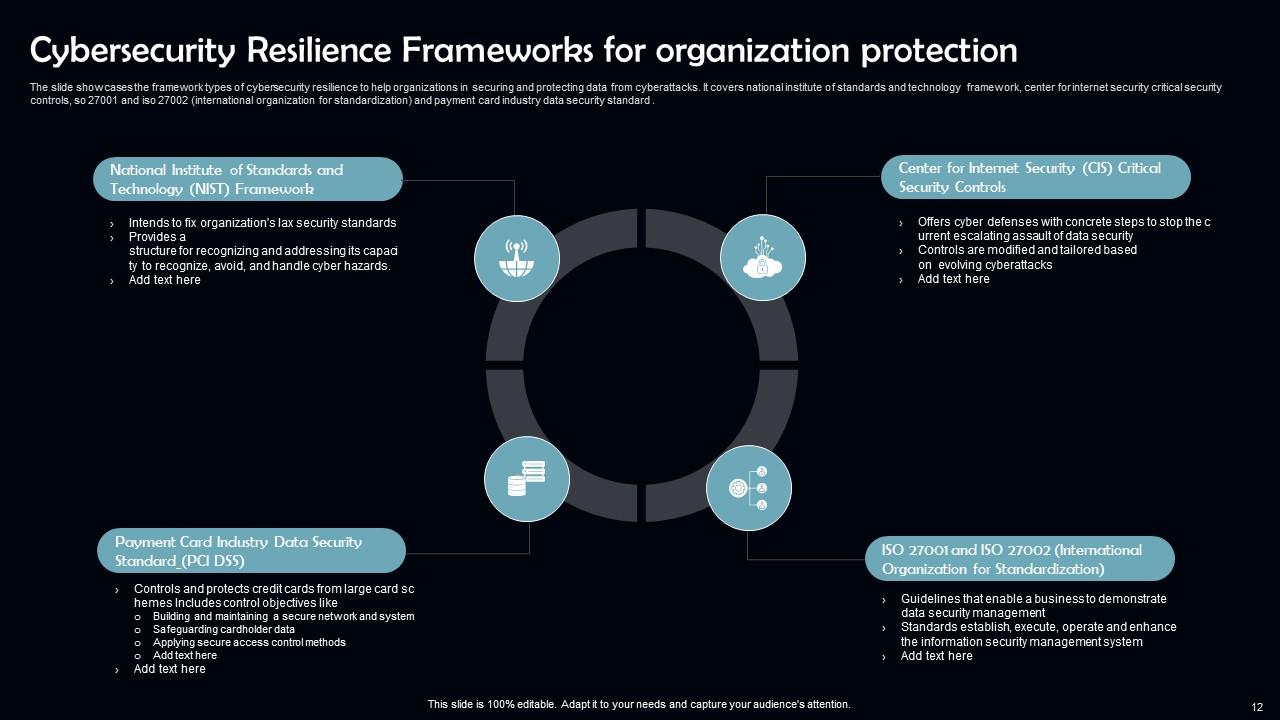
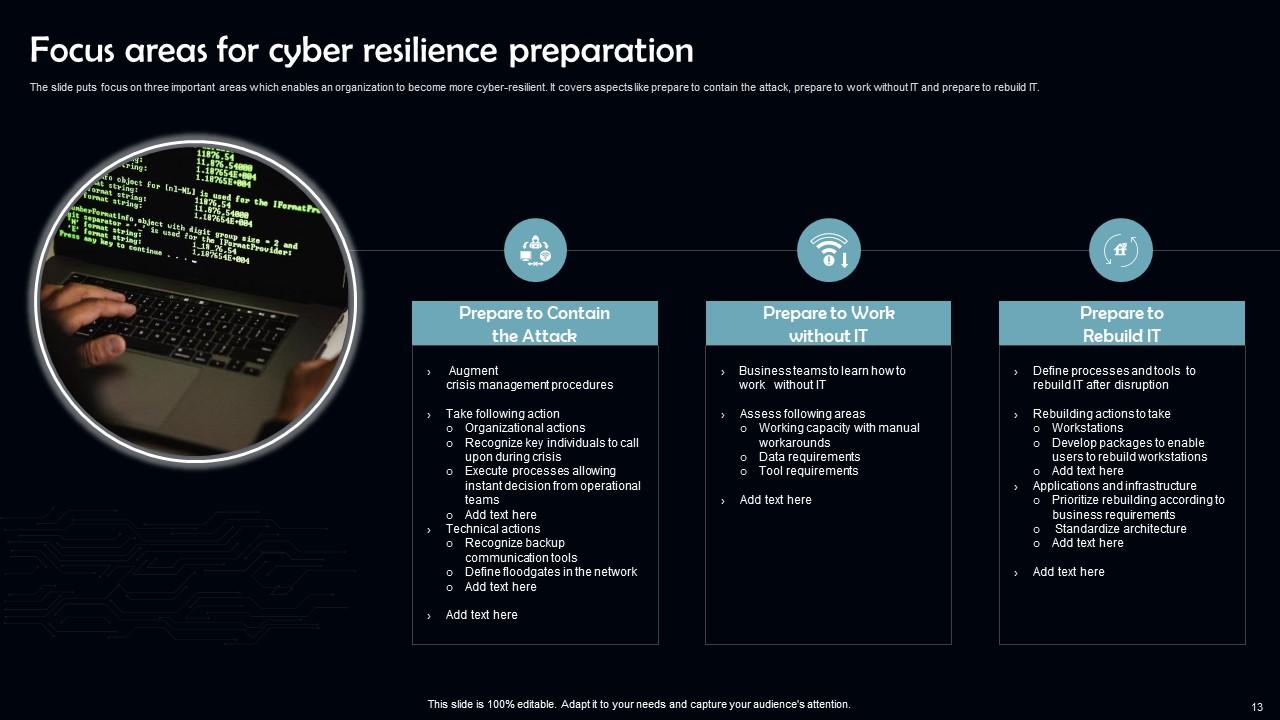
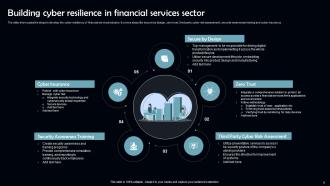
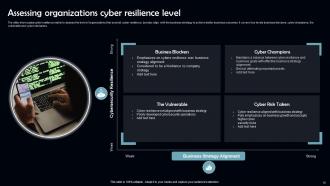
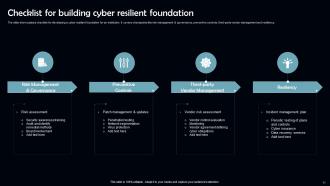
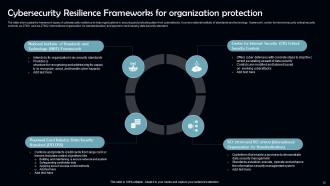
Introducing our comprehensive Cyber Resilience PowerPoint presentation, designed to equip organizations with the knowledge and tools to build robust cyber defense strategies. This informative deck explores the key components of Cyber Resilience, including an Integrated Cycle approach and Resiliency Framework. Dive into the intricacies of Cyber Resilience in Financial Sectors and discover best practices to mitigate cyber risks. Our presentation provides a Resiliency Checklist to help organizations assess their current cybersecurity posture and identify areas for improvement. With visually engaging slides and expert insights, this PPT empowers professionals to strengthen their cyber defenses, respond effectively to cyber incidents, and recover quickly from disruptions. Stay one step ahead of cyber threats with our comprehensive Cyber Resilience presentation, and safeguard your organizations critical assets and reputation.
People who downloaded this PowerPoint presentation also viewed the following :
Cyber Resilience Powerpoint Ppt Template Bundles with all 22 slides:
Use our Cyber Resilience Powerpoint Ppt Template Bundles to effectively help you save your valuable time. They are readymade to fit into any presentation structure.
FAQs for Cyber Resilience Powerpoint
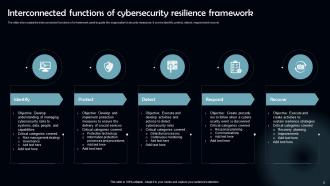
So you'll want four main things: prevention (security stuff + training people), detection (systems that actually catch problems), response (having a real plan when shit hits the fan), and recovery (backups and getting back to normal). Most places are decent at the prevention side but completely suck at response planning. Like, they'll spend thousands on firewalls then have zero idea what to do during an actual breach. Also make sure someone's actually in charge of this - can't just be "everyone's responsibility." I'd look at what you have now in each area, then fix whatever's most broken first.
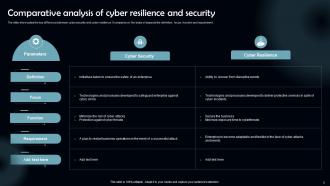
So cybersecurity is like building a fortress - you're trying to keep all the bad stuff out. But cyber resilience? That's when you accept hackers will probably get in eventually. Instead of just blocking attacks, you plan for what happens after they break through. It's way more realistic honestly. You build backup systems, recovery plans, redundancy - basically designing everything to bounce back fast. I mean, think about it - even the Pentagon gets hacked sometimes. Better to assume your defenses will fail and have a solid recovery plan than get caught with your pants down.
Dude, train your people - seriously, it's your best shot at stopping hackers. Most attacks happen when someone clicks a bad link or gets fooled by fake emails. Not some fancy hacking movie stuff. Get your team to recognize phishing, use decent passwords, follow basic security rules. They'll go from being weak spots to actually helping protect you. Try those phishing simulation tests first - people hate admitting it, but they're actually pretty effective and kinda entertaining. Even doing this stuff quarterly makes a real difference. Way easier than you'd think.

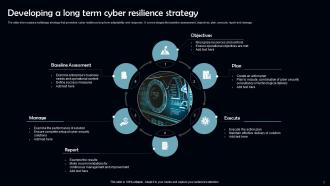
Start with a solid risk assessment - map out what assets matter most and where you're vulnerable. Run some tabletop exercises and fake attacks to test how your team actually responds. Trust me, most companies are shocked at how poorly these go the first time. Check your backup systems, supplier risks, and whether your staff can spot phishing emails. NIST framework works well for organizing this stuff, though honestly any structured approach beats winging it. Focus on technical defenses AND operational readiness. Once you know where the gaps are, prioritize fixes based on what'd really mess up your business if it broke.
Honestly, look at Target after that massive 2013 hack - they completely rebuilt their security from scratch and came back way stronger. JPMorgan throws billions at cybersecurity every year, which is probably overkill but hey, it works. Their backup systems kept everything running even when hackers tried multiple times to take them down. Microsoft's zero-trust stuff is pretty much the gold standard now. They basically turned getting attacked into their biggest selling point, which is kind of genius if you think about it. The pattern here? Don't just build walls - make sure you can bounce back fast when (not if) something gets through.
Honestly, risk management is where you should start with any cyber resilience plan. Figure out what assets matter most and what your biggest vulnerabilities are first. Then rank threats by how likely they are and how much damage they'd actually cause. This way you're not spreading yourself thin trying to protect everything - which never works anyway. Good risk assessment shapes both your prevention work and your recovery plans. It's basically the difference between having a solid strategy versus just throwing money at random security tools and hoping for the best.
NIST Cybersecurity Framework is probably your best bet to start with - it's free and doesn't make you want to bang your head against a wall. ISO 27001 works too if your company's into the whole certification thing, but honestly it's more formal and bureaucratic. There's also CERT's resilience model which focuses on recovery instead of just prevention, though I feel like that's more niche. Start with NIST, see how it goes. You can always add other frameworks later once you've got your feet wet. Trust me, trying to juggle multiple frameworks from day one is a recipe for disaster.
Honestly, the cyber stuff that's actually making a difference right now is pretty cool. AI threat detection can catch weird behavior way faster than old-school methods. Zero-trust is huge too - basically treat everything like it's already hacked until you know it isn't. There's also automated response tools that'll handle threats before you even know what happened (kinda scary but useful). XDR platforms give you the full picture across everything. Oh, and incident response automation is clutch. My take? Roll out zero-trust on your critical stuff first, then add AI monitoring on top.
Track your mean time to detect/respond and backup success rates - that's the technical stuff. But honestly, the business metrics hit different. Downtime costs, customer complaints, whether critical systems actually stayed up during chaos. Sometimes a simple "did we keep the lights on" matters more than perfect dashboards, you know? Run tabletop exercises regularly to stress-test everything. Red team assessments help too. Start with maybe 3-5 metrics your leadership actually cares about. Recovery time objectives are solid to include. Build from there once you've got those basics locked down.
Yeah, cyber security is pricey upfront - tools, training, hiring people who actually know what they're doing. But honestly? Way cheaper than getting hacked. Breaches cost millions between recovery, lawyers, and customers who'll never trust you again. Plus regulatory fines are brutal these days. I'd start with whatever data you absolutely can't afford to lose and protect that first. You can always expand from there. It's basically expensive insurance, but the kind that actually pays off when things go sideways.
Look, I know compliance feels like busy work sometimes, but those regs actually make your cybersecurity way better. GDPR and HIPAA force you to set up proper incident response plans and data controls - stuff you should be doing anyway. Think of them as your foundation, not the finish line. Once you've got that baseline covered, you can build on top with whatever makes sense for your specific risks. Honestly, most companies that treat compliance like just checking boxes miss the point entirely. It's pushing you toward practices that'll actually help when shit hits the fan.
So incident response is basically your game plan for when shit hits the fan. Cyber resilience is more about your overall ability to bounce back from attacks, but incident response? That's your actual step-by-step playbook when something goes wrong. Without solid IR procedures, you can't really call yourself resilient - you'll just be running around like chickens with their heads cut off. The key thing is testing your plan regularly (seriously, don't skip this) and making sure everyone knows what they're supposed to do when chaos breaks out.
Look, you absolutely need a business continuity plan that works when everything's on fire. Figure out your most critical stuff first - what literally can't stop for even a day? Then build backup systems that aren't connected to your main network (I've seen too many companies get burned because their "backup" was on the same compromised system). Set up offline backups, alternative ways to communicate, workflows that run without your normal IT setup. Oh, and actually test this stuff regularly with practice runs. Most places think they're ready until they're scrambling during a real attack.
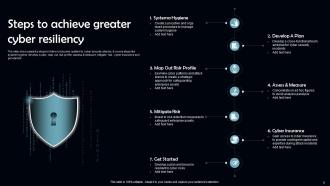
Honestly, just nail the basics first. Update your software, turn on two-factor auth for everything, and actually backup your data (then test it - learned that one the hard way). Your team needs to know what phishing looks like because someone's gonna click something sketchy eventually. Set up network segments so hackers can't just waltz through your entire system if they get in. Oh, and have a plan ready for when stuff hits the fan. Don't put all your eggs in one security basket either - you need multiple layers. Pick like three of these things and just do them this month instead of overthinking it.
So cloud computing totally flips the script on cyber resilience. You're not protecting physical servers anymore - honestly, who even worried about server room break-ins? Now it's all about data flows and who can access what. Identity management becomes huge, plus API security and figuring out what your cloud provider handles vs. what's on you. The upside? Most cloud platforms have way better security than what companies build themselves. First step is mapping your data - where does it live and who's got access? That's your starting point for cloud resilience.
-
The ease of modifying templates is just superb! Also, the vast collection offers plenty of options to choose from.
-
Thank you for offering such fantastic custom design services. The team is really helpful and innovative. In a very short time, I received my personalized template.