


Marketing strategies development powerpoint icon c
You must be logged in to download this presentation.




Try Before you Buy Download Free Sample Product
 Impress Your
 Audience
 100%
100% Editable
 Save Hours
 of Time


You are your own person and you bring something new to the world. Don't get into the stereotype league when our Marketing Strategies Development PowerPoint Icon C will make you stand out clearly.
People who downloaded this PowerPoint presentation also viewed the following :
Content of this Powerpoint Presentation
Description:
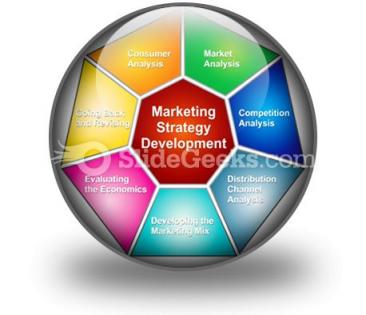
The image depicts a graphical representation of a marketing strategy development process. The graphic is a segmented sphere with each segment labeled with a different component of the strategy development process:
1. Consumer Analysis:
Understanding the target market's preferences, behaviors, and demographics.
2. Market Analysis:
Assessing the size, growth, trends, and patterns in the market.
3. Competition Analysis:
Evaluating the competitors' strengths, weaknesses, and strategies.
4. Distribution Channels Analysis:
Looking at the various ways to deliver products or services to customers.
5. Developing the Marketing Mix:
Crafting a mix of product, price, place, and promotion strategies.
6. Evaluating the Economics:
Analyzing the cost-effectiveness and financial viability of the marketing strategy.
7. Going Back and Revising:
Revisiting and adjusting the strategy based on feedback and outcomes.
Use Cases:
This model is a comprehensive approach to creating a marketing strategy and is applicable across various industries:
1. Retail:
Use: Crafting campaigns to boost sales and customer engagement
Presenter: Marketing Director
Audience: Marketing Team and Store Managers
2. Technology:
Use: Launching new tech products in competitive markets
Presenter: Chief Marketing Officer
Audience: Product Managers and Marketing Specialists
3. Healthcare:
Use: Promoting healthcare services and patient acquisition strategies
Presenter: Healthcare Marketing Consultant
Audience: Healthcare Administrators
4. Finance:
Use: Developing strategies for marketing financial products
Presenter: Marketing Strategist
Audience: Financial Advisors
5. Real Estate:
Use: Positioning property listings to attract buyers
Presenter: Real Estate Marketing Manager
Audience: Real Estate Agents
6. Hospitality:
Use: Increasing visibility and bookings for hospitality services
Presenter: Brand Manager
Audience: Hotel and Restaurant Managers
7. Education:
Use: Attracting students to educational programs and courses
Presenter: Admissions Marketing Manager
Audience: Admissions Team
Marketing strategies development powerpoint icon c with all 1 slides:
Deliver your sermon on our Marketing Strategies Development PowerPoint Icon C. Your team will become your disciples.
FAQs for Marketing strategies development
Honestly, start with knowing exactly who you're targeting - like really knowing them, not just "women 25-40." Create content that doesn't suck and optimize it so Google can find you. Pick maybe 1-2 social platforms where your people actually are (Instagram stories aren't gonna help if you're selling B2B software). Email's still gold for nurturing leads. Paid ads work if you need quicker wins. But here's the thing - most people totally ignore analytics and wonder why nothing works. Track what makes you money, not how many likes you got. Way better to nail two channels than be mediocre everywhere.
Honestly, stop posting random stuff and actually think about what your audience wants to see. Pick like 2-3 platforms max where your people actually are - I made the mistake of trying to be everywhere and it was exhausting. Show some personality with behind-the-scenes content, respond to comments for real, and throw in some strategic hashtags. Micro-influencers are way better than big ones usually. Oh, and always tell people what to do next - clear calls-to-action work. Try posting consistently for a month and see what hits. Start by checking what you're already doing first though.
Segmenting your audience is a total game-changer for campaigns. You can group people by age, buying habits, interests - whatever makes sense for your business. Then create messages that actually speak to each group instead of blasting everyone with the same boring content. I mean, nobody wants to feel like they're getting spam, right? Your email stats will definitely improve. Oh, and don't go crazy at first - just pick 2-3 segments based on your biggest customer differences. Test those out and see what happens.
Honestly, data analytics is like having a cheat code for marketing. You'll finally see which channels actually bring in good leads instead of just guessing. Track your customer journey, spot trends early, optimize where you spend money. No more throwing stuff at the wall hoping it works - though I still do that with my dinner choices lol. The cool part? You can personalize campaigns based on real behavior and predict who's likely to buy. My advice: figure out your key metrics first, then build everything around those goals.
Dude, content marketing is seriously underrated for getting leads. You create helpful stuff - blog posts, videos, whatever - and people find you when they're looking for solutions. Way better than annoying ads that everyone ignores. The cool thing? Good content keeps pulling in leads for months without you doing anything. I mean, my friend's guide from last year still gets her clients. Just pick one problem your customers always complain about and make something that actually helps them solve it. Trust builds naturally from there.
Dude, you've got something they don't - speed and realness. Big brands are stuck in committee hell while you can try stuff tomorrow. People are so over fake corporate BS anyway, so lean into being yourself. Pick like one or two platforms where your people actually are instead of being everywhere at once. Your local connections? That's gold. Way better than some expensive ad campaign. Start with customers who already love you - they'll spread the word better than any marketing team. Oh and don't try to sound perfect all the time. Consistent, helpful content with actual personality wins.
Honestly, AI personalization is where it's at right now. Chatbots for shopping are getting pretty decent too - way better than those annoying ones from like 2019. Voice search is blowing up, so that's worth looking into. AR stuff for showing off products is actually insane now. I saw this furniture company let you place couches in your living room through your phone and it looked totally real. Interactive content's crushing it engagement-wise - polls, quizzes, that kind of thing. Oh, and you'll definitely want to focus on collecting your own customer data since Apple's making everything harder with their privacy updates. Don't go crazy trying everything though. Pick what makes sense for your people and test small first.
Honestly, influencer partnerships work because people actually trust creators they follow way more than regular ads. It's like getting a rec from a friend, you know? But here's the thing - it has to feel genuine or people see right through it. I've noticed the best campaigns happen when the influencer's vibe naturally fits with the brand. Don't just go for whoever has the most followers either. Find someone whose audience actually matches who you're trying to reach. Authenticity beats everything else here - scripted stuff just feels weird and can totally backfire on you.
Look, SEO is like having your website work for you 24/7 without spending money on ads. People find you when they're actually looking for your stuff - not just doom-scrolling like they do on social media. That intent makes all the difference, honestly. Once you start ranking, the traffic keeps coming and compounds over time. Pretty sweet deal if you ask me. Focus on keywords your audience actually types into Google, then write content that genuinely helps them. Don't overthink it at first - just be useful and consistent.
First thing - check your current open rates so you know where you're starting from. Your subject lines are probably the biggest culprit if they suck. Make them actually intriguing, not like "Monthly Newsletter
-
Excellent
-
it's good
-
best
-
good stuff
-
Best Representation of topics, really appreciable.
-
Qualitative and comprehensive slides.
-
Very good templates