

Presentación de diapositivas de planificación de medios




Try Before you Buy Download Free Sample Product
 Impress Your
Audience
 100%
Editable
 Save Hours
of Time


Implementar técnicas de marketing extraordinarias utilizando estas Diapositivas de presentación de PowerPoint de Planificación de Medios. Tome la asistencia de estas plantillas de PPT de mezcla de medios para mostrar los distintos tipos de medios, incluida la autoridad, los medios pagados, las redes sociales, entre otros. Aproveche estas diapositivas de PPT publicitario para representar las categorías de la mezcla de medios, como actividad de medios, promociones, precio, condiciones económicas, etc. Utilice esta presentación de promoción de productos en PPT para revelar los canales de promoción más efectivos, como eventos/conferencias, marketing por correo electrónico, publicidad tradicional, etc. Demuestre diferentes plataformas de medios como impresión, marketing digital, planificación estratégica, anuncios tradicionales, gestión de relaciones, sitio web, gestión de marca, entre otros. Defina los problemas de marketing, convierta las necesidades de marketing en objetivos y finalmente cree una estrategia efectiva según la situación utilizando este conjunto de PPT de mezcla de medios. Considere numerosos factores para comparar diferentes medios publicitarios como alcance, frecuencia, selectividad, impacto, costo por punto, etc. con estos gráficos de canales de promoción en PPT. Descargue estos increíbles infográficos de promoción de productos de PowerPoint y obtenga ingresos exponenciales.
People who downloaded this PowerPoint presentation also viewed the following :
Contenido de esta presentación de Powerpoint
Diapositiva 1: Esta diapositiva presenta la Planificación de Medios. Indique el nombre de la empresa.
Diapositiva 2: Esta diapositiva muestra Nuestra Agenda.
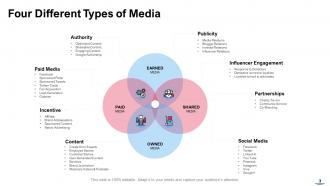
Diapositiva 3: Esta diapositiva presenta Cuatro Tipos Diferentes de Medios que contienen: Relaciones con los Medios, Relaciones con Blogueros, Relaciones con Inversores, Relaciones con Influencers, Asociaciones.
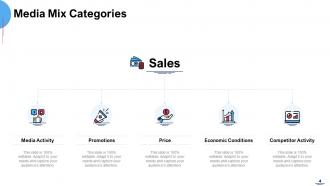
Diapositiva 4: Esta diapositiva representa las Categorías de la Mezcla de Medios: Actividad de Medios, Promociones, Precio, Condiciones Económicas, Actividad de la Competencia.
Diapositiva 5: Esta diapositiva muestra los Canales de Medios Más Efectivos.
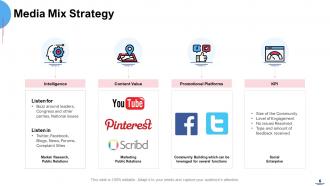
Diapositiva 6: Esta diapositiva presenta la Estrategia de Mezcla de Medios.
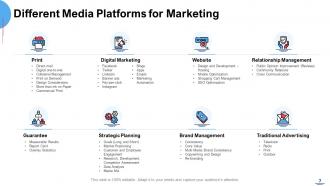
Diapositiva 7: Esta diapositiva representa Diferentes Plataformas de Medios para Marketing que contienen: Correo Directo, Digital Uno a Uno, Gestión de Material Impreso, Impresión Bajo Demanda, Consideraciones de Diseño, Más que Tinta sobre Papel, Impresión Comercial, Impresión, Facebook, Twitter, LinkedIn.
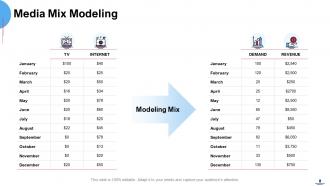
Diapositiva 8: Esta diapositiva muestra el Modelado de la Mezcla de Medios con: Modelado de la Mezcla
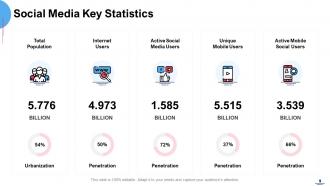
Diapositiva 9: Esta diapositiva representa las Estadísticas Clave de las Redes Sociales.
Diapositiva 10: Esta es la Diapositiva de Iconos de Planificación de Medios.
Diapositiva 11: Esta diapositiva se titula Diapositivas Adicionales para Avanzar.
Diapositiva 12: Esta es la diapositiva Sobre Nosotros para mostrar las especificaciones de la Empresa.
Diapositiva 13: Esta es la diapositiva Nuestra Misión con Misión, Visión y Objetivo.
Diapositiva 14: Esta diapositiva representa el proceso de Línea de Tiempo.
Diapositiva 15: Esta es la diapositiva de Generación de Ideas para resaltar hechos, ideas importantes, etc.
Diapositiva 16: Esta diapositiva muestra una Comparación entre usuarios masculinos y femeninos de Facebook.
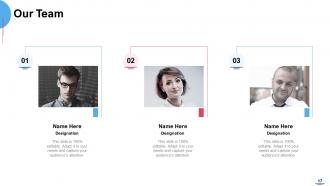
Diapositiva 17: Esta es la diapositiva de Nuestro Equipo con Nombres y Designaciones.
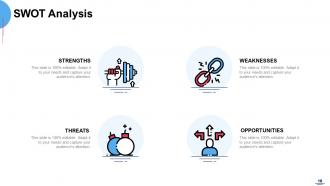
Diapositiva 18: Esta diapositiva representa el Análisis FODA.
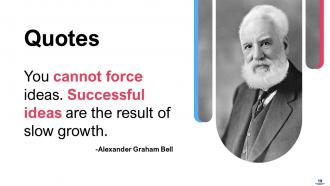
Diapositiva 19: Esta es la diapositiva de Citas para transmitir ideas, creencias, etc.
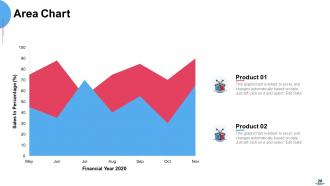
Diapositiva 20: Esta diapositiva muestra un Gráfico de Áreas con comparación de productos.
Diapositiva 21: Esta es la diapositiva de Gracias con Dirección de Correo Electrónico, Dirección y Número de Contacto.
Presentación de diapositivas de PowerPoint de planificación de medios con las 21 diapositivas: 1. Introducción a la planificación de medios 2. Objetivos de la campaña 3. Análisis de la audiencia objetivo 4. Selección de medios 5. Estrategia de medios 6. Presupuesto de medios 7. Compra de medios 8. Planificación de medios digitales 9. Planificación de medios tradicionales 10. Integración de medios 11. Métricas y análisis 12. Optimización de la campaña 13. Informes y presentación de resultados 14. Tendencias en la planificación de medios 15. Herramientas y tecnologías 16. Desafíos y consideraciones éticas 17. Colaboración con el equipo creativo 18. Caso de estudio: Campaña exitosa 19. Lecciones aprendidas 20. Próximos pasos 21. Conclusión
Obtén lo mejor para sobresalir con nuestras Diapositivas de Presentación de Planificación de Medios. Son buenos para extraer la crema.





FAQs for Media planning
Honestly, start with your audience - like really dig into who they are, what they do online, all that stuff. Everything else kinda builds from there. Set some actual measurable goals (conversions, brand awareness, whatever makes sense). Budget's obviously huge - figure out how much you can spend and where. Channel mix is tricky but you gotta pick what works for your people. Digital's great but don't sleep on traditional if it fits. Map out your timing too. Oh and definitely scope out what competitors are doing - I always forget that part but it's super helpful. Performance tracking's a given.
Start with your customer data - who's buying, how they behave, what they're purchasing. Then dig into market research to find similar prospects. Honestly, the psychographic stuff is where it gets interesting because you learn *why* people buy, not just who they are. Check out your competitors' audiences too - might spot something you missed. Be super specific though. "Women 25-45" is way too broad nowadays. Think more like "working moms who prioritize convenience and do their online shopping after 8pm." Build detailed personas from this and make sure they're backed by real data before you start spending money on ads.
Honestly, market research is like having a roadmap instead of driving around lost. You'll know exactly where your audience spends time online and what actually gets their attention. Without it? You're basically gambling with your budget - and trust me, that never ends well. The data shows you which channels are worth the money and when to time your campaigns. Oh, and it keeps you from stepping on competitors' toes too. Just dig into whatever research you've got first. Then figure out what's missing before you plan your next big push.
Look, your budget is basically what decides everything in media planning. Got a small budget? You're probably going digital instead of TV. Tight on cash means picking fewer markets but hitting them harder. I always think of it like grocery shopping - you've got $50 so you can't buy everything you want. The smart move is starting with what you can actually spend, then building your plan around that. Don't make some perfect campaign first and then realize you can't afford it. Work backwards from your money to get the best reach and frequency possible.
Honestly, digital is just way smarter. You can actually target people who care about your stuff instead of throwing ads at everyone watching TV (who even does that anymore?). Real-time data means you'll know immediately if something's bombing. Traditional media? You're stuck in these long contracts with zero clue if it's working. The targeting alone makes it worth it - why pay for massive reach when you only need the right people? Plus you can test small, see what clicks, then throw more money at what's actually working. Way more control over your budget too.
So it really comes down to what you were trying to do with the campaign. Brand awareness? Look at reach and those brand lift studies. Performance stuff? Focus on cost per acquisition and ROAS. Track the usual suspects - reach, frequency, CTR, conversions. But honestly, don't just stare at raw numbers. Compare them to your benchmarks or you'll have no clue if you're actually doing well. Oh and set up your tracking before you launch. I learned that the hard way - scrambling to figure out measurement after everything's live is the worst.
Focus on reach, frequency, and conversions that match your actual goals. Reach shows unique viewers. Frequency is how often they see your stuff - balancing this is honestly a pain but super important. Track conversions that actually move the needle, not just random impressions (those are pretty much useless on their own). Sales, leads, brand lift - whatever fits your campaign. Set benchmarks for these three first. Once you've got that down, add cost metrics like CPA or ROAS. Don't overthink it initially though - I see people get lost in the weeds with too many metrics right off the bat.
Honestly, just nail down your brand guidelines first and actually follow them - I can't stress this enough. Write down your messaging, visuals, tone, all that stuff in one doc everyone can access. Your creative teams need to work from the same playbook, whether they're doing social posts or billboards. I've seen campaigns where nothing matches and it's so confusing for customers. Have someone review everything before it goes live. Sounds obvious but you'd be surprised how often people skip this step. Regular check-ins help too so nobody goes rogue halfway through.
Social media works best when it amplifies your other campaigns, not when you're just dumping TV ads onto Instagram (nobody wants that). Map your content calendar to match your paid media timing. Each platform needs its own vibe though - what works on TikTok won't fly on LinkedIn. Social listening gives you goldmine data for targeting across all your channels. Oh, and use that social data to tweak your broader strategy too. The whole thing should feel connected, like you planned it that way from the start instead of scrambling to add social at the end.
So basically your audience is moving around constantly and your budget needs to chase them. Everyone's ditching regular TV for streaming now, and don't even get me started on how TikTok just exploded again out of nowhere. You can't keep throwing money at the same old channels just because they worked before - that's honestly just asking to waste your budget. I'd start by checking where your people actually hang out online these days, then move your spending there. The whole thing requires staying super flexible because trends shift so fast now. Quick pivots are everything.
Depends on your budget really. If you're working with bigger clients, MediaForte and Strata are solid for planning and buying. Google Ads and Facebook Ads Manager are pretty much mandatory at this point. Nielsen Ad Intel is clutch for competitive research too - saved my butt on a few pitches actually. The enterprise stuff has crazy learning curves though, fair warning. Starting out? Just focus on Google Analytics and Facebook Audience Insights first. Maybe throw in Hootsuite for social planning. Don't try to learn everything at once or you'll burn out. Master one platform, then add more.
Dude, data analytics is a total game changer for media planning. Instead of throwing money around and hoping for the best, you actually know what's working. Real-time data shows you which channels convert, your best audience segments, peak performance times - all that good stuff. Oh and you'll catch trends way before everyone else jumps on them (honestly one of my favorite parts). Budget allocation becomes so much smarter. Less waste, better predictions for future campaigns. My advice? Start simple with one metric like cost per acquisition. Don't go crazy trying to track everything at once. You'll be shocked how much better your media buys get.
Honestly, the biggest thing right now is AI taking over ad buying - it's everywhere. Connected TV is crushing traditional TV too, which makes sense since everyone's streaming now. You really need to start collecting your own customer data because third-party cookies are basically dead. Privacy stuff means we're going back to contextual ads instead of creepy behavioral tracking, which is probably better anyway? Amazon and Walmart's ad platforms are blowing up too. Attribution tools are actually getting decent for once. Post-pandemic consumers change their minds constantly, so you gotta be ready to pivot fast. I'd audit your data collection first, then maybe test some CTV if you haven't.
Okay so cross-channel planning is basically about connecting the dots instead of treating each platform like it's separate. You map out how customers actually move around - maybe they see your Instagram ad, then Google you later, visit your site but don't buy. That's when you hit them with a Facebook retargeting ad. Budget gets tricky because you're not just looking at individual channel performance anymore. You have to think about how they influence each other, which honestly makes my brain hurt sometimes. Start by sketching out your customer's typical path and figure out where each channel does its best work.
Dude, copyright and trademark stuff is huge - get proper licensing for any music, images, or video you're using. FTC guidelines are no joke either, especially with influencer partnerships or if you're making health/financial claims. Privacy laws like GDPR matter if you're collecting data too. The regulatory stuff changes constantly which is honestly super annoying to keep up with. Run anything edgy past your legal team first though. I've seen companies get absolutely wrecked by lawsuits they could've avoided. Better to be boring than broke, you know?
No Reviews