

Industrial marketing powerpoint presentation slides




Try Before you Buy Download Free Sample Product
 Impress Your
 Audience
 100%
100% Editable
 Save Hours
 of Time


Take your B2B business to the next level using this Industrial Marketing PowerPoint Presentation Slides PPT. These business-to-business marketing PPT templates consist of business promotion channels, business promotion tools, promotion campaigns, customer acquisition costs, etc. Take the assistance of these organizational marketing PowerPoint slides to portray the marketing cost of various channels like social media, video advertising amongst others. Showcase distinct promotional tools or methods such as PR, content marketing, SEO, SMM, trade shows, etc. with these organizational marketing PPT layouts. Unveil the inevitable need for brand advocates for positive word-of-mouth marketing and brand awareness. You can also depict the consumer retention strategies and its effects such as improved operational efficiency, better customer and market intelligence. Present the strategies to retain your valuable customers and monitor the success rates of various customer loyalty programs. Download these industrial marketing PPT infographics to provide the best offerings to your incumbent as well as prospective clients.
People who downloaded this PowerPoint presentation also viewed the following :
Content of this Powerpoint Presentation
Slide 1: This slide introduces Industrial Marketing. State Your company name.
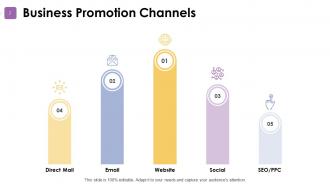
Slide 2: This slide depicts Business Promotion Channels such as- Website, Email, Social, Direct mail, SEO/PPC etc.
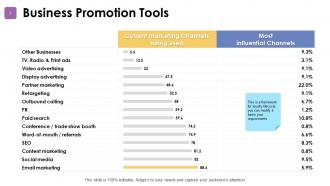
Slide 3: This slide showcases Business Promotion Tools.
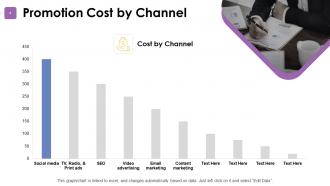
Slide 4: This slide showcases Promotion Cost by Channel.
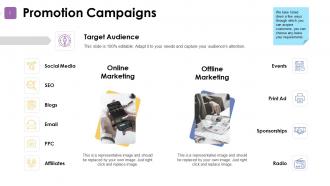
Slide 5: This slide displays Promotion Campaigns. We have listed down a few ways through which you can acquire customers, you can choose any basis your requirements.
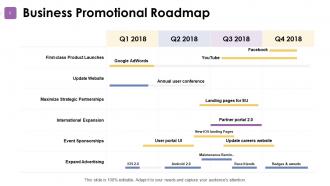
Slide 6: This slide displays Business Promotional Roadmap.
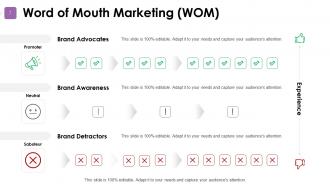
Slide 7: This slide describes Word of Mouth Marketing.
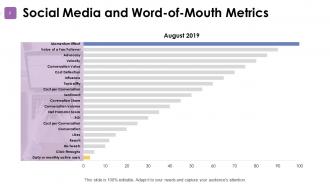
Slide 8: This slide describes Social Media and Word-of-Mouth Metrics.
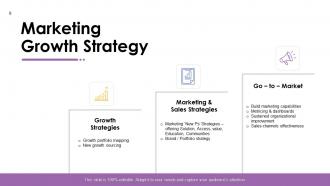
Slide 9: This slide showcases the Growth Strategies.
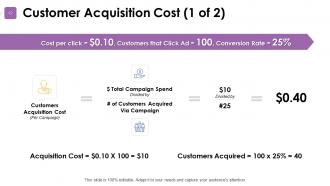
Slide 10: This slide displays Customer Acquisition Cost.
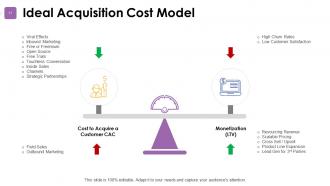
Slide 11: This slide presents Ideal Acquisition Cost Model.
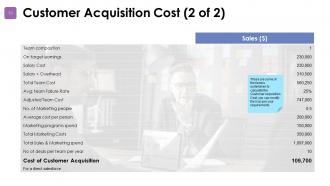
Slide 12: This slide showcaes Customer Acquisition Cost.
Slide 13: This slide depicts Customer Acquisition Cost. These are some of the factors undertaken to calculate the Customer Acquisition Cost, you can modify them as per your requirements.
Slide 14: This slide showcases Customer Retention.
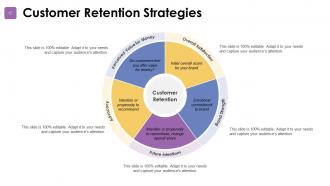
Slide 15: This slide presents Customer Retention Strategies.
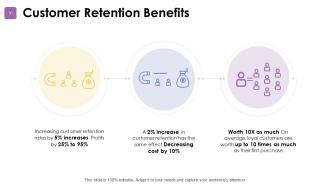
Slide 16: This slide displays Customer Retention Benefits.
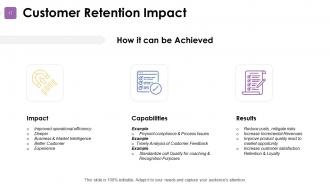
Slide 17: This slide showcases the Customer Retention Impact such as- How it can be Achieved, Improved operational efficiency, Deeper, Business & Market Intelligence, Better Customer, Experience, Impact, etc.
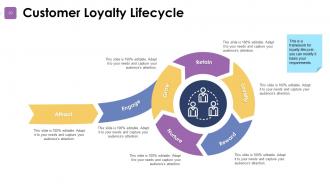
Slide 18: This slide showcases Customer Loyalty Lifecycle.
Slide 19: This slide also showcases Customer Loyalty Lifecycle.
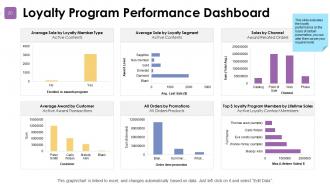
Slide 20: This slide showcases Loyalty Program Performance Dashboard. This slide evaluates the loyalty performance on the basis of certain parameters, you can alter them as per your requirements
Slide 21: This slide reminds about Coffee Break.
Slide 22: This is Industrial Marketing Icons Slide.
Slide 23: This slide is titled as Additional Slides for moving forward.
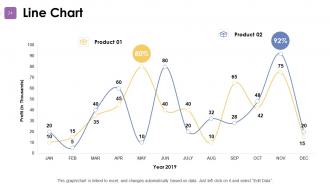
Slide 24: This slide displays the Line Chart with product comparison.
Slide 25: This is Our Mission slide with related imagery.
Slide 26: This is Our Team slide with names and designation.
Slide 27: This is About Us slide with company specifications.
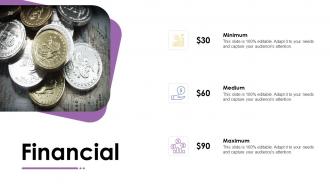
Slide 28: This is Financial slide. Showcase finance related stuff here.
Slide 29: This slide showcases Comparison between male and female instagram users.
Slide 30: This is Quotes slide to convey message, beliefs etc.
Slide 31: This is Our Target slide. Showcase company targets.
Slide 32: This is Idea Generation slide to highlight ideas, information etc.
Slide 33: This is Thank You slide with Email address, address and contact number.
Industrial marketing powerpoint presentation slides with all 33 slides:
Enable folks to comprehend economic facts and figures with our Industrial Marketing Powerpoint Presentation Slides. It helps illustrate financial calculations.






FAQs for Industrial marketing
So basically, industrial marketing is all about hitting up businesses who need stuff to run their operations. Consumer marketing? That's when you're going after regular people buying things for themselves. Business buyers are usually whole committees making these super logical, numbers-driven decisions - and man, do they take forever. Personal buyers are way more emotional and quick to pull the trigger. B2B deals are massive too - we're talking million-dollar equipment versus someone grabbing a $50 thing on impulse. Your messaging has to be completely different. Skip the lifestyle stuff and focus on technical specs and business results instead.
Look, your buyers are basically living on LinkedIn and Google when they're researching this stuff. Engineers Google literally everything before buying - I swear they research a paperclip for 3 hours. So nail your SEO game. Case studies work way better than those glossy product sheets nobody reads. LinkedIn's perfect for thought leadership content, plus industry publications still matter in B2B. Email nurturing's clutch since these sales cycles drag on forever. Here's the thing though - B2C buyers want pretty pictures, but your audience wants hard specs and ROI numbers. Map out their research journey first, then create content for each step.
Dude, you absolutely need to customize for industrial marketing. These buyers aren't messing around - they've got super specific technical needs and operational requirements that are totally different from regular consumer stuff. B2C companies can maybe get away with generic messaging, but industrial clients? They want solutions built for their exact processes and compliance standards. Custom machinery, specialized software integrations, weird chemical formulations - that's where you'll actually make money. Your marketing has to hit their specific pain points, not just list random benefits. Honestly, I'd start by breaking your audience into industry verticals and creating targeted case studies for each one.
Honestly, focus on lead quality scores and cost per qualified lead first - those are your bread and butter. Sales cycle length tells you way more than vanity metrics. Revenue attribution is clutch since these B2B deals drag on forever and you'll need to justify your budget eventually. Track how deep people engage with your content too, like time on technical specs or demo requests. Industrial buyers research the hell out of everything before they call. Oh and pipeline velocity beats raw lead count every time in this space. Pick maybe 3-4 metrics that actually connect to revenue and stick with them.
Honestly, it's all about showing up consistently with stuff that actually matters to them. Figure out what keeps your top stakeholders up at night, then be the person who brings solutions. Industry events are clutch - but don't just grab cards and ghost people. Actually follow up with something useful. I swear, half of sales reps disappear after conferences. Share content that solves their real problems. Be there when they text you at 9pm with a crisis. You want them thinking of you as their go-to advisor, not some vendor trying to hit quota. Pick your top 10 people and make actual plans for each relationship.
Honestly, AI and machine learning are completely changing how industrial marketing works - lead scoring, predictive stuff, you name it. AR/VR is pretty wild for demos too. Like, you can show someone a massive piece of equipment without actually hauling it to their office, which is genius. IoT data's helpful because it shows you how people actually use your products (not just how they say they do). Oh, and those account-based platforms keep getting better at targeting the right decision makers. My advice? Don't try to use everything at once. Pick maybe two things that'll actually fix problems you're having right now.
Start with the questions your sales team gets asked constantly - turn those into content. Technical whitepapers work great for engineers, while procurement folks want case studies with actual ROI numbers. Videos and webinars hit different too. Here's the thing though - nobody cares about your product specs right off the bat. Focus on solving their problems first. Break down those crazy complex processes into stuff people can actually digest. Different teams need different info, so don't treat everyone the same. Map out who you're talking to, then educate them on trends and best practices instead of just pushing features.
Ugh, it's like playing telephone but with your business on the line. Your message gets totally mangled as it bounces from tier 1 down to tier 3 or 4 suppliers. Tier 2 suppliers? Half the time they don't even bother passing your info along correctly - they've got their own priorities. Each level has different decision-makers and buying cycles too. What works is building direct relationships when you can and keeping your messaging super simple. Like, ridiculously simple so it actually survives all those handoffs between tiers.
Yeah so industrial sales are brutal - we're talking months or years vs like a week for regular retail stuff. Multiple people have to sign off on everything, there's procurement departments involved, it's a whole thing. Someone can't just see your product and buy it, you know? They want demos, endless proposals, then five different teams need to approve it. Honestly the bureaucracy drives me crazy sometimes. But here's the thing - when you finally close one of these deals, the contracts are way bigger and last longer. So all that waiting around actually pays off in the end.
Honestly, content marketing is where you'll see the biggest returns. Write stuff that actually helps - whitepapers, case studies, webinars that solve real problems. LinkedIn is huge for this space (like, seriously huge). Trade shows are still worth it too, even though they're expensive as hell. SEO matters, and maybe throw some PPC at industrial keywords. Oh, and audit what you've got first - you might be surprised what's already working versus just burning budget. Face-to-face networking still beats digital in a lot of industrial deals.
Start with the basics - company size, industry, location, revenue. Then look at how they actually behave: buying patterns, tech adoption, decision-making speed. B2B buying committees are insane btw - I've seen deals with 12 people weighing in on one software purchase! Pain points matter more than demographics though. Geographic stuff helps too, especially with different regulations. Oh, and don't go crazy with segments - 3 or 4 max. Test your messaging with each group to see what actually works. You can always split them further later once you know what's working.
Dude, trade shows are massive for industrial stuff. Face-to-face meetings with procurement people who actually make decisions? That's gold. You can demo equipment properly instead of sending PDFs nobody reads. Your competition will definitely be there, so you kinda need to show up too. The leads are way better quality since these people flew across the country looking for solutions - not just random internet browsers. Oh and skip the fancy booth nonsense. Industrial buyers want to see your gear actually running, not pretty graphics.
Honestly, industrial B2B is all about understanding who's actually making the buying decisions - and there's usually like 5+ people involved. Skip the flashy ads (seriously, when's the last time someone bought a $50K machine because of clever copy?). Instead, pump out technical content and solid case studies. These sales cycles drag on forever, so relationship building is huge. Your website better be loaded with specs and proof points or you're toast. Oh and here's the thing - your marketing and sales teams absolutely have to be in lockstep. Can't have them pulling in different directions when you're nurturing prospects for months.
Buyer personas are game-changers for industrial marketing. Instead of that spray-and-pray approach, you actually know who's making the purchasing calls and what problems are driving them crazy. Your content becomes way more targeted - like you're talking directly to their headaches instead of just listing boring product features. I used to waste so much money on LinkedIn ads going after completely wrong job titles, ugh. The trick is talking to real customers regularly since these personas shift over time. Honestly, just pick one main persona and map out their buying process this week.
Dude, sustainability isn't just a buzzout anymore - buyers are literally choosing vendors based on this stuff. Procurement teams won't even look at you without solid environmental credentials. Honestly, I've seen companies get their entire budget approved just because they could prove lower carbon footprints. Start digging into what you're already doing that's green - energy efficiency, waste reduction, recyclable materials. You're probably underselling these benefits big time. Then work that into your messaging and case studies. It's wild how much this matters now, but that's where the money is.
No Reviews