


Medical Billing Audit Process Checklist





Try Before you Buy Download Free Sample Product
 Impress Your
 Audience
 100%
100% Editable
 Save Hours
 of Time


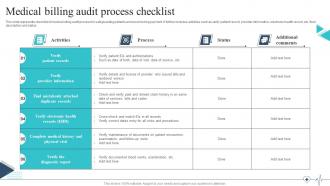
This slide represents checklist of medical billing audit process for safeguarding patients and avoid risking payment. It further includes activities such as verify patient record, provider information, electronic health record, etc, their description and status
People who downloaded this PowerPoint presentation also viewed the following :
Medical Billing Audit Process Checklist with all 9 slides:
Use our Medical Billing Audit Process Checklist to effectively help you save your valuable time. They are readymade to fit into any presentation structure.








FAQs for Medical Billing
Hey! So for your billing audit checklist - start with patient info and insurance verification. Check your CPT and ICD-10 codes are spot on. Documentation needs to be complete, obviously. Also look at claim timing, how you're handling denials, and payment posting. HIPAA compliance is huge, plus modifier rules and bundling (that stuff gets messy fast). Honestly, I've seen practices get burned on the bundling more than anything else. Each claim should flow logically from visit to payment. Run this monthly if you can - way easier than scrambling at year-end when you find problems.
Honestly? Start with quarterly full audits, but throw in some monthly spot-checks too. Way less painful than dealing with a mess later. If you're a bigger practice or getting hit with tons of claim denials, probably bump those full audits up to monthly. I've seen practices that had compliance issues stick with monthly until they got their act together - then they could dial it back. The whole thing really comes down to your error rates and denial patterns. Those numbers don't lie. Oh, and smaller practices can usually get away with less frequent auditing, but don't skip the spot-checks completely.
Oh man, billing audits are a nightmare but here's what always pops up: coding mess-ups are everywhere - outdated CPT codes, wrong diagnosis codes, the usual stuff. Documentation that's either missing or doesn't actually back up what you billed is another big one. Duplicate billing happens more than you'd think. Then there's unbundling issues where procedures should've been grouped together but weren't. Modifiers are honestly the worst - those two-digit codes confuse everyone! Don't even get me started on authorization problems, especially with specialist referrals. Start checking these areas first since they're where you're bleeding money and compliance gets dicey.
Honestly, tech makes auditing way less painful. Audit software can scan thousands of claims super fast and catch stuff like coding mistakes or weird billing patterns that you'd never spot going through manually. Takes minutes instead of hours, which is huge. The AI stuff is pretty neat too - it'll actually predict where problems might pop up based on patterns. Digital tracking makes reporting so much cleaner when you need to show stakeholders what's broken. I'd start with something that plays nice with whatever billing system you're already using. Trust me, once you automate the repetitive stuff, you'll wonder how you ever did it the old way.
Think of compliance guidelines as your cheat sheet for medical billing audits. They tell you exactly what CMS, HIPAA, and your payers expect - which is literally what the auditors will judge you on. Without them, you're just guessing at what to check instead of targeting real problem areas. Map every item on your checklist back to actual compliance rules. Otherwise you'll waste time on stuff that doesn't matter (been there). The whole point is being systematic about risk, not just ticking random boxes. Start with current CMS guidelines first - they're usually the biggest pain point anyway.
Ugh, yeah regulatory changes are such a pain - you basically have to redo your whole audit checklist every time. New rules mean new documentation requirements and compliance standards you've gotta follow. Your audit scope will probably shift too, sometimes completely. The worst part? This stuff changes constantly. Like quarterly, sometimes monthly with CMS updates. Honestly it's exhausting keeping up. I'd set up some alerts for when new regulations drop and maybe review your checklist every few months to catch whatever you missed. Better than scrambling last minute when you realize you're behind.
You definitely want someone with medical coding certs - CPC, CCS, or RHIA through AAPC or AHIMA. Healthcare billing experience is huge, like 2-3 years minimum dealing with claims and denials. Trust me, without that background they'll be drowning! HIPAA knowledge is non-negotiable too. They need to be super detail-oriented and good at catching patterns in billing mistakes. Oh, and make sure they can work independently - you don't want to babysit. Check their certs are up to date first, then ask about experience in your specialty areas specifically.
Honestly, just tackle the expensive screw-ups first - that's where you're bleeding the most money. Pick maybe 2-3 big issues per quarter, don't go crazy trying to fix everything at once. Give each problem to someone specific with an actual deadline. Update your processes, retrain people if they need it, document what you changed. The annoying part? You've got to circle back in like 30-60 days to make sure your fixes actually stuck and people aren't sliding back into old habits. Trust me, they will if you don't stay on it.
Check your error rates first - that's the big one. Compare claim denials before and after, plus see how much revenue you pulled back from audit findings. Days in AR is huge too since faster collections = better cash flow. Staff productivity matters - like how many claims per day they're cranking out. Oh, and compliance scores if you've got regulatory headaches (which honestly, who doesn't these days?). Just throw those five things on a basic dashboard and peek at it monthly. You'll know pretty quick if the audits are worth your time or not.
Training your billing staff is huge for accuracy - seriously makes or breaks your denial rates. I've watched practices drop from 15% denials down to 5% just from doing regular training sessions. Your team needs to get the why behind coding, not just the how. Like, which codes trigger audit red flags and why certain combinations look sketchy to payers. Monthly 30-minute sessions work well, especially if you focus on your office's most common screw-ups. Coding updates and payer policy changes happen constantly, so staying on top of that stuff really pays off. Documentation standards too - that's where a lot of people mess up.
So basically, internal audits are when your own team checks for billing mistakes before sending claims out. External ones? That's when insurance companies or the government come knocking after you've already submitted everything. Internal is like proofreading your work - you're hunting down coding errors and documentation issues. External audits are more like getting investigated. Way more stressful, honestly. They can claw back money or hit you with penalties if they find problems. My take? Do those internal checks regularly. Trust me, it beats having outsiders digging through your books later.
Yeah, definitely tailor your checklist to each specialty - they're all so different. Surgery needs heavy focus on modifiers and bundling (those rules are brutal). Primary care is all about E&M documentation levels. Mental health is basically its own universe with session times and therapy codes. Cardiology? Watch those diagnostic test bills like a hawk. Dermatology constantly deals with the cosmetic vs medical headache - patients always argue about that stuff. Build your base template first, then tack on maybe 5-10 specialty-specific items that target whatever errors keep popping up in your claims data. Makes the whole process way more targeted.
Document everything right when you find it - error details, patient ID, service date, amounts. Screenshots save your life, especially for system reports. I learned this the hard way trying to remember specifics weeks later, what a mess. Use consistent codes so you can spot trends. Each finding needs the root cause and whether it's a random mistake or bigger problem. Simple spreadsheet works fine, or whatever audit software you have. Don't forget the fix plan for each issue - that's usually what auditors want to see anyway.
Honestly, a good audit checklist is a game-changer for catching rejection stuff before it happens. Track your most common denial reasons first - that's where you build your checklist around. I've seen offices drop their denial rates by 40% just from being systematic about patient demographics, insurance eligibility, and coding accuracy. Those modifier requirements are so easy to mess up when you're swamped. The checklist makes you slow down and double-check medical necessity docs and authorization requirements. It's boring work but saves tons of headaches later.
Look, practices typically save 5-15% annually just from catching undercoding and claim denials before they become massive headaches. You're probably losing money right now without realizing it. The audit costs? They pay for themselves within three months through better reimbursements and fewer screwups. Insurance companies love demanding refunds when they overpay - trust me, you don't want that drama. I'd start with quarterly audits on your biggest procedures first since that's where the real money is. My friend's practice found like $30K in the first audit alone.
-
SlideTeam is my one-stop destination for templates. Highly recommended!
-
I discovered this website through a google search, the services matched my needs perfectly and the pricing was very reasonable. I was thrilled with the product and the customer service. I will definitely use their slides again for my presentations and recommend them to other colleagues.