

Micro and macro marketing elements powerpoint presentation slides




Try Before you Buy Download Free Sample Product
 Impress Your
 Audience
 100%
100% Editable
 Save Hours
 of Time


Micro And Macro Marketing Elements PowerPoint Presentation Slides meet the presentation needs of marketers. Management professionals from all industry verticals can employ these highly-compatible market economics PPT slides. Elucidate marketing environment structure with the help of a diagram that labels factors that affect your firm’s abilities. Demonstrate internal and external marketing factors and the respective tools to conduct strategic analysis. Get access to graphically-gripping data visualization formats for a number of market analysis approaches. These include PESTEL analysis, VRIO analysis, SWOT analysis, competitive analysis, 5C analysis, and Porter’s 5 forces analysis. Illustrate how marketing components like direct beneficiaries and input markets influence your organization’s business model Consolidate factors beyond control that affect your organization’s functions through this marketing intelligence PPT presentation. Economics and business development educators can use this content-driven market study PowerPoint template deck. So, hit the download button and begin personalization instantly!. Our Micro And Macro Marketing Elements Powerpoint Presentation Slides are topically designed to provide an attractive backdrop to any subject. Use them to look like a presentation pro.
People who downloaded this PowerPoint presentation also viewed the following :
Content of this Powerpoint Presentation
Slide 1: This slide introduces Micro and Macro Marketing Elements. State your Company name and begin.
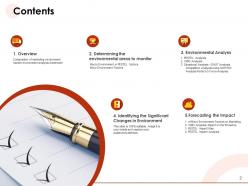
Slide 2: This slide displays Contents of the presentation.
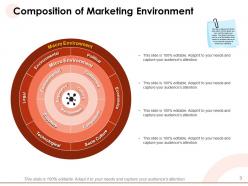
Slide 3: This slide shows Composition of Marketing Environment such as- Socio Culture, Technological, Macro Environment, Environmental, Political, Socio Culture, etc.
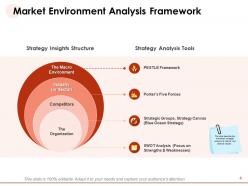
Slide 4: This slide displays Market Environment Analysis Framework
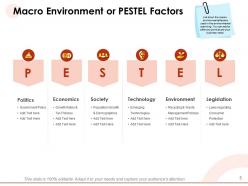
Slide 5: This slide showcases Macro Environment or PESTEL Factors. List down the macro-environmental factors used in the environmental scanning. You can add or alter any point as per your business need.
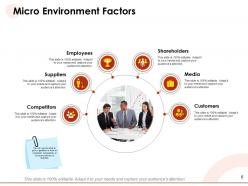
Slide 6: This slide depicts Micro Environment Factors. You can use this slide to give a guideline to work on mentioned components of micro environment of business
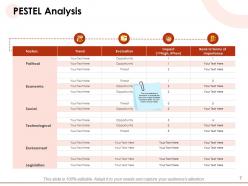
Slide 7: The slide describes a framework to evaluate the trend and impact of external marketing factor. You can modify it as per needs
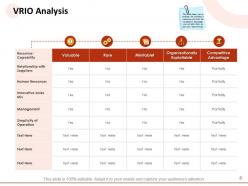
Slide 8: This slide helps you to evaluate the company’s resources and thus the competitive advantage, you can alter them as per your requirements
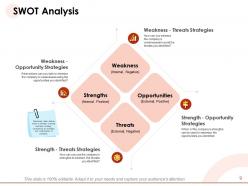
Slide 9: The slide defines areas to develop a strong business strategy considering all strengths and weaknesses of company.
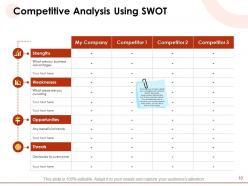
Slide 10: This slide shows Competitive Analysis Using SWOT
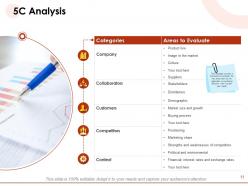
Slide 11: This template provide a framework to evaluate the key areas that can be applicable to marketing decision. Use it as per your needs
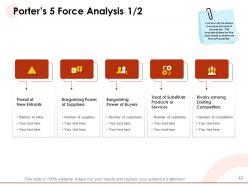
Slide 12: This slide shows Porter’s 5 Force Analysis.
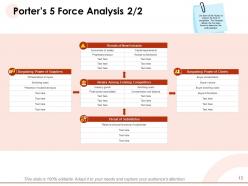
Slide 13: This slide shows Porter’s 5 Force Analysis. List down all the factors to analyze the level of competition. This template defines the five basis forces to determine the profit potential.
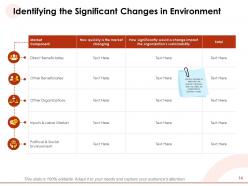
Slide 14: This slide provides information regarding Identifying the Significant Changes in Environment
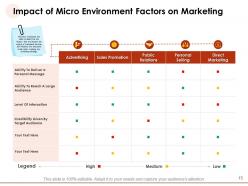
Slide 15: This slide shows the Impact of Micro Environment Factors on Marketing
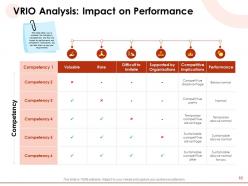
Slide 16: This slide helps you to evaluate the company’s competencies and thus the impact on performance and competitive implications, you can alter them as per your requirements
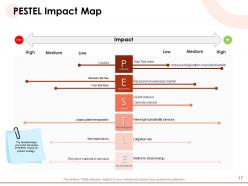
Slide 17: This slide shows PESTEL Impact Map. The template helps you to plot the impact of PESTEL Factor for product strategy.
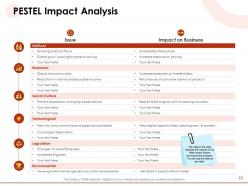
Slide 18: The table in the slide illustrate the fraction of the likely macro factors
Slide 19: This is Icons Slide for Micro and Macro Marketing Elements
Slide 20: This slide is titled as Additional Slides for moving forward.
Slide 21: This slide displays Our Mission, Vision and Goals.
Slide 22: This is Our Team slide with Names and Designations.
Slide 23: This slide displays Our Target
Slide 24: This is About Us slide to showcase Company specifications.
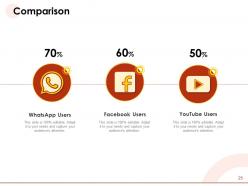
Slide 25: This is Comparison slide to showcase Comparison between facebook users and whatsapp users.
Slide 26: This slide shows Timeline process.
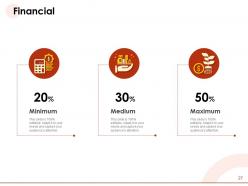
Slide 27: This is Financial slide.
Slide 28: This is Thank You slide with Contact details.
Micro and macro marketing elements powerpoint presentation slides with all 28 slides:
Use our Micro And Macro Marketing Elements Powerpoint Presentation Slides to effectively help you save your valuable time. They are readymade to fit into any presentation structure.

FAQs for Micro and macro marketing elements
So micro marketing stuff is basically what you control - your product, how you price it, where you sell, all that promotional work. The classic 4 Ps basically. Macro is everything happening around you that you can't really change but need to watch - economy, culture shifts, new regulations, tech changes, competitors doing weird stuff. It's like driving honestly - you've got your wheel and pedals (micro) but you're still dealing with rain and crazy drivers (macro). The trick is making your moves work with whatever's going on outside. Makes sense?
Okay so basically micro marketing works because it gets super specific about what each person actually wants. Like, Netflix knows you binged three serial killer docs last week, so boom - here's another one. Amazon's always like "hey, people who bought that weird kitchen gadget also got this" and somehow it works every time. It's honestly a little stalkerish but whatever. The whole thing taps into your buying history and personal stuff. Instead of blasting the same boring message to everyone, you're making each person feel like you actually get them. Short version: use your customer data to make people think you're reading their minds.
Macro marketing basically shapes the whole playing field for everyone. Think about how suddenly every company started going green - that's macro forces creating industry-wide shifts. Cultural movements, new regulations, social issues... they all push entire sectors to change direction. The food industry's health kick is a perfect example. Your micro campaigns target specific people, but these bigger trends? They can either back you up or totally work against what you're trying to do. Honestly, I always check what's brewing on the macro level first - saves you from fighting an uphill battle later.
So basically you want to get super specific with your targeting. Pick apart your customer data - age, income, where they live, all that stuff. Social media ads are perfect for this because honestly their targeting is kind of scary good now. Email campaigns work great too if you switch up the tone for different groups. Like, don't talk to Gen Z the same way you'd talk to boomers, you know? I'd probably start with just one demographic first and see how a personalized campaign performs before going crazy with it. Oh and definitely use their purchase history to suggest products - people love that "recommended for you" stuff.
Tech basically turbocharges your marketing on both levels. For the detailed stuff, you get crazy precise targeting and can track every single click in real-time. The bigger picture benefits? Reaching massive audiences through social media and running those huge automated campaigns. AI is honestly pretty game-changing because it connects both sides without you having to think about it. I'd say first figure out what gaps you have in your current setup – like, are you collecting all this customer data but not using it for your brand strategy? That's usually where people mess up.
Okay so micro marketing - you've got Coca-Cola doing those "Share a Coke" bottles with people's names on them. Works every time. Nike creates these super localized store experiences for different neighborhoods, which is pretty smart. But honestly? Spotify crushes everyone else at this. Their personalized playlists and that yearly Wrapped thing makes you feel like they actually know you (even though it's just data, obviously). Amazon's recommendation stuff is micro marketing on steroids - they're basically reading your mind based on what you've clicked. Oh, and start collecting detailed customer data now if you aren't already. You'll need it to create those personal touches that don't feel creepy.
So you wanna track the big picture stuff, not just your sales numbers. Market share growth is huge - are you actually taking territory from competitors? Brand awareness surveys will tell you if people even know you exist (honestly those can be brutal but super useful). Social listening tools are gold for seeing how conversations about your brand shift over time. Track whether you're influencing industry trends too. Are competitors copying what you're doing? That's actually a good sign. Start with quarterly brand health surveys to get your baseline metrics down. Focus on your impact across the whole market ecosystem rather than just immediate customers.
Honestly the hardest part is getting everything to actually work together. Macro stuff like economic trends moves super slowly while you're tweaking email campaigns every day - totally different speeds. Then there's the data mess of trying to connect big picture market research with individual customer clicks and purchases, which is... fun. Most companies have their strategy people completely separate from the execution team, so nobody talks to each other. My take? Don't try to fix everything at once. Pick one campaign and follow it from the initial big idea all the way down to the tiny details. Build from there.
Dude, culture is literally everything when you're marketing globally. Your messaging that crushes it in the US? It'll probably flop hard in Japan because individualistic vs collectivist mindsets are night and day. You've got to totally rethink your channels, positioning, even pricing - some places expect haggling while others find it super rude. Religious stuff, language quirks, social norms... they all mess with how people see your brand. Oh and definitely check out Hofstede's cultural dimensions before diving into any new market - that framework is actually pretty solid for getting the basics down.
Honestly, feedback is everything with micro marketing. Your customers will tell you straight up if your messaging sucks or feels weird - they're brutal but honest. I thought I had my segments figured out once and... yeah, I was way off. Quick surveys work great, or just watch social media reactions. Without that feedback loop, you're basically guessing and hoping for the best. Use what people tell you to tweak your targeting and creative stuff. The whole point of micro marketing is being precise, so you need real responses to know if you're actually nailing it or not.
Look, regulations basically control everything you can do with marketing. Your pricing, ads, where you sell stuff - it all has to follow whatever laws are in place. GDPR was a nightmare when it hit because companies had to completely redo how they handled customer data in Europe. Honestly, the companies that saw it coming did way better than the ones scrambling at the last minute. You've got consumer protection laws, advertising rules, industry-specific stuff. It's annoying but you can't just ignore it or you're screwed. Better to stay on top of changes before they blindside you.
Honestly, social media is perfect for this kind of targeting. You can get super specific with who sees your ads - different demographics, interests, behaviors, all on the same platform. Like Instagram Stories work great for younger crowds, LinkedIn's obviously better for business stuff. The cool part is all the data you get back. Engagement rates, clicks, who's actually responding - helps you figure out what's working. Oh and definitely pick one platform first instead of trying to do everything at once. I learned that the hard way lol. Get really good at targeting there, then expand.
Look beyond basic demographics and dig into actual behavior patterns - purchase history, how they browse your site, email clicks, social stuff. Tuesday buyers might hate the same pricing that weekend shoppers love (honestly this gets weirdly specific sometimes). Google Analytics and purchase data will show you these micro-segments. Then customize your messaging and product recs for each group. I'd start by A/B testing your best customer segments first since they're worth the most. Customer journey mapping helps too, but don't overthink it initially.
Look, you gotta bake those big trends right into your research from day one. Demographics, economic shifts, cultural stuff - figure out where society's heading before you even think about features. I've watched so many teams get blindsided by changes they totally could've seen coming. Do regular "macro audits" to check how these trends might mess with your roadmap. Make sure your market research people actually talk to the product team - otherwise those insights just die in some report nobody reads. The trick is making this macro thinking automatic, not something you do once and forget about.
Honestly, the economy messes with your marketing strategy more than you'd think. Recession hits? Companies flip from "premium quality" to "hey look, cheap stuff!" McDonald's nailed this with their dollar menu back in 2008. Inflation screws up all your pricing, and when interest rates spike, people won't drop cash on expensive purchases. Employment numbers matter too - they decide if you're selling luxury or just basic needs. I'd check economic data every quarter and have backup campaigns ready. Sounds boring but it's actually pretty crucial for staying relevant.
-
Editable templates with innovative design and color combination.
-
I discovered this website through a google search, the services matched my needs perfectly and the pricing was very reasonable. I was thrilled with the product and the customer service. I will definitely use their slides again for my presentations and recommend them to other colleagues.
-
Perfect template with attractive color combination.
-
Awesome use of colors and designs in product templates.