


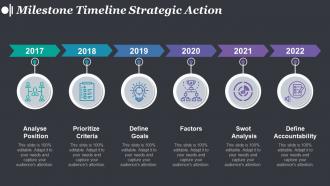
Milestone timeline strategic action






Try Before you Buy Download Free Sample Product
 Impress Your
 Audience
 100%
100% Editable
 Save Hours
 of Time


Enable folks to be gainfully employed with our Milestone Timeline Strategic Action. Be able to institute fresh jobs.
People who downloaded this PowerPoint presentation also viewed the following :
Milestone timeline strategic action with all 5 slides:
Our Milestone Timeline Strategic Action ensure definite gains. Your coffers will begin to fill.
FAQs for Milestone
Definitely focus on the big moments - kickoffs, major deadlines, client reviews, final delivery. Buffer time is your friend because projects always get weird somehow. Don't forget external dependencies and approval gates since those turn into nightmares fast. Decision points matter too, especially when stakeholders need to bless direction changes. Stay high-level though - you're not tracking every tiny task. Oh, and make sure your milestones are actually measurable so everyone knows if you're winning or losing. Honestly, half the battle is just being realistic about what can go wrong.
Honestly, charts and visual stuff are game-changers for tracking milestones. Progress bars and color coding let everyone see instantly if you're on track or behind. Gantt charts work great too, even though they look scary at first - once you get the hang of them they're super helpful. I always throw in little icons next to milestones because it makes everything way easier to scan. Your stakeholders will actually thank you since they won't have to wade through those boring text updates anymore. Plus it just makes your presentations look way more professional, which never hurts.
Look, stakeholder feedback is super important for setting up milestones that actually mean something. Without their input, you'll end up with checkpoints that look nice but don't match what the business actually cares about. They know about dependencies and roadblocks you might totally miss. I learned this the hard way on a project where our "perfect" timeline completely ignored a major compliance review - whoops. Get their thoughts early, then keep checking back as things change. Short bursts work better than long meetings too. Bottom line: milestones should reflect their priorities, not just what makes sense to your team internally.
Dude, don't save up the wins for some formal meeting - celebrate right when stuff happens! Fire off a quick message about what you accomplished, who helped make it happen, and why it actually matters. Honestly, I'm big on celebrating even the smaller victories because that's how you keep the energy going. Mix it up too - Slack shout-outs, team meetings, or just giving people props in person. Oh and definitely name specific people instead of some vague "great job team" thing. Just stay consistent with it so people start anticipating those moments, you know?
The biggest mistake? Making milestones way too vague. Like "complete user research" - that could mean anything. You need stuff that's actually measurable. Don't pack your timeline either because everything takes forever (learned this the hard way). Short sentences work better. Also tie them to business results or stakeholders won't care. I always ask myself "could my teammate look at this and know if it's actually finished?" That usually fixes the vague problem. Keep it realistic and specific - you'll thank yourself later when you're not scrambling to explain why nothing's "done."
So Gantt charts basically turn milestones into these diamond shapes or vertical lines right on your timeline. Makes it super easy to spot when stuff's actually due. I honestly think they're the best way to show stakeholders what's happening without confusing everyone with a bunch of text. Different colors help too - like maybe blue for internal deadlines, red for client stuff. The trick is making them obvious enough that people notice them immediately but not so crazy that your whole chart looks like a mess. Short answer: they just make everything way more visual than boring old lists.
So major milestones are your big checkpoints - stuff like wrapping up deliverables, finishing project phases, getting client sign-offs. Minor ones? Those are just internal tracking points. Completing specific tasks, hitting weekly targets, that kind of thing. Here's what matters: major milestones usually involve outside people (clients, stakeholders) and often tie to budget stuff. Minor ones keep your team sane between the big moments - trust me on this one. I learned the hard way that skipping small wins leads to that panicked "wait, what have we even done?" conversation nobody wants. Just map out both types early so you're not flying blind.
Honestly, just look at your past projects first - see where you totally missed the mark on timing. I always add buffer time now because something *always* goes wrong, trust me. Your team knows better than anyone how long stuff actually takes, so get their input instead of guessing. Breaking big deadlines into smaller pieces helps too - way easier to catch problems early. I made this mistake last quarter by being ridiculously optimistic with timelines. Learn from actual data, not what you hope will happen. Oh and definitely check your last three projects to spot patterns in where estimates went sideways.
Oh man, there's so many good ones! Asana and Microsoft Project are solid if you want those Gantt chart timelines. Trello's great for the kanban board vibe - super visual. Monday.com too. But honestly? I've worked with teams who just used Google Sheets and crushed it. Sometimes you don't need all the bells and whistles, you know? For fancy presentations though, Roadmunk makes these gorgeous roadmaps that'll impress your stakeholders. My take - just use whatever your team's already comfortable with first, then get fancy later if you need better reports.
Yeah, cultural stuff totally messes with how teams see deadlines and success. Germans will lose their minds over timeline precision, but your Latin American teammates might focus more on building relationships first - which honestly can work out better sometimes. Missing a deadline by a few days? Some cultures shrug it off if quality's perfect, others treat it like the world's ending. Asian teams usually want everyone to agree before hitting milestones instead of rushing decisions. I'd chat with each regional team upfront about what they expect and definitely build in extra time for different work styles.
Track your timeline, budget, and deliverables - that's the basics. But honestly? Those numbers don't tell you everything. Stakeholder satisfaction matters way more than people think. Also look at team velocity, defect rates, and whether you're actually hitting your main project goals. Resource utilization is another good one to watch. I'd set up maybe 4-5 key metrics on a simple dashboard so you can spot problems early. Quality stuff like rework percentages will save you headaches later. Risk mitigation too - did your milestone actually reduce the big scary unknowns?
Look, stop guessing and dig into your old project data instead. Pull up your last 3-4 similar projects and see how long stuff actually took. Trust me, you'll find patterns - like how testing always runs over, or client feedback takes forever. We're all terrible at estimating deadlines (myself included), but numbers don't lie. Calculate average completion times for each phase. Make sure you're comparing projects with similar complexity and team size though, otherwise it's pretty useless. Once you spot those consistent bottlenecks, you can finally build in realistic buffer time.
Honestly, team lunches and happy hours are solid go-tos. Slack shoutouts work too if you're remote. I know it sounds cheesy, but those group photos actually do something for team spirit - who knew? For bigger wins, maybe do certificates or small gifts. Escape rooms are fun if your team's into that stuff. Oh, and volunteering together hits different than regular activities. Just match the celebration to how big the milestone actually is. Pizza parties seem basic but people genuinely appreciate free food and recognition. Know your team's personality and don't overthink it.
Figure out your critical path first - what absolutely has to be done before other stuff can start? Focus on high-impact, risky things early while you've got time to fix problems. Seriously, I've watched so many teams push the hard stuff to the end and then panic when everything goes sideways. Don't be those people! Break big milestones into smaller pieces so you can actually see progress. Oh, and definitely think about stakeholder needs plus any deadlines you can't move. Maybe grab your team leads this week for a quick session to get everyone on the same page about priorities?
Dude, you gotta read the room completely differently each time. Execs want the big picture stuff - money, risks, outcomes. Skip all the technical weirdness with them. Your actual team? That's when you get into the nitty-gritty blockers and deliverables. I made this mistake so many times early on - same presentation for everyone just makes people zone out. Governance meetings need those formal slides and charts. Team check-ins? Sometimes I just pull up a dashboard and talk through it. Way less painful. Stakeholders fall somewhere in the middle - they want progress but with enough context that decisions actually make sense. Always think: what do these specific people need to hear right now?
-
Great quality slides in rapid time.
-
Presentation Design is very nice, good work with the content as well.