


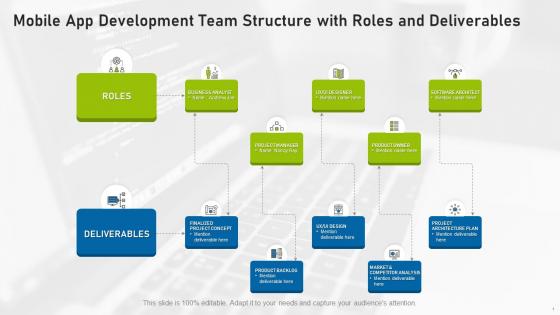
Mobile app development team structure with roles and deliverables




Try Before you Buy Download Free Sample Product
 Impress Your
 Audience
 100%
100% Editable
 Save Hours
 of Time


Our Mobile App Development Team Structure With Roles And Deliverables are topically designed to provide an attractive backdrop to any subject. Use them to look like a presentation pro.
People who downloaded this PowerPoint presentation also viewed the following :
Mobile app development team structure with roles and deliverables with all 2 slides:
Use our Mobile App Development Team Structure With Roles And Deliverables to effectively help you save your valuable time. They are readymade to fit into any presentation structure.
FAQs for Mobile app development team structure with
So you'll want a product manager to nail down what you're actually building, plus some UI/UX people for design. Mobile devs are obvious - either iOS/Android specialists or someone who does cross-platform stuff. Backend developer handles all the server work. QA testers are honestly a lifesaver because they'll find bugs you never even thought of. Depending on how complex things get, maybe grab a DevOps person for deployment and a project manager to herd cats. Small teams though? Everyone just does whatever needs doing. I'd figure out where your biggest gaps are first, then hire based on that and your timeline.
Honestly, team size matters way more than people think. You'd assume bigger teams crush projects faster, but that's not really true. When you've got 3-5 people, everything moves quickly and nobody's confused about what's happening. But throw a massive project at them? They'll drown. Large teams bring serious skills and can handle complexity, though coordinating 10+ people is absolute chaos without solid systems. I've seen it go sideways so many times. Medium-sized teams around 6-9 people usually work best - you get the expertise without everyone stepping on each other's toes. My advice? Start small and add people only when the project actually needs it.
So you need someone who's solid with user research and wireframing - Figma or Sketch are the main tools. Mobile stuff is way different than web, so they better understand gestures, different screen sizes, plus iOS and Android guidelines. Visual design chops are a given. The really good ones know at least some dev basics, which honestly saves so much drama down the road. They should get accessibility and user testing too. But here's the thing - when you're interviewing, make them walk through their actual process. Pretty mockups are easy to fake, but you can tell who really knows their stuff when they explain how they got there.
Honestly, it comes down to three things: your budget, how fast you need this done, and whether it's something you'll keep working on. In-house costs way more upfront and hiring takes forever, but you get better control. Outsourcing is cheaper and faster to start - just expect some headaches with time zones and communication. I've dealt with that mess before. Here's my take: if this is core to your business and you'll be tweaking it for years, go in-house. One-off project or tight deadline? Outsource it. Either way, don't go all-in immediately. Test them out with something small first.
So with Agile, you basically blow up those old department walls and mix everyone together. Put your iOS people, Android devs, designers, and QA in small teams - like 5-7 max. They do daily check-ins and work in short bursts instead of those endless waterfall cycles. Each team owns their stuff from start to finish, which honestly cuts through so much BS. You'll want a product owner calling the shots on priorities and someone running the scrum meetings. Oh, and don't just randomly assign people - figure out your main features first, then build teams around those. The speed difference is pretty wild once you get it running.
Okay so daily standups are a given, but you'll also want weekly cross-team syncs with your iOS, Android, backend and design folks. Slack's perfect for async stuff. Though honestly? Face-to-face still beats everything when you're stuck on something. Make sure you've got shared docs that people actually use - not another dead Google Doc nobody touches. Oh, and create clear escalation paths so problems don't just sit there rotting. I'd probably start with some kind of communication charter first. Figure out who needs what info and when. Sounds boring but it'll save you so much headache later.
Dude, get a QA person. Seriously. They'll catch all the stupid bugs before your users start leaving one-star reviews that make you question your life choices. Your devs are probably missing obvious stuff because they're too close to the code - happens to everyone. QA tests on different phones, iOS versions, weird edge cases you never thought of. Performance issues too. Honestly once you've got 3-4 developers, you need someone whose only job is breaking your app. It's way cheaper than having your actual users do it for you (and they're way less nice about it). Your developers will thank you since they can actually build features instead of constantly fixing random crashes.
Honestly, get your developers and designers talking from the very beginning. Don't do that stupid relay race thing where design throws something over the wall. Joint planning sessions work great - designers explain their vision, devs can immediately flag if something's gonna be a nightmare to build. I've watched so many projects completely blow up because of this disconnect! Regular check-ins are clutch so designers see how their stuff actually looks in code. Tools like Figma make it easy for devs to grab what they need. Oh, and create an environment where people can push back on each other's ideas without it getting weird.
Pick something like Jira, Linear, or Asana for tracking sprints and stories. Teams spend forever debating tools when they should just grab one and move on - honestly drives me nuts. Slack's your best bet for communication since it plays nice with most PM platforms. GitHub or GitLab works for code reviews and deployments. Main thing is getting everyone on the same dashboard. Your designer, devs, and QA need to see identical info or things get messy fast. Start with one core tool, then add integrations later. Don't try managing five different platforms right away.
Honestly, go with specialists for the really complex stuff but make sure everyone picks up some cross-functional skills. Like your iOS person should at least get Android basics, backend devs need to understand frontend enough to not break things. Everyone should know basic UX - it just makes everything smoother. I've watched teams completely freeze when only Sarah could touch the payment code and she got sick during launch week. Total nightmare. But yeah, don't make your designer write APIs or anything crazy. Best approach? Clear ownership but enough shared knowledge so people can actually help each other out. During quiet periods, have folks shadow other roles for a day or two.
Oh man, the communication breakdowns are brutal - designers and devs never seem to speak the same language, and don't get me started on QA handoffs. Platform fragmentation makes me want to pull my hair out sometimes. Then you've got scope creep, impossible deadlines, and trying to sync up team members scattered across different time zones. Daily standups are a lifesaver though. Get everyone using the same project management tools and actually document stuff properly. I'd throw in some buffer time for when things inevitably go sideways - trust me on this one. Cross-functional meetings sound boring but they really help people stay aligned on what we're building.
Honestly, cultural stuff can totally derail your mobile dev team if you're not careful. Direct communicators clash with indirect ones during code reviews - I've seen it get messy. The timezone thing is annoying but manageable. What really trips people up is hierarchy expectations and how feedback gets handled. Some devs won't challenge stupid deadlines because culturally they don't question authority. Others will straight-up argue in meetings. Set communication rules from day one. Be super clear about what you want. Most importantly, make sure everyone feels safe speaking up - otherwise you'll only hear from like half your team.
Your product owner is gonna be key when you're figuring out team structure. They're the ones translating business stuff into actual requirements for developers. Without a solid PO, you'll have devs asking "wait, what are we even building?" every other day. They also help you decide if you need separate iOS/Android people or if cross-platform works. Plus they keep everyone focused on the right priorities instead of random feature requests. Oh, and good designers who can work with the PO's vision are crucial too. Get your PO involved early - they know what skills you actually need way better than anyone else.
Honestly, CI/CD is a game changer for team dynamics. It basically forces developers, testers, and ops people to actually talk to each other - no more working in isolation. Everyone suddenly cares about broken builds because they affect the whole pipeline. Your team starts owning code quality together instead of pointing fingers. The feedback happens way faster too, which is huge. Fair warning though - it gets messy at first when everyone's suddenly involved in everything! I'd start with just automated testing. Once people see how much easier their lives get, they'll be begging for more automation. Trust me on this one.
Track velocity and bug escape rates first - those'll tell you the most. Crash rates are huge too, nobody wants pissed off users blowing up the app store reviews. I'd also watch code review turnaround times since that's where things get stuck. Oh, and definitely check if people actually use the features you're shipping - waste of time otherwise. Don't go metric-crazy though, I've seen teams drown in dashboards. Pick like 4 metrics max and just review them in your weekly retros. Way better than tracking everything and getting analysis paralysis.
-
Innovative and Colorful designs.
-
Design layout is very impressive.