

Money saving and planning ppt infographics




Try Before you Buy Download Free Sample Product
 Impress Your
 Audience
 100%
100% Editable
 Save Hours
 of Time


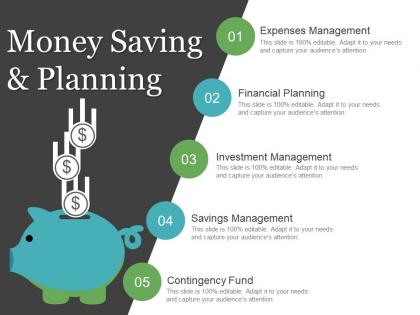
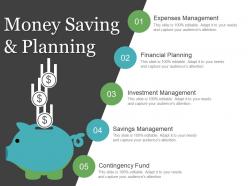
Money act as the driving element of almost all commercial activities. For impressing audience, stakeholders, strategic partners become easy with this money planning PowerPoint presentation slide. A user can describe that earning money is an infinite process by using dollar currency PPT template. Every activity you start, it commences with small or large investments and ends in earning income and in the entire process you need to look for money planning process. For sharing your money planning, you can go for the money planning presentation slide. Every single activity revolves around money whether it is a business process, marketing plan, strategy, advertisement, sales plan, or business research, all directed towards earning money. Our professionals crafted this money saving PowerPoint slide specifically for finance as well as money related presentation. The dollar currencies in money PowerPoint presentation template mimics the financial scenario whereas the piggy bank mimics money saving. A user can share a variety of money saving plan by using this money saving plan design template. The money icon PPT slide design is useful for an organization such as financial meetings, accounting presentations, cost management sessions, and many more. Be the current buzz with our Money Saving And Planning Ppt Infographics. Get folks discussing your abilities.
People who downloaded this PowerPoint presentation also viewed the following :
Money saving and planning ppt infographics with all 5 slides:
Be ' Captain Courageous ' with our Money Saving And Planning Ppt Infographics. Boldly lead them from the front.
FAQs for Money saving and
Honestly, just start by spending less than you make and actually tracking where your cash goes. I used to think tracking was pointless until I realized I was dropping like $80/month on random coffee runs lol. Build up that emergency fund first - trust me on this one. Then tackle high-interest debt and start investing regularly. Automate everything you can so you don't have to think about it. Even setting up one automatic transfer helps. Don't try to do it all at once though. Pick one thing this week and go from there.
Honestly, budgeting apps are game changers because they do all the boring work for you. You link your accounts and they automatically sort your spending into categories. I used to think I had a handle on my money (lol nope). These things will show you're dropping way more on takeout than you realized. They send alerts before you blow past your limits, which is clutch. Plus they help with saving goals and stuff. Mint's free and YNAB has a good trial - just pick one and start. You'll probably discover some weird spending habits you didn't know about.
Dude, you really need financial goals or you'll just blow through money without thinking. I learned this the hard way - used to save whatever scraps were left at month's end (hint: usually nothing lol). Goals completely changed my game though. Pick 2-3 specific things you want - emergency fund, debt payoff, house down payment, whatever. Write down exact dollar amounts and deadlines. Then you can actually work backwards to see how much you need to save monthly. It's like having a GPS for your money instead of driving around lost. Trust me, makes budgeting way less painful.
Honestly, you don't have to pick just one. Build up that emergency fund first - like 3-6 months of expenses in a high-yield savings account. That's your "oh shit" money that sits there untouched. After that's covered, split your extra cash between saving for short-term stuff (house down payment, trips, whatever) and investing for the long haul through index funds or your 401k. I usually go with something like 70% investing, 30% saving, but it really depends on your goals and risk tolerance. Some people get anxious about market dips and need more in savings to sleep well. Just start both habits early and stick with them.
Track your spending for a whole month first - you'll be shocked where your money actually disappears. Most people budget way too tight and then blow it completely, or they forget about random stuff like car repairs and Christmas gifts. Those tiny subscriptions will murder your budget too. Netflix, Spotify, that workout app you used twice... they're sneaky. Also, don't budget assuming you'll make your absolute best income every month. Be realistic about the ups and downs. Honestly, just knowing where your cash goes is half the battle. Once you see the real numbers, making a budget that actually works becomes so much easier.
Dude, forget those brutal spreadsheet days - I still have PTSD from trying to balance mine manually. Apps like Mint or YNAB connect straight to your bank and sort everything automatically. Pretty sweet deal. You can literally just snap photos of receipts with your phone, plus you'll get pinged when you're blowing too much on takeout (which honestly happens to me way too often). The charts these things spit out are actually kind of shocking - like seeing where your money really disappears to. Just grab a free one this week and link your checking account. You'll see what I mean.
Dude, you NEED an emergency fund - trust me on this. Mine saved me when my car transmission totally crapped out last year (ugh, $1800). Basically it keeps you from racking up credit card debt every time life gets expensive. Aim for 3-6 months of expenses, but honestly? Even $500 helps tons when your phone dies or whatever. Keep it in a separate savings account you can actually access. I know it sounds boring compared to investing, but you'll thank yourself later when something breaks.
Ugh, debt is the worst because you're literally paying for stuff you already bought instead of saving for things you actually want now. Make a list of everything you owe and go after the credit cards first - those interest rates are absolutely brutal. Set up autopay for minimums so you don't accidentally miss anything. The hardest part is not adding MORE debt while you're trying to dig out (guilty as charged lol). But once you start knocking them off one by one, you'll have way more breathing room in your budget.
Oh man, cash flow issues are the worst! Three things saved my butt: First, invoice people RIGHT when you finish the work - don't wait around. Maybe throw in early payment discounts too. With suppliers though, milk those payment terms for all they're worth (unless they're giving you a discount to pay early). The real game-changer was doing a 13-week cash forecast - sounds boring but you'll spot problems way before they smack you in the face. Start there honestly, the planning ahead thing is clutch.
Honestly, our brains are wired to mess up money decisions. Fear and greed take over way more than logic does - I've panic-sold during crashes and chased stupid trends because of FOMO. We hate losing money so much more than we like making it, which is weird when you think about it. Like losing $100 feels way worse than gaining $100 feels good. Makes us too cautious sometimes. I do this crap constantly. Best thing is catching yourself doing it and setting up systems to work around it - auto-investing helps, or having someone talk you through big moves first.
Okay so first thing - track every single purchase for like a week or two. I'm telling you, those random $5 coffee runs will blow your mind when you add them up. For anything over $20, just wait 24 hours before buying it. Most of the time you won't even want it anymore. Also, unsubscribe from all those store emails because honestly? Those "limited time offers" are such BS and they'll drain your account fast. Oh, and set up automatic savings transfers right when you get paid. That way you're only spending what's actually left instead of crossing your fingers at the end of the month. Just pick one thing to focus on first though - maybe eating out or whatever you spend the most on.
Dude, just automate everything right now - seriously, it's a total game changer. Max out that 401k match first (literally free money), then grab a Roth IRA if you qualify. Compound interest is like actual wizardry when you've got 30+ years ahead of you. Figure out what you're spending now so you'll know what retirement actually costs. I used to think this stuff was so boring, but honestly? Starting early makes the monthly hit way less brutal. The math gets pretty wild when time's on your side.
Dude, your credit score is basically how much banks think they can trust you with their money. Good score (700+) means better rates on everything - mortgages, car loans, credit cards. We're talking thousands in savings over time. Bad credit though? You'll either pay way more or just get rejected outright. It's honestly wild how much this three-digit number controls your life. Payment history matters most, plus how much of your credit limit you're using. Oh and how long you've had accounts open. Check yours free on Credit Karma or whatever. Just pay bills on time and don't max out cards.
Honestly, it's all about reading the room with market trends. Bull markets? Go for growth stocks, take some risks - the momentum's on your side. Things getting ugly? Time to play defense with bonds and dividend stocks. I learned this the hard way in 2020 lol. Nobody can time it perfectly though, so stay flexible and don't get stuck in one mindset. Keep cash ready so you can actually move when opportunities hit. The worst thing is being all-in on one strategy when everything shifts.
Dude, get a financial advisor. They know all the tax tricks and investment stuff that would take you forever to figure out. I was just throwing money at my 401k randomly for years - such a waste. They'll actually look at your whole situation and tell you what makes sense for your goals. The good ones will adjust everything when life gets crazy too. My buddy's advisor saved him from some terrible stock picks that could've wrecked his retirement. Ask around for recommendations first though - some are definitely better than others. Your work might even have someone you can talk to for free.
-
Great quality product.
-
Illustrative design with editable content. Exceptional value for money. Highly pleased with the product.
-
Great designs, Easily Editable.
-
Thanks for all your great templates they have saved me lots of time and accelerate my presentations. Great product, keep them up!